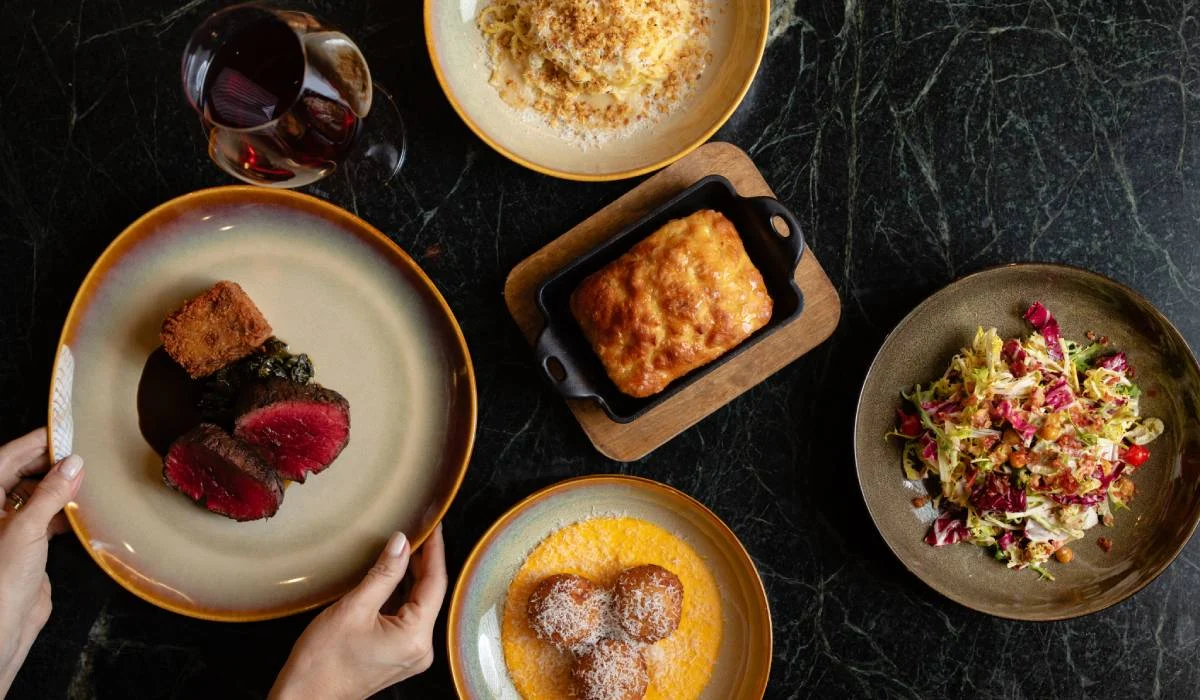

In the heart of Idaho’s premier resort destination, a new culinary landmark has emerged, redefining the relationship between traditional Italian simplicity and the primal art of live-fire cooking. Fiamma, a restaurant whose name translates to "little flame," recently celebrated its first anniversary in Sun Valley, marking a significant milestone for its founders, Chef Britt Rescigno and her wife, Chef Kinsey Leodler. The establishment represents more than just a dining venue; it is the culmination of a two-year cross-country search for a community that valued both gastronomic excellence and authentic human connection. By blending high-concept hearth cooking with a commitment to regional sourcing, Rescigno and Leodler have established a business model that balances the volatile demands of a seasonal tourism market with the steady needs of a dedicated local population.
From Nomadic Exploration to Idaho Roots
The journey to Fiamma’s inception was neither direct nor conventional. Before selecting Sun Valley, Rescigno and Leodler spent two years traveling across the United States, evaluating various culinary hubs including Seattle, Washington, and Charleston, South Carolina. While these cities offered robust restaurant scenes and established infrastructure, the duo sought a location where they could build deep-seated roots rather than simply occupy a space in a crowded market.
The turning point occurred during a visit to Sun Valley, where the pair participated in a local food and wine festival. During this event, they donated four private dinners which collectively raised nearly $50,000 for a local culinary school. This philanthropic success served as a proof of concept, demonstrating both the community’s high level of engagement and its appetite for sophisticated dining experiences.
"We fell in love, first, with the surrounding area. The mountains are majestic—it’s just so beautiful," Rescigno noted, reflecting on the decision to settle in the Wood River Valley. However, the aesthetic appeal was secondary to the professional infrastructure. The chefs found a welcoming network of local distributors and a workforce eager for a collaborative environment, leading them to conclude that Sun Valley was the ideal environment for their "little flame" to grow.
The Architecture of Fire and the Italian Philosophy
At the physical and conceptual center of Fiamma sits a seven-foot custom hearth. This architectural anchor dictates the pace of the kitchen and the flavor profile of the menu. For Rescigno and Leodler, the fascination with fire is both professional and personal. Their culinary background is rooted in outdoor cooking and the experimentation with various hardwoods, specifically oak and mesquite, to impart distinct smoky notes into proteins and vegetables alike.
The restaurant’s philosophy draws heavily from the Italian concept of regionalità—the belief that the best ingredients are those found in the immediate vicinity. Rescigno, raised in a New Jersey Italian household, brought a heritage of handmade craftsmanship to the table, while Leodler emphasized the importance of the human touch in an era of industrial food production.
"The idea that food you pluck from the earth right where you are always tastes better than something shipped from somewhere else is central to what we do," Leodler explained. This commitment to "primal" cooking—engaging the senses of touch, smell, and taste at every stage of the process—ensures that the final product remains unadulterated by modern shortcuts.
Strategic Evolution: The Shift to an Italian Steakhouse
While Fiamma originally launched as a regional Italian pasta house featuring live-fire proteins, the owners demonstrated a critical trait of successful restaurateurs: the ability to pivot based on market feedback. Within the first six months of operation, Rescigno and Leodler recognized that their guests were gravitating toward the hearth-cooked meats and the premium, house-cut steak offerings.
Responding to this demand, the duo revamped the concept into an Italian-style steakhouse. This transition allowed them to lean more heavily into their butchery program while maintaining the Italian soul of the restaurant through seasonal pastas and traditional side dishes. The menu now undergoes a full revision every four to five weeks, a strategy that serves two purposes: it allows the kitchen to utilize the peak of Idaho’s agricultural seasons and it keeps the dining experience fresh for the local residents who frequent the establishment multiple times a month.
This responsiveness is a hallmark of the Fiamma business model. "It’s critical as a restaurant owner and chef to respond to your market," Leodler said. "You want to serve things that fulfill your heart… but it’s important to pay attention to what your customers want."

Operational Innovation: The Five-Burger Strategy
One of the most notable successes in Fiamma’s first year is the "steakhouse burger," a dish that highlights the restaurant’s commitment to sustainability and waste reduction. Because the kitchen performs extensive in-house butchery, there is a consistent surplus of high-quality trimmings from New York strips, filets, elk, and venison. Rather than relegating these premium cuts to stocks or sauces, the chefs developed a high-end burger.
To maintain the allure of the dish and manage inventory, Fiamma produces only five of these burgers per day. This scarcity has created a "groundswell" of interest, particularly among the early-evening bar crowd. By offering the burger at the start of service, the restaurant effectively eliminated the traditional "4:30 lull," the quiet period between opening and the primary dinner rush.
The strategy has proven to be a triple-win for the business: it generates revenue from product that might otherwise be underutilized, it attracts a diverse range of price-point diners, and it serves as a marketing tool that drives early-evening foot traffic.
Managing the Seasonal Dual-Market Dynamics
Sun Valley presents a unique challenge for hospitality businesses due to its extreme seasonality. The town experiences massive influxes of tourists during the winter ski season and the summer hiking/festival season, interspersed with "shoulder seasons" where the population drops significantly.
Rescigno and Leodler have navigated this by designing a "choose your own adventure" menu. This flexible pricing and ordering structure allows the restaurant to accommodate a wide variety of dining occasions. A tourist coming off the mountain may be looking for an extravagant multi-course celebration, while a local business owner may require a quick, high-quality meal on a Tuesday night.
By catering to both demographics without compromising the brand’s identity, Fiamma has achieved a level of stability that is often elusive in resort towns. The chefs have also prioritized staff training to ensure that the story of the food—the "why" behind the ingredients—is communicated clearly to every guest, regardless of whether it is their first or tenth visit.
Cultivating a Sustainable Labor Culture
Beyond the culinary achievements, the impact of Fiamma on the local labor market has been a point of pride for the founders. In many resort destinations, the high cost of living forces service industry workers to hold multiple jobs to survive. Leodler and Rescigno set out to disrupt this cycle by creating a workplace that offers competitive wages and a supportive culture.
"For the last 20 years, some of our staff members had to work three jobs to make ends meet, and now they can support themselves with just one job at Fiamma," Leodler noted. This focus on labor sustainability has resulted in a more cohesive and loyal team, which in turn improves the guest experience. The collaborative nature of the two chefs—described by Leodler as "two puzzle pieces"—has trickled down to the staff, fostering an environment where ideas are welcomed from all levels of the kitchen and front-of-house.
Broader Impact and Future Implications
As Fiamma enters its second year, its success serves as a case study for the revitalization of the Sun Valley culinary scene. The restaurant’s ability to raise significant funds for culinary education and its commitment to local distributors suggest that the "little flame" is contributing to a larger "groundswell" of growth in the region.
The implications of Fiamma’s model extend beyond the Wood River Valley. It demonstrates that in an era of increasing automation and globalized supply chains, there remains a powerful market for hand-crafted, locally sourced, and human-centric dining. The shift from a pasta-focused house to a hearth-driven steakhouse further illustrates the importance of agility in the modern restaurant industry.
Looking toward the future, Rescigno and Leodler are focused on further delegating responsibilities to their trained staff, allowing the team to take greater ownership of the concept. As the market in Sun Valley continues to evolve, Fiamma appears well-positioned to remain a cornerstone of the community, proving that when simplicity, collaboration, and fire are combined with a sharp business sense, the result is a recipe for long-term endurance.