
The craft brewing community continues to experience a surge in sophisticated home-scale experimentation, with precision brewing taking center stage at national and international competitions. Among the organizations leading this educational and competitive charge is the American Homebrewers Association (AHA), which routinely highlights exceptional formulations that capture prestigious accolades. Deconstructing a gold-medal-winning recipe requires a comprehensive examination of its analytical parameters, ingredient composition, and technical execution. For intermediate and advanced brewers seeking to replicate or draw inspiration from championship-level brewing, understanding the precise chemistry and mechanics behind the beer is vital to achieving style excellence.
Technical Specifications and Analytical Profile
Every award-winning beer begins with a carefully calculated formula designed to balance alcohol content, bitterness, color, and fermentability. The technical specifications associated with this gold-medal-winning formulation provide a clear blueprint for achieving the desired sensory profile.
The beer registers an Alcohol By Volume (ABV) of 5.1 percent, placing it squarely in a sessionable yet robust category where drinkability meets complex flavor delivery. Bitterness is measured at 43 International Bitterness Units (IBUs), indicating a notable hop presence designed to balance the malt sweetness without overwhelming the palate.
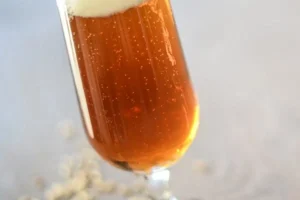
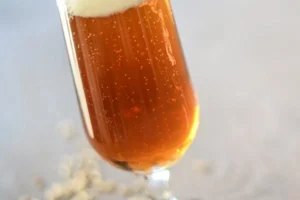
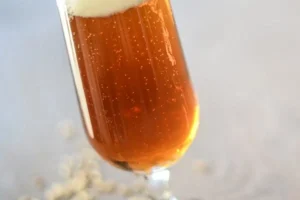
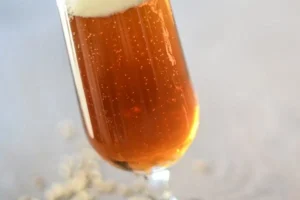
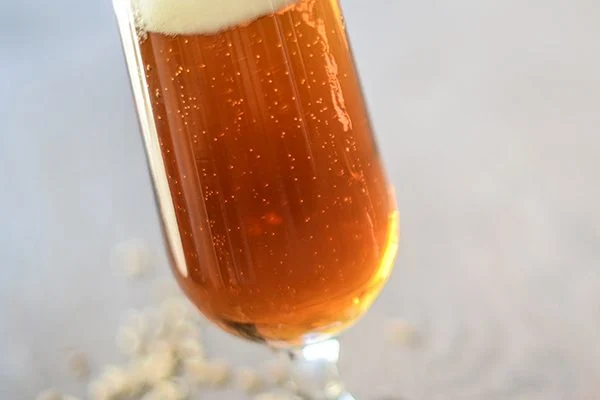
Color metrics are evaluated using the Standard Reference Method (SRM), with this recipe scoring a 3. This indicates a very pale, straw-like hue characteristic of highly clarified, lighter-colored styles such as light lagers, pilsners, or pale ales brewed with exceptionally light base malts.
Fermentation metrics further highlight the efficiency and attenuation of the recipe. The Original Gravity (OG) starts at 1.046, which translates to 11.5 degrees Plato. Following primary and secondary fermentation, the Final Gravity (FG) drops significantly to 1.007, or 1.7 degrees Plato. This high degree of attenuation ensures a dry, crisp finish, preventing the beer from tasting cloying or heavy, and allowing the interplay between the clean malt bill and the 43 IBU hop profile to shine through.
Background Context and the Evolution of Homebrewing Competitions
To understand the significance of recipes published by organizations like the American Homebrewers Association, one must examine the broader evolution of amateur brewing over the past several decades. Founded in 1978, the AHA has played a pivotal role in legalizing, standardizing, and elevating homebrewing across the United States. What began as a localized hobby constrained by limited ingredient availability and rudimentary equipment has matured into a technologically advanced craft characterized by scientific rigor.
Competitions sanctioned by the AHA, most notably the National Homebrew Competition (NHC), serve as the premier proving grounds for amateur brewers. Winning a gold medal at such events requires navigating rigorous multi-tier judging panels that evaluate entries based on the Beer Judge Certification Program (BJCP) style guidelines. Judges assess appearance, aroma, flavor, and overall mouthfeel, penalizing even minor off-flavors such as diacetyl, acetaldehyde, or oxidation.
Consequently, recipes that achieve gold medal status are rarely accidental. They represent meticulous control over water chemistry, mash temperatures, fermentation kinetics, and packaging techniques. When these formulas are shared with the broader homebrewing community—often through exclusive member-only platforms—they act as educational benchmarks, helping elevate the baseline quality of home-produced beer nationwide.
Chronology of Recipe Development and The Brewing Process
Developing a championship-grade beer follows a strict chronological timeline, from initial formulation to the final packaged product. While exact ingredients remain protected behind organizational membership structures to support the association’s community infrastructure, the methodological timeline required to execute such a recipe is universally understood among master brewers.

The process begins weeks or months before brew day with water profiling. Given the low SRM of 3, water chemistry must be meticulously adjusted using calcium sulfate and calcium chloride to accentuate either a crisp hop bite or a rounded malt profile, depending on the exact style parameters. Residual alkalinity must be kept low to prevent harsh astringency in pale beers.
On brew day, the mash schedule requires precise temperature control. A single-infusion mash at standard saccharification temperatures—typically around 150°F to 152°F—ensures the targeted fermentability needed to drop the gravity from an OG of 1.046 down to an FG of 1.007. Lautering and sparging must be conducted efficiently to ensure high lautering yields without extracting tannins from the grain husks.
During the boil, the hop additions are timed precisely to hit the 43 IBU target. Bittering hops are added early in the 60-minute boil, while late-addition or whirlpool hops may be utilized to contribute aromatic complexity without drastically increasing perceived bitterness.
Fermentation management represents the most critical phase of the timeline. Pitching a healthy, active yeast cell count at the correct pitching rate ensures a clean flavor profile. Temperature control during the primary fermentation phase prevents the generation of unwanted esters and higher alcohols. Cold crashing following complete attenuation clarifies the beer, dropping the turbidity and preserving the brilliant pale appearance that corresponds to the 3 SRM rating. Finally, packaging via kegging or bottle conditioning under strict oxygen-exclusion protocols protects the delicate hop aromatics and malt character until the beer is evaluated.
Institutional Perspectives and Membership Value
The curation and sharing of elite recipes are central to the mission of organizations dedicated to homebrewing education. By gating detailed, validated recipes behind membership frameworks, associations are able to fund ongoing educational initiatives, government advocacy for homebrewing legalization, and the maintenance of comprehensive resource libraries.
Industry analysts note that the value proposition of specialized homebrewing associations has shifted toward digital resource integration. Members gain access not merely to static ingredient lists, but to dynamic brewing calculators, troubleshooting forums, and peer-reviewed technical articles. The inclusion of gold-medal recipes serves as a primary driver for membership acquisition, offering aspiring brewers a direct path to replicating world-class results in their own garages and basements.
Representatives from amateur brewing coalitions emphasize that sharing these recipes fosters a collaborative culture rather than a competitive one. The transparency of sharing metrics such as 5.1% ABV, 43 IBUs, and specific attenuation rates empowers everyday hobbyists to reverse-engineer success and experiment with their own system efficiencies.
Broader Impact and Industry Implications
The dissemination of championship-level homebrewing data has profound implications for both the amateur sector and the commercial craft beer industry. Historically, many of the most successful commercial craft breweries in the United States—ranging from Sierra Nevada to The Alchemist—began as homebrewing operations. When homebrewers master complex attenuation curves, hop utilization, and fault-free fermentation, they lay the groundwork for future commercial innovations.
Furthermore, the rising sophistication of homebrew recipes drives demand in the commercial supply chain. Suppliers now manufacture specialized liquid yeasts, specific agricultural hop varieties, and advanced analytical equipment (such as digital refractometers and pH meters) previously restricted to commercial laboratories. As homebrewers increasingly demand professional-grade inputs to hit precise targets like 1.046 OG and 1.007 FG, the entire brewing ecosystem adapts to higher standards of quality and consistency.
Ultimately, the publication and analysis of gold-medal recipes reinforce the scientific rigor underpinning modern brewing. Whether viewed as an exclusive perk for association members or as a technical case study in attenuation and balance, these formulations illustrate the intersection of art and science that defines contemporary brewing culture.