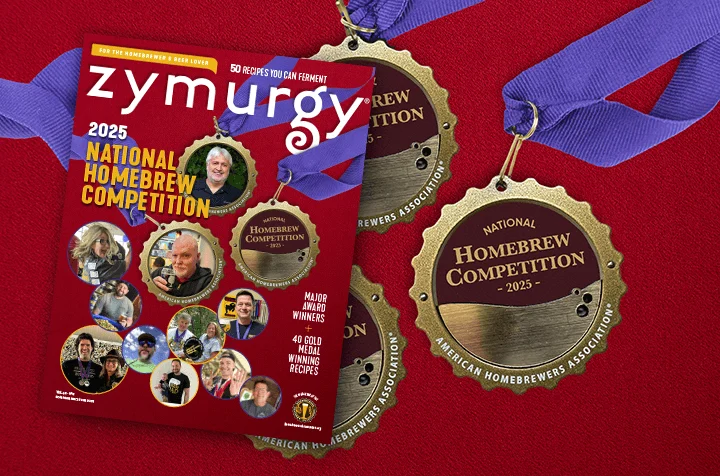

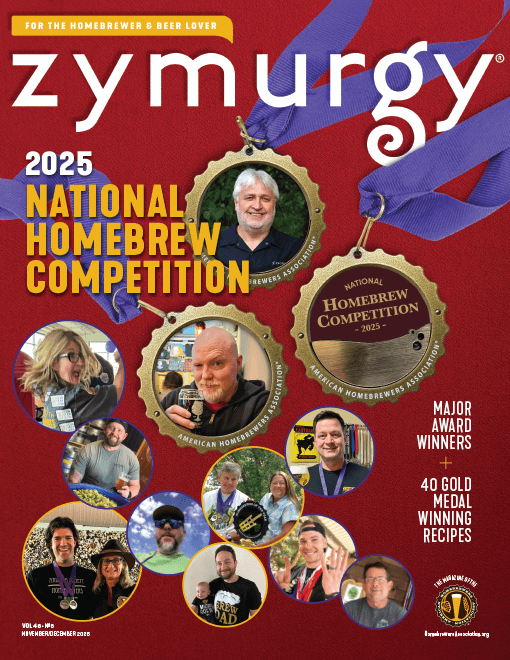
The American Homebrewers Association (AHA) has officially released the November/December 2025 edition of Zymurgy magazine, a milestone issue that serves as both a record of competitive excellence and a guide for navigating the modern challenges of the fermentation hobby. This final installment of the year focuses heavily on the results of the 2025 National Homebrew Competition (NHC), the world’s largest and most prestigious stage for amateur brewers, while simultaneously addressing the socio-economic and technical hurdles currently facing the craft. Through a combination of gold-medal recipes and deep-dive features on brewing philosophy, the issue highlights the resilience of a community that continues to innovate despite rising material costs and historical industry barriers.
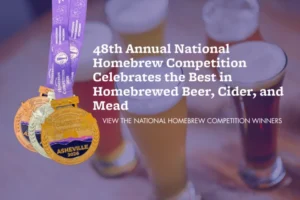
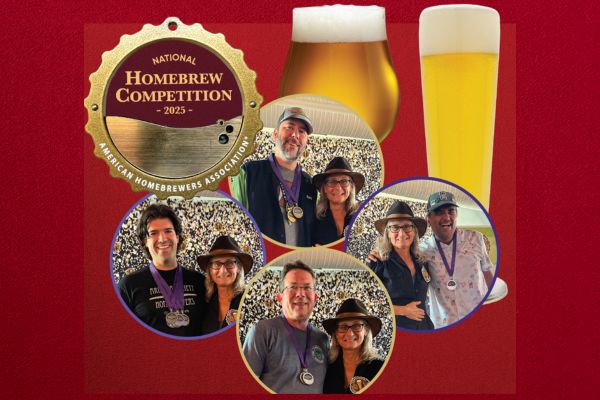
The National Homebrew Competition remains the cornerstone of the AHA’s annual calendar, attracting thousands of entries from across the globe. The 2025 awards ceremony, detailed in the cover story by Adriana Terron, saw the crowning of several major champions. These included the highly coveted Homebrewer of the Year, Cidermaker of the Year, and Meadmaker of the Year titles. Most notably, the Samuel Adams Ninkasi Award—named after the Sumerian goddess of beer—was presented to the brewer who garnered the most points across the final round of the competition. This award is traditionally seen as the ultimate benchmark of a brewer’s versatility, requiring high-level execution across a diverse array of styles, from delicate European lagers to robust experimental meads.
The Evolution of the National Homebrew Competition
To understand the weight of the 2025 results, one must look at the historical trajectory of the NHC. Founded in 1979, shortly after the federal legalization of homebrewing in the United States, the competition began as a small gathering of enthusiasts in Boulder, Colorado. Over the subsequent four decades, it has evolved into a rigorous multi-stage event. The 2025 cycle continued the tradition of utilizing a massive network of BJCP (Beer Judge Certification Program) sanctioned judges to evaluate entries based on aroma, appearance, flavor, mouthfeel, and overall impression.
The significance of the NHC extends beyond the amateur ranks; it has historically served as a primary talent pipeline for the professional craft brewing industry. Many of the most successful commercial brewers in the United States began their careers by winning medals at the NHC. The 2025 winners represent the latest vanguard of this movement, showcasing a level of technical precision that rivals commercial standards. The November/December issue provides readers with the specific recipes used by these gold medalists, offering a rare "open source" look at the techniques and ingredient profiles that currently define the pinnacle of the craft.
Overcoming the "Invisible Wall": Diversity in Brewing
A major focal point of the new issue is the examination of social dynamics within the brewing community. A featured article explores the experiences of women in the hobby, centered on insights from Robyn Schumacher. Schumacher highlights a phenomenon she describes as the "invisible wall of respect," a subtle but persistent barrier that women encounter when entering male-dominated brewing spaces.

While the number of women in homebrewing and professional brewing has increased significantly over the last decade, Schumacher’s analysis suggests that the challenge is no longer just about access, but about the assumption of competence. The article posits that while these barriers are not insurmountable, they require a conscious effort from the broader community to dismantle. This inclusion of social commentary marks a continued shift for Zymurgy, which has increasingly balanced technical brewing science with discussions on the culture and inclusivity of the craft.
The Economics of Fermentation: Frugal Brewing in a High-Cost Era
As global supply chains and inflation continue to impact the price of raw materials, Zymurgy has tapped economist Jeff Weikert to provide a framework for "frugal brewing." The cost of base malts, specialty grains, and high-alpha acid hops has seen a steady increase since 2021, driven by climate-related crop yields and increased logistics costs.
Weikert’s contribution applies economic principles to the brewhouse, suggesting ways for hobbyists to maintain the quality of their output while reducing waste and overhead. His analysis covers several key areas:
- Bulk Procurement: The mathematical advantages of group-buys through local homebrew clubs to offset the rising costs of shipping individual sacks of grain.
- Energy Efficiency: Optimizing boil times and insulation techniques to reduce natural gas or electricity consumption during the brewing process.
- Yeast Management: The economic impact of maintaining a yeast library and performing "over-building" of starters to avoid the recurring $10–$15 cost of new liquid yeast pitches.
By framing brewing as an exercise in resource management, the article addresses a growing concern among hobbyists that the "affordable" pastime of making beer at home is becoming an expensive luxury.
Pursuing the "Homebrew Unicorn": Technical Mastery of Rare Styles
For many brewers, the appeal of the hobby lies in creating what Mark Pasquinelli calls "homebrew unicorns." These are high-gravity, complex, or obscure styles that are rarely found on commercial shelves due to their high production costs or difficult fermentation requirements. Pasquinelli’s feature in the November/December issue focuses on the technical challenges of these "mythical beasts."
High-gravity brewing (beers with an alcohol by volume often exceeding 12%) requires a sophisticated understanding of yeast health and oxygenation. The article details the risks associated with these styles, such as "stuck" fermentations or the production of off-flavors like fusel alcohols and acetaldehyde. By sharing the secrets to mastering these difficult styles, Zymurgy continues its mission of elevating the technical proficiency of its readership. This focus on "unicorn" beers also reflects a broader trend in the hobby toward "extreme brewing," where the goal is to push the biological limits of Saccharomyces cerevisiae and other fermenting microbes.

Editorial Leadership and the Path Forward
The 2025 year-end issue is overseen by Editor-in-Chief Dave Carpenter, who has led the publication through a period of significant digital transition. Carpenter, a veteran beer writer and brewer since 2009, has emphasized a "gerund-based" lifestyle—focusing on the active doing of brewing, hiking, and traveling. Under his tenure, Zymurgy has integrated more multimedia content, including the digital previews and member-only resources mentioned in the current release.
The American Homebrewers Association uses the November/December issue as a call to action for its membership. As a non-profit organization, the AHA relies on member dues to fund its advocacy work, which includes lobbying for homebrewer-friendly legislation at the state and federal levels. The magazine serves as the primary perk of this membership, acting as a curated repository of validated recipes and peer-reviewed DIY content that cannot be found in the fragmented landscape of social media and forums.
Broader Impact and Industry Implications
The release of the 2025 NHC results and the accompanying articles in Zymurgy have implications that reach far beyond the basement brewhouse. The data provided by the competition offers a snapshot of current consumer trends. For instance, the prevalence of specific hop varieties or the resurgence of traditional styles like Czech Pale Lager in the winner’s circle often precedes commercial trends by twelve to eighteen months.
Furthermore, the emphasis on "brewing in the face of adversity"—whether that adversity is economic, social, or technical—reflects the current state of the wider craft beverage industry. As professional breweries face a tightening market and changing consumer habits, the homebrewing community remains the R&D lab for the entire sector. The enthusiasts featured in the November/December issue are not merely hobbyists; they are the architects of the next generation of fermented beverages.
In conclusion, the November/December 2025 issue of Zymurgy stands as a testament to the enduring spirit of the homebrewing community. By celebrating the champions of the National Homebrew Competition and providing a roadmap for overcoming modern challenges, the publication ensures that the "art of fermentation" remains accessible, innovative, and resilient. As the AHA moves into 2026, the insights found within this issue will likely serve as the foundation for the next wave of brewing excellence.