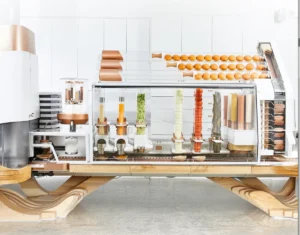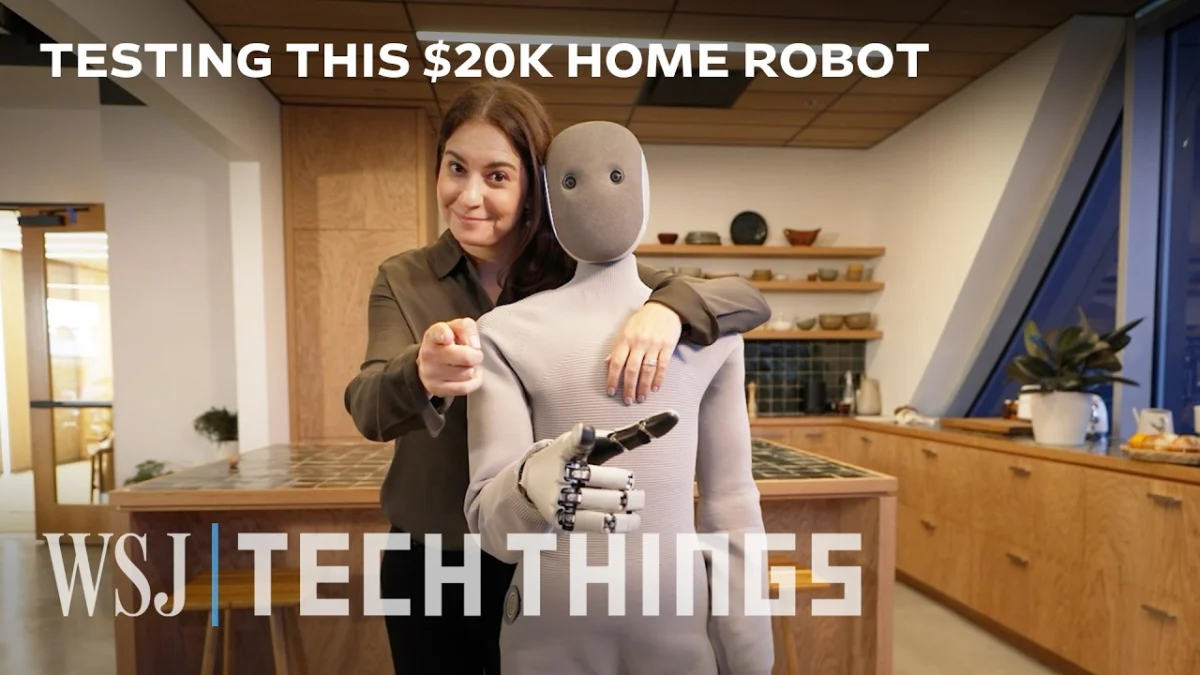

The consumer electronics landscape, as showcased at both IFA last fall and the recent CES in Las Vegas, has been abuzz with a singular, dominant trend: the ascendance of humanoid robots. Once confined to the realm of science fiction, these sophisticated machines are now poised to transition into powerful, multifunctional tools for both professional and domestic environments. This surge in interest, amplified by predictions from industry leaders like Jensen Huang, suggests that 2025 and beyond will witness a dramatic acceleration in the deployment of physical AI, fundamentally reshaping how we interact with technology in nearly every facet of our lives. However, when the focus narrows to the intricacies of the home kitchen, a critical question emerges: will anthropomorphic robots truly become the default form factor for culinary assistance in the coming years? Or will the future of kitchen automation lean towards more specialized designs, such as the industrial-grade robotic arms exemplified by Moley, or the seamlessly integrated, streamlined makeline systems embedded within countertops, akin to Chefee?
The Kitchen Conundrum: Humanoids vs. Countertop Intelligence
While the allure of a robot that can mimic human actions in the kitchen is undeniable, a pragmatic assessment of the current market and technological trajectory suggests a different immediate future for domestic culinary automation. For the average consumer, the most likely evolution in the near to medium term is not a fully-fledged humanoid but rather an advancement of existing countertop cooking appliances. These devices are anticipated to evolve into sophisticated systems that offer greater automation and incorporate multi-step cooking intelligence, building upon the familiarity and convenience of multifunction cookers already prevalent in many households.
This vision is actively being pursued by a burgeoning ecosystem of startups. These companies are dedicated to developing countertop cooking robots that represent a sophisticated fusion of established technologies like the Thermomix and the Anova Precision Oven, enhanced with the capability for automatic ingredient dispensing and seamless transitions between diverse cooking functions, ultimately enabling the preparation of entire meals with minimal human intervention.
The concept of automated kitchen assistants is not entirely novel. Early iterations of countertop cooking robots have been observed for over a decade, with the Sereniti cooking appliance being one of the initial forerunners. Since then, the field has seen the emergence and development of several notable players, including Else Labs/Oliver, GammaChef, Posha, and Nosh. Among these, Posha appears to be the most advanced in its efforts to bring a fully functional home cooking robot to the consumer market. Else Labs/Oliver, while initially focused on the consumer space, has largely shifted its attention to developing cooking appliances for office and commercial settings. Nosh, meanwhile, has been steadily gaining traction, notably through its successful Kickstarter campaign.
Posha and Nosh: Redefining the Home Cooking Experience
Raghav Gupta, CEO of Posha, articulates a clear evolutionary pathway for his company’s technology, drawing a direct parallel between the Thermomix and the capabilities of Posha. "What Posha is, is actually Thermomix plus plus," Gupta stated, encapsulating the significant leap in functionality. He likens the progression from a device like the Thermomix to Posha to the transition from a car equipped with advanced driver-assistance systems to a fully autonomous vehicle. "In Thermomix, you still have to be around your device. You still have to be behind the wheel," he explained. "In Posha, you don’t have to be behind the wheel anymore. It’s like the Waymo equivalent of driving. You can sit in the back seat, read a book while your self-driving car takes you from point A to point B." This analogy highlights Posha’s ambition to liberate users from constant oversight, offering a truly hands-off cooking experience.
Amit Gupta (no relation to Raghav Gupta), co-founder of Nosh, echoes this sentiment, framing the challenge of home cooking as a significant daily burden. "Eating right is impossible because cooking is a burden," Amit Gupta remarked to The Spoon last year. Nosh, which has successfully raised over $800,000 through a Kickstarter campaign for its first-generation robot, is also betting that the immediate future of kitchen robotics will not involve ambulatory robots but rather self-contained countertop systems designed to automate the repetitive and time-consuming aspects of meal preparation. Amit describes Nosh as a "kitchen in a box," a comprehensive system engineered to automate not only the precise control of heat and timing but also the critical judgment calls inherent in the cooking process.

This strategic focus on contained, appliance-like automation aligns closely with what is anticipated to be the preferred choice for a significant portion of consumers over the next five to ten years. The appeal lies in the integration of advanced technology into familiar kitchen workflows, minimizing disruption and maximizing convenience.
The Long Road to Humanoid Kitchen Assistants
The long-term prospect of humanoid robots in the kitchen remains a captivating vision, but its realization hinges on several key developments. Foremost among these are the speed at which these robots become accessible in terms of cost and the extent to which they can reliably perform a wide array of everyday tasks. This progress is intrinsically linked to advancements in AI and robotics, particularly in the development of robust datasets that enable robots to navigate and interact with the complexities of the real world.
The groundwork for this future is actively being laid. Initiatives such as Instawork, which equips temporary workers with body cameras to document everyday tasks, are contributing to the vast accumulation of real-world data. This approach builds upon earlier academic research, like the EPIC Kitchens project launched in 2018, which focused on capturing physical interactions on video to train computer vision systems for robotics. Today, these efforts are scaling exponentially, driven by substantial investment flowing into the AI-meets-robotics sector.
While the rental cost of robots has begun to approach more manageable figures, currently around $500 per day, early-stage systems often cater to early adopters. A significant hurdle for wider adoption remains the limited ability of these robots to perform useful tasks autonomously, such as cooking. Many current systems, including models like the NEO 1, still require teleoperation, meaning a human operator remotely monitors and controls the robot’s actions within a user’s home in real-time. This reliance on remote human intervention underscores the developmental stage of current humanoid robotics.
Broader Implications and the Future of Independent Living
The eventual success of humanoid robots in performing household tasks, including cooking, holds profound implications for individuals facing mobility, dexterity, or other challenges that impact their ability to live independently. As global populations age and the costs associated with managed care continue to escalate, the potential for humanoid robots to provide essential support is immense. This demographic shift, coupled with the increasing demand for in-home assistance, positions humanoid robots as a potential solution for maintaining quality of life and autonomy for seniors and individuals with disabilities.
Even now, older generations are embracing assistive technologies. For example, individuals in their 80s, like the author’s mother, already find significant value in established voice assistants such as Alexa for accessing information, setting reminders, and enjoying music. The transition to a robotic assistant, particularly one capable of assisting with cooking – a task that can become increasingly challenging with age – may not represent an insurmountable leap.
In essence, while the future of kitchen robotics might eventually walk on two legs and possess human-like dexterity, the immediate horizon points towards more specialized, integrated countertop solutions. For the present, the most accessible and practical advancements in home cooking automation are likely to be found in intelligently designed appliances that reside quietly on our kitchen counters, paving the way for a future where technology seamlessly assists us in preparing our daily meals. The journey from science fiction to widespread domestic adoption is ongoing, with both humanoid and specialized robotic forms playing distinct, yet complementary, roles in shaping the future of our homes.