
The culinary and scientific communities are abuzz with the release of a comprehensive summary detailing two decades of pioneering molecular gastronomy seminars held in Paris, spearheaded by the discipline’s co-founder, Hervé This. This monumental document, initially distributed via email by This, offers a concise yet profound overview of the monthly experimentation and findings that have systematically interrogated and often redefined the scientific underpinnings of cooking. Made publicly available in both French and English editions, the release marks a significant milestone, providing an unparalleled "treasure trove" for professional chefs, aspiring culinary students, food scientists, and enthusiastic home cooks eager to delve into the empirical truths behind kitchen processes. The initiative underscores a sustained commitment to demystifying culinary phenomena through rigorous scientific inquiry, fostering an environment where curiosity meets empirical validation.
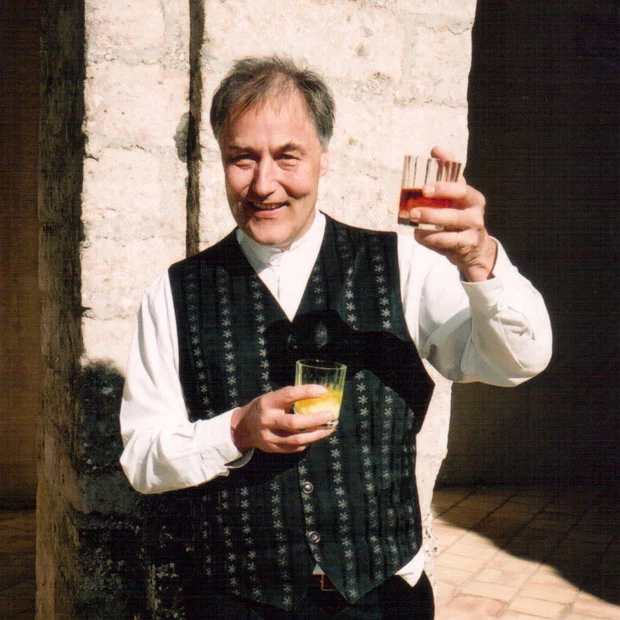
The discipline of molecular gastronomy, a term coined by Hervé This, a physical chemist at INRA (Institut National de la Recherche Agronomique) and AgroParisTech, alongside Hungarian physicist Nicholas Kurti, emerged from a shared vision to apply scientific methods to the understanding of cooking. Kurti, renowned for his low-temperature physics research at the University of Oxford, had a long-standing passion for applying scientific principles to everyday life, particularly cooking. His public lecture in 1969, "The Physicist in the Kitchen," at the Royal Society of London, is often cited as a precursor to the formal establishment of the field. However, it was the collaborative efforts of This and Kurti in the late 1980s that solidified the concept, leading to the first International Workshop on Molecular Gastronomy held in Erice, Sicily, in 1992. This seminal workshop brought together an eclectic mix of scientists, chefs, and food writers to explore the chemical and physical processes that occur during cooking. The image accompanying the summary document, showing Hervé This with eggs in colored solutions at the 2004 Erice workshop, serves as a poignant reminder of the hands-on, experimental spirit that has defined the movement from its inception.
The Paris seminars, which form the core subject of the newly released summary, commenced shortly after the foundational Erice workshops, establishing a continuous forum for experimental gastronomy. Hosted primarily at AgroParisTech, these monthly gatherings have served as a unique crucible where culinary folklore and traditional recipes are subjected to the scrutiny of scientific methodology. Over twenty years, participants—a diverse group often comprising chefs, scientists, students, and curious amateurs—have collectively designed and executed experiments to test long-held culinary beliefs, optimize cooking techniques, and explore novel food preparations. The methodology is straightforward yet profound: formulate a hypothesis about a culinary phenomenon, design an experiment to test it, collect data, and draw conclusions. This systematic approach stands in stark contrast to the often anecdotal or tradition-bound nature of culinary knowledge transmission.
The recently circulated PDF documents, available in French and English (though This himself advises cross-referencing with the French version for absolute clarity due to potential translation nuances), offer succinct summaries of the myriad findings generated by these seminars. While these brief statements provide an immediate glimpse into the seminar’s extensive work, they merely scratch the surface. The true depth of research, including complete experimental conditions and detailed results, remains accessible through extensive French documentation available via AgroParisTech’s dedicated online portal. This layered accessibility ensures that both casual readers and serious researchers can engage with the material at their preferred level of detail. For instance, a summary might state that "adding salt to water does not significantly raise its boiling point for practical cooking purposes," but the full documentation would detail the precise measurements, salt concentrations, and thermodynamic principles involved.
One of the most significant contributions of molecular gastronomy, as exemplified by the Paris seminars, has been its systematic debunking of numerous culinary myths and the scientific explanation of others. For decades, chefs and home cooks alike have operated under certain assumptions that, upon scientific examination, prove to be either partially true, entirely false, or misleading. Consider the long-held belief that searing meat "seals in the juices." Molecular gastronomy experiments, as documented in the seminars, have repeatedly demonstrated that searing primarily creates the Maillard reaction, developing complex flavors and a desirable crust, but it does not prevent moisture loss. In fact, excessive searing can sometimes lead to greater moisture loss. The true key to juicy meat lies in proper cooking temperatures and resting periods. Another example often explored relates to vegetable cooking: the seminars might investigate whether adding bicarbonate of soda to green vegetables truly enhances their color without detrimental effects on texture or nutrient content, revealing the chemical interactions between the alkali and chlorophyll.
The implications of these findings extend far beyond academic curiosity. For the professional chef, this body of knowledge provides a foundation for innovation and consistency. Understanding the precise chemical reactions involved in emulsification, gelatinization, caramelization, or protein denaturation allows a chef to manipulate ingredients with greater precision, troubleshoot problems, and create new dishes with predictable results. It moves cooking from an art based purely on intuition to an art informed by science, enabling a level of control previously unattainable. Culinary schools globally have begun to integrate principles of molecular gastronomy into their curricula, equipping future generations of chefs with a scientific literacy that complements traditional techniques. This shift ensures that culinary education is not just about mastering recipes but about understanding the "why" behind every "how."
Furthermore, the work of Hervé This and the Paris seminars has profoundly influenced the broader food industry. Food scientists and product developers draw upon these principles to create new food products, improve existing ones, and address challenges related to food preservation, texture, and flavor. The understanding of hydrocolloids, spherification, and gelling agents—techniques often associated with "molecular cuisine" (the practical application of molecular gastronomy principles in high-end restaurants)—has permeated various segments of the industry, from confectioneries to convenience foods. This cross-pollination between scientific research and industrial application highlights the practical utility of fundamental culinary science.
The "treasure trove" described in the initial announcement is not merely a collection of facts; it is a blueprint for continuous learning and experimentation. For aspiring chemists, the seminars’ documentation offers practical, real-world examples of chemical principles in action, making abstract concepts tangible and relatable. The kitchen becomes an accessible laboratory where concepts like pH, diffusion, oxidation, and protein folding can be observed and manipulated. This practical application can serve as inspiration for science projects in schools, encouraging younger generations to engage with chemistry and physics through the familiar medium of food. For home cooks, it provides the tools to become more confident and creative in their kitchens, moving beyond rote adherence to recipes to a deeper understanding that allows for improvisation and mastery.
The release of these summarized findings also serves as a testament to the enduring vision of Hervé This, who has championed the systematic study of cooking for decades. His work, including influential books like "Kitchen Mysteries: Explaining the Science of Cooking" and "Molecular Gastronomy: Exploring the Science of Flavor," has consistently aimed to bridge the gap between the scientific laboratory and the everyday kitchen. His insistence on questioning and explaining recipes and processes has ignited a similar curiosity in countless individuals, inspiring many to adopt a more analytical approach to cooking. The seminars, under his guidance, have cultivated a culture of empirical validation, where no culinary claim is too trivial to be tested, and every observation warrants thorough documentation.
While molecular gastronomy has garnered widespread acclaim, it has not been without its initial challenges and occasional misinterpretations. Early on, some critics mistakenly conflated molecular gastronomy (the scientific discipline) with "molecular cuisine" (a style of cooking employing its principles, often associated with avant-garde chefs like Ferran Adrià of elBulli or Heston Blumenthal of The Fat Duck). This led to perceptions of the field as overly academic, elitist, or even unnatural due to the use of novel ingredients and techniques. Hervé This himself has consistently sought to clarify this distinction, emphasizing that molecular gastronomy is a fundamental science, applicable to all forms of cooking, from traditional peasant dishes to high-tech culinary creations. The Paris seminars have always maintained this broader, inclusive scientific perspective, focusing on universal principles rather than specific stylistic applications.
Looking ahead, the enduring legacy of the Paris molecular gastronomy seminars and the continued work of Hervé This will likely shape future developments in food science and culinary practice. As global challenges such as food security, sustainability, and personalized nutrition become increasingly pressing, the foundational knowledge provided by molecular gastronomy offers crucial insights. Understanding the precise properties of ingredients and the transformations they undergo during cooking can contribute to optimizing nutrient retention, reducing food waste, and developing more sustainable cooking methods. The scientific rigor championed by This encourages innovation in areas such as plant-based proteins, alternative ingredients, and advanced food processing techniques.
The call for individuals to share "culinary claims or kitchen myths that should be checked" embedded within the announcement further underscores the collaborative and open-ended nature of this scientific endeavor. It is a perpetual invitation to engage with the world of food not just as consumers or practitioners, but as curious investigators. This ongoing dialogue between science and the kitchen ensures that the field of molecular gastronomy remains dynamic, relevant, and continually evolving, promising a future where our understanding of food is as rich and complex as the flavors it produces. The release of these summaries is more than just a historical account; it is a renewed impetus for inquiry, a celebration of scientific curiosity, and a powerful resource for anyone passionate about the intricate alchemy of cooking.