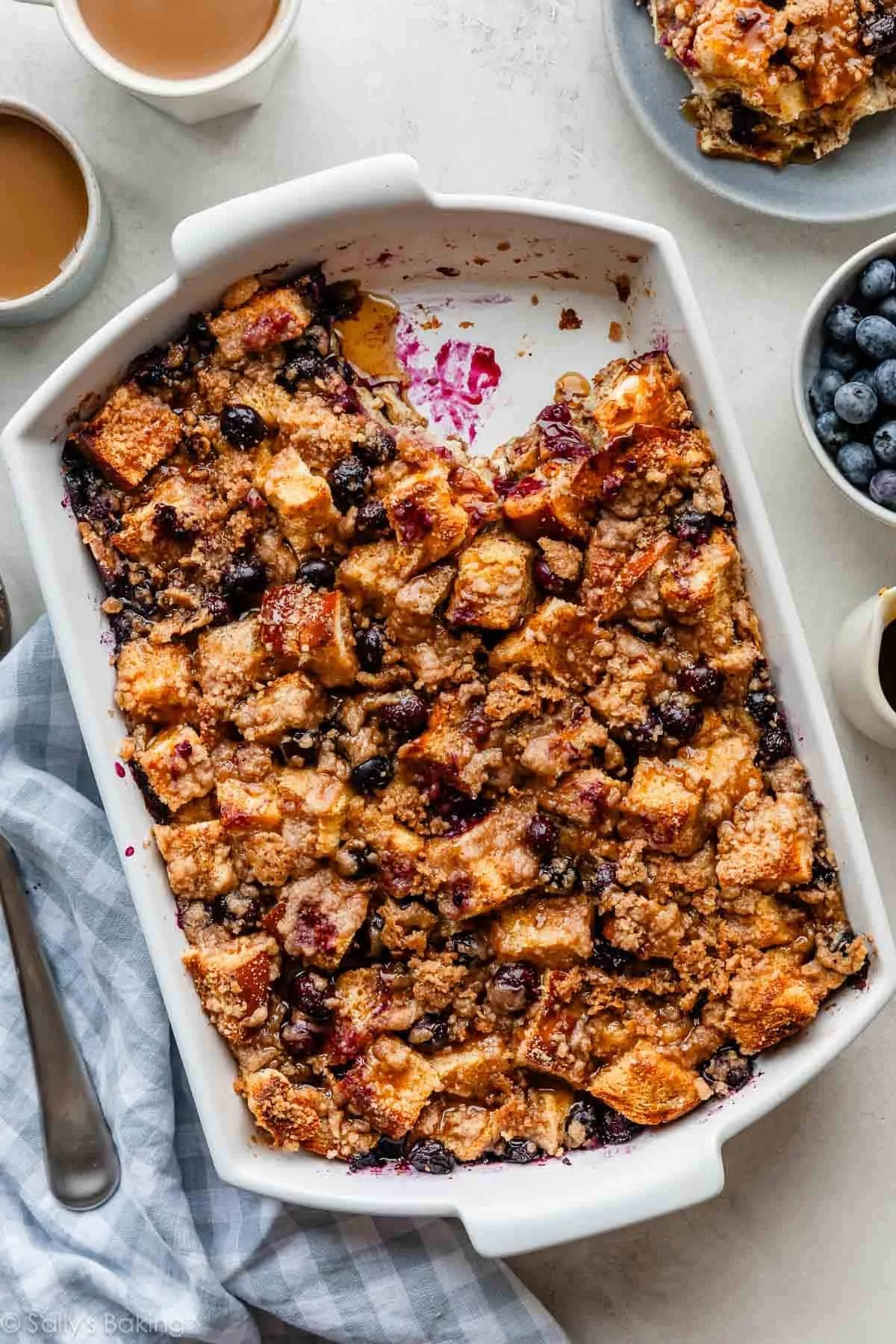

The Blueberry French Toast Casserole stands as a testament to culinary innovation, offering a harmonious blend of textures and flavors that has captivated home cooks and brunch enthusiasts alike. Each serving delivers a complex sensory experience, from the yielding, custard-infused bread and the vibrant bursts of juicy blueberries to the satisfying crunch of a crisp brown sugar streusel topping. Its remarkable appeal is further amplified by its design as a make-ahead dish, benefiting from an overnight refrigeration period that simplifies morning preparations, allowing for a seamless transition from refrigerator to oven. This characteristic positions it as an ideal choice for holiday gatherings, leisurely weekend brunches, and any occasion demanding an impressive yet convenient breakfast solution.
A Legacy of Flavor: Evolution and Enduring Popularity
Originally introduced to the public in 2015, this specific iteration of the blueberry French toast casserole quickly ascended to prominence within the online culinary community. Its initial reception spurred subsequent updates, incorporating new photographic representations and enhanced success tips, further solidifying its status as a consistently favored make-ahead breakfast recipe. The recipe’s widespread acclaim led to its inclusion in a print publication, "Sally’s Baking 101," underscoring its significant impact on contemporary home baking. This trajectory highlights a broader trend in food media where online popularity translates into mainstream recognition and enduring culinary relevance.
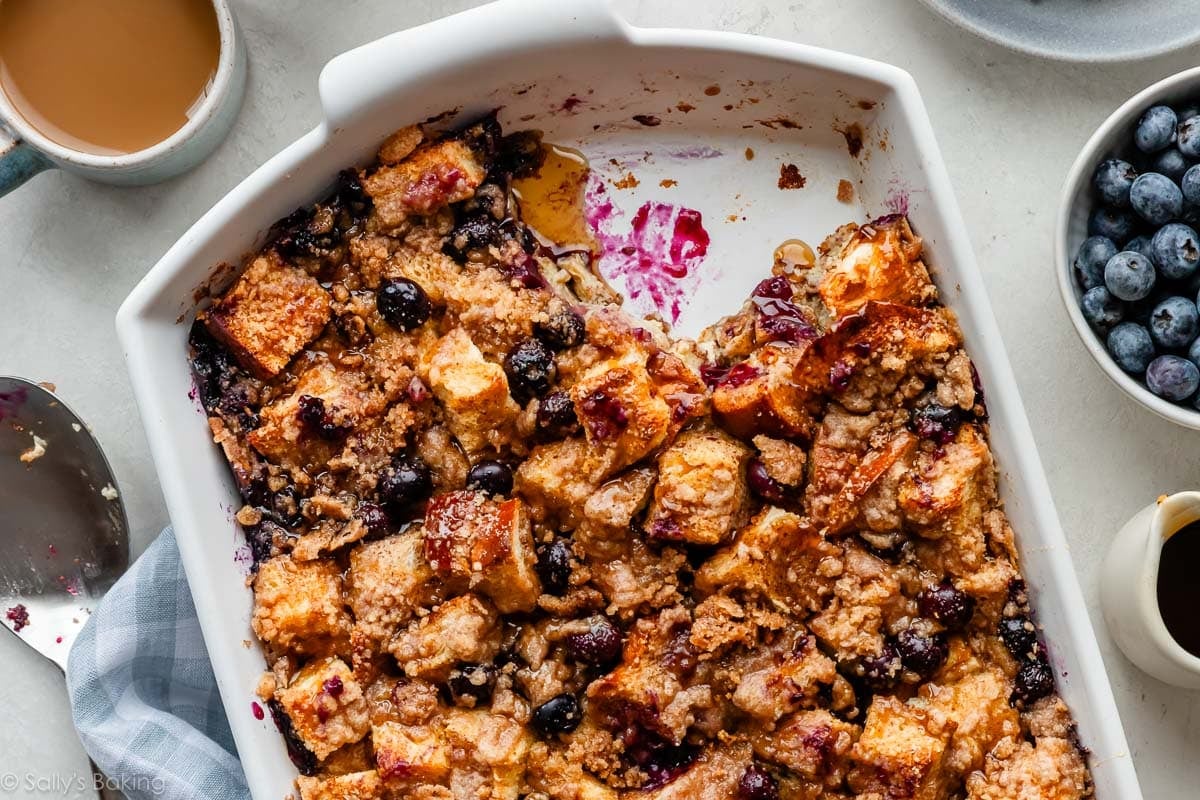
The inherent appeal of this dish lies not only in its exceptional flavor profile but also in its practical advantages. In an era marked by increasingly demanding schedules, recipes that allow for substantial preparation in advance are highly valued. The ability to complete the majority of the slicing, whisking, and combining processes the day prior, reserving only the streusel application and baking for the morning, offers a significant advantage over the labor-intensive process of individually preparing French toast slices on a griddle. This strategic approach to meal preparation aligns with modern consumer preferences for efficiency without compromising on quality or homemade authenticity. Its consistent popularity across various celebratory occasions, including Christmas breakfast, Easter brunch, and Mother’s Day, confirms its versatility and broad appeal as a festive yet manageable dish.
The Art and Science Behind the Casserole’s Success
The culinary success of the Blueberry French Toast Casserole is rooted in a meticulously balanced interplay of its core components, each contributing uniquely to the overall experience.
Bread as Foundation: The Importance of Structure and Absorption
The selection of bread is paramount to the casserole’s structural integrity and its ability to absorb the rich custard without disintegrating. Robust, sturdy varieties are recommended, such as brioche, challah, sourdough, or French bread. These types possess a dense crumb and a resilient crust that can withstand prolonged soaking. Conversely, flimsy sliced sandwich bread is explicitly advised against, as its delicate structure tends to collapse under the weight of the custard, leading to an undesirable texture.
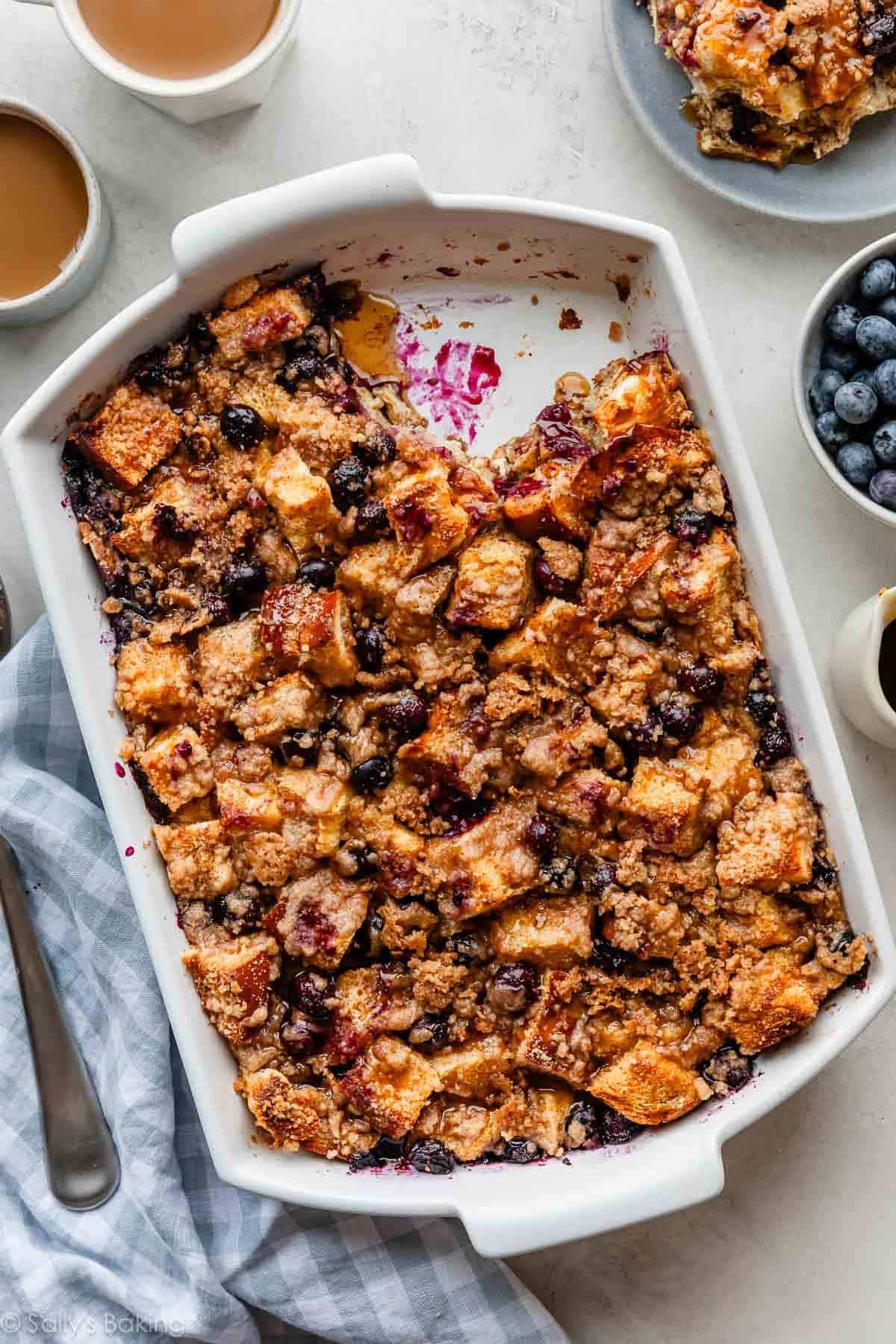
A critical success tip emphasizes the use of slightly stale or crusty bread. Cubing the bread and allowing it to air-dry for approximately a day before use is crucial. This pre-drying process facilitates optimal absorption of the egg mixture. Fresh bread, with its higher moisture content, struggles to adequately soak up the custard, often resulting in a casserole with a dry top layer and a soggy, unappealing bottom. This phenomenon is attributable to the cellular structure of stale bread, which, having lost some moisture, becomes more porous and receptive to liquid absorption. For instances where day-old bread is unavailable, a practical shortcut involves briefly toasting fresh bread cubes in a 300°F (149°C) oven for about 10 minutes. This controlled heating process effectively reduces moisture, preparing the bread to fully embrace the custard.
The Custard: A Symphony of Ingredients
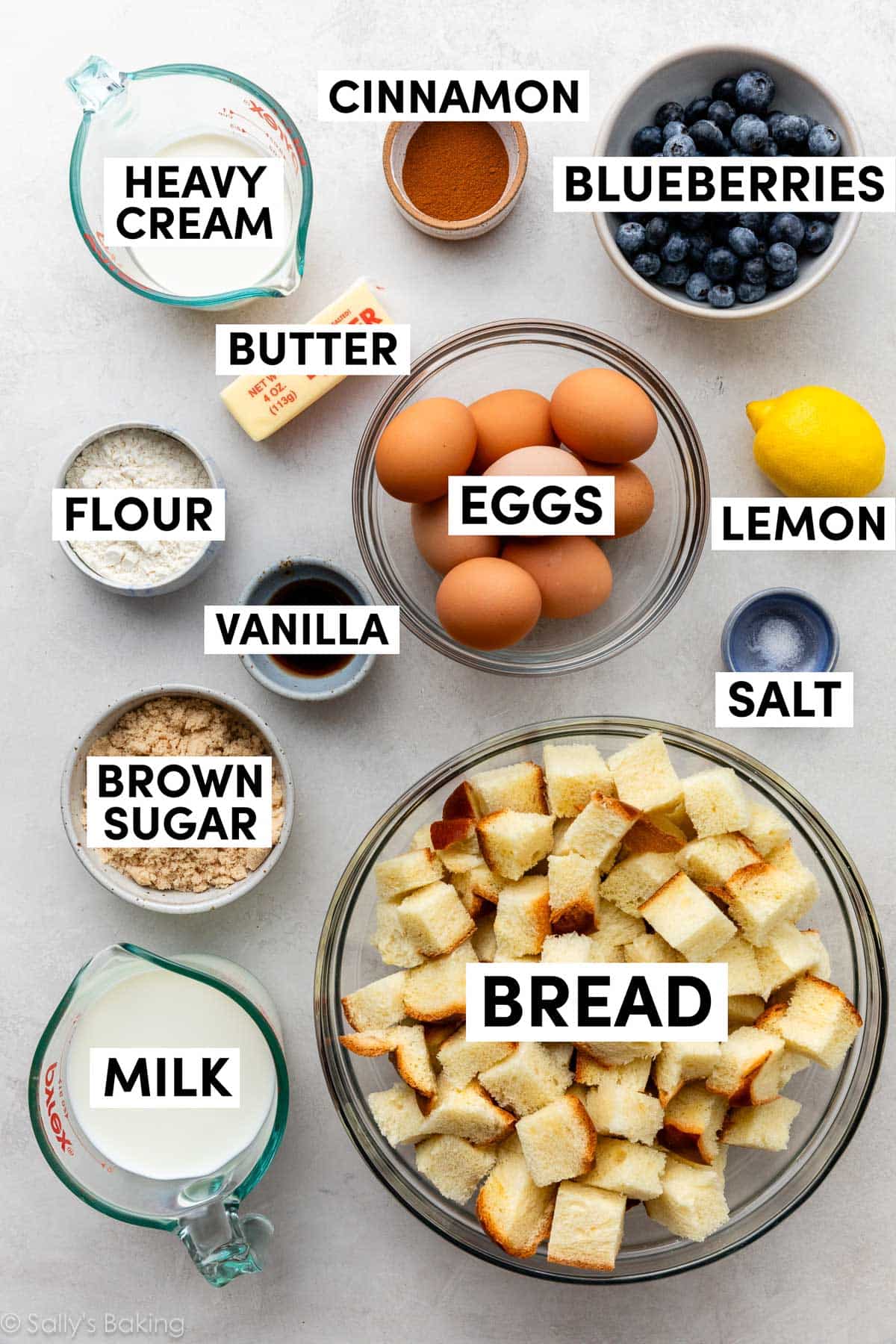
Following the preparation of the bread, the creation of the custard forms the liquid heart of the casserole. This rich mixture typically comprises eggs, milk, heavy cream, sugar, vanilla extract, lemon zest, ground cinnamon, and a pinch of salt. Each ingredient plays a vital role:
- Eggs: Provide structure and emulsification, binding the mixture and creating the characteristic custardy texture.
- Milk and Heavy Cream: Contribute to the liquid volume and richness, with heavy cream adding a luxurious mouthfeel and enhanced flavor.
- Sugar: Sweetens the custard, balancing the richness and complementing the fruit.
- Vanilla Extract: Infuses a warm, aromatic note that enhances overall flavor.
- Lemon Zest: Offers a bright, fresh counterpoint to the sweetness, cutting through richness and highlighting the fruit.
- Ground Cinnamon: Adds a classic warming spice that pairs exceptionally well with both bread and blueberries.
- Salt: A crucial flavor enhancer, balancing sweetness and bringing out the nuances of other ingredients.
The combined effect of these components results in a custard that thoroughly saturates the bread, transforming it into a soft, melt-in-your-mouth interior upon baking.
The Streusel: A Crucial Counterpoint
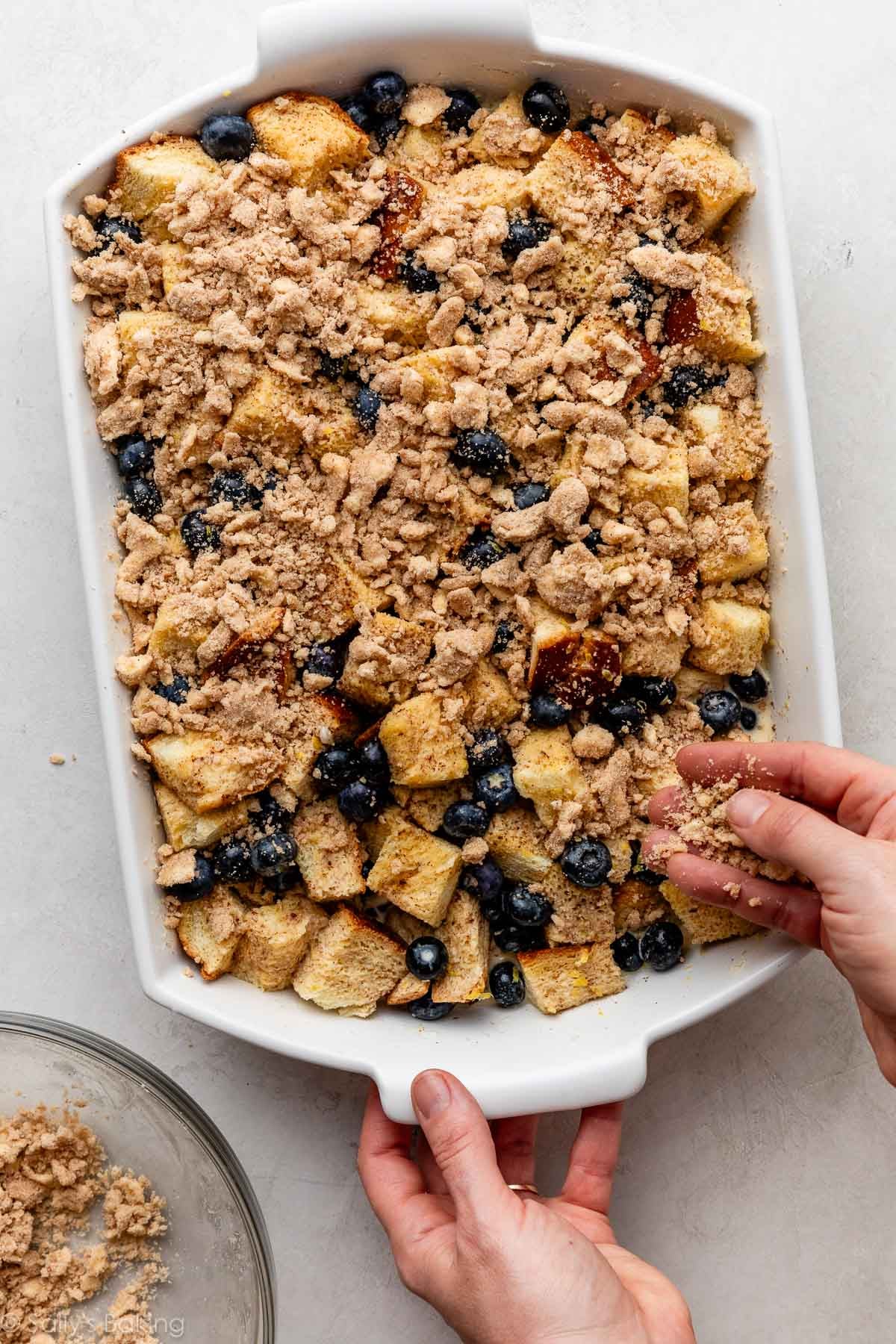
The brown sugar streusel topping is widely considered a defining element that elevates this casserole from merely good to truly exceptional. Composed of a simple blend of brown sugar, all-purpose flour, ground cinnamon, and cold cubed butter, this mixture undergoes a remarkable transformation during baking. It forms a lightly crisp, buttery crust that provides a delightful textural contrast to the soft, moist interior of the casserole. The streusel’s creation involves cutting the cold butter into the dry ingredients using a pastry blender or two forks until coarse crumbs form. This method, akin to the preparation of streusel for classic coffee cakes, ensures a flaky, crumbly texture. The streusel can also be prepared in advance and chilled overnight, then sprinkled over the casserole just before it enters the oven, further enhancing the make-ahead convenience.

The Blueberry Element: Versatility and Flavor
The inclusion of blueberries is central to the dish’s identity, providing bursts of juicy sweetness and a vibrant visual appeal. The fruit softens during baking, releasing its natural sugars and juices into the surrounding bread and custard. The recipe’s adaptability, however, extends beyond blueberries. Culinary enthusiasts have successfully experimented with other berries, such as strawberries, raspberries, or blackberries, either individually or as a medley, as seen in "berries & cream French toast casserole" variations. Seasonal adaptations are also common, with cranberries or thinly sliced apples and pears being popular choices for fall-themed versions. For those preferring a more classic French toast profile, the berries and lemon zest can be omitted, creating a plain casserole, with specific guidance for variations like a gingerbread version found in the aforementioned cookbook.
Consumer Reception and Market Trends
The public’s response to the Blueberry French Toast Casserole has been overwhelmingly positive, marked by enthusiastic testimonials that frequently praise its flavor, texture, and convenience. Readers have consistently highlighted its superiority among similar recipes, with comments such as, "The best French toast casserole I have ever made—and I’ve made several! My family loved it." Other feedback emphasizes its crowd-pleasing nature, noting, "It was the only dish everyone went back to for seconds." The longevity of its appeal is further underscored by comments from long-term users: "I have been making this recipe for 10 years now… It is always the most popular brunch item, the best!" These endorsements are indicative of a dish that not only meets but often exceeds culinary expectations.
This widespread acceptance reflects several broader culinary trends. The sustained demand for comfort food, particularly during challenging times or celebratory periods, finds a perfect embodiment in this casserole. Its customizable nature, allowing for variations in fruit and flavor profiles, caters to diverse tastes and dietary preferences. Furthermore, the immense influence of food bloggers and online recipe platforms in shaping contemporary home cooking cannot be overstated. Recipes that gain traction online, often through visual appeal and relatable narratives, tend to become viral sensations and enduring staples. The emphasis on homemade meals, even when facilitated by make-ahead strategies, also speaks to a societal value placed on wholesome, prepared-at-home food in an increasingly busy world.
Strategic Planning: The Make-Ahead Advantage
The "make-ahead" aspect is not merely a convenience but a strategic culinary choice that significantly enhances the final product. The recommendation for an overnight rest in the refrigerator is crucial. This extended soaking period allows the bread cubes to fully absorb the rich custard mixture, ensuring that every piece of bread is uniformly saturated. This thorough saturation prevents the aforementioned issue of dry tops and soggy bottoms, leading to a consistently moist and flavorful casserole.
While not strictly mandatory, the advance preparation is strongly recommended, with a minimum resting period of at least three hours, though overnight is considered optimal. This extended duration facilitates a more profound infusion of flavors and ensures the desired custardy texture throughout. The convenience of preparing the dish the day before and simply baking it in the morning offers a significant reduction in morning stress, particularly beneficial for hosts preparing for special occasions or large family breakfasts. This planning allows both the cook and the casserole to "rest," ensuring a more enjoyable and efficient culinary experience.
Culinary Pairings and Serving Innovations

The Blueberry French Toast Casserole, with its inherent sweetness and richness, lends itself to a variety of serving enhancements and strategic pairings. Traditional accompaniments such as warm maple syrup, an additional scattering of fresh berries, or a generous dusting of confectioners’ sugar are classic choices that further elevate the dish. For an intensified berry experience, a homemade blueberry sauce topping provides an extra layer of fruit flavor and moisture.
To create a balanced and comprehensive brunch spread, pairing the sweet and rich casserole with savory elements is highly recommended. The contrast offered by proteins such as crispy bacon, savory sausage links, or slices of baked ham provides a satisfying counterpoint that prevents the meal from becoming overly sweet. Beyond simple proteins, more elaborate savory dishes like quiches or frittatas can complement the casserole, creating a well-rounded and sophisticated brunch menu suitable for any celebratory gathering. The versatility of this dish also suggests its potential beyond breakfast, possibly as a unique dessert offering when served with a scoop of vanilla ice cream or whipped cream.
Future Outlook and Adaptability
The sustained popularity of the Blueberry French Toast Casserole since its 2015 debut underscores its robust recipe design and its alignment with evolving consumer preferences for convenient, flavorful, and adaptable home-cooked meals. Its longevity is a testament to its foundational appeal: a comforting, celebratory dish that manages to be both indulgent and practical.
Looking forward, the adaptability of such recipes will likely continue to drive their relevance. While specific recipe modifications fall outside the scope of journalistic reporting, the underlying principles allow for potential adjustments to suit various dietary needs or preferences, such as exploring dairy alternatives or adjusting sugar levels, thus broadening its appeal to an even wider audience. As culinary trends continue to emphasize both indulgence and mindful eating, dishes that offer a balance, or the flexibility to achieve it, are poised for continued success. The Blueberry French Toast Casserole, in its enduring form, remains a prime example of how traditional comfort foods can be reimagined to fit the demands and desires of modern kitchens, inspiring new creations within the vibrant landscape of brunch cuisine.