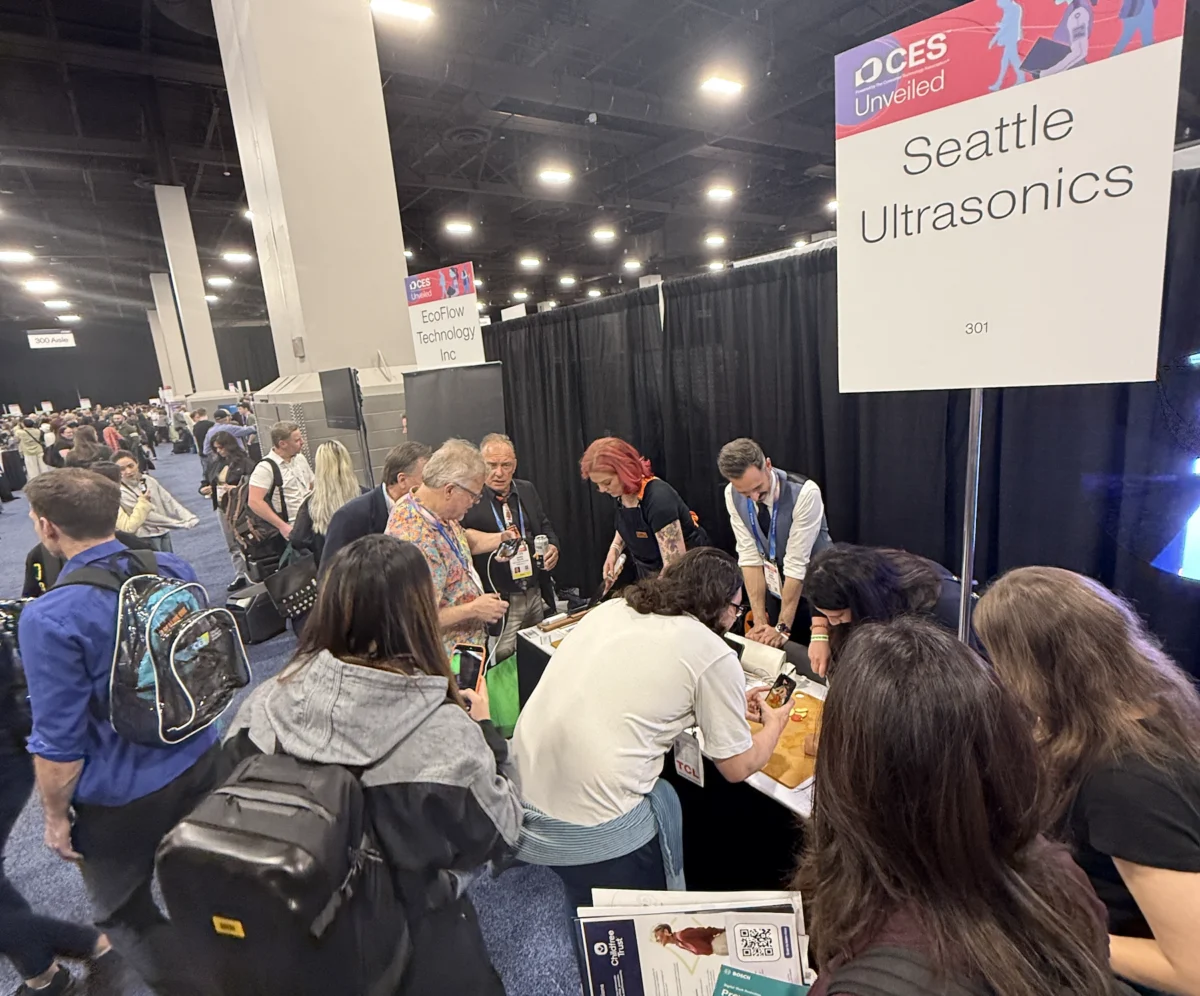

Las Vegas, NV – The Consumer Electronics Show (CES) is a global stage for innovation, a vibrant ecosystem where groundbreaking technologies debut and capture the world’s attention. This year, amidst the dazzling array of smart devices and futuristic gadgets, a seemingly humble kitchen tool, an ultrasonic chef’s knife, emerged as a significant talking point. The C-200, a revolutionary culinary instrument employing high-frequency vibrations, garnered considerable press coverage following its unveiling at CES Unveiled, the exclusive media event that kicks off the sprawling Las Vegas convention. Publications like The Verge and Mashable highlighted the C-200, recognizing its potential to redefine food preparation. However, the narrative surrounding its successful debut was unexpectedly shaped by the absence of its creator, Scott Heimendinger, who, after six years of dedicated development, was unable to attend due to unforeseen health challenges.
A Six-Year Journey Culminating in Unexpected Circumstances
The path to bringing the C-200 to market was a long and arduous one for Heimendinger. The concept, born from a desire to reimagine a tool with a history stretching back over two million years, involved intricate engineering and a significant investment of time and resources. Heimendinger’s vision was to leverage ultrasonic technology – specifically, vibrations oscillating at an astonishing 40,000 times per second – to dramatically reduce the resistance encountered when slicing through food. This innovation promised a cutting experience that could potentially decrease the physical effort required by up to 50 percent, transforming everyday culinary tasks.
The product’s official online unveiling in the fall had already generated interest, but the presence at CES Unveiled was a critical component of Heimendinger’s strategic launch plan. This event, known for its high concentration of media professionals and its role as a preview for the main CES exhibition, offered an invaluable opportunity for hands-on demonstrations and direct engagement with journalists. Heimendinger had meticulously prepared for this moment, envisioning it as a pivotal point in establishing market presence and securing crucial media attention.
However, life presented Heimendinger with an unexpected and formidable obstacle. He was diagnosed with cervical radiculopathy, a painful condition where nerve roots in the neck become compressed by herniated discs or bone spurs. The pain intensified to a debilitating level, forcing Heimendinger to confront a difficult decision regarding his health. When offered the opportunity to advance his scheduled surgery by two months in December, he accepted, a choice that meant he would be recovering during the crucial CES period.
The Power of Friendship and a Leap of Faith
The decision to prioritize his health, though necessary, was not made lightly. Heimendinger, known for his tenacious "power-through" mentality, a trait often essential for entrepreneurs launching complex hardware products, found it challenging to step back. He confessed during a recent Zoom interview, "I’ve kind of been in power-through mode forever, right? Like my whole life, it’s just like, ‘Oh, what do you do? You power through.’" This ingrained drive to overcome obstacles made the prospect of missing such a significant launch event particularly disheartening.
He recounted a pivotal conversation with his longtime friend and early investor, Rand Fishkin, from last fall. While Heimendinger was confined to bed, battling severe pain and medication, he engaged in a video call with Fishkin. The conversation took a stark turn when Fishkin, concerned about Heimendinger’s well-being, issued a blunt warning. "He basically threatened to speak at my early funeral if I didn’t take better care of myself. Like, actually focus on my health," Heimendinger shared. This blunt, yet caring, intervention served as a catalyst, prompting Heimendinger to re-evaluate his approach to his health and the demands of launching his company.
With his surgery scheduled and his absence from CES confirmed, Heimendinger faced the daunting task of coordinating the Unveiled booth with a minimal team – a single marketing lead and a part-time PR representative. He was acutely aware of the logistical challenges and the potential for his small team to be overwhelmed by the approximately 2,000 journalists who typically cycle through the three-hour Unveiled event. The thought of missing this critical opportunity to showcase his six years of labor weighed heavily on him.
It was during this period of reflection and disappointment that Fishkin made an extraordinary offer: he and his wife, Geraldine DeRuiter, would attend CES Unveiled in Heimendinger’s stead. Initially, Heimendinger’s instinct was to politely decline, a familiar pattern of self-reliance. However, influenced by his recent commitment to accepting help, he embraced this unexpected generosity. "I said, I’m going to try something new and try accepting a little more help when it’s offered," Heimendinger explained. "And I said, ‘Actually, if you’re serious, that would be incredible.’"

A Strategic Alliance for a Crucial Debut
The choice of Fishkin and DeRuiter to represent the C-200 was not arbitrary. Fishkin, as Heimendinger’s first investor and the sole board member of his company, possessed an intimate understanding of the product, its development history, and Heimendinger’s personal journey. Furthermore, Fishkin is a renowned marketer, celebrated for his ability to create viral content and articulate complex technological and business trends. His wife, Geraldine DeRuiter, is a professional author with a formidable background in communications, making her equally adept at conveying the product’s value proposition.
"So they’re well-versed in how to talk about the knife and can do so authentically," Heimendinger stated, underscoring the strategic advantage of their involvement. This well-matched duo was perfectly positioned to articulate the C-200’s innovative features and compelling backstory to the media, ensuring that Heimendinger’s vision was effectively communicated even in his absence.
The C-200: Innovation in the Kitchen
For those interested in the C-200 itself, the technology is a marvel of engineering. The ultrasonic vibrations are not merely a gimmick; they are integral to the knife’s performance. By oscillating at 40,000 times per second, the blade creates a micro-layer of air between itself and the food, significantly reducing friction. This principle allows for smoother, cleaner cuts through a variety of ingredients, from delicate herbs to dense meats, with substantially less downward pressure. When powered off, the C-200 functions as a high-quality chef’s knife, crafted from premium Japanese AUS-10 san mai stainless steel, ensuring durability and the ability to be re-sharpened like a conventional blade.
The product is currently available for pre-sale at $499, with initial deliveries anticipated in January 2026. This pricing positions the C-200 as a premium kitchen tool, targeting consumers who value cutting-edge technology and enhanced culinary performance.
Broader Implications and the Future of Kitchenware
The successful debut of the C-200 at CES Unveiled, even with Heimendinger’s physical absence, carries significant implications for the future of kitchenware and consumer technology. It demonstrates that a compelling product, backed by a strong narrative and executed by a capable support team, can command attention and generate substantial buzz. The story also highlights a growing trend in consumer products: the integration of advanced technological principles into traditionally low-tech categories.
The willingness of Heimendinger to delegate and trust his network, particularly in a moment of personal vulnerability, underscores a shift in entrepreneurial paradigms. It suggests that success is not solely reliant on the founder’s constant physical presence but can also be a testament to building a robust support system and a product with inherent merit. This approach can be particularly valuable in the demanding and often isolating world of hardware startups.
Furthermore, the positive media reception and the subsequent interest generated by the C-200 at CES Unveiled suggest a market appetite for kitchen innovations that offer tangible benefits in terms of performance and ease of use. As consumers increasingly seek to enhance their home cooking experiences, products that combine sophisticated technology with practical application are likely to find a receptive audience.
A Lesson in Resilience and Collaboration
While the six-year journey to bring the C-200 to market did not unfold exactly as Scott Heimendinger had meticulously planned, his absence from CES ultimately became a powerful testament to his resilience, his vision, and the strength of his collaborative relationships. The C-200’s impressive showing at CES Unveiled, amplified by the unexpected yet effective representation by Rand Fishkin and Geraldine DeRuiter, proved that sometimes, the most significant step forward is not about powering through alone, but about learning to accept and leverage the support of others. This narrative, as much as the innovative technology of the knife itself, captured the attention of the media and offered a compelling glimpse into the future of culinary tools. The event served as a reminder that even in the face of personal adversity, dedication to a groundbreaking idea, coupled with a strong network of support, can pave the way for remarkable success.