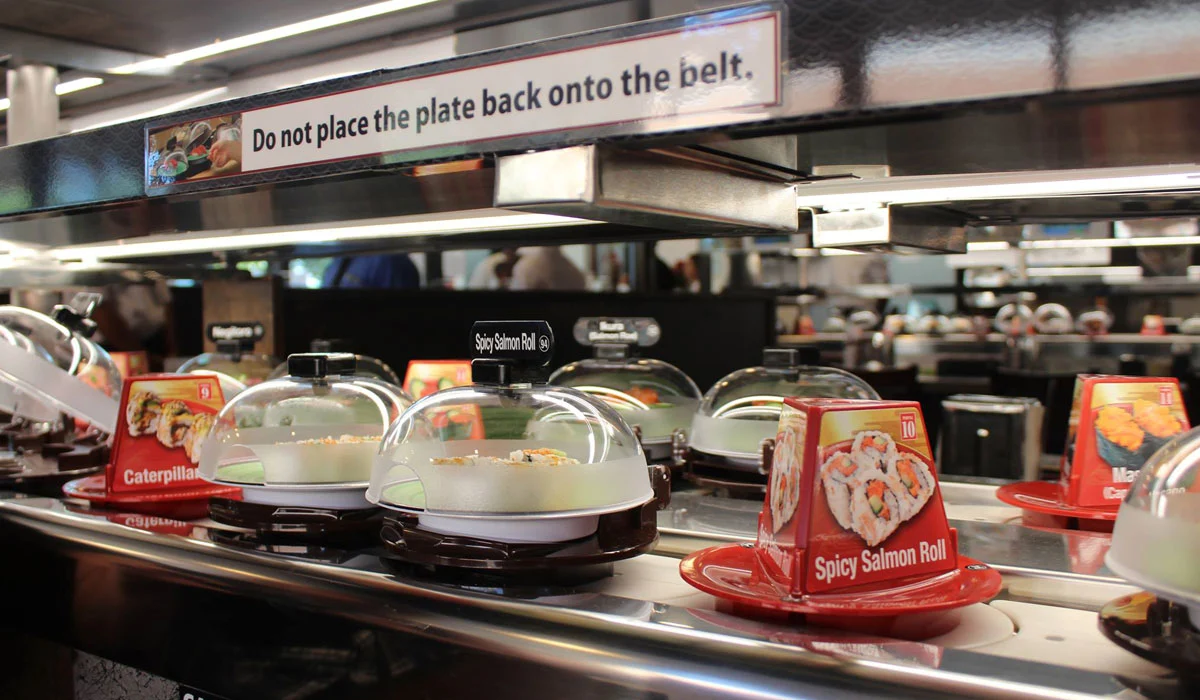

Kura Sushi USA, Inc., the technology-enabled revolving sushi chain, has reported a significant resurgence in consumer traffic and financial performance for its second fiscal quarter, marking a pivotal turnaround following several periods of macroeconomic volatility and regional legislative shifts. The brand, which has spent the better part of two years navigating a complex landscape of supply chain tariffs, rising labor costs, and changing consumer sentiment, saw its revenue climb by 23 percent year-over-year to reach $80 million. This performance was underpinned by an 8.6 percent increase in same-store sales, a figure that comfortably surpassed Wall Street’s consensus estimate of 3.5 percent. Perhaps most notably for industry analysts, the growth was balanced between a 4.3 percent increase in menu pricing and a 4.3 percent jump in guest traffic, representing the brand’s strongest traffic performance in two years.
The recent success comes as a relief to stakeholders after a period of uncertainty. Over the past twenty-four months, Kura Sushi has faced a unique set of challenges, particularly in California, where the implementation of the FAST Act raised minimum wages for large quick-service restaurant (QSR) brands to $20 per hour. While Kura Sushi does not operate in the QSR category, the legislative change created a "price tide" that affected consumer perceptions of value across all dining segments in the region. Furthermore, the brand’s reliance on imported goods—roughly 60 percent of its supply basket—made it particularly vulnerable to tariff fluctuations. Despite these headwinds, the company’s strategic focus on operational leverage, automation, and high-profile intellectual property (IP) collaborations has begun to yield tangible dividends.
A Strategic Pivot Toward Intellectual Property and Gamification
Central to Kura Sushi’s recent traffic surge has been its aggressive pursuit of "eatertainment" through strategic IP collaborations. During the second quarter, the brand partnered with Nintendo to launch a "Kirby" winter experience. This promotion utilized the brand’s proprietary Bikkura Pon prize system, a gamified element where guests receive a digital animation and a physical prize capsule for every fifteen plates consumed. The Kirby collaboration featured themed capsule prizes, including cable bands, microfiber cloths, and acrylic charms.
To drive higher check averages, Kura Sushi implemented spending thresholds, offering exclusive giveaways such as Kirby-themed cup sets and blankets to customers who spent $85 or more. CEO Jimmy Uba noted that these incentives were highly effective in influencing guest behavior, encouraging diners to reach for that "15th plate" or add additional items to hit the reward tier. The success of the Nintendo partnership was reflected in the brand’s improved sales mix, which remained flat despite broader industry trends toward trade-down behavior.
Building on this momentum, Kura Sushi has announced a robust pipeline of future collaborations. The brand is currently preparing for a 30th-anniversary partnership with the virtual pet brand Tamagotchi, followed by a collaboration with the popular video game "Honkai: Star Rail." These partnerships are designed to maintain a consistent "buzz" around the brand, ensuring that the dining experience remains novel and collectable for a core demographic of younger, tech-savvy consumers.
Technological Innovation and Labor Efficiency
While IP collaborations drive the "front-of-house" excitement, Kura Sushi is simultaneously overhauling its "back-of-house" operations through aggressive technological integration. The company has identified labor as a primary area for margin expansion and has set ambitious goals to reduce labor costs as a percentage of sales.
One of the most significant recent developments is the rollout of a new reservation system. Launched systemwide last June and heavily marketed since December, the system was recently decoupled from the brand’s loyalty program. Previously, guests were required to join the loyalty app to make a reservation; by removing this barrier, Kura Sushi saw a 30 percent increase in reservation usage among non-loyalty guests. Management estimates that this change alone contributed approximately one percentage point to same-store sales during the quarter while simultaneously improving labor efficiency by allowing for better-predicted staffing needs.
Furthermore, Kura Sushi is doubling down on kitchen automation. The brand is currently deploying robotic dishwashers, which are scheduled to be installed in all new units and retrofitted into 50 existing sites by the end of the year. This technology is expected to provide a 50-basis-point improvement in labor efficiency by 2027. Other innovations in the pipeline include the "Sushi Slider," a delivery system optimized for high-volume periods, and a specialized broth preservation device imported from Japan. The latter addresses a specific quality control issue: the evaporation and concentration of ramen broth over the course of a day, which can lead to a bitter taste profile. By automating these processes, Kura Sushi aims to ensure product consistency while reducing the manual labor burden on staff.
Financial Performance and Margin Expansion
The financial results for Q2 reflect the synergy between these operational and marketing efforts. Adjusted EBITDA for the period reached $5.5 million, more than doubling year-over-year and beating internal projections by 44 percent. For the first time in over two years, the brand saw a meaningful expansion in restaurant-level operating margins, which rose to 18.2 percent compared to 17.3 percent in the same period the previous year.
This margin expansion is particularly significant given the ongoing pressures of wage inflation and the costs associated with importing a majority of the brand’s raw materials. Kura Sushi’s ability to achieve 80 to 90 basis points of unit-level margin expansion suggests that its pricing strategy—maintaining increases below 4 percent for the full year—is finding the "sweet spot" between covering costs and maintaining a value proposition.
CEO Jimmy Uba emphasized that the brand’s value gap compared to independent sushi restaurants is widening. As smaller, individually owned restaurants struggle to absorb the costs of $20-per-hour labor and high food inflation, they are often forced to raise prices more aggressively than a scaled corporate entity like Kura. "The value delta has become clearer and clearer to our guests," Uba stated during the earnings call, suggesting that while the current economic environment is challenging, it ultimately favors Kura Sushi’s high-volume, tech-enabled model.
Regional Performance and Expansion Strategy
The brand’s growth was geographically diverse, though particularly strong in the Southwest and West Coast. Same-store sales in the West Coast region grew by 7.2 percent, while the Southwest saw a 9.7 percent increase. This regional strength supports Kura Sushi’s aggressive unit expansion plan. In the second quarter, the brand opened a new location in Austin, Texas, bringing its total count to 84 units—a 15 percent increase in the store base year-over-year.
Expansion has continued into the third quarter with new openings in Orange and Union City, California; Goodyear, Arizona; and Wellington, Florida. With eight additional locations currently under construction, Kura Sushi is on track to meet its guidance of 16 new restaurants for the fiscal year, representing a 20 percent annual growth rate. Uba noted that the current crop of new openings is performing as strongly as the fiscal 2023 cohort, which was previously cited as the most successful in the company’s history.
Future Outlook and the Role of Artificial Intelligence
Looking ahead, Kura Sushi remains cautiously optimistic. While the Q2 results were stellar, the company has maintained a "prudent" full-year outlook, citing potential headwinds such as fluctuating gas prices and global geopolitical conflicts that could impact consumer discretionary spending. The brand expects "moderately positive" same-store sales for the remainder of the year, a stance that management characterizes as a reflection of macro-uncertainty rather than internal pessimism.
A major focus for the upcoming fiscal year will be the evolution of the brand’s rewards program and the integration of artificial intelligence. Uba has taken a personal lead in this area, chairing a newly formed "AI Committee." While specific applications are still in development, the company is already using AI-driven social media listening tools to gauge guest sentiment. Future AI initiatives are expected to focus on both "efficiency and fun," potentially including guest-facing solutions that personalize the dining experience or further optimize supply chain logistics.
The brand is also working on a "sear station" to automate the preparation of aburi-style (flame-seared) sushi, moving away from manual hand-torching. This, along with the "Wagyu of the Seas" campaign featuring high-quality Toro at a competitive $4 price point, underscores Kura’s dual commitment to premium quality and operational scalability.
Conclusion
Kura Sushi’s second-quarter performance serves as a case study in how specialized restaurant brands can leverage technology and culture to overcome regional economic pressures. By decoupling its reservation system from its loyalty app, the brand reduced friction for new customers. By leaning into popular Japanese IP like Kirby and Tamagotchi, it reinforced its cultural authenticity and incentivized higher spending. And by investing in robotic solutions, it has begun to insulate itself against the long-term reality of rising labor costs.
As Kura Sushi continues its march toward 100 units and beyond, the "revolving" model appears to be gaining momentum. The combination of 23 percent revenue growth and significant margin expansion suggests that the brand has successfully navigated its most challenging period since the pandemic, positioning itself as a formidable player in the competitive American casual dining landscape. While macroeconomic clouds remain on the horizon, Kura Sushi’s strategic focus on automation and engagement provides a robust blueprint for sustained growth in an increasingly expensive and complex market.