
Las Vegas, NV – The Consumer Electronics Show (CES) 2026, a sprawling testament to technological innovation, may well be etched in the annals of tech history as the year the ubiquitous humanoid robot truly commanded the exhibition floor. From meticulously folding laundry and artfully boxing products to engaging in surprisingly articulate product pitches, these mechanical marvels were a defining feature of the 2026 iteration of the world’s largest tech trade show. Against this backdrop of advanced automation, a pivotal discussion unfolded on the food technology stage, posing a fundamental question: Is the culinary domain on the cusp of a robotic revolution, or will human ingenuity and artistry continue to reign supreme?
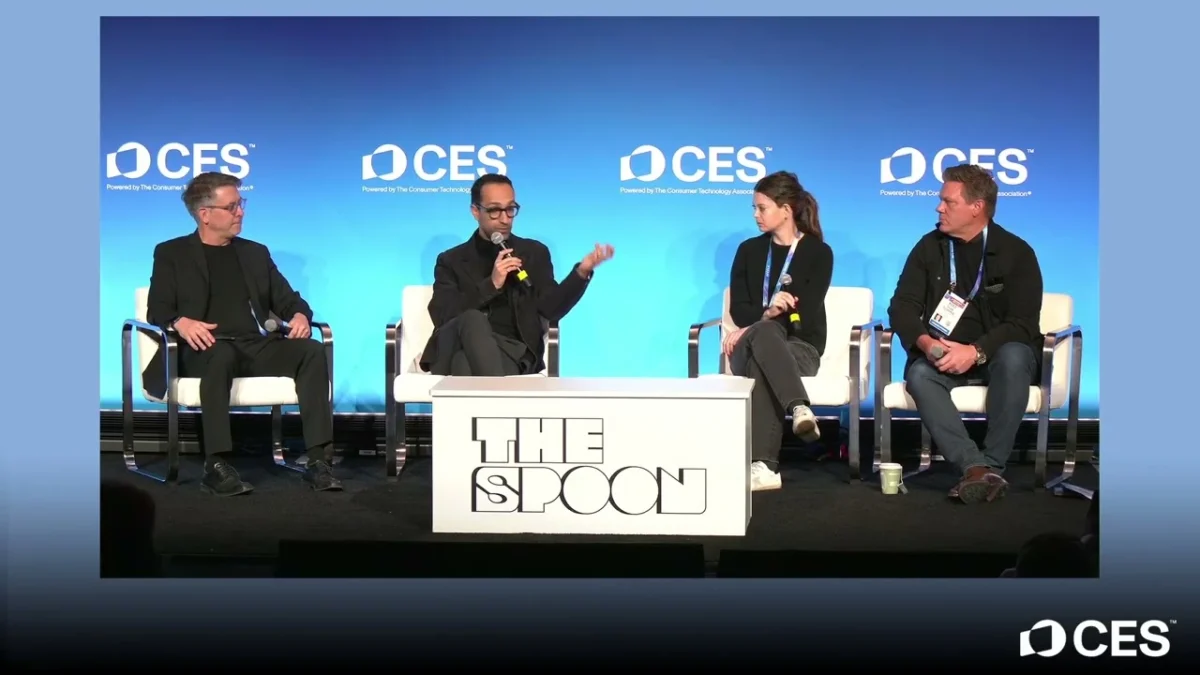
In a session provocatively titled "Robot vs. Chef: Will AI Augment or Replace the Cook?", a distinguished panel convened to dissect the intricate relationship between artificial intelligence, robotics, and the future of food preparation. Moderated by this publication’s lead technology correspondent, the conversation brought together esteemed television chef Tyler Florence, a culinary titan with a career built on accessible and inspiring home cooking, with two leading figures in the robotics industry: Nicole Maffeo, representing Gambit Robotics, and Ali Kashani, co-founder of Serve Robotics. The intent was not to pit these luminaries against each other, but rather to foster a comprehensive dialogue on the evolving landscape of kitchen technology and its potential impact on both professional kitchens and the domestic sphere.
The prevailing sentiment, echoing throughout the packed auditorium, was one of cautious optimism and a shared vision where technology serves as a powerful ally rather than a disruptive usurper. While tens of thousands of CES attendees were captivated by the theoretical capabilities demonstrated by robots across various sectors, the panel focused on the practical and ethical applications within the food ecosystem.
The Human Touch: AI as a Tool, Not a Creator
Chef Tyler Florence immediately set a pragmatic tone, emphasizing that artificial intelligence, in its current iteration, functions as a responsive entity, entirely dependent on human direction. “As great as AI is right now,” Florence articulated, “it’s really all about the prompts. It’s not going to do anything if it’s just sitting there by itself.” This perspective underscored a fundamental understanding: AI’s creative potential is intrinsically linked to human input, creativity, and intent. It is a sophisticated tool, capable of processing vast amounts of data and executing complex instructions, but it lacks the innate consciousness, subjective experience, and emotional depth that drive human culinary artistry.
This sentiment was echoed by Maffeo and Kashani, who collectively agreed that the true value of AI and robotics in kitchens lies not in replacing human cooks, but in augmenting their capabilities. The consensus pointed towards a future where automation would shoulder the burden of repetitive, physically demanding, and often unglamorous tasks that currently consume valuable time and energy from culinary professionals.
Addressing the Unseen Labor: Efficiency and Safety
The discussion delved into the often-overlooked aspects of kitchen work – tasks that are not only tedious but can also pose significant safety risks and contribute to labor shortages. Ali Kashani highlighted the automation of such jobs as a clear benefit. “If you have that job, like coring an avocado, that’s not a great job,” he explained. “It’s actually dangerous. People cut their fingers.” He argued that by delegating these high-risk, repetitive tasks to robots, businesses can not only mitigate workplace injuries but also free up human staff to concentrate on more engaging, creative, and customer-facing responsibilities. This aligns with industry trends observed at CES, where efficiency gains and enhanced worker safety are recurring themes across all sectors. For instance, advancements in industrial robotics have consistently shown a reduction in workplace accidents in manufacturing environments by taking over hazardous assembly line tasks. The application of similar principles to the food industry promises analogous benefits.
Beyond Humanoids: Practicality Over Personification
The visual spectacle of humanoids performing a myriad of tasks on the CES show floor stood in stark contrast to the panel’s pragmatic approach to kitchen robotics. When questioned about the necessity of human-like form factors for kitchen robots, all panelists expressed a unified skepticism. Kashani humorously quipped, “No one wants a man coming out of their closet to come and cook them dinner and then going back in.” This sentiment was seconded by Maffeo, who stressed the importance of practicality over anthropomorphism. “We don’t need someone coming out and doing all these things for us,” she stated. “Just help us solve these simple pain points that waste so much of our time.”
Maffeo further elaborated that for the foreseeable future, the most effective and economically viable approach lies in the deployment of distributed, specialized robots. These single-task robots, designed for specific functions, are inherently more cost-effective and adaptable than complex, generalized humanoids. This perspective suggests a phased integration of robotics, starting with targeted solutions for defined problems, rather than an immediate leap to full-scale humanoid integration.

The Resurgence of "Human-Made" as a Luxury
As the conversation pivoted to the long-term implications of increasing automation, Tyler Florence offered a compelling counterpoint. He posited that as robotics and AI become more integrated into the food system, a unique value proposition will emerge for meticulously crafted, human-made food. “Human-made will become the new luxury item,” Florence predicted. “Things that feel like this is made by a human being, thought of by a human being, produced by a human being.”
This notion of "human-made" as a premium commodity aligns with broader societal trends where authenticity, craftsmanship, and personal connection are increasingly valued in an increasingly automated world. In the realm of high-end dining, Florence anticipated that automation would remain largely invisible, enhancing efficiency behind the scenes, while human interaction and the artistry of the chef would become an even more prized and premium experience. This is a concept already observed in artisanal crafts and bespoke services, where the human element significantly contributes to the perceived value.
The Smart Home Kitchen: AI Integrated into Everyday Appliances
While the focus often drifts to professional kitchens and high-end dining, the role of automation and AI in the domestic sphere – where the vast majority of meals are prepared and consumed – was also a critical point of discussion. Kashani outlined a future where intelligence from technologies like computer vision, the Internet of Things (IoT), and automation will be seamlessly integrated into everyday kitchen appliances. This intelligent integration will empower home cooks with enhanced capabilities for meal planning, significant reductions in food waste, and a more streamlined food preparation process. “Every step of that process, we can be assisting people with the help of AI and robots,” he asserted.
Kashani specifically pointed to the growing need for assistive technologies in aging-in-place scenarios, where automation can provide invaluable support to individuals seeking to maintain their independence. Maffeo concurred, foreseeing a future where smart pantries and refrigerators will play a more active role in assisting with meal planning and inventory management. This vision aligns with the ongoing development of smart home technology, where connected devices aim to simplify daily routines and improve quality of life.
Societal Implications: Jobs, Culture, and the Future of Human Endeavor
As the panel drew to a close, the discussion broadened to encompass the long-term societal implications of robotics and AI in the food sector, touching upon employment, culture, and the very fabric of human endeavor. Kashani, drawing parallels from historical technological advancements, expressed cautious optimism regarding job displacement. “Every such prediction in the past has been wrong,” he stated, referencing how periods of significant technological change have historically led to the creation of new industries and job roles, rather than outright job elimination. He argued that productivity gains tend to spur economic growth and foster new forms of employment.
While acknowledging the potential for job shifts, the moderator gently suggested that some job losses are inevitable, though a deeper exploration of solutions like universal basic income was beyond the scope of the discussion.
Tyler Florence raised a poignant cultural concern, emphasizing the deeply ingrained connection between food, memory, and identity. “We’re all defined by what our grandparents cooked,” he reflected. “And that really defines us as people.” This highlights the potential cultural ramifications of an increasingly automated food landscape, where traditional culinary practices and the transmission of generational knowledge could be impacted. The human element in cooking is not merely about sustenance; it is about heritage, community, and personal history.
The session concluded as a thought-provoking exploration, offering a nuanced perspective on the integration of robotics and AI into the food world. It moved beyond the sensationalism of futuristic visions to address the practical, ethical, and cultural considerations that will shape how we eat, cook, and interact with food in the years to come. The overarching takeaway from CES 2026’s food tech stage was a reaffirmation of the enduring value of human creativity, skill, and connection, even as technology continues to advance at an unprecedented pace. The future of food, it seems, will be a collaborative effort, a symphony of human artistry augmented by intelligent machines.
The full session, offering a deeper dive into these critical questions and featuring visual aids, is available for viewing.