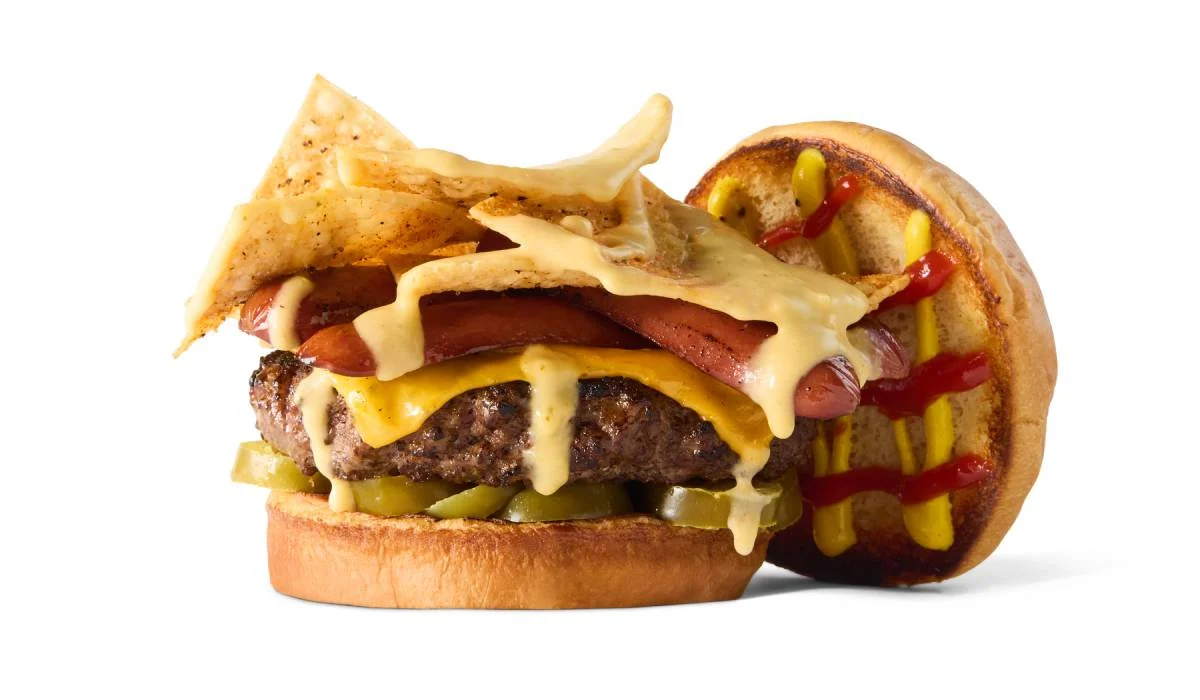

Bad Daddy’s Burger Bar has officially announced the launch of its latest culinary innovation, the Ballpark Burger, marking the second installment in its ambitious "Big Bad Monthly Drops" campaign. This new menu item, which will be available at all locations from April 1 through April 30, represents a strategic shift in the company’s marketing and product development efforts, aiming to capture the seasonal excitement of the spring sports season. The Ballpark Burger is engineered to evoke the nostalgia of American stadium dining, combining several classic concessions into a single, high-concept sandwich.
The introduction of this limited-time offering (LTO) follows the successful debut of the series earlier this year, as the brand seeks to maintain consumer interest through a rotating cycle of "bold and over-the-top" creations. By positioning these releases as "drops"—a term more commonly associated with high-end streetwear and digital media—Bad Daddy’s is attempting to leverage the psychology of scarcity and exclusivity to drive foot traffic and social media engagement.
The Evolution of the Big Bad Monthly Drops Series
The "Big Bad Monthly Drops" series is a cornerstone of Bad Daddy’s 2024 growth strategy. In an increasingly crowded "better burger" market, fast-casual chains are finding that static menus are often insufficient to retain the attention of younger, more adventurous diners. The "Drop" model allows the culinary team, led by Culinary Director John Masterson, to experiment with ingredients that might be too logistically complex or niche for a permanent menu position.
Drop #002, the Ballpark Burger, succeeds the inaugural drop with a focus on Americana and seasonal relevance. As Major League Baseball enters its first full month of the regular season in April, the timing of the Ballpark Burger is intended to align with the cultural zeitgeist. This approach to menu planning demonstrates a sophisticated understanding of seasonal marketing, where the product serves not just as a meal, but as a thematic experience tied to external events.
Culinary Engineering: A Deep Dive into the Ballpark Burger
The Ballpark Burger is built upon the foundation of Bad Daddy’s signature seven-ounce beef patty. The brand has long distinguished itself through the quality of its protein, utilizing a proprietary blend that is designed to remain juicy even when subjected to the high-heat searing process required for a "better burger" profile. However, the true innovation of the Ballpark Burger lies in its toppings, which are layered to provide a complex interplay of textures and temperatures.
The centerpiece of the toppings is a flame-kissed, smoky grilled hot dog. By splitting and grilling the hot dog, the culinary team introduces a distinct snap and a different dimension of smokiness that complements the char of the beef patty. This "burger-dog" hybrid is a classic, albeit rare, staple of American backyard grilling and regional diners, here elevated for a commercial fast-casual setting.
To provide the necessary acidity and heat to cut through the richness of the two proteins, the burger features pickled jalapeños. These are paired with a housemade jalapeño cheddar cheese sauce, a creamy element that reinforces the stadium theme. Texture is further enhanced by the inclusion of seasoned tortilla chips, providing a crunch that mimics the experience of eating nachos at a game. The assembly is rounded out with American cheese, traditional ketchup, and mustard, all served on a toasted brioche bun that provides a buttery, soft contrast to the internal components.
John Masterson, the Culinary Director at Bad Daddy’s, described the creation as an intentional balance of chaos and craftsmanship. "Every element is intentional," Masterson stated. "This creation is all about playful indulgence—it’s our way of bringing a little ballpark chaos to your table."
The Strategic Significance of Limited-Time Offerings in Fast-Casual Dining
The use of LTOs like the Ballpark Burger is a proven method for driving incremental sales in the restaurant industry. According to industry data from firms like Technomic and Mintel, LTOs can account for a significant percentage of a chain’s annual revenue growth. They serve multiple purposes: they create a sense of urgency for the consumer, provide content for digital marketing channels, and allow the brand to test new flavor profiles without the long-term risk of a permanent menu change.
For Bad Daddy’s, the "Monthly Drops" series is particularly important as the brand navigates a post-pandemic economy characterized by fluctuating ingredient costs and shifting consumer spending habits. By focusing on high-impact, premium burgers, the chain can maintain a higher average check size while offering a product that feels like a "reward" or an "event" for the customer. The $6 Michelob Ultra 20-ounce draft pairing offered alongside the Ballpark Burger is a tactical addition designed to increase beverage attachment rates, which are critical for maintaining healthy profit margins in the full-service and fast-casual sectors.
Contextualizing the "Better Burger" Market in 2024
The "better burger" segment, which includes brands like Bad Daddy’s, Shake Shack, Five Guys, and Hopdoddy, has seen remarkable resilience over the last decade. Unlike traditional fast food, the better burger category focuses on higher-quality ingredients, customizable options, and a more "chef-driven" approach to the menu.
However, the segment faces headwinds in 2024. Inflation has pressured the "discretionary" income of middle-class diners, leading many to trade down to lower-priced fast-food options. To counter this, brands like Bad Daddy’s must emphasize the "value-added" nature of their products. The Ballpark Burger, with its multi-protein composition and artisanal sauces, is designed to be perceived as a high-value item that cannot be easily replicated at home or at a standard drive-thru.
Furthermore, the rise of "eatertainment" and experiential dining means that customers are looking for more than just sustenance; they are looking for a story. The "Curator of Chaos" branding used by Bad Daddy’s positions the restaurant as a destination for culinary adventure, a move that helps insulate the brand from the price wars prevalent in the lower tiers of the industry.
Brand History and the Path to National Recognition
Founded in 2007 in Charlotte, North Carolina, Bad Daddy’s Burger Bar began as a single location with a simple mission: to create the best possible burger using premium ingredients and a creative flair. The brand’s early success was built on its "Create Your Own" burger concept, which allowed for thousands of potential combinations, alongside a robust selection of craft beers.
In 2015, the brand was acquired by Good Times Restaurants Inc., a move that provided the capital and infrastructure necessary for multi-state expansion. Today, Bad Daddy’s operates dozens of locations across the Southeast and Midwest, including North Carolina, South Carolina, Oklahoma, Georgia, Tennessee, Alabama, and Colorado.
The "Big Bad Monthly Drops" series represents a new chapter in the brand’s evolution under the stewardship of Good Times Restaurants Inc. It signals a move away from purely customer-driven customization toward a more curated, "chef-led" experience. This transition is common among maturing brands that seek to establish a stronger identity and more predictable operational flow.
Consumer Psychology and the "Drop" Marketing Model
The decision to label these monthly specials as "drops" is a calculated move to appeal to Millennial and Gen Z consumers. In the digital age, the "drop" creates a cycle of anticipation and social validation. When a customer posts a photo of the Ballpark Burger on Instagram or TikTok, they are participating in a time-bound cultural moment.
This marketing strategy also encourages repeat visits. A customer who tries the Ballpark Burger in April is more likely to return in May to see what the next "drop" will be. By keeping the upcoming releases a secret—implied by the brand’s call to "follow to see what drops next"—Bad Daddy’s maintains a continuous feedback loop with its audience.
Operational Logistics and Future Outlook
Executing a new, complex burger every month across a national footprint requires significant operational discipline. The supply chain must be coordinated to ensure that specific ingredients, such as the grilled hot dogs and the housemade jalapeño cheddar sauce, are available in the correct quantities for exactly 30 days.
From a culinary perspective, the Ballpark Burger is a relatively efficient LTO. Many of its components, such as American cheese, ketchup, mustard, and brioche buns, are already standard inventory items. The "chaos" is achieved through the creative assembly of these items and the addition of a few key specialty ingredients, minimizing the risk of food waste or kitchen confusion.
As Bad Daddy’s moves forward with its 2024 roadmap, the success of the Ballpark Burger will likely serve as a barometer for future "drops." If the series continues to perform well, it may lead to more permanent menu integrations of the most popular items or even a move toward more frequent, smaller-scale "micro-drops."
In conclusion, the Ballpark Burger is more than just a seasonal menu addition; it is a manifestation of Bad Daddy’s broader business strategy. By blending nostalgia, culinary creativity, and modern marketing techniques, the brand is positioning itself as a leader in the competitive fast-casual landscape. For the month of April, diners at Bad Daddy’s will have the opportunity to experience a "home run" of flavors that celebrate the return of one of America’s favorite pastimes, all while the brand continues to redefine what a burger bar can be in the modern era.