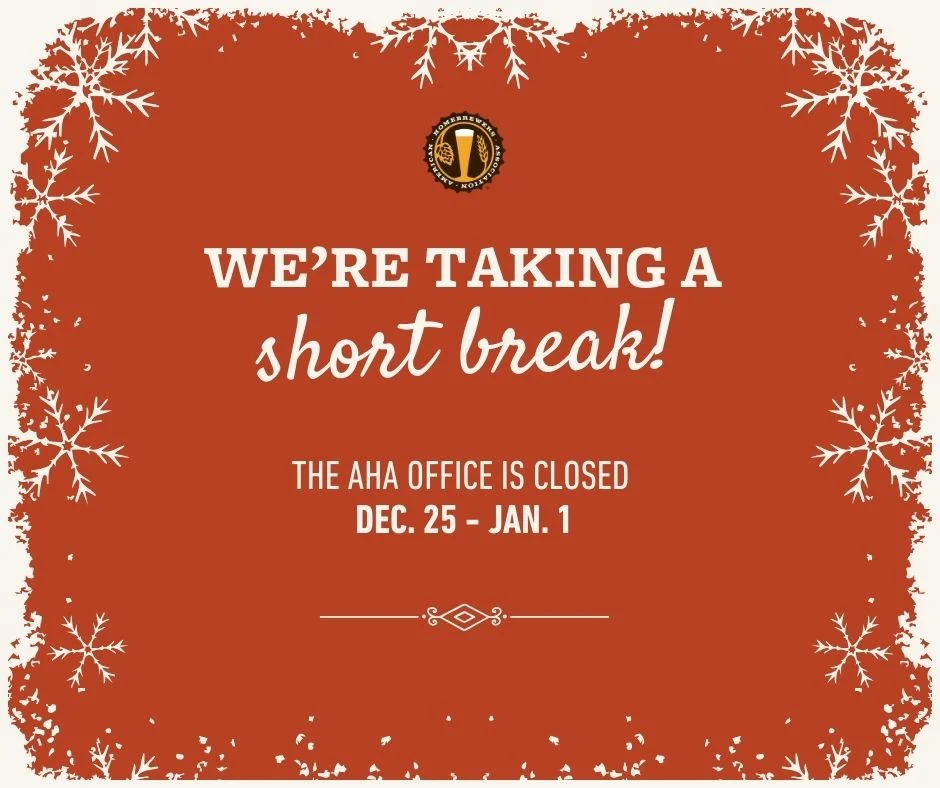

The American Homebrewers Association (AHA), the nation’s primary advocacy and educational organization for amateur fermenters, has officially announced its annual winter closure, scheduled to take place from December 25, 2025, through January 1, 2026. This week-long hiatus is designed to allow the organization’s professional staff to observe the holiday season, recharge internal resources, and prepare for a comprehensive suite of programming scheduled for the upcoming 2026 calendar year. While the physical and administrative offices located in Boulder, Colorado, will be inaccessible during this period, the association’s vast digital infrastructure will remain operational to serve its global membership base of hobbyists, educators, and industry professionals.
The announcement marks the conclusion of a significant year for the American homebrewing community, characterized by shifting market dynamics and a renewed focus on community-based fermentation. The AHA, which operates under the umbrella of the Brewers Association (BA), has utilized this year-end break traditionally to pivot from the heavy logistical demands of the autumn festival season toward the strategic planning required for the first quarter of the new year. As the organization enters this period of rest, it leaves behind a year of notable legislative advocacy and educational expansion that has solidified the role of homebrewing within the broader $28 billion U.S. craft beer industry.
Chronology of the 2025 Holiday Closure and Operational Resumption
The timeline for the AHA’s winter outage is structured to align with the standard fiscal and holiday cycles of the craft beverage industry. The closure begins on Wednesday, December 25, 2025, coinciding with the Christmas holiday. During this interval, all direct member support services, including technical brewing inquiries, membership billing assistance, and the processing of orders from the AHA online store, will be suspended.
The organization has confirmed that digital platforms, including the AHA website, the "Zymurgy" magazine digital archives, and the mobile application, will remain functional. This ensures that members seeking recipes or troubleshooting advice for holiday brew days will have uninterrupted access to the association’s proprietary database of over 1,500 award-winning recipes. Formal operations and staff availability are slated to resume on Thursday, January 2, 2026, at 8:00 AM Mountain Time. This return will initiate the primary planning phase for the 2026 National Homebrew Competition, the largest event of its kind globally.
Historical Context and the Evolution of the AHA
To understand the significance of the AHA’s current standing, it is necessary to examine its historical trajectory. Founded in 1978 by Charlie Papazian and Charlie Matzen in Boulder, Colorado, the AHA was established shortly after the federal legalization of homebrewing in the United States. President Jimmy Carter signed H.R. 1337 into law in late 1978, which removed federal restrictions on the home production of beer and wine for personal use. Since that landmark legislation, the AHA has grown from a grassroots newsletter into a sophisticated non-profit organization that represents the interests of an estimated 1.1 million homebrewers across the country.
The association’s influence extends beyond mere hobbyist support; it has been the breeding ground for the modern craft beer revolution. A significant majority of professional craft brewers in the United States began their careers as homebrewers and members of the AHA. By providing a structured environment for recipe development and technical education, the AHA has indirectly fueled the innovation that defines the American craft beer market. The year-end closure, therefore, is not merely a break for a small office staff but a scheduled pause for an organization that acts as the foundational pillar for a massive economic ecosystem.
Supporting Data: The Economic and Social Impact of Homebrewing
The state of homebrewing in 2025 reflects a mature but evolving market. According to recent industry surveys conducted by the Brewers Association, the demographic profile of the American homebrewer has shifted toward a more diverse and tech-savvy audience. Data indicates that approximately 40% of active homebrewers have been practicing the craft for over a decade, while a surge in "nano-brewing" and high-end automated systems has attracted a younger demographic interested in the intersection of fermentation science and technology.
Economically, the homebrewing supply industry contributes significantly to local economies. In 2025, it is estimated that homebrewers spent over $700 million on ingredients—such as malted barley, hops, and yeast—and specialized equipment. The AHA plays a critical role in supporting these local homebrew supply shops (LHBS), which serve as the physical hubs for the community. The association’s "Shop Local" initiatives throughout 2025 have aimed to bolster these small businesses against the rising tide of e-commerce, emphasizing the importance of sensory evaluation and immediate expert advice that only a physical storefront can provide.
Furthermore, the AHA’s membership data reveals that the average homebrewer produces roughly 7.5 batches of beer per year, totaling approximately 40 gallons. When aggregated across the 1.1 million practitioners in the U.S., this represents a significant volume of liquid that, while not for sale, contributes to the cultural literacy of the beer-consuming public. This literacy is a primary driver for the premiumization of the commercial beer market, as homebrewers are more likely to purchase high-quality, high-margin craft products when they are not brewing their own.
Strategic Implications of the Year-End Hiatus
The decision to close for the final week of the year is a strategic move that addresses the growing concern of professional burnout within the non-profit sector. The craft beer industry, including its advocacy branches, has faced significant challenges over the last five years, ranging from supply chain disruptions to shifting consumer preferences toward non-alcoholic beverages. By mandating a total office closure, the AHA leadership ensures that its team is prepared for the high-intensity cycle that begins in January.
From an administrative perspective, the hiatus allows for a "quiet period" in which digital systems can undergo maintenance and end-of-year audits can be finalized without the interruption of daily member inquiries. This is particularly relevant as the AHA prepares to launch its 2026 "State of the Hobby" report, a comprehensive data-driven analysis that guides manufacturers and retailers in their inventory and marketing strategies for the coming year.
Member Reactions and Community Engagement
While the AHA office remains closed, the community engagement aspect of the organization often peaks during the holiday season. Internal data from the AHA forums suggests that the week between Christmas and New Year’s Day is one of the highest-traffic periods for the "Zymurgy" recipe database. This is attributed to the "holiday brew day" tradition, where enthusiasts utilize their time off from their primary occupations to engage in complex, time-consuming brewing projects, such as barrel-aging or brewing high-gravity winter warmers.
Inferred reactions from the membership suggest a high level of support for the staff hiatus. On various social media platforms, members have expressed that the AHA team’s dedication throughout the year—particularly during the massive logistical undertaking of the National Homebrewers Conference (Homebrew Con)—earns them this period of rest. The prevailing sentiment within the community is one of mutual respect, acknowledging that the passion for brewing is shared by both the members and the professional staff who advocate for their right to brew.
Broader Industry Trends and the 2026 Outlook
As the AHA looks toward 2026, several key trends are expected to dominate the conversation. The rise of "No-and-Low" (non-alcoholic and low-alcohol) brewing has moved from a niche interest to a mainstream movement within the homebrewing community. The AHA has responded by increasing its educational resources on specialized yeast strains and brewing techniques that allow for full-flavored beers without high ethanol content.
Additionally, sustainability remains a top priority. In the coming year, the AHA is expected to expand its "Green Brewing" initiative, which provides guidelines for reducing water consumption and energy use in the home brewery. As climate change impacts the global supply of hops and barley, the AHA’s role in educating brewers on ingredient efficiency and alternative grains will become increasingly vital.
The 2026 legislative agenda for the AHA is also expected to be robust. While homebrewing is legal in all 50 states, various local regulations regarding the transport of homebrew to competitions and the hosting of club meetings in commercial spaces remain gray areas in some jurisdictions. The AHA’s legal defense and advocacy fund will continue to work with state legislatures to modernize these "post-Prohibition" era laws, ensuring that the hobby remains accessible and legally protected for all.
Conclusion: A Season of Reflection and Preparation
The American Homebrewers Association’s holiday closure is more than a simple break in the work schedule; it is a calculated pause that reflects the health and stability of the organization. By providing its staff with the opportunity to "refresh and recharge," the AHA reinforces its commitment to longevity and excellence in its service to the fermentation community.
As the year 2025 draws to a close, the association stands as a testament to the enduring appeal of traditional craftsmanship in a digital age. The beer that will be brewed in kitchens, garages, and basements during this holiday week will be the product of decades of advocacy, education, and community building facilitated by the AHA. When the doors reopen on January 2, 2026, the organization will return to a landscape that is ever-changing, yet firmly rooted in the simple, ancient act of turning grain, water, hops, and yeast into something shared and celebrated. The AHA’s message to its members remains clear: enjoy the holiday season, brew safely, and prepare for a year of unprecedented growth in the world of home fermentation.