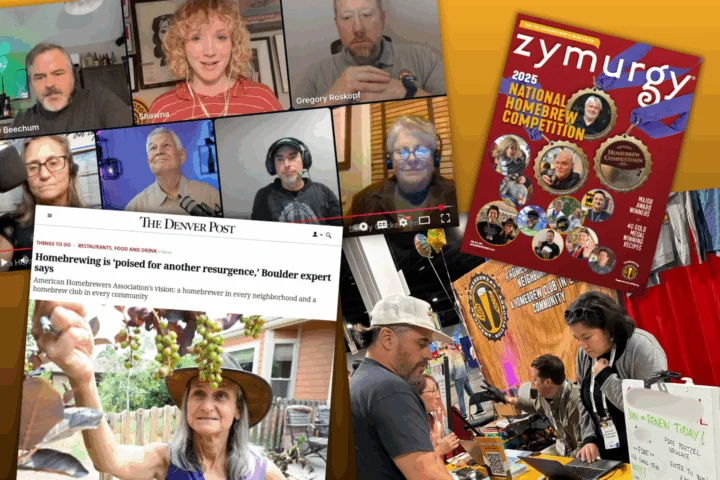

The American Homebrewers Association (AHA) has officially entered a new era of governance and operational strategy, marking 2025 as a watershed year for the organization. Following its transition into a fully independent, standalone nonprofit entity, the association has reported significant progress in its mission to cultivate the hobby of homebrewing across the United States and beyond. This independence represents a fundamental shift from its previous structure, where it operated under the umbrella of the Brewers Association (BA), the trade group representing small and independent professional craft brewers. By establishing its own autonomous board and strategic roadmap, the AHA aims to prioritize the specific needs of amateur zymurgists and local brewing communities with renewed focus and financial transparency.
A New Vision for a Global Community
Central to the AHA’s independence is a newly unveiled strategic plan that sets a high bar for the hobby’s expansion. The organization’s stated vision is to see "a homebrewer in every neighborhood and a homebrew club in every community." This ambitious goal reflects a desire to move homebrewing from a niche pastime into a ubiquitous cultural staple. Industry analysts suggest that this shift toward localized community building is a response to the changing landscape of the craft beverage industry, which has seen a stabilization in professional growth, placing more emphasis on the grassroots enthusiasts who often serve as the primary ambassadors for beer culture.
The independence of the AHA is not merely an administrative change but a strategic pivot designed to allow for greater agility in advocacy and resource allocation. As a standalone 501(c)(3) or similar nonprofit structure, the association can now direct 100% of its membership dues and sponsorship revenue toward initiatives that directly benefit homebrewers. This includes the development of educational resources, the management of world-class competitions, and the protection of the legal rights of homebrewers at both the state and federal levels.
Chronology of the Transition and 2025 Milestones
The path to independence began in earnest following a series of board updates in April 2024, which laid the groundwork for the structural separation from the Brewers Association. Over the course of late 2024 and the first half of 2025, the AHA Founding Board—a group of dedicated volunteers and industry veterans—worked to establish the legal and financial infrastructure required for autonomy.
Key accomplishments achieved since the April board update include:
- Legal and Financial Decoupling: The formalization of the AHA as an independent entity, ensuring that all assets, including Zymurgy magazine and the National Homebrew Competition, are managed directly by the association.
- Strategic Plan Implementation: The rollout of a multi-year roadmap focusing on membership value, diversity in the brewing community, and technological modernization.
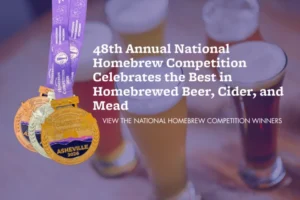
- The 2025 National Homebrew Competition (NHC): Despite the internal reorganization, the AHA successfully executed the world’s largest homebrew competition, maintaining rigorous judging standards and validating hundreds of award-winning recipes that serve as a benchmark for the hobby.
- Zymurgy Magazine Evolution: The association’s flagship publication has undergone editorial shifts to focus more deeply on technical innovation and the stories of local clubs, ensuring it remains the "journal of record" for the homebrewing world.
Supporting Data and Industry Context
The significance of the AHA’s independence can be better understood through the lens of historical data and the economic impact of the hobby. Founded in 1978 by Charlie Papazian, the AHA was instrumental in the passage of federal legislation that legalized homebrewing at the national level. At its peak, the association has boasted tens of thousands of members, contributing to an ecosystem that includes thousands of "homebrew supply shops" (LHBS) across the country.
While the number of active homebrewers saw a surge during the pandemic lockdowns of 2020 and 2021, the hobby has faced headwinds in recent years due to the closure of many local brick-and-mortar supply shops and the rising costs of ingredients like malt and hops. By becoming independent, the AHA is positioned to more aggressively address these challenges. For example, the association’s "Member Deals" program, which offers discounts at hundreds of breweries and supply shops, is being expanded to provide more tangible ROI for members, potentially offsetting the costs of the hobby.
Furthermore, data from the National Homebrew Competition shows that the technical proficiency of amateur brewers continues to rise. In recent years, the gap between "best-in-show" homebrews and professional craft beers has narrowed significantly, with many NHC winners going on to open successful commercial breweries. This pipeline is vital for the broader beer industry, as homebrewers are often the most educated and loyal consumers of professional craft beer.
Official Responses and Member Engagement
The AHA Founding Board has emphasized that this transition is a member-led movement. In a statement to the membership, the board noted that "independence brings the freedom to become our own stand-alone nonprofit," which in turn allows for "greater opportunity" to serve the community. The board has invited the public—not just current members—to participate in a special "Zymurgy Live" session on November 5. This event is designed to provide a transparent look at the association’s finances, future goals, and the specific ways in which member feedback is being incorporated into the 2026 planning cycle.
Reactions from the homebrewing community have been largely positive, though some members have expressed a desire for improved digital infrastructure. The association has acknowledged these concerns, announcing that "member service upgrades" are a top priority. These upgrades are expected to include a more robust website experience, easier access to the digital archives of Zymurgy, and streamlined competition registration processes.
Broader Implications and the 2026 Outlook
Looking ahead to 2026, the AHA has several major initiatives "simmering." These include a renewed focus on legislative advocacy. Although homebrewing is legal in all 50 states (a goal finally achieved in 2013 when Alabama and Mississippi passed their respective bills), many states still have restrictive laws regarding the transport of homebrew to competitions or the hosting of club meetings in public spaces. An independent AHA will have the dedicated legal and lobbying focus required to tackle these "last mile" legislative hurdles.
Additionally, the association is planning to invest heavily in "Homebrew Club" resources. Recognizing that clubs are the lifeblood of the hobby, the AHA intends to provide better insurance options for clubs, standardized educational kits, and a more comprehensive "Club Finder" tool to help new brewers find local mentorship.
The transition also has implications for the professional brewing industry. For decades, the AHA and the Brewers Association were intrinsically linked, reflecting the fact that almost every professional brewer started as a homebrewer. While the organizations are now separate entities, they maintain a "sibling" relationship. This independence allows the BA to focus strictly on trade issues, such as excise tax reform and distributor relations, while the AHA focuses on the "joy of brewing" and the cultivation of the next generation of brewing talent.
Analysis of the "Independent Nonprofit" Model
The shift to a standalone nonprofit model is a sophisticated move in the world of hobbyist associations. By operating as a nonprofit, the AHA can apply for educational grants and seek tax-deductible donations that were previously unavailable under the BA’s trade association structure. This could open new revenue streams for "STEM" (Science, Technology, Engineering, and Math) education programs centered around the chemistry and biology of fermentation.
However, independence also brings risks. The AHA must now cover its own overhead, including staff salaries, office space, and insurance, without the shared resources of the larger Brewers Association. The success of this move will depend heavily on membership retention and the ability of the Founding Board to recruit new brewers into the fold. The "homebrewer in every neighborhood" vision is not just an aspirational slogan; it is a financial necessity for the organization’s long-term viability.
Conclusion
As the American Homebrewers Association moves into the final months of 2025, the focus remains on building momentum. The upcoming November 5 "Zymurgy Live" event serves as a critical touchpoint for transparency and community building. With a clear strategic plan, a history of advocacy, and a dedicated base of members, the AHA is attempting to redefine what a hobbyist association can achieve in the modern era.
By prioritizing local clubs, technical excellence through competition, and legislative protection, the association is ensuring that the culture of homebrewing remains a vibrant and essential part of the American beverage landscape. As the fermenters warm up for the winter brewing season, the AHA stands ready to lead the charge into a future where the craft of brewing is accessible to all.