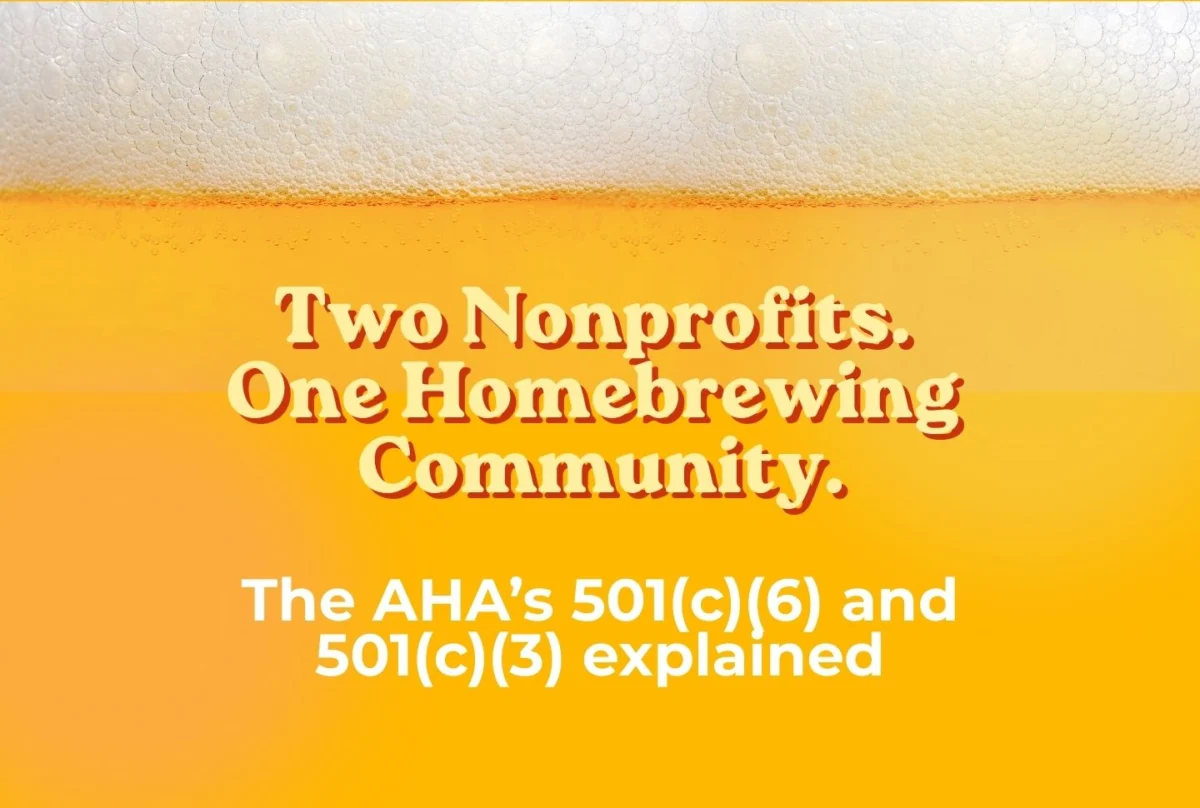

The American Homebrewers Association (AHA), a cornerstone of the global fermentation community for nearly half a century, has officially transitioned into an independent entity, marking a historic shift in its organizational structure. Following decades of operation under the umbrella of the Brewers Association (BA), the AHA has secured approval from the U.S. Internal Revenue Service (IRS) to operate as a dual-entity nonprofit. This transition establishes the association as both a 501(c)(6) membership organization and a 501(c)(3) charitable nonprofit, a rare structural move designed to ensure the long-term sustainability and educational reach of the homebrewing hobby.
The announcement comes after a comprehensive four-year organizational overhaul that began in 2021. Under the leadership of Executive Director Julia Herz, the association moved to document internal gaps and identify opportunities for growth that were previously constrained by its coupled status with the Brewers Association. The move to independence is framed not merely as a legal separation, but as a return to the grassroots spirit of the association’s founding in 1978.
Historical Context and the Road to Autonomy
The American Homebrewers Association was founded in 1978 by Charlie Papazian and Charlie Matzen in Boulder, Colorado. At its inception, the AHA was a maverick organization, born at a time when homebrewing was only beginning to emerge from the shadow of federal prohibition, which was not fully repealed for home production until 1978. Interestingly, the AHA originally formed as a 501(c)(3) entity under its founders, emphasizing public education and the cultural promotion of brewing as a domestic art.
As the craft beer movement exploded in the 1980s and 1990s, the AHA became a foundational pillar of the Brewers Association, the trade group representing small and independent professional craft brewers. While this partnership allowed the AHA to benefit from the BA’s significant resources and political capital, it also meant that the interests of hobbyists were occasionally secondary to the commercial and legislative needs of professional breweries.
The transition toward independence began in earnest in 2021. Following a change in the Executive Director role, the AHA leadership initiated a strategic review to determine how to preserve the core membership experience while expanding the association’s influence. By 2025, the decision was finalized to seek independent nonprofit status, allowing the AHA to be governed directly by homebrewers for homebrewers, free from the corporate requirements of shareholders or professional trade interests.
Understanding the Dual-Entity Structure
The decision to pursue two distinct IRS classifications—501(c)(6) and 501(c)(3)—is a strategic maneuver intended to maximize the organization’s financial and operational flexibility.
The 501(c)(6) designation applies to the membership association. Based in Colorado to honor the organization’s historic roots, this entity functions as a "business league" for the hobby. It handles member benefits, governance, and the advocacy work necessary to protect the rights of homebrewers at the state and federal levels. This structure ensures that the association remains a community-led group where the primary stakeholders are the members themselves.
The 501(c)(3) designation, known as the AHA Foundation, is established as a charitable and educational nonprofit. This entity is based in Texas, where the AHA’s current operational team and association management company, Strategic Association Management (SAM), are located. The (c)(3) status is critical for the AHA’s future growth because it opens doors to federal and private grants, as well as tax-deductible charitable donations. This entity will focus on the "cultural, historical, and societal importance of homebrewing," funding public education programs, historical preservation of brewing techniques, and outreach efforts to introduce new demographics to the hobby.
Chronology of the Transition
The path to 2025 independence was characterized by several key milestones:
- 2021: Julia Herz is appointed Executive Director. The AHA begins a formal "gap analysis" to identify organizational needs separate from the Brewers Association.
- 2022-2023: Extensive coordination begins between the AHA Governing Committee, volunteer leaders, and professional advisors to draft a roadmap for independence.
- 2024: The Brewers Association Board of Directors and the AHA leadership reach an agreement to ensure a smooth transition, maintaining continuity for members during the legal separation.
- Late 2024: IRS applications are filed for the dual nonprofit status.
- 2025: Official IRS approval is received. The AHA establishes its Founding Board and begins operating its new operational home in Texas while maintaining its spiritual home in Colorado.
- 2026: The AHA launches its new strategic plan, focusing on four core values: Community, Education, Joy, and Volunteerism.
Supporting Data and the Impact of Homebrewing
The reorganization of the AHA arrives at a critical time for the hobby. According to industry data, homebrewing serves as the primary "incubator" for the American craft beer industry. Surveys indicate that a significant majority of professional craft brewers in the United States began as homebrewers.
The economic impact of the hobby is also substantial. While specific figures for 2025 show a stabilizing market, historical data from the mid-2010s suggested that homebrewers contributed over $1 billion annually to the economy through the purchase of ingredients, equipment, and educational materials. By securing 501(c)(3) status, the AHA aims to revitalize these numbers by lowering the barrier to entry through subsidized educational programs and community outreach.
The association’s transition was also necessitated by the changing landscape of volunteerism. In the post-COVID era, the AHA saw a shift in how members engaged with the community. The new structure addresses this by activating nine new member-led committees, designed to handle everything from competition standards to diversity and inclusion initiatives.
Official Responses and Strategic Vision
The transition has received broad support from both the hobbyist community and the professional brewing industry. The Brewers Association issued a statement supporting the move, noting that a strong, independent AHA is vital for the health of the entire beer ecosystem.
Julia Herz, in her capacity as Executive Director, emphasized that the shift is about self-determination. "Your membership confirms that homebrewing merits a dedicated national organization," Herz stated in a communication to members. She highlighted that the independence of the AHA ensures that the hobby’s future is guided by those who actually practice it.
The involvement of Strategic Association Management (SAM) in Texas marks a shift toward a more modern, efficient operational model. By utilizing an association management company, the AHA can leverage professional staff for daily operations—such as membership processing and event planning—without the overhead of maintaining a massive standalone corporate headquarters. This efficiency is expected to redirect more funds toward member benefits and educational grants.
Broader Implications for the Brewing Community
The independence of the AHA is likely to have several long-term effects on the brewing landscape:
- Expanded Outreach: With the ability to accept charitable donations, the AHA can now launch initiatives to bring homebrewing to underserved communities, potentially diversifying a hobby that has historically struggled with demographic representation.
- Educational Grants: The (c)(3) foundation can provide grants for research into fermentation science, hop cultivation, and yeast health, benefiting both home and professional brewers.
- Preservation of History: As the first generation of modern American homebrewers reaches retirement age, the AHA Foundation will play a crucial role in archiving the history of the movement that sparked the global craft beer revolution.
- Governance Stability: By decoupling from the BA, the AHA is no longer subject to the market fluctuations or the specific lobbying priorities of the professional beer industry. If the professional craft sector faces a downturn, the AHA’s nonprofit status provides a buffer to ensure the hobbyist association remains solvent.
Conclusion and Future Outlook
As the American Homebrewers Association moves into its 48th year, its new status as an independent, dual-entity nonprofit represents a "coming of age." The structure allows the organization to honor its past in Colorado while embracing a streamlined, operationally sound future in Texas.
The move signals a confidence in the enduring appeal of homebrewing. Despite the proliferation of high-quality craft beer in retail markets, the AHA’s leadership maintains that the "joy of the world’s most rewarding hobby" remains a unique and necessary cultural force. With nine active committees and a new strategic plan in place, the AHA is positioned to evolve alongside its members, ensuring that the next 48 years of American homebrewing are as impactful as the first.
The association’s new strategic plan, which will be detailed in the May/June 2026 issue of Zymurgy Magazine, serves as a blueprint for this new era. It emphasizes that while the legal structure has changed, the mission remains the same: to empower the individual brewer and celebrate the community that chooses to "build something amazing together."