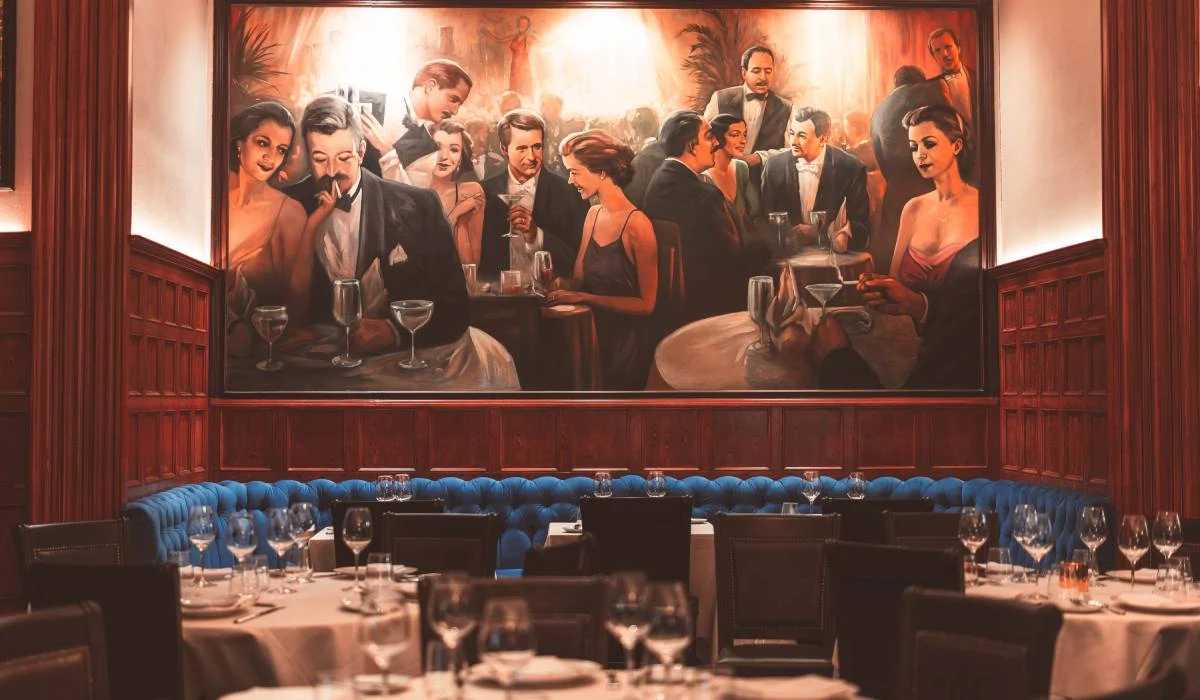

In the spring of 1868, a group of women entered Delmonico’s, one of New York City’s most prestigious and storied establishments, and performed an act that was considered a radical breach of social decorum: they sat down to eat lunch without male escorts. While the simple act of dining might seem mundane by contemporary standards, in the mid-19th century, it represented a direct challenge to the patriarchal structures that governed public life. This event did more than just cause a stir in local society columns; it served as the foundational moment for Sorosis, the first professional women’s club in the United States, and signaled a shift in the American cultural landscape regarding the rights of women to occupy public spaces.
The catalyst for this quiet revolution was Jane Cunningham Croly, a pioneering journalist who wrote under the pseudonym "Jennie June." As one of the nation’s first syndicated female columnists, Croly was a fixture in the male-dominated world of New York media. Despite her professional standing, she and her female colleagues were routinely excluded from the intellectual and social circles of their male peers. The tipping point occurred when the New York Press Club organized a banquet to honor the visiting British novelist Charles Dickens. When Croly and other female journalists requested tickets to the event, they were summarily rejected. The club’s president reportedly suggested that women could attend only if they remained hidden behind a curtain, silent and out of sight of the male diners.
Refusing to accept a secondary status, Croly decided that if women were not welcome at the men’s table, they would establish a table of their own. She approached the Delmonico brothers—Giovanni and Pietro—who had already built a reputation for innovation and sophistication. Unlike many of their contemporaries, the Delmonicos were progressive in their business philosophy. They agreed to host Croly’s group, providing a private space where professional women could gather, network, and organize. This agreement effectively broke the unwritten rule that reputable women could not dine in public unaccompanied, and it laid the groundwork for a movement that would eventually span the globe.
A Chronology of Innovation and Social Change
The history of Delmonico’s is inextricably linked with the evolution of American fine dining and social progress. To understand the significance of the 1868 luncheon, it is necessary to examine the restaurant’s timeline of "firsts" and its role as a cultural trendsetter.
- 1827: Giovanni and Pietro Delmonico open a small pastry shop and cafe in Lower Manhattan.
- 1837: The brothers open what is widely considered the first true fine-dining restaurant in the United States. Unlike the taverns and inns of the era, Delmonico’s offered a printed menu, private dining rooms, and white tablecloths.
- 1862: Chef de cuisine Charles Ranhofer joins the establishment. Over his career, he would invent or popularize dishes that remain staples of American cuisine, including Eggs Benedict, Baked Alaska, and Lobster Newburg.
- 1868: Jane Cunningham Croly founds Sorosis at Delmonico’s. The group’s first official meeting marks the beginning of the professional women’s club movement.
- 1869: Within just one year of its founding, Sorosis grows to 83 members, including some of the most prominent female writers, artists, and thinkers of the era.
- 1890: The General Federation of Women’s Clubs (GFWC) is formed, largely inspired by the success and structure of Sorosis.
- 2023-2024: Following a temporary closure due to the COVID-19 pandemic, Delmonico’s reopens with a renewed focus on its historical legacy, including the commemoration of the "Ladies’ Luncheon."
The Founding of Sorosis and the "Social Intercourse" of Progress
The organization founded by Croly was named "Sorosis," derived from a Greek word meaning an aggregation or a collection of fruits—symbolizing growth and unity. The club’s mission was the "collective elevation and advancement" of women. In an era where women were often confined to the domestic sphere, Sorosis provided a vital outlet for professional networking. At the time, members referred to these interactions as "social intercourse," a term that described the intellectual and professional exchange of ideas.
Carin Sarafian, the director of private dining and special projects for Delmonico’s, notes that the restaurant’s willingness to host these women was a major departure from the norm. "Women were able to network at Delmonico’s for the first time," Sarafian says. "It’s funny to think about now—women are such a visible force in our restaurant today—but at the time, it was unheard of."
The meetings at Delmonico’s were not merely social gatherings; they were strategic sessions. Sorosis advocated for improved education for women, better working conditions, and broader legal rights. The group’s influence extended beyond the dining room, as members used their platforms in journalism and literature to advocate for systemic reform. By providing a safe and prestigious venue, Delmonico’s played a silent but essential role in legitimizing the professional woman in the eyes of the public.
Culinary Innovations and the Standardization of the Restaurant Experience
While Delmonico’s was a site of social rebellion, it was also the birthplace of the modern American restaurant experience. Before Delmonico’s, public eating houses were often rough establishments where diners sat at communal tables and ate whatever the "house" was serving that day. The Delmonico brothers introduced the concept of the à la carte menu, allowing guests to choose their own dishes and portions.
The restaurant’s influence on American gastronomy cannot be overstated. Chef Charles Ranhofer’s 1894 cookbook, The Epicurean, remains a foundational text in culinary history, containing over 3,500 recipes. Many of these dishes were created specifically for the high-profile guests who frequented the restaurant, including presidents, titans of industry, and international royalty. The "Delmonico Steak," a specific cut of ribeye or top loin, became a standard in steakhouses across the country.

Furthermore, the restaurant introduced the use of the wine list and the separate dessert course, elements that are now standard in fine dining. By creating an environment of luxury and order, Delmonico’s provided the perfect backdrop for the Sorosis Club to demonstrate that professional women were entitled to the same standards of service and respect as their male counterparts.
The Modern Commemoration: The Ladies’ Luncheon
In contemporary times, Delmonico’s continues to honor its role in women’s history. Following its post-pandemic reopening, the restaurant launched a special "Ladies’ Luncheon" menu. This initiative serves as both a tribute to Jane Cunningham Croly and a way to introduce a new generation of diners to the restaurant’s history.
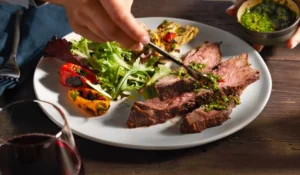
The commemorative menu, priced at $49 per person, features a blend of historical and modern dishes. Options include potato-leek soup and yellowfin tuna tartare, followed by roasted organic chicken or a prime flat-iron steak frites. Sarafian observes that the menu has been highly successful in drawing in guests who were previously unaware of the restaurant’s progressive past. "This menu has drawn in a lot of new guests who didn’t know about this terrific milestone in history," she says.
Beyond the culinary tribute, the restaurant has integrated a charitable component into the initiative. Proceeds from the Ladies’ Luncheon menu benefit the Joyful Heart Foundation. Founded by actress and activist Mariska Hargitay, the foundation works to transform society’s response to sexual assault, domestic violence, and child abuse. By partnering with this organization, Delmonico’s aligns its historical legacy of female empowerment with modern efforts to support and protect women.
Analysis of Sociopolitical Implications
The 1868 luncheon at Delmonico’s was more than a localized event; it was a microcosm of the broader shifts occurring in post-Civil War America. The mid-to-late 19th century was a period of rapid urbanization and the slow expansion of the female workforce. As more women entered professions such as journalism, teaching, and nursing, the lack of public infrastructure to support them—such as safe places to eat and meet—became a glaring issue.
The success of Sorosis at Delmonico’s proved that there was a massive, untapped market for female-centric spaces. It also demonstrated that women could organize effectively without male oversight. This realization was a precursor to the organized suffrage movement. While Sorosis was not explicitly a political organization at its inception, the networks formed within its walls provided the organizational skills and confidence that many women would later use to campaign for the right to vote.
Economically, the Delmonico brothers’ decision to welcome women was a shrewd business move. By opening their doors to half the population, they set a precedent that other restaurateurs eventually followed. This expansion of the consumer base helped fuel the growth of the American restaurant industry throughout the late 19th and early 20th centuries.
A Legacy of "Firsts" and the Future of Dining
As Delmonico’s nears its second century of operation, it remains a symbol of both tradition and progress. The restaurant has survived multiple wars, economic depressions, and a global pandemic, each time emerging with its legacy intact. Sarafian, who has been with the restaurant for nearly 20 years, believes the core appeal of the establishment remains the human connection formed over a meal.
"There’s always something special about gathering around the table, whether it’s socially or professionally," Sarafian says. She notes that in the digital age, the desire for physical gathering spaces is stronger than ever. "The Sorosis Club started in person at Delmonico’s, and now we love to honor them every year and say thank you for paving the way for all of us."
The story of Jane Cunningham Croly and the Delmonico brothers serves as a reminder that social progress is often the result of small, courageous actions. By demanding a seat at the table, Croly did more than just secure a lunch reservation; she helped redefine the boundaries of what was possible for women in America. Today, Delmonico’s stands not just as a monument to fine dining, but as a landmark of social evolution, proving that a restaurant can be much more than a place to eat—it can be a catalyst for change.