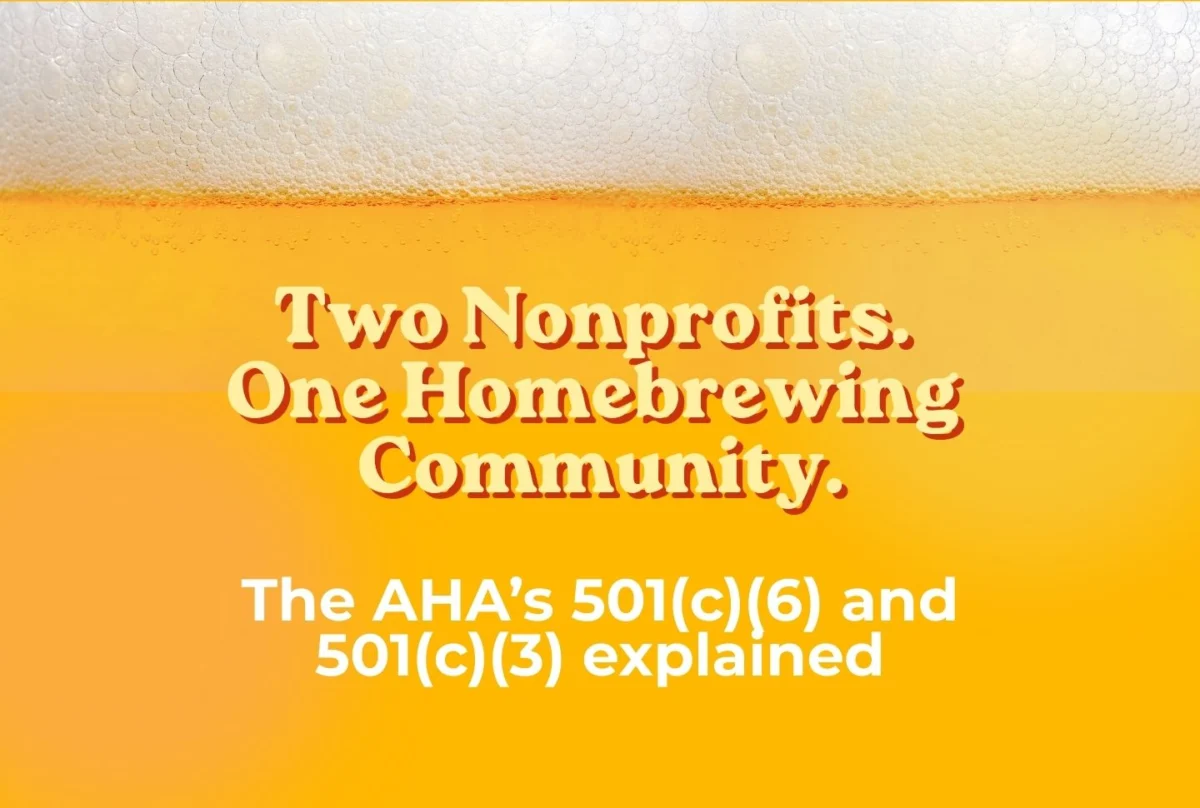

For nearly half a century, the American Homebrewers Association has operated as a cornerstone of the national craft beverage movement, built entirely through the collective passion, sweat, and dedication of individual homebrewers rather than corporate investors or outside shareholders. In a monumental milestone for the organization, Executive Director Julia Herz has officially announced that the U.S. Internal Revenue Service has approved the association’s transition into a fully independent entity operating under a dual nonprofit structure. This historic restructuring establishes a 501(c)(6) membership association alongside a 501(c)(3) charitable nonprofit, effectively charting a new course for the future of homebrewing in the United States while formally untethering the organization from its long-standing parent body, the Brewers Association.
The path to complete independence represents the culmination of years of strategic evaluation, extensive legal planning, and cooperative coordination among staff, volunteer leaders, and professional advisors. Since taking the helm as Executive Director in 2021, Herz initiated a comprehensive internal review designed to identify organizational gaps, evaluate long-term opportunities, and determine how best to preserve the core community values cherished by AHA members while simultaneously expanding the cultural footprint of the hobby. The resulting dual-status framework is designed to ensure that the organization can continue to deliver direct value to its members while unlocking new avenues for public education, grant acquisition, and philanthropic support.
A Historical Return to Roots and a Modern Evolution
The structural shift marks a fascinating full-circle moment for the national organization. When the American Homebrewers Association was originally founded back in 1978, it operated as a 501(c)(3) nonprofit under the visionary leadership of pioneers such as Charlie Papazian, Charlie Matzen, and a dedicated collective of maverick homebrewers who sought to legalize and popularize a hobby that was largely prohibited at the federal level following Prohibition. Over subsequent decades, the AHA became deeply integrated with the Brewers Association, serving as the leading voice for hobbyist brewers while the BA increasingly focused its advocacy and operational efforts on the commercial craft brewing sector.
As the craft beer movement matured and expanded globally, the leadership team recognized that the unique needs of amateur brewers required a dedicated, self-governing national organization with specialized legal and financial tools. Initially, leadership explored forming a single new 501(c)(3) entity to achieve total independence from the Brewers Association. However, as planning progressed toward 2025 and 2026, the organization realized that securing both 501(c)(6) and 501(c)(3) classifications would provide the ultimate operational flexibility.
Under this new dual-model approach, the 501(c)(6) designation will continue to power the traditional membership association, handling member governance, advocacy, and community-driven initiatives. Simultaneously, the 501(c)(3) designation will empower the newly established AHA Foundation to pursue broader educational outreach, historical preservation of brewing culture, academic grants, and tax-deductible charitable contributions.
Chronology of the Transition: From 2021 Strategic Review to 2026 Independence
The journey toward institutional independence was methodical and deliberate, spanning several distinct operational phases over a five-year period.
2021: Following a leadership transition, Executive Director Julia Herz launched an exhaustive organizational audit to evaluate structural inefficiencies, membership retention strategies, and future growth opportunities for the AHA.
2022–2023: Leadership engaged in prolonged internal discussions concerning governance, financial autonomy, and the legal feasibility of separating from the Brewers Association. Consultations with legal advisors, tax professionals, and volunteer committees mapped out the complex regulatory hurdles required to establish a standalone entity.
2024: Collaborative negotiations commenced between the AHA leadership team, volunteer governing committees, and the Brewers Association Board of Directors. Both organizations committed to ensuring a seamless transition that protected member benefits and maintained operational continuity.
2025: The strategic vision coalesced around the dual-nonprofit model. Applications were formally submitted to the U.S. Internal Revenue Service to establish the distinct 501(c)(6) and 501(c)(3) classifications, laying the groundwork for a complete organizational reboot.
2026: Official IRS approval was granted, allowing the AHA to finalize its independence. The transition is highlighted in detail in the May/June 2026 edition of Zymurgy Magazine, marking the official dawn of a new era for the organization.
The Geographic Footprint: Balancing Colorado Heritage with Texas Operations
The logistical framework of the newly independent AHA reflects both its storied past and its modern operational requirements, spanning two key states: Colorado and Texas.
Colorado serves as the historic spiritual heartland of the association. Founded in Boulder, Colorado, in 1978, the state remains deeply intertwined with the genesis of modern American homebrewing and the broader craft beer revolution. Under the new structure, the 501(c)(6) membership organization maintains its spiritual and administrative home in Colorado, preserving the legacy of member governance and historical continuity.
Meanwhile, Texas has become the operational engine room for the association’s daily activities. Through a partnership with Strategic Association Management, an association management company based in Texas, the AHA’s operational team executes day-to-day administrative tasks, communications, and program delivery. Furthermore, the newly formed 501(c)(3) charitable foundation is anchored in Texas to maximize operational efficiency while managing nationwide and international outreach programs.
While the AHA Foundation is structured as a non-membership charitable entity distinct from the traditional membership association, individual members will have abundant opportunities to financially support and fuel its mission. This collaborative synergy ensures that the foundation’s educational and cultural programming directly reinforces the health and vibrancy of the broader homebrewing community.
Unprecedented Member Support and Collaborative Partnerships
Throughout the multi-year transition, the single most critical factor in achieving independence was the unwavering backing of the AHA’s membership base. Tens of thousands of homebrewers, whose dues and active participation validate the ongoing need for a dedicated national advocacy organization, provided the mandate necessary to pursue autonomy.
Leadership has been quick to credit the extensive network of volunteers who sustained the organization through shifting eras, including pre- and post-COVID volunteer cohorts, former Governing Committee members, National Homebrew Competition organizers, Homebrew Con coordinators, and the newly appointed Founding Board. Furthermore, the transition was significantly aided by the cooperation of the Brewers Association Board of directors and professional staff, whose institutional support ensured a stable bridge between the AHA’s past structure and its independent future.
What the Dual-Nonprofit Status Means for Individual Members
For the everyday homebrewer, the structural reorganization translates into tangible long-term benefits designed to protect, elevate, and expand the hobby.
Expanded Educational Outreach and Public Engagement
With the formal backing of the 501(c)(3) charitable foundation, the AHA can develop and scale new public education programs that introduce brewing science, history, and technique to a broader demographic. These initiatives are designed to foster greater inclusivity and diversity within the brewing community, ensuring the craft continues to thrive across new generations.
Enhanced Grant and Fundraising Opportunities
Operating as a charitable nonprofit unlocks access to philanthropic foundations, corporate matching gifts, educational grants, and tax-deductible individual donations. These new capital streams will fund large-scale historical research, safety initiatives, and community-building programs that were previously unattainable under a single corporate umbrella.
Guaranteed Long-Term Institutional Stability
By dividing operations between a dedicated membership body and a robust philanthropic foundation, the AHA has insulated itself against economic volatility. This dual-pillar approach fortifies the organization’s financial health, ensuring that the voice of the American homebrewer remains protected and adequately resourced for decades to come.
Implications and Future Outlook for the Craft Beverage Sector
Industry analysts and association governance experts view the AHA’s successful transition as a notable blueprint for special-interest membership organizations seeking autonomy from larger parent trade groups. By securing dual tax-exempt status, the AHA has successfully reconciled the competing demands of member-servicing trade associations and public-benefit charitable entities.
Looking ahead, the AHA has signaled that its operational priorities, committee structures, bylaws, and membership perks will remain dynamic and responsive to member feedback. Guided by its core organizational values—Community, Education, Joy, and Volunteerism—the association is poised to draft new bylaws, form active working committees, and update its strategic plan to meet the evolving technological and cultural landscape of modern homebrewing.
As Julia Herz noted in her official address to the community, the achievement belongs entirely to the individuals who believe that the art and science of homebrewing deserve a protected, independent future. With its legal foundation secured and its historical roots honored, the American Homebrewers Association enters its next chapter better equipped than ever to champion the world’s most rewarding hobby.