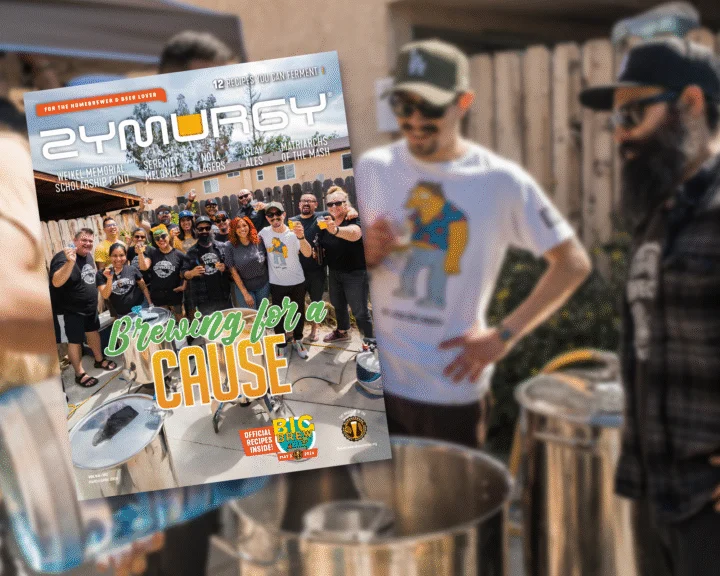

The American Homebrewers Association (AHA) has officially released the March/April 2026 edition of Zymurgy, its flagship publication dedicated to the art and science of home fermentation. This latest installment, arriving at a critical juncture for the global craft beverage industry, centers on the theme of "the pivot." As the brewing landscape faces an unprecedented convergence of climate volatility, shifting consumer demographics, and fluctuating economic conditions, the issue serves as both a technical manual and a cultural record of how enthusiasts and professionals alike are redefining their craft. Through a combination of historical retrospectives, regional spotlights, and twelve new validated recipes, the magazine documents a community in the midst of significant transformation.
The Strategic Pivot: Adapting to a New Brewing Reality
The editorial core of the March/April 2026 issue explores the necessity of adaptation. For decades, the homebrewing community operated within a relatively stable environment regarding ingredient availability and climate predictability. However, the mid-2020s have introduced a "triple threat" to the hobby: rising costs of base malts due to erratic harvest cycles, the increasing price of carbon dioxide, and a cultural shift toward lower-alcohol and highly technical styles like craft lagers.

Editor-in-Chief Dave Carpenter, who has led the publication through several years of industry flux, emphasizes that "the pivot" is not merely about survival but about finding new avenues for creativity. The issue provides data-driven insights into how brewers are utilizing drought-resistant grain varieties and exploring alternative fermentation temperature controls to mitigate the impact of rising ambient temperatures in home workshops. This focus on sustainability and efficiency reflects a broader trend in the 2026 brewing scene, where resourcefulness has become as valued as the final flavor profile.
Philanthropy and Legacy: The Stoney Creek Homebrewers
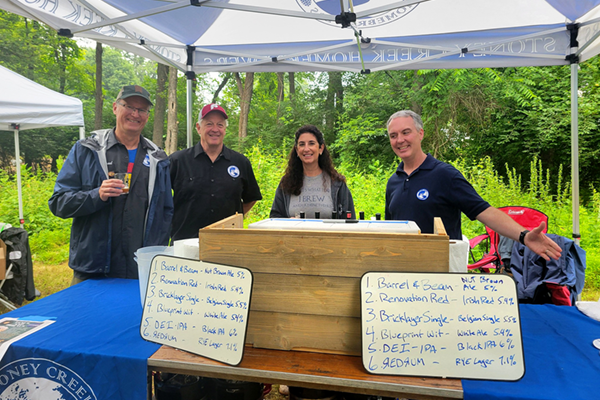
A primary feature of this issue, authored by noted brewing expert Josh Weikert, highlights the intersection of hobbyist passion and community service. The Stoney Creek Homebrewers, a club founded in Philadelphia in 2007, has become a model for how localized organizations can exert a positive social influence. The article details the establishment and growth of the Weikel Memorial Scholarship Fund.
The fund was created in the wake of a tragic loss within the club, transforming grief into a sustainable educational resource. By funding scholarships for aspiring brewers and fermentation scientists, the Stoney Creek Homebrewers are addressing a critical gap in the industry: the need for formal technical training among those who may lack the financial means to attend prestigious brewing programs. This narrative underscores a shift in homebrew club culture from purely social gatherings to sophisticated non-profit entities that contribute to the professionalization of the craft.
Reclaiming History: The Role of Women in Brewing
In a significant historical deep dive, the March/April issue seeks to correct the long-standing erasure of women from the brewing narrative. While the modern industrial era of beer has been predominantly associated with male figures, the feature "Matriarchs of Fermentation" explores centuries of practice by "brewsters"—women who managed the fermentation vats of antiquity and the Middle Ages.
The article provides a global portrait of these figures, from the alewives of 14th-century England to the indigenous women of the Americas and Africa who have maintained continuous fermentation traditions for millennia. By analyzing how industrialization and 19th-century legal frameworks systematically marginalized women in the trade, the piece offers a sobering look at the roots of current industry disparities. However, it also celebrates the modern resurgence of women in brewing, noting that the "pivot" mentioned in the issue’s theme includes a return to these ancestral roots where brewing was a domestic, community-focused endeavor led by female experts.
Regional Evolution: The Lager Renaissance in New Orleans
The geographical features in this issue highlight two vastly different environments: the humid streets of New Orleans and the peat-stained shores of Islay, Scotland.

For years, the New Orleans beer scene was characterized as a "lager desert." Outside of the historic Abita Brewing Company, the city’s extreme heat and humidity made the production of clean, cold-fermented lagers a logistical nightmare for smaller operations and homebrewers. However, the issue documents a remarkable shift over the last five years. New advancements in glycol cooling technology and a renewed consumer interest in "crisp" profiles have led to a flourishing lager culture in the Big Easy. The magazine examines how local brewers are navigating the challenges of high-gravity brewing in a subtropical climate, providing a blueprint for others living in increasingly warm regions.
Global Perspectives: Islay’s Brewing Spirit and Extreme Fermentation
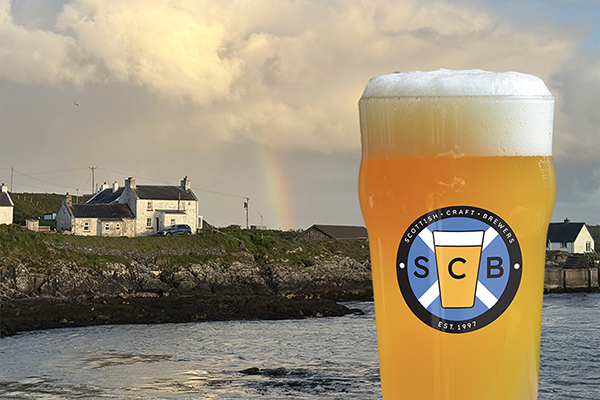
Crossing the Atlantic, the publication visits the Scottish island of Islay. While Islay is synonymous with smoky, peated whiskies, the March/April issue explores its emerging beer identity. Donald MacKenzie and Mackay Smith, inspired by the Scottish Craft Brewers homebrew club, have successfully integrated the island’s distillation heritage into their brewing processes. Their work represents a unique synthesis of two worlds, utilizing the water and atmospheric conditions that make Islay whisky world-famous to produce ales with a distinct sense of place.
Complementing this is a feature by Art Fitzsimmons on fermentation in the most inhospitable climates of North America. Focusing on indigenous practices in desert regions, Fitzsimmons unveils how heat-tolerant yeast strains and local flora—such as cactus fruit and drought-resistant succulents—are being used to create fermented beverages that defy traditional stylistic categories. This research is particularly relevant as homebrewers globally look for ways to brew without the heavy energy footprint of constant refrigeration.

Technical Resources and the AHA Membership Value
Central to Zymurgy’s mission is the provision of "validated recipes"—formulas that have been tested and peer-reviewed to ensure consistency and quality for the home user. The March/April 2026 issue includes 12 such recipes, ranging from traditional European lagers to experimental "climate-pivot" ales that utilize alternative grains.
The release of this content also serves as a membership drive for the American Homebrewers Association. As the costs of publishing and maintaining educational databases rise, the AHA continues to emphasize the value of its "Member-Only" paywall. For a subscription fee of $4.99 or through full annual membership, enthusiasts gain access to a digital archive that spans decades of brewing science. Industry analysts suggest that this model is essential for the survival of niche hobbyist publications in an era where free, unverified information often crowds out expert-led discourse.
Editor-in-Chief Dave Carpenter: A Decade of Influence
The profile of Editor-in-Chief Dave Carpenter provides context for the magazine’s current direction. Having brewed his first batch in 2009, Carpenter’s tenure has been marked by a focus on "geeking out" on both the technical aspects of beer and the linguistics of brewing culture. His leadership has steered the magazine away from being a mere collection of recipes toward becoming a high-level journalistic outlet that tackles complex issues like economic pressure and historical revisionism.

Carpenter’s approach reflects a broader trend in the hobby: the "gerund-loving" lifestyle, where brewing is integrated with hiking, traveling, and environmental stewardship. This holistic view of the hobbyist is what the AHA believes will keep the community vibrant even as the commercial craft beer market experiences cooling periods.
Broader Implications for the Brewing Industry
The themes presented in the March/April 2026 issue of Zymurgy have implications that extend far beyond the basement workshop. The "pivot" described by the magazine mirrors the strategic shifts being made by large-scale commercial breweries. As climate change alters the alpha-acid content of hops and the protein levels in barley, the homebrewing community often serves as the "R&D lab" for the wider industry. The experimental batches brewed today by AHA members using unconventional ingredients may well become the commercial staples of the 2030s.
Furthermore, the emphasis on scholarships and the history of women in brewing signals a maturation of the industry’s social consciousness. By acknowledging the erasures of the past and investing in the diverse talent of the future, the homebrewing community is positioning itself as a progressive leader in the global beverage sector.
As the March/April issue reaches mailboxes and digital devices, it serves as a reminder that while the ingredients and the climate may change, the fundamental human impulse to ferment and share remains a constant. The "pivot" is not just a reaction to hardship; it is a proactive embrace of the next chapter in brewing history. Through technical rigor and a commitment to community, Zymurgy continues to document the evolution of a craft that is as resilient as the yeast at its center.