
The human relationship with self-assessment has undergone a profound transformation. From the primal instincts that guided early humans in hunting, gathering, and survival, to the sophisticated algorithms embedded in today’s wearable technology, the means by which individuals gauge their well-being and performance have evolved dramatically. Today, a casual glance at one’s wrist or phone can reveal a wealth of physiological data: heart rate, step count, exercise intensity, sleep quality, and even caloric expenditure. This proliferation of data-driven insights marks a significant shift, offering a tangible bridge between the subjective feelings of the body and objectively measurable metrics.
The Ubiquity of Wearable Technology and the Quantified Self Movement
The rise of wearable technology is not merely a technological fad but a cornerstone of the burgeoning "quantified self" movement. This cultural phenomenon, gaining traction since the early 2010s, encourages individuals to leverage technology to collect data on various aspects of their lives – from biological to behavioral – with the aim of self-knowledge and self-improvement. The market for these devices has exploded, with reports indicating a global wearable technology market size exceeding tens of billions of dollars, projected to grow significantly in the coming years. Major players like Apple, Garmin, Fitbit (now Google), and Oura have invested heavily in research and development, continuously refining sensors and algorithms to provide increasingly accurate and diverse data points.
These sleek devices offer immediate, actionable feedback, transforming abstract concepts like "good sleep" or "active day" into quantifiable metrics. This is, in principle, a remarkably beneficial development. Human subjective assessments, while invaluable for qualitative experience, are inherently prone to biases and inaccuracies. We are not naturally adept at precisely quantifying our physical output, metabolic processes, or recovery states. The classic example of a colleague meticulously tracking their diet, only to discover a hidden 500-calorie surplus daily from an overlooked condiment, illustrates this inherent human fallibility. While exceptional individuals, like Canadian sprinter Ben Johnson, reportedly possessed an uncanny ability to estimate their 100-meter times within a tenth of a second, such precision is an outlier, prompting a broader inquiry: How accurate are individuals at assessing themselves, and how can technology facilitate better health decisions?
Evaluating the Accuracy of Data Trackers: A Critical Perspective
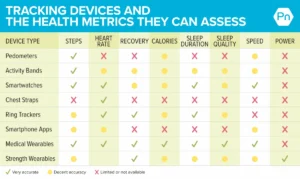
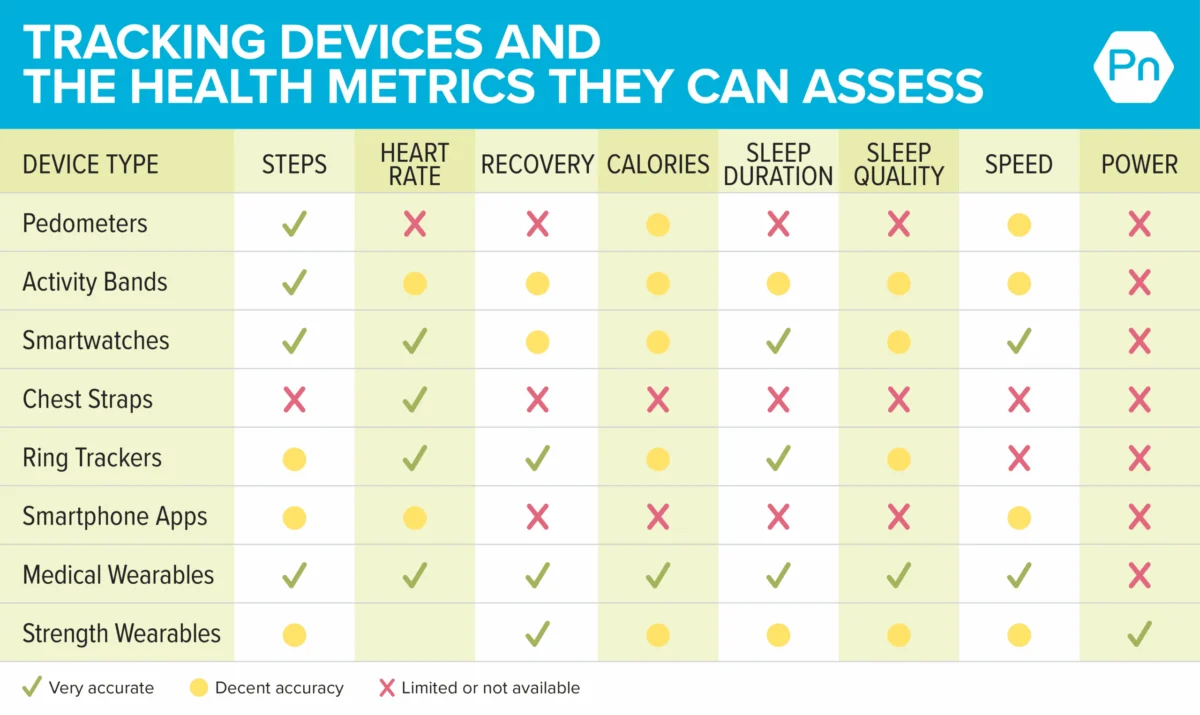
The utility of wearable technology hinges critically on the accuracy of the data it provides. However, not all data generated by these devices is created equal. The landscape of fitness trackers is diverse, encompassing everything from basic pedometers to advanced smartwatches, chest straps, ring trackers, and specialized medical or strength wearables. The reliability of the output varies significantly across brands, device types, and the specific metrics being measured.
Generally, core metrics such as heart rate and step count tend to be highly reliable across most reputable devices, with numerous studies validating their accuracy against clinical gold standards. For instance, photoplethysmography (PPG) sensors, commonly found in smartwatches, have shown good agreement with electrocardiography (ECG) for heart rate tracking during rest and moderate activity. Step counters, often relying on accelerometers, are generally robust. However, as the complexity of the metric increases, so does the margin for error. Calculations for calories burned, sleep stages, movement velocity, and recovery scores often rely on more complex algorithms that make assumptions about individual physiology, metabolism, and activity types, leading to substantial variability and potential inaccuracies. For example, estimating caloric expenditure from wrist-based devices can have a margin of error upwards of 20-30% compared to direct calorimetry. Similarly, distinguishing between deep, REM, and light sleep stages without electroencephalography (EEG) remains a significant challenge for consumer-grade devices. Consumers are advised to consult detailed reviews and scientific validations when considering devices for specific tracking needs.
The Paradox of Information: Finding the "Sweet Spot" in Decision-Making
The advent of readily available personal health data presents a unique paradox: while information is crucial for informed decision-making, an excessive amount can be counterproductive. Samantha Kleinberg, a computer scientist specializing in decision-making, highlights that "even a tiny amount of surplus information has a big negative effect on our decision-making." This phenomenon is often depicted as an inverted U-shaped curve, where optimal decision-making occurs at a "sweet spot" of relevant information. Too little data leads to uncertainty, but too much can lead to "analysis paralysis."
Consider the common experience of sifting through hundreds of online reviews for a simple product – the sheer volume of conflicting opinions and granular details can overwhelm, making a straightforward choice unexpectedly difficult. In the realm of health and fitness, where the industry often champions "more science, more customization, more complexity," navigating this information overload becomes an art form. The challenge lies in discerning "just enough" information to facilitate good decisions without being bogged down by superfluous details.

For individuals grappling with this data deluge, a fundamental question serves as a compass: "Does tracking increase my well-being and performance?" A clear affirmative or negative answer provides immediate guidance. However, for those in a "fuzzy" middle ground, specific indicators can help determine if the data is genuinely beneficial or inadvertently detrimental.
When Tracking Becomes a Catalyst for Well-being and Performance
Wearable technology proves most valuable when it serves as a supportive tool, enhancing rather than replacing intrinsic self-awareness. Three key scenarios highlight its positive impact:
-
Reducing Stress and Validating Methods: Data can be a powerful validator, especially for individuals who inherently distrust subjective feelings. Take Zak, a high-performing individual who struggled to embrace "easy" Zone 2 cardio, believing only intense effort yielded results. His heart rate monitor, however, objectively showed a steady decrease in resting heart rate and improved recovery times. This empirical evidence built his confidence, allowing him to relax into the process, which paradoxically further improved his physiological markers. For coaches, leveraging data to spotlight existing performance can be instrumental in building client confidence, especially for those prone to self-doubt. It provides expert assurance bolstered by undeniable facts. Conversely, if tracking consistently delivers negative scores on factors beyond one’s control (e.g., poor sleep quality for a new parent), it becomes a source of unnecessary stress and should be paused. The utility of tracking is deeply tied to its ability to empower, not merely report.
-
Enhancing Motivation and Facilitating Behavior Change: According to behavior models, effective action requires motivation, ability, and a prompt. Fitness trackers excel at providing that crucial prompt. Margaret, a client who believed her nightly glass of wine aided sleep, saw a clear objective decline in her sleep quality scores when she started wearing a tracker. This undeniable data served as a powerful prompt, altering her behavior. Highlighting key data points can clarify choices and solidify commitment. The immediate, personalized feedback loop created by trackers can transform abstract health goals into tangible, daily adjustments. Timothy Jones, CEO of Precision Nutrition, provides a compelling example, using data from various lifestyle trackers to significantly reduce his genetically high cholesterol levels, demonstrating how targeted feedback can drive profound lifestyle changes. However, if the pursuit of numbers eclipses the joy or purpose of an activity, leading to burnout or injury, tracking has likely become a hindrance, transforming a healthy pursuit into an obsessive one.
-
Deepening Self-Understanding: The conventional wisdom that "harder work always equals better results" can be misleading. While many benefit from pushing harder, others, like "grinders," unknowingly impede their progress by overtraining, accumulating "junk volume" that leads to fatigue without performance gains. Conversely, individuals who chronically underestimate their capacity can use data to realize their true potential. In high-intensity interval training (HIIT), for instance, fixed rest periods are often generalized estimates. Heart rate data can provide a personalized picture of actual recovery needs, showing whether one is ready for the next interval sooner or later than anticipated. This objective feedback refines one’s understanding of their body’s unique rhythms, helping to avoid both under- and over-exertion. A skilled coach uses these real-time metrics to guide clients away from unproductive effort, optimizing training and recovery. The goal is not just to do more, but to train smarter.
The Perils of Over-Reliance: Losing Touch with Internal Senses
While data offers undeniable advantages, an excessive dependence on external metrics carries significant risks. Over-reliance can lead to a disconnect from one’s own internal physiological and psychological signals – hunger, fullness, energy levels, fatigue, or mood. The "Great MyFitnessPal Blackout" of 2019 serves as a stark reminder. When the popular calorie-tracking app, used by hundreds of millions, experienced an outage, many users reported feeling adrift, unable to make dietary decisions without the app’s explicit guidance. This mild panic underscored an over-reliance that had eroded their intuitive eating capabilities. The condition of "nomophobia" – the fear of being without a mobile phone – highlights a broader societal trend towards external validation and guidance, even for internal states.
To truly thrive, individuals must learn to leverage technology without sacrificing their inherent sensory wisdom.
Integrating Sensors and Senses: A Path to More Accurate Self-Assessment
The ultimate goal is not to choose between internal senses and external data, but to integrate them, allowing technology to calibrate and enhance innate self-awareness. Intrinsic motivation, stemming from feelings of mindfulness, mastery, meaning, and success, fosters a more resilient and enjoyable practice, particularly when objective progress plateaus. When the scale stops moving, or lifting weights become stagnant, focusing on the felt experience becomes paramount.

Here are three strategies to achieve this harmonious integration:
-
Prioritize Internal Check-ins Before Data Review: Before consulting any device, pause and tune into your body. How do you feel? Estimate your performance, energy levels, or sleep quality. Only then compare your subjective assessment with the tracker’s data. This practice, repeated over time, helps to narrow the gap between your internal perception and objective reality, sharpening your self-assessment skills. It’s akin to asking someone about their vacation before they show you photos; the immediate, unmediated feeling holds unique value. Regular software updates for trackers also contribute to better predictive accuracy, refining the external data points.
-
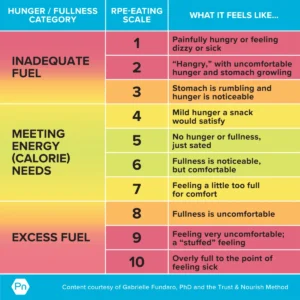
Develop Mental Shortcuts and Calibrate with Objective Measures: Coaches often ask clients to estimate their physical limits, such as reps to failure. Novices are frequently inaccurate. However, consistent use of objective trackers can rapidly improve these estimations. While advanced tools like accelerometers or blood lactate measurements exist, simpler prompts can be equally effective. For instance, asking "For a million dollars a rep, how many more reps could you do?" creates a mental shortcut to understand maximal effort. This approach leverages the Rate of Perceived Exertion (RPE), a highly validated sensory-driven measure of effort. By regularly mapping felt exertion against objective data (e.g., heart rate, power output), individuals can dramatically improve their RPE accuracy.
-
Actively Cultivate and Hone Your Sensory Awareness: Humans possess an incredibly rich and complex network of internal senses that technology cannot replicate. These include:
- Proprioception: The sense of body position and movement.
- Interoception: The sense of the physiological condition of the body (e.g., hunger, thirst, heart rate, respiration).
- Thermoception: The sense of temperature.
- Nociception: The sense of pain.
- Vestibular sense: The sense of balance and spatial orientation.
- Kinesthesia: The sense of movement and effort.
This vast array of sensory information is continuously fed into the nervous system, which acts as a powerful pattern-recognition machine. Regularly checking in with these internal feelings – how your muscles feel, your energy levels, your overall sense of well-being – allows you to continue honing this innate ability. When combined with the precision of wearable technology, this dual approach empowers individuals to leverage the cutting-edge advances in health tech while remaining deeply connected to their own unique, lived experience. The future of self-assessment lies not in the complete surrender to data, but in a symbiotic relationship between our ancient senses and our modern tools.
References
Click here to view the information sources referenced in this article.
Broader Implications and the Future of Health Monitoring
The integration of wearable technology into daily life carries significant implications for public health, preventative medicine, and personalized wellness. As devices become more sophisticated, offering insights into early disease detection, stress management, and optimal training loads, they have the potential to democratize access to health data previously confined to clinical settings. However, this also raises critical ethical considerations regarding data privacy, security, and the potential for increased anxiety or "digital hypochondria" if not managed wisely.
For health professionals and coaches, understanding how to effectively guide clients through this data-rich landscape is paramount. The role of the coach evolves from simply providing instructions to helping clients interpret their data, distinguish meaningful signals from noise, and cultivate a balanced relationship with their technology. Educational initiatives focusing on data literacy and the importance of interoceptive awareness will be crucial. Ultimately, the trajectory of self-assessment points towards a future where technology serves as an intelligent co-pilot, enhancing our innate capacity for self-care and performance, rather than an authoritarian guide dictating every move.