
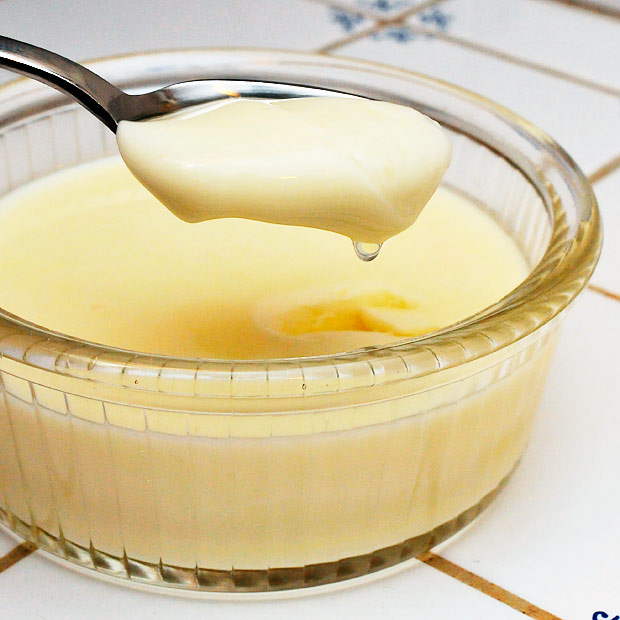
Ginger milk curd, known in Cantonese as Jiang Zhi Zhuang Nai (姜汁撞奶), is a cherished traditional dessert celebrated for its delicate texture and warming ginger spice. Despite its apparent simplicity, requiring only three core ingredients—milk, ginger, and sugar—its successful preparation has long been shrouded in mystery, leading to widespread frustration and inconsistent results among home cooks and even seasoned chefs. The process hinges on a rapid, enzyme-driven gel formation that, when understood scientifically, transforms a finicky endeavor into a predictable culinary delight. This deep dive explores the historical context, the scientific principles at play, and a method to consistently achieve the perfect, tender curd.
A Centuries-Old Culinary Tradition Meets Modern Science
Originating in the Shawan Ancient Town of Panyu, Guangzhou, Guangdong province, ginger milk curd has been a staple dessert in Southern China for centuries. Its creation is a testament to early culinary ingenuity, combining everyday ingredients to produce a unique textural and flavor experience. Traditionally, the technique relied on anecdotal wisdom passed down through generations, often involving specific pouring heights or seemingly arbitrary timings, without a full understanding of the underlying chemical reactions. This lack of precise knowledge contributed to the dish’s reputation for being temperamental, with many reporting success rates as low as 50% or requiring numerous attempts before achieving a desirable outcome. Such inconsistencies naturally fostered a plethora of "kitchen myths"—unverified beliefs about specific steps or conditions that supposedly guaranteed success, but often lacked scientific validity.
The modern scientific approach to food, however, has begun to demystify these traditional processes. Researchers, driven by a curiosity to understand the "how" behind culinary phenomena, have turned their attention to dishes like ginger milk curd. Their investigations have revealed that the magic lies in a precise biochemical interaction, making it a fascinating subject for both culinary arts and food science. The journey from hit-or-miss experimentation to a reliably "fool-proof" recipe exemplifies the power of applying scientific principles to everyday cooking.
The Enigma of Inconsistency: Debunking Culinary Folklore
The sheer volume of contradictory advice surrounding ginger milk curd preparation underscores the confusion it has historically generated. Recipes often specify idiosyncratic instructions: "milk must be exactly 80°C," "use only old ginger," "never stir," "pour from a high distance," or "let it sit for exactly 7 minutes." While some of these elements touch upon relevant factors, their often-isolated presentation and lack of scientific rationale contribute to a trial-and-error approach. For instance, some cooks might succeed on their ninth attempt after having given up on prior attempts, leading them to attribute success to a random variable that was not, in fact, the critical factor. This cycle perpetuates myths, as people try to correlate successful outcomes with minor, often irrelevant, procedural changes.
One common misconception revolves around the specific variety or age of ginger, with some believing "old ginger" is essential. While ginger varieties can differ in enzyme content, the primary issue often lies not in the ginger itself, but in how its active components are handled. Similarly, the directive to "pour from a height" is partially correct in ensuring rapid mixing, but without the crucial context of precise temperature control, it becomes just another variable in a long list of potential failures. The prevalence of these myths highlights a fundamental gap in understanding the specific enzymatic reactions driving the curdling process.
The Scientific Revelation: Ginger Proteases as Natural Coagulants
The key to understanding ginger milk curd lies in the presence of proteolytic enzymes within fresh ginger. These enzymes, collectively known as ginger proteases (GP) or zingipain (EC 3.4.22.67), possess the remarkable ability to curdle milk. This mechanism is not unique; it mirrors the action of rennet, a traditional animal-derived enzyme (chymosin) used for centuries in cheesemaking. Rennet, found in the stomachs of young mammals, is crucial for digesting milk by coagulating its proteins. Similarly, certain plant extracts, including those from kiwi, melon, and notably ginger, contain proteases capable of inducing milk coagulation.
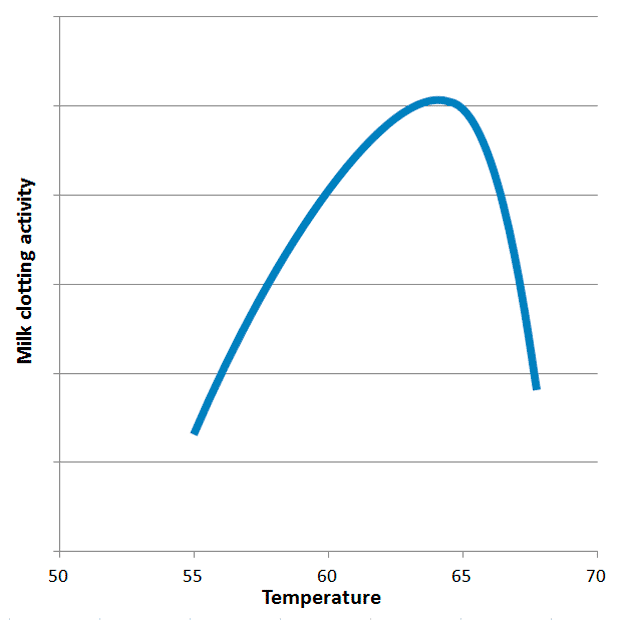
Scientific studies have precisely characterized ginger proteases, identifying their optimal conditions for activity. Unlike many other enzymes that might function across a broad temperature range, ginger proteases exhibit a remarkably narrow window of peak milk clotting activity (MCA). Research indicates that GP activity peaks around 63°C and rapidly declines outside the 60-65°C range. Above 70°C, these delicate enzymes quickly denature, becoming irreversibly destroyed and rendering the curdling process impossible. Below 60°C, their activity is too low to initiate effective coagulation within a reasonable timeframe. This exquisite sensitivity to temperature is the primary reason behind the historical inconsistencies in preparing ginger milk curd, and understanding it is paramount to achieving consistent success.
The discovery of effective plant-based proteases like zingipain has broader implications for the food industry, particularly in the development of vegetarian and vegan cheese alternatives, as well as in other dairy product formulations where non-animal coagulants are desired. Scientists are actively comparing the MCA/PA (milk clotting activity to general proteolytic activity) ratio of various plant proteases to chymosin, seeking optimal alternatives for industrial applications.
The Molecular Mechanics of Gel Formation: Casein’s Transformation
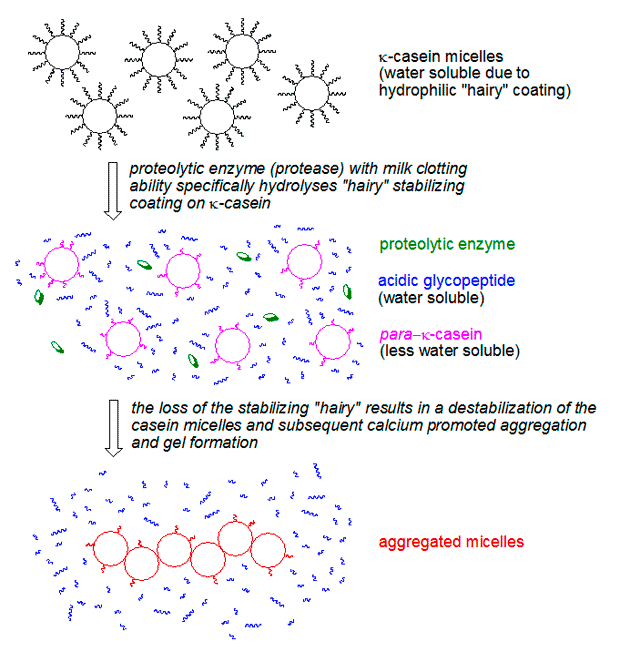
To fully appreciate how ginger proteases work, one must delve into the intricate world of milk proteins, specifically casein. Casein proteins exist in milk as large, spherical structures called micelles, which are stabilized and kept dispersed in the aqueous solution. The outer surface of these micelles is largely covered by a specific type of casein called kappa-casein (κ-casein). Kappa-casein has a unique structure: one part is highly water-soluble (a hydrophilic glycopeptide), forming a "hairy" layer that extends into the milk serum, while the other part (para-κ-casein) is less soluble and anchors to the micelle. This "hairy" layer performs two critical functions: it maintains the micelles in a dissolved state and creates steric hindrance and electrostatic repulsion, preventing the micelles from clumping together and aggregating. This stability is why milk remains a liquid.
When ginger proteases are introduced to milk within their optimal temperature window, they act as molecular scissors. Specifically, they target and cleave the water-soluble portion of the κ-casein. With this "hairy" protective layer removed, the now "shaved" para-κ-casein micelles lose their stability. They can no longer repel each other effectively and begin to collide and aggregate. Calcium ions, naturally present in milk, play a crucial role in facilitating this aggregation, acting as bridges between the destabilized micelles. This rapid, interconnected network of aggregated micelles forms the tender, fragile gel that is ginger milk curd. The entire process occurs within a few minutes, transforming liquid milk into a solid structure.
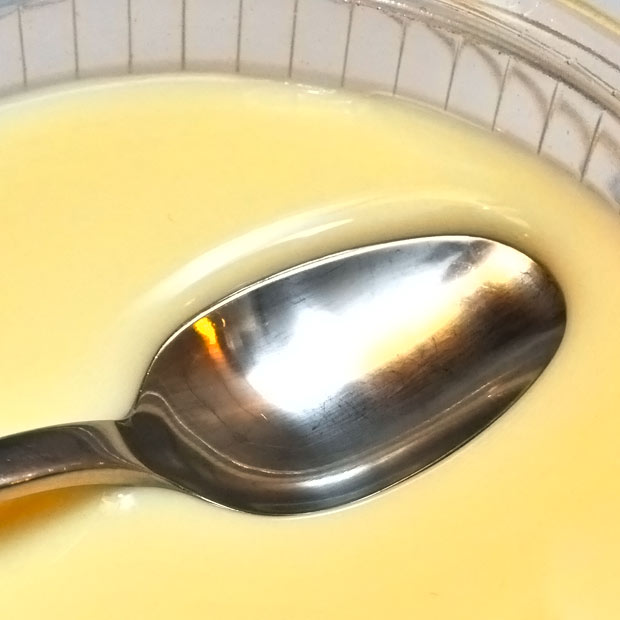
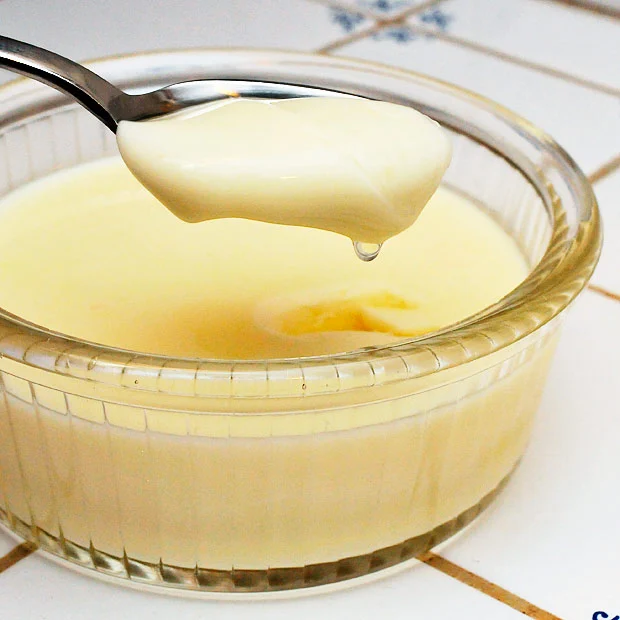
A common phenomenon observed with this type of gel is syneresis, where the gel contracts over time, expelling liquid (whey). This is visible as clear droplets forming on the surface or at the bottom of the curd, a natural consequence of the protein network tightening.
Optimizing Ingredients: Milk Choice and Enzyme Preservation
Beyond temperature control, the choice of milk and the freshness of ginger juice significantly impact the success and quality of the curd.
-
Milk Type: While full-fat milk can be used, skimmed milk often yields a stronger, more consistent gel. This is because heating milk, especially above 65°C, can cause whey proteins (like lactoglobulins) to denature and precipitate onto the κ-casein micelles. This precipitation interferes with the protease’s ability to cleave the κ-casein effectively, resulting in a weaker or non-existent gel. The presence of milk fat can also impede the formation of a robust protein network. Furthermore, since calcium ions are integral to micelle aggregation, a higher calcium concentration in the milk (or even a slight addition of calcium salts) can lead to a firmer gel.
-
Ginger Juice Stability: The effectiveness of ginger proteases is not only temperature-dependent but also time-dependent, particularly in freshly prepared juice. Ginger also contains another enzyme, polyphenol oxidase (PPO), which is responsible for the browning of fruits like apples. Once ginger is grated and its cells are ruptured, PPO becomes active. It oxidizes phenolic compounds naturally present in ginger into highly reactive ortho-quinones. These quinones, in turn, can react with and inactivate the ginger proteases (GP), significantly reducing their milk-clotting activity. At room temperature (e.g., 30°C), the half-life of GP in fresh juice can be as short as 20 minutes, meaning half of its activity is lost within that time, and 75% after 40 minutes. This explains why ginger juice cannot be prepared far in advance.
However, this degradation can be mitigated. Ascorbic acid, commonly known as Vitamin C, is a powerful antioxidant that effectively blocks the action of PPO. By adding a small amount (around 0.2%) of ascorbic acid to freshly squeezed ginger juice, the PPO activity is inhibited, thereby preserving the stability and activity of the ginger proteases. This simple trick allows for the preparation and storage of ginger juice for a longer duration, providing greater flexibility in the kitchen.
The Fool-Proof Method: A Scientifically-Backed Recipe
Armed with a deep understanding of the enzymatic and molecular processes, a reliable recipe emerges, prioritizing precise temperature control and fresh ingredients. The most critical piece of equipment for consistent success is a digital kitchen thermometer.
Fool-Proof Ginger Milk Curd Recipe:
-
Ingredients:
- 250 mL Skimmed Milk (or low-fat milk for a slightly softer gel)
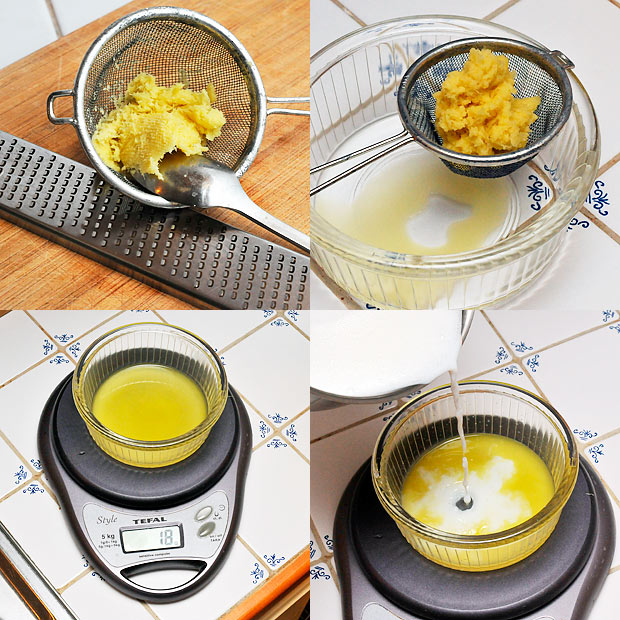
- 18 g Fresh Ginger Juice (approximately 31 g peeled ginger or 43 g raw ginger)
- 20 g Granulated Sugar
-
Instructions:
- Prepare Ginger Juice: Peel and finely microplane fresh ginger. Immediately squeeze out the juice into a bowl. It is crucial to use freshly prepared juice due to the rapid degradation of ginger proteases. If preparing slightly in advance, add a pinch (approx. 0.2%) of ascorbic acid to stabilize the enzymes.
- Combine and Heat Milk: In a clean saucepan, combine the skimmed milk and sugar. Heat the mixture carefully over medium heat, stirring gently until the sugar dissolves. Monitor the temperature precisely with a digital thermometer. The target temperature is 65°C (149°F). Do not exceed 70°C, as this will denature the enzymes; do not let it drop below 60°C, as enzyme activity will be too low.
- Prepare for Pouring: Place the bowl containing the fresh ginger juice on a stable surface.
- The Critical Pour: Once the milk reaches exactly 65°C, immediately and confidently pour the hot milk into the bowl of ginger juice from a moderate height (e.g., 15-20 cm / 6-8 inches). This height ensures rapid, thorough mixing of the milk and ginger proteases without the need for stirring.
- Set and Rest: Crucially, do NOT stir the mixture after pouring. Stirring can disrupt the nascent gel network as it forms, leading to a broken or inconsistent curd. Cover the bowl lightly (optional) and leave it undisturbed at room temperature.
- Observation and Serving: Within 5-10 minutes, a tender gel will have formed. The curd can be served immediately while still warm or chilled in the refrigerator for a firmer texture.
This recipe achieves a milk:ginger juice ratio of approximately 14:1, which typically provides a good balance of ginger flavor and gel strength. Adjusting the ginger juice quantity can alter the intensity of the flavor, but reducing it too much may compromise gel formation.
Broader Implications and Future Culinary Innovations
The scientific understanding of ginger milk curd transcends a single dessert, offering valuable insights into food science, culinary education, and the development of novel food products.
- Advancing Culinary Arts: By replacing anecdotal methods with scientific principles, culinary professionals can achieve greater consistency and confidently innovate. This knowledge transforms cooking from a purely artistic endeavor into a blend of art and applied science, fostering precision and reproducibility.
- Plant-Based Innovations: The characterization of ginger proteases highlights the vast potential of plant-derived enzymes as natural food additives and processing aids. As demand for vegetarian and vegan products grows, plant-based coagulants offer sustainable and ethical alternatives to traditional animal rennet, paving the way for new dairy-free cheese and dessert applications. Further research could explore the synergistic effects of different plant proteases or their application in other food matrices.
- Empowering Home Cooks: Demystifying complex culinary processes empowers home cooks to experiment with confidence. Understanding why a recipe works (or fails) enables them to troubleshoot effectively and adapt recipes intelligently, rather than blindly following instructions or giving up in frustration.
- Research and Development: The areas for further experimentation suggested in scientific literature are extensive. Investigating the impact of ginger variety and age on protease concentration, the precise role of calcium and other mineral ions, the optimal sugar content for texture and taste, and the potential for incorporating non-dairy milks (though the casein mechanism would not apply directly) are all avenues for future exploration by both professional scientists and curious culinary enthusiasts. Such research could lead to even more refined recipes and entirely new food products.
In conclusion, ginger milk curd stands as a remarkable example of how a seemingly simple traditional dish can encapsulate complex biochemical interactions. By bridging the gap between centuries of culinary tradition and the rigor of modern food science, we can not only perfect this beloved dessert but also unlock broader applications for natural enzymes, enriching our understanding of food and expanding our culinary horizons. The journey from mysterious failures to a scientifically assured success story underscores the enduring value of scientific inquiry in the kitchen.