
The past year has brought the concept of exponential growth into stark global focus, primarily through its sobering manifestation in the rapid spread of the SARS-CoV-2 virus. This mathematical phenomenon, often counterintuitive to human understanding, dictates that a quantity increases at a rate proportional to its current value, leading to slow initial changes followed by sudden, dramatic surges. This principle, famously illustrated by the ancient "wheat and chessboard problem" where doubling grains on each square quickly leads to astronomical numbers, became a critical lens through which societies grappled with the COVID-19 pandemic. While the virus’s exponential trajectory presented a formidable public health challenge, the same underlying principle of rapid proliferation played a surprisingly positive role in an unexpected byproduct of the global crisis: a worldwide resurgence in home baking, particularly with yeast.
The Counterintuitive Nature of Exponential Growth in a Global Crisis
The initial stages of the COVID-19 pandemic, beginning in late 2019 and escalating into early 2020, were marked by a period of underestimation and slow public reaction. This response can be largely attributed to the counterintuitive nature of exponential growth. For extended periods, the number of confirmed cases appeared manageable, leading many to believe the threat was contained or exaggerated. However, as the virus continued to spread, doubling its numbers over relatively short intervals, the seemingly stable situation rapidly transformed into an overwhelming crisis. This sudden acceleration, where case numbers appeared to "skyrocket out of nowhere," is a classic characteristic of exponential patterns.
Epidemiologists utilize the basic reproduction number (R0) to quantify the contagiousness of an infectious agent, representing the average number of secondary infections produced by one infected individual in a completely susceptible population. For SARS-CoV-2, initial R0 estimates ranged from approximately 2 to 3, meaning each infected person was likely to transmit the virus to two or three others. An R0 value greater than 1 signifies exponential growth, indicating that an outbreak will continue to spread and potentially grow into an epidemic or pandemic. Public health strategies, such as social distancing, mask-wearing, and lockdowns, were designed to reduce this R0 value to below 1, thereby "flattening the curve" and converting exponential growth into a more manageable linear or even declining trend. This global effort to curb the virus’s exponential spread highlighted the urgent need for widespread public understanding of this complex mathematical concept.
The Global Lockdowns and the Rise of Home Baking
As governments worldwide implemented stringent lockdown measures in early to mid-2020 to contain the pandemic, billions found themselves spending unprecedented amounts of time at home. This drastic shift in lifestyle, characterized by remote work, cancelled social engagements, and limited outdoor activities, inadvertently sparked a global phenomenon: the "Great Baking Boom." With more free evenings and weekends, many individuals turned to the kitchen, seeking comfort, a sense of productivity, and a creative outlet during uncertain times. Baking, particularly bread-making, experienced a renaissance.
This surge in culinary activity placed immense pressure on supply chains for staple baking ingredients. Reports from various countries, including Norway, indicated widespread shortages of flour and, most notably, yeast. Shelves typically stocked with multiple brands and types of yeast lay bare for weeks and even months. Consumers, accustomed to readily available ingredients, suddenly faced the challenge of sourcing essential components for their newfound hobby. This demand spike underscored the critical role of these seemingly humble ingredients in daily life and revealed the vulnerabilities in global supply networks when faced with sudden, unprecedented shifts in consumer behavior. The convenience of instant dry yeast, in particular, became a coveted commodity, often selling out within hours of restocking.
Unpacking the Science: Yeast and its Exponential Power
The very ingredient that became scarce during the baking boom—yeast—is itself a testament to the power of exponential growth. Saccharomyces cerevisiae, the common baker’s yeast, is a single-celled microorganism renowned for its ability to convert sugars into carbon dioxide and ethanol through fermentation. This process is fundamental to bread leavening, giving dough its characteristic airy texture and contributing to flavor development.
Under ideal laboratory conditions, with optimal access to nutrients, oxygen (initially for reproduction), and the right temperature, a single yeast cell can grow and divide into two cells in approximately 100 minutes. This remarkably short life cycle means that in just over an hour and a half, a yeast population can double. The implications of this exponential doubling are profound:
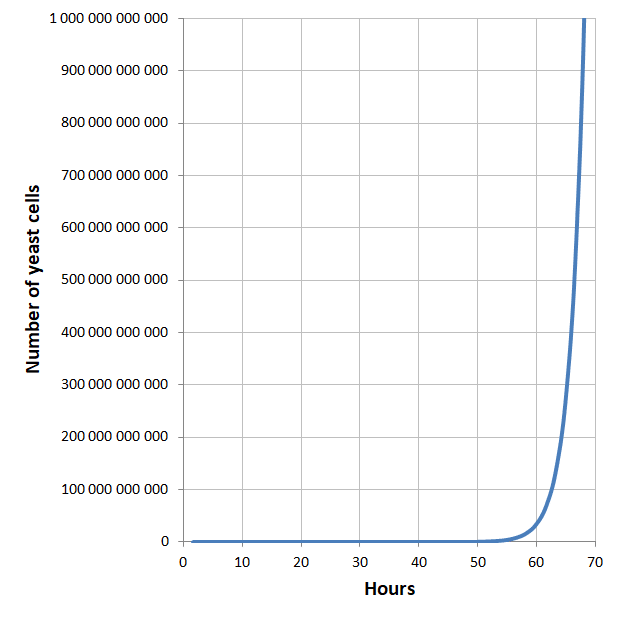
- After another 100 minutes, the two cells become four.
- After 24 hours (roughly 14.4 doubling cycles), a single cell can multiply into approximately 16,000 cells.
- By 48 hours, this number escalates dramatically to around 268 million cells.
- Before three full days have passed, the population can reach an astonishing one trillion (1,000,000,000,000) yeast cells. To put this into perspective, one trillion yeast cells is roughly equivalent to the number of cells found in a standard 50-gram piece of compressed fresh yeast, a common retail quantity.
This rapid, exponential proliferation is harnessed in the commercial production of yeast, where carefully controlled environments allow for maximum growth efficiency. However, in the context of a typical bread dough, conditions are far from ideal. Factors such as limited oxygen, nutrient depletion, varying temperatures, and the presence of inhibitory substances like high salt or sugar concentrations significantly slow down the yeast’s reproductive rate. Consequently, while the principle of exponential growth remains, the actual doubling time in a dough environment is considerably longer than the optimal 100 minutes observed in a laboratory setting. Understanding this biological mechanism not only demystifies the leavening process but also highlights the incredible efficiency of microbial life.
Mastering Fermentation: The Art of Less Yeast, More Time
The scarcity of yeast during the pandemic led many home bakers to re-evaluate their techniques, moving away from recipes that called for large quantities of yeast and embracing methods that maximized the efficiency of smaller amounts. This shift highlighted a fundamental principle of baking: longer fermentation times, even with minimal yeast, can yield superior results. By extending the bulk fermentation period, bakers allow time, rather than sheer quantity of yeast, to do the work.
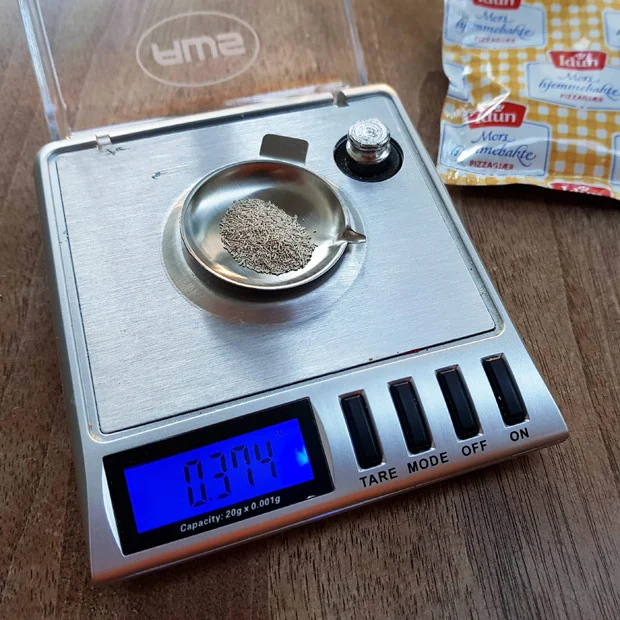
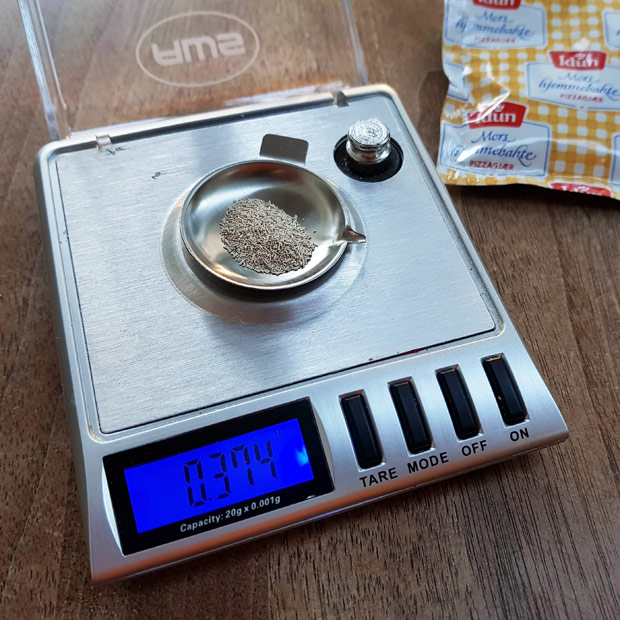
This approach requires precision. Measuring minute quantities of instant dry yeast, sometimes less than half a gram, necessitates specialized equipment. Small digital balances with a 0.001-gram readout, once considered niche laboratory tools, became increasingly popular in home kitchens. These balances, now more affordable for consumers, enable bakers to accurately measure the tiny amounts of yeast required for extended fermentation. For instance, a dough made with 1 kilogram of wheat flour, when allowed to rise for 20 hours at a consistent temperature of 20°C, may require only 0.48 grams of instant dry yeast. This contrasts sharply with traditional recipes that might call for 7-10 grams of yeast for a much shorter rise time.
The benefits of longer fermentation extend beyond mere resourcefulness. Extended bulk fermentation periods allow for the development of complex flavors. During this time, not only does the yeast slowly produce carbon dioxide, but naturally occurring lactic acid bacteria (LAB) present in the flour also become active. These bacteria produce organic acids, primarily lactic and acetic acids, which contribute to a more nuanced, often tangy, flavor profile and improve the dough’s structure and keeping qualities. This process mirrors the flavor development seen in sourdough breads, offering a glimpse into artisanal quality even with conventional yeast.
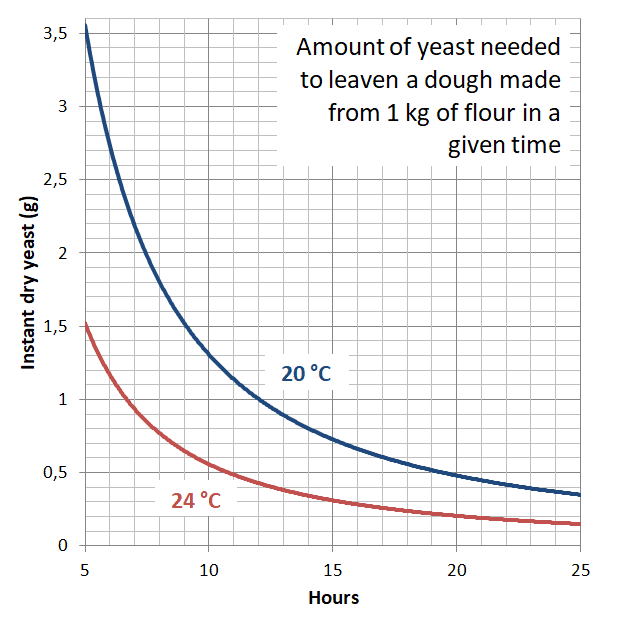
To aid in these precise calculations, dedicated tools emerged as indispensable resources. The PizzApp+ application for Android, for example, provides a comprehensive calculator for various dough parameters, including yeast quantity based on flour weight, fermentation time, and temperature. It even allows users to select between fresh compressed yeast, active dry yeast, instant dry yeast, and different types of sourdough starters, empowering home bakers to fine-tune their recipes with scientific accuracy. While sourdough offers a complete solution to yeast dependency, the unparalleled convenience of instant dry yeast, especially when used judiciously with extended fermentation, remains a highly appealing option for many.
Industry Response and Broader Societal Implications
The pandemic-induced surge in baking and the accompanying yeast shortages prompted reactions across various sectors. Public health authorities, while focused on viral containment, indirectly contributed to the baking boom by encouraging stay-at-home behaviors. Food manufacturers and retailers faced unprecedented demand for baking ingredients. Yeast producers likely ramped up production, but the sudden, global nature of the demand meant that supply chains struggled to keep pace in the short term. Retailers reported stock-outs, leading to frustrated customers but also fostering ingenuity among bakers.
Beyond the immediate market impacts, the events of the past year have had broader societal implications. The constant public discourse surrounding the R0 value and the "flattening the curve" campaign significantly enhanced public scientific literacy regarding exponential growth. More people now possess a foundational understanding of how seemingly small changes can lead to massive outcomes over time. Culturally, the baking boom has cemented home baking as a popular and accessible hobby, potentially influencing long-term consumer preferences towards artisanal, homemade goods. Economically, the demand stimulated sales of kitchen equipment, cookbooks, and specialized ingredients. Furthermore, for many, baking offered a therapeutic escape, a structured activity that provided a sense of control and accomplishment during a period of widespread anxiety and uncertainty. The renewed emphasis on using ingredients more sparingly also subtly promoted principles of sustainability and reducing food waste.
Conclusion: A Deeper Understanding of Microbes and Macro Trends
The parallel narratives of viral spread and the baking boom during the COVID-19 pandemic vividly underscore the pervasive, often underappreciated, influence of exponential growth. From the rapid proliferation of a virus that reshaped global society to the microscopic marvel of yeast cells leavening a loaf of bread, this mathematical principle governs phenomena across vastly different scales. The challenges posed by the pandemic forced a deeper public engagement with scientific concepts and simultaneously inspired a wave of culinary creativity and self-sufficiency. As societies navigate the complexities of a post-pandemic world, the lessons learned about the power of exponential functions—whether in understanding disease transmission or in mastering the art of a perfectly proofed dough—will undoubtedly contribute to a more informed and resilient populace, equipped with a renewed appreciation for both macro-level trends and the intricate wonders of the microbial world.