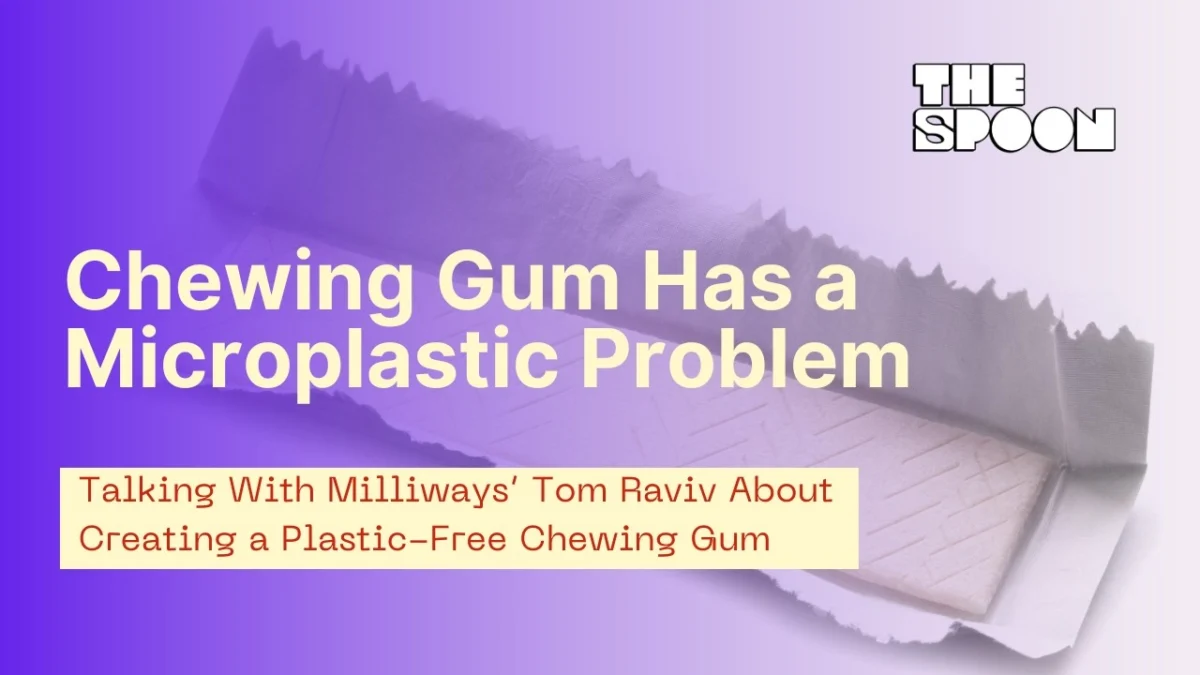

For years, Tom Raviv, a seasoned professional in mergers and acquisitions, meticulously examined the ingredient lists of his snacks and protein bars, a habit born from a dedication to mindful consumption. Yet, one daily indulgence consistently eluded his scrutiny: chewing gum. It was a seemingly innocuous habit, a quick grab from the checkout counter, a brief respite between demanding meetings. He never once paused to consider the composition of the substance he was habitually masticating. This oversight, however, was about to be profoundly challenged, setting in motion a chain of events that would lead to the founding of Milliways, a company aiming to revolutionize the chewing gum industry by eliminating its plastic core.
The turning point arrived not through a sudden health scare or a dramatic personal revelation, but through a simple, yet potent question: why, after diligently scrutinizing the ingredients of his food, had he never applied the same critical lens to his gum? This introspective query prompted a dive into the digital realm, and the findings were nothing short of startling. The primary ingredient in most commercially available chewing gum, often vaguely labeled as "gum base," is derived from petroleum-based plastics and polymers. These are the very same synthetic materials that form the backbone of everyday items like plastic bags and bottles. Academic research further underscored the magnitude of this issue, with some studies indicating that a single piece of gum can contain up to 250,000 microplastics. This revelation struck Raviv with the force of a personal affront. "I was really shocked," he recounted in a recent interview with The Spoon. "I didn’t want to be chewing on plastic and realized the stuff must be going into my body."
This moment of profound realization became the catalyst for Milliways, a venture Raviv launched in 2021. During the nascent stages of his entrepreneurial journey, while still holding down his demanding day job, his apartment transformed into an ad-hoc research and development laboratory. Weekends and evenings were dedicated to the arduous task of devising a formula for plastic-free gum. The early experiments involved sourcing unconventional materials, including a kilogram of natural tree sap, a substance historically used for chewing centuries ago. Through persistent exploration and collaboration, Raviv eventually connected with partners capable of translating this raw, natural material into a sophisticated, modern gum product. The culmination of this effort was Milliways’ inaugural offering: a plant-based gum, crafted from tree sap, boasting a remarkably clean ingredient list of no more than seven naturally derived components.
Raviv’s quest to highlight the pervasive presence of plastic in chewing gum and its potential health implications is not an isolated one. The scientific community has increasingly turned its attention to this overlooked aspect of consumer products. A significant peer-reviewed study published in the Journal of Hazardous Materials provided robust evidence that chewing gum can indeed release substantial quantities of microplastics and nanoplastics into a user’s saliva during the act of chewing. These findings resonate deeply with Raviv’s personal convictions. "When you’re chewing something made from plastic and grinding it down in your mouth, it’s no surprise you’re ingesting it," he stated. "It’s like chewing on a plastic straw. It doesn’t just disappear." This analogy starkly illustrates the inescapable reality of consuming plastic particles.
Beyond the direct health concerns, Raviv and a growing chorus of advocates emphasize the critical issue of transparency in product labeling. They argue that if consumers were fully aware that their daily chew is, in essence, a plastic product, the demand would likely plummet. The current vague labeling practices obscure this reality, allowing a product laden with synthetic materials to remain a staple in many consumers’ routines.
The message propagated by Milliways and its allies appears to be gaining significant traction. This month marked a pivotal moment for the company as it announced the successful closure of a $3 million funding round. Notably, this investment was spearheaded by former senior executives from the global gum industry itself, including luminaries such as Mehmet Yüksek, former CEO of Perfetti Van Melle North America, and Leon Amram, former owner of Intergum. Their participation signifies a powerful endorsement of Milliways’ vision and the underlying market opportunity. Since its U.S. launch just over a year ago, the brand has experienced rapid expansion, securing shelf space in more than 2,000 retail locations nationwide.
For Tom Raviv, the burgeoning momentum of his company serves as a profound confirmation of his core belief: that even seemingly insignificant, habitual choices can aggregate into substantial impact. "It’s not always the big changes," he reflected. "Sometimes it’s the little things you do every day. Those things add up, for better or worse." This philosophy extends beyond the personal realm, impacting consumer behavior and market trends. The success of Milliways suggests a growing consumer appetite for products that align with ethical and environmental values, even in categories previously dominated by conventional, less sustainable options.
The Hidden Plastic in Our Daily Lives: A Growing Concern
The ubiquity of chewing gum belies its complex and often plastic-based composition. For decades, "gum base" has been the standard ingredient, a proprietary blend that typically includes synthetic polymers, resins, and plasticizers. These components, derived from petroleum, are chosen for their elasticity, chewability, and ability to hold flavor. However, their non-biodegradable nature and propensity to break down into microparticles during mastication have raised significant environmental and health alarms.
The timeline of this awareness is relatively recent. While the concept of chewing for pleasure or as a digestive aid dates back millennia, the industrialization of chewing gum in the late 19th and early 20th centuries ushered in the era of synthetic ingredients. It wasn’t until the latter half of the 20th century and the early 21st century that the environmental impact of plastics, including microplastics, began to be widely understood and debated. This growing scientific consensus has now extended to everyday products like chewing gum, prompting a re-evaluation of consumer habits and industry practices.

Scientific Scrutiny: Unveiling the Microplastic Load
The scientific evidence linking chewing gum to microplastic ingestion is mounting. Studies, such as the one published in the Journal of Hazardous Materials, have employed sophisticated analytical techniques to quantify the release of plastic particles. These investigations often involve collecting saliva samples from participants chewing various types of gum and then analyzing these samples for the presence of microplastics. The findings are consistently concerning:
- Particle Count: Research indicates that hundreds of thousands of microplastic particles can be released from a single piece of gum.
- Particle Size: The particles range from microplastics (larger than 1 micrometer) to nanoplastics (smaller than 1 micrometer), posing varying degrees of risk for absorption into the bloodstream and accumulation in tissues.
- Material Composition: The microplastics found in gum often consist of polyethylene, polyvinyl acetate, and polystyrene – common polymers used in plastic manufacturing.
These findings are not merely academic curiosities; they have tangible implications for public health. While the long-term effects of chronic microplastic ingestion are still under investigation, emerging research suggests potential links to inflammation, endocrine disruption, and other adverse health outcomes. The fact that these particles are directly introduced into the oral cavity, a gateway to the digestive and circulatory systems, makes the issue particularly pressing.
Milliways’ Innovative Approach: A Return to Nature
Milliways’ foundational principle is a stark departure from industry norms. By utilizing natural tree sap as its primary gum base, the company taps into a tradition that predates the petrochemical age. This plant-based alternative offers several advantages:
- Biodegradability: Natural tree sap is biodegradable, significantly reducing environmental pollution compared to synthetic gum bases.
- Reduced Chemical Load: The ingredient list is intentionally minimalist, featuring naturally derived sweeteners, flavorings, and softeners, thereby minimizing exposure to artificial additives and chemicals.
- Allergen Consideration: While not explicitly stated in the initial reports, a focus on natural ingredients often leads to considerations for common allergens, potentially making the product more accessible to a wider audience.
The development process, as described by Raviv, highlights the challenges and innovations involved in creating a commercially viable, natural gum. Sourcing consistent, high-quality natural sap, understanding its unique properties, and developing manufacturing processes that maintain its integrity while incorporating other natural ingredients require significant scientific and technical expertise.
Industry Reactions and Market Implications
The substantial funding secured by Milliways, particularly from established figures within the global gum industry, signals a significant shift in the market landscape. This investment suggests that established players are recognizing the growing consumer demand for healthier, more sustainable alternatives and are willing to back disruptive innovations.
The expansion of Milliways into over 2,000 stores nationwide indicates a strong consumer response to the company’s message and product offering. This success has several implications:
- Increased Competition: Milliways’ traction could spur other companies to develop their own plastic-free gum alternatives, fostering a more competitive and innovative market.
- Consumer Education: The brand’s marketing and communication efforts are likely to raise broader consumer awareness about the composition of traditional chewing gum, potentially leading to a wider market shift.
- Regulatory Scrutiny: As awareness grows, there may be increased pressure for more transparent labeling requirements for chewing gum and other products containing microplastics.
The involvement of former industry leaders like Yüksek and Amram is particularly noteworthy. Their expertise, gained from years navigating the complexities of the global gum market, lends credibility to Milliways’ business model and its potential for widespread adoption. Their investment can be interpreted as a strategic move to capitalize on emerging consumer trends and potentially pivot established companies towards more sustainable practices.
The Broader Impact: Habitual Choices and Collective Change
Tom Raviv’s emphasis on the cumulative impact of small, daily choices resonates deeply in the context of sustainability and health. The chewing gum industry, with its billions of dollars in global revenue, represents a microcosm of how deeply ingrained habits can have significant, often unnoticed, environmental and health consequences.
Milliways’ mission is more than just selling gum; it’s about fostering a culture of conscious consumption. By providing a tangible, accessible alternative to a common, yet problematic, product, the company empowers consumers to make choices that align with their values. This ripple effect, starting with individual decisions, has the potential to drive broader systemic change, influencing manufacturing processes, ingredient sourcing, and regulatory frameworks.
The journey from a personal realization in a busy office to a well-funded startup challenging a global industry is a testament to the power of curiosity and the pursuit of a healthier, more sustainable future. As the world becomes increasingly aware of the pervasive presence of plastics, the simple act of chewing gum is being re-examined, and companies like Milliways are at the forefront of a movement to redefine what it means to enjoy a daily chew. The future of gum, it appears, is becoming decidedly more natural and less plastic.