
A profound transformation in coffee appreciation, driven by a scientific understanding of its myriad variables, is empowering enthusiasts and professionals alike to elevate the daily brew from a simple commodity to a finely tuned sensory experience. This shift, often associated with the "third wave of coffee," has seen a significant increase in focus on bean origin, roast profile, and the intricate science of extraction. What began for many as a practical need for caffeine has evolved into a meticulous exploration of flavor, guided by principles of chemistry and physics, particularly evident in the burgeoning specialty coffee scene across Scandinavia and beyond.
The journey into this scientific realm often starts subtly. For some, the transition from an occasional coffee consumer to a daily ritual, perhaps necessitated by demanding professional lives and lengthy commutes, marks the initial step. Over time, this routine consumption often gives way to a deeper appreciation for the nuanced flavors inherent in quality beans. The recognition of "lightly roasted and single-sourced specialty coffee" as a distinct category, far removed from darker, more uniform commercial roasts, is a common turning point. This preference is nurtured by active communities and services, such as monthly coffee subscriptions from roasters across Norway, Sweden, and Denmark, which deliver diverse, high-quality beans directly to consumers, fostering an environment of continuous sensory discovery.
The year 2020, marked by unprecedented global changes, inadvertently provided many with extended periods for introspection and the refinement of personal hobbies. For coffee enthusiasts, this meant more time for reading, contemplation, and intensive experimentation with brewing techniques. Experiences like a "Coffee Advent Calendar," featuring 24 days of blind tasting, underscored the profound impact of origin and processing methods on flavor. Such exercises serve as both a delight when origins are correctly identified and a valuable learning opportunity when distinctions prove challenging, revealing the complex interplay of factors that shape a cup’s profile. Similarly, experimenting with various coffee hand grinders, alongside established equipment, can introduce a degree of variability that, while initially frustrating, often compels a deeper dive into the science of reproducibility and control in brewing. This period of intensified exploration highlights a growing realization: achieving consistently excellent pour-over coffee requires more than just good beans and hot water; it demands a systematic, scientific approach.

The scientific investigation of extraction is not new in culinary or chemical contexts, having been applied to water, oil, ethanol, and even beer brewing. Within coffee, earlier explorations touched upon diverse topics like Norwegian egg coffee, the convenience of the Aeropress, and the surprising impact of adding salt to coffee, even involving collaborations with renowned experts like Tim Wendelboe. However, the last decade has witnessed an explosion of scientific literature and practical knowledge specifically concerning pour-over and drip coffee. This wealth of information, increasingly bridging academic research with practical applications for home brewers and cafés, signals a mature phase in coffee science, moving beyond anecdotal evidence to data-driven optimization.
The Genesis of Flavor: From Bean to Brew
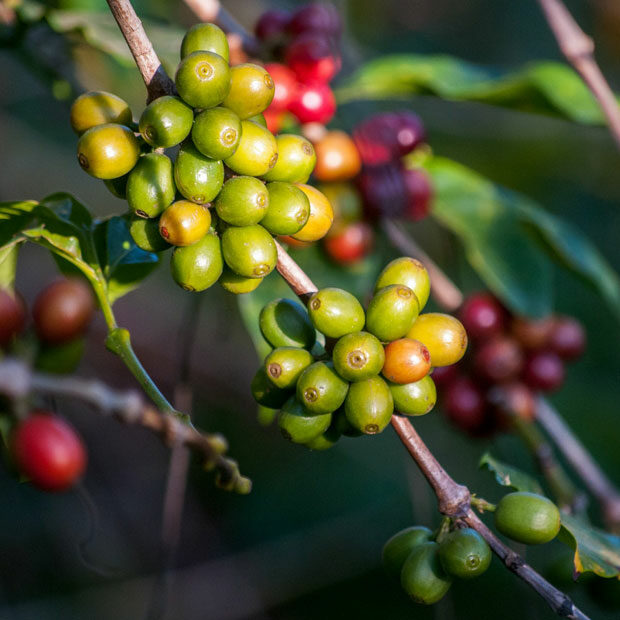
The journey of a single coffee bean, from its origin as a fruit on a Coffea arabica shrub to the final beverage, involves an astonishing number of stakeholders and processing steps, each exerting influence on the ultimate quality. While much of this intricate chain—cultivation, harvesting, processing, and roasting—remains outside the consumer’s direct control, the power to select high-quality beans, ethically sourced and expertly roasted, is paramount. Once these beans arrive in the kitchen, the brewer assumes the critical role, influencing several key parameters that dictate the final taste. Understanding and controlling these variables is the cornerstone of the scientific brewing process.
Key Parameters for Optimized Extraction
Brewing coffee effectively involves a delicate balance of several interconnected variables. Mastering these parameters allows for repeatable results and the ability to fine-tune flavor profiles.
1. Brew Ratio (BR): The Foundation of Strength
The brew ratio, defined as the mass of water relative to the mass of coffee grounds, is the simplest and most fundamental parameter in coffee brewing. Expressed typically as a ratio (e.g., 15:1 or 16.7:1), it quantifies the concentration of the final beverage. A common starting point, often recommended by the Specialty Coffee Association (SCA), is 60 grams of coffee for 1000 grams of water, resulting in a BR of approximately 16.7. This ratio is analogous to "Baker’s percentage" in baking, providing a convenient and scalable recipe. Brew ratios for black coffee generally fall within the range of 15 to 25. For instance, a 15:1 ratio yields a stronger coffee, while a 25:1 ratio produces a lighter brew. This parameter is crucial for scaling recipes up or down while maintaining consistent strength.
2. Total Dissolved Solids (TDS): Quantifying Strength
While brew ratio dictates the initial concentration of coffee grounds to water, Total Dissolved Solids (TDS) measures the actual amount of coffee solids dissolved in the final beverage. Expressed as a percentage (e.g., 1.2-1.5%), TDS is a direct indicator of coffee strength. Many individuals find overly strong coffee to be bitter or astringent; a slight dilution with hot water can sometimes unlock a surprising array of fruity notes. However, such an empirical approach is imprecise. Measuring TDS provides an objective metric, helping brewers understand if their coffee falls within an optimal strength range, typically between 1.15% and 1.35% for filter coffee according to SCA standards.
The traditional gravimetric method—evaporating a sample to dryness and weighing the residue—is impractical for home use due to the minute quantities involved (e.g., 6-7 mg of dry matter from a 500 mg sample) and the requirement for highly accurate laboratory balances (0.0001 g precision). Fortunately, refractometry offers a more accessible solution. Refractometers measure the refractive index of a liquid, which changes based on the concentration of dissolved solids.
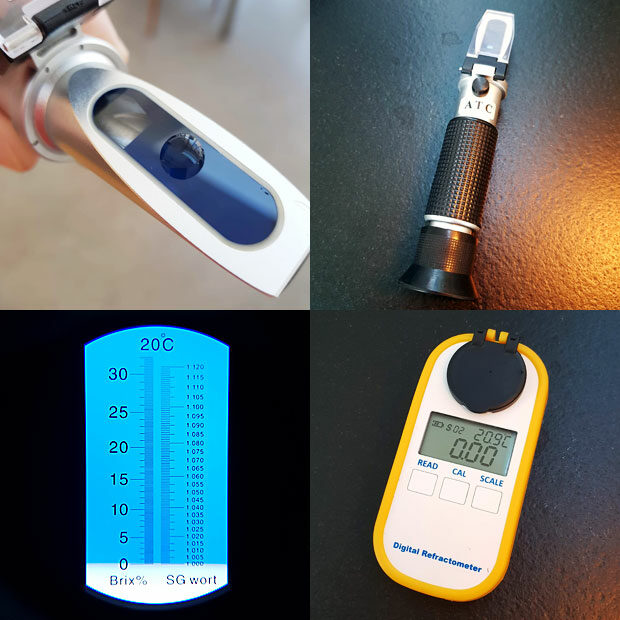
- Handheld Refractometers: These analog devices, often available with a Brix (%Brix) scale, are affordable and versatile, useful for various kitchen applications (e.g., measuring sugar in sorbets). A conversion factor of 0.85 (TDS = Brix x 0.85) can approximate coffee TDS. While they provide a general indication (e.g., 0.1-0.2%Brix resolution), their precision is limited for fine-tuning coffee strength. However, they are excellent for confirming whether a brew is significantly outside the typical range.
- Digital Refractometers: More accurate and often featuring automatic TDS conversion, these devices offer 0.01%Brix resolution but come at a higher cost.
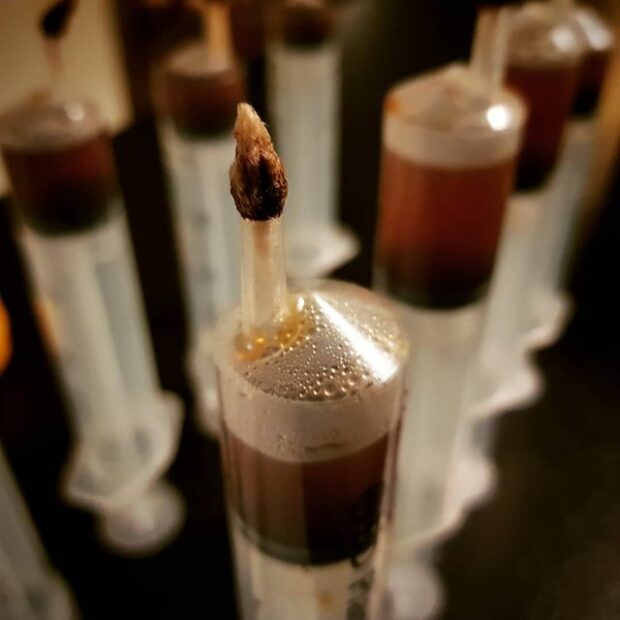
To obtain accurate TDS readings, especially for samples taken during the extraction process, coffee samples must be hot-filtered to halt extraction and then allowed to cool completely to minimize evaporation and ensure stable readings. Simple DIY methods, such as using plastic syringes with cotton plugs, can effectively filter and cool samples while minimizing waste and cost. The fact that a standard cup of black coffee is over 98% water underscores the potency of the dissolved solids in shaping its character.
3. Extraction Yield (EY and EEY): The Efficiency of Flavor Extraction
Extraction Yield (EY) quantifies the percentage of dissolved solids extracted from the coffee grounds relative to the initial dry mass of the grounds. It measures how efficiently the soluble compounds are transferred from the coffee to the water. A typical target range for EY, endorsed by the SCA, is 18-22%. Below 18%, coffee tends to taste "under-extracted"—sour, weak, or grassy. Above 22%, it can become "over-extracted"—bitter, hollow, or astringent.
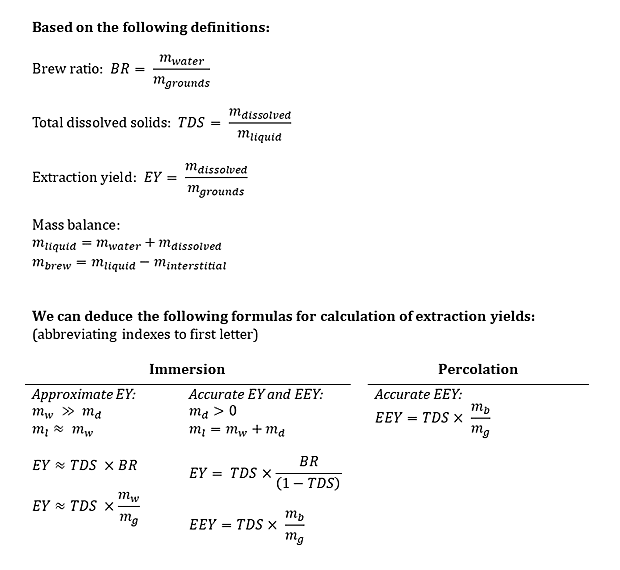
The calculation of EY can be nuanced, particularly for percolation brews (like pour-over) versus immersion brews (like French press), due to the "interstitial liquid" remaining in the spent grounds. To address this complexity, two definitions are often used:
- Extraction Yield (EY): Focuses on the total solids extracted from the grounds into the entire liquid mass (including what remains in the grounds). This is more relevant for understanding the total amount of material removed from the coffee.
- Effective Extraction Yield (EEY): Focuses specifically on the solids delivered into the final cup. This is more pertinent from an economic perspective and for assessing the actual beverage consumed.
For percolation brews, EY and EEY often converge under certain assumptions, as the interstitial liquid is not considered part of the final brew. In immersion brews, where everything is mixed, the distinction becomes more critical. Precise calculations, accounting for the mass added by dissolved solids to the liquid, require iterative formulas, highlighting the depth of this scientific pursuit.
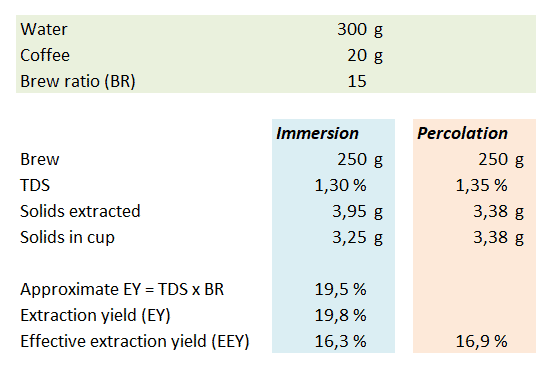
For example, using 20g of coffee and 300g of water to yield 250g of brew:
- An immersion brew with 1.30% TDS might result in an approximate EY of 19.5% and a precise EY of 19.8%, with an EEY (solids in the cup) of 16.3%.
- A percolation brew with 1.35% TDS in the cup might result in an EEY of 16.9%.
This comparison reveals that while immersion might extract more total solids from the grounds, percolation can be more effective at delivering those solids to the cup, leading to distinct flavor profiles. The difference in total extracted solids (e.g., 3.95g vs. 3.38g in the example) suggests a varied chemical composition, explaining the sensory differences between brewing methods. Factors like evaporation during brewing, which can alter the effective brew ratio and temperature, also play a role and are often disregarded for practical reasons, though they impact accuracy. Furthermore, the inherent water content (1-4%) in roasted coffee beans should ideally be factored into highly accurate yield calculations. The precision of yield calculations is highly dependent on the accuracy of coffee mass and TDS measurements. A handheld refractometer’s 0.1% TDS uncertainty can lead to significant variations (e.g., +/- 1.7% in EY for a 15g coffee dose), underscoring the value of more precise tools for serious enthusiasts.
4. Grind Size and Particle Size Distribution (PSD): The Surface Area Story
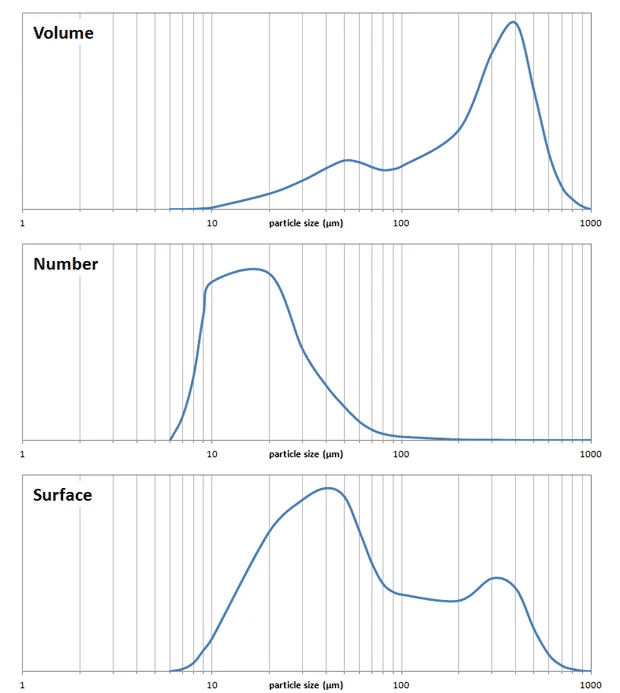
The process of grinding coffee beans is not merely about breaking them down; it’s about creating an optimal surface area for extraction. When a roasted bean is ground, it shatters into a distribution of particle sizes, from large "boulders" to fine particles, or "fines" (typically defined as particles smaller than 100 micrometers). This "Particle Size Distribution" (PSD) is critical because extraction primarily occurs on the surface of these particles.
Visualizing PSD can be deceptive. While a volume distribution might show a relatively small proportion of fines, a number-based distribution reveals their sheer abundance. Crucially, a surface area distribution often highlights that over half of the total available surface for extraction can come from particles smaller than 100 micrometers. This is significant, especially considering preliminary research suggesting that coffee particles are only extracted to a depth of about 100 micrometers. This implies that the core of larger particles may remain largely unextracted, representing "wasted" coffee. However, larger particles are not without purpose; they play a vital role in forming a permeable filter bed, crucial for controlling flow rate and preventing clogging in percolation methods.
The ideal PSD for pour-over coffee is generally a narrow distribution with minimal fines. Excessive fines lead to over-extraction (bitterness), slower flow rates, and potential clogging of filters. Conversely, too many large particles result in under-extraction (sourness) and inefficient use of the coffee. Grinders are the primary determinants of PSD. Inexpensive blade grinders produce an inconsistent and wide distribution with many fines, making them unsuitable for quality brewing. Burr grinders, which crush beans between abrasive surfaces, are preferred. These come in various designs (flat or conical burrs) and materials, with higher-end models often featuring larger flat burrs designed for specific brewing methods (e.g., espresso burrs for fines, pour-over burrs for uniformity). Industrial grinders achieve extremely narrow PSDs, suggesting that commercially pre-ground filter coffee, if properly packaged in an inert atmosphere, could theoretically offer a more uniform grind than most home equipment. However, the rapid oxidation of ground coffee upon exposure to air makes fresh grinding of whole beans almost universally preferred for specialty coffee. Experimentation with techniques like double grinding (coarse followed by fine) may help achieve narrower PSDs, though accurate measurement tools like sifters (e.g., Kruve) or image analysis software are needed to evaluate results.
5. Freshness of Beans: The Battle Against Oxidation
The mantra in specialty coffee is "use freshly roasted beans." Coffee beans, particularly after roasting, are highly susceptible to oxidation when exposed to oxygen. This process leads to the degradation of aromatic compounds and the development of stale, rancid flavors. Storing beans in an airtight container, ideally removing as much air as possible, is essential. Once a bag is opened, the clock starts ticking; quality rapidly declines within days. Grinding coffee significantly increases its surface area, accelerating oxidation. Therefore, grinding only what is needed immediately before brewing is paramount. For longer-term storage, freezing or refrigerating larger quantities can slow down the oxidation process, preserving freshness.
6. Water Composition: The Unsung Hero of Flavor
Water is not a neutral medium in coffee brewing; its mineral content significantly influences extraction and flavor. Just as with beer brewing, specific mineral profiles in water are optimal for extracting desirable compounds from coffee. Key minerals and their roles include:
- Calcium and Magnesium: Contribute to body and sweetness, enhancing the perception of desirable acids.
- Bicarbonate (Alkalinity): Acts as a buffer, neutralizing acids and impacting the perceived brightness and acidity of the coffee. Too much bicarbonate can flatten flavors, while too little can make coffee overly acidic.
The Specialty Coffee Association (SCA) has established water quality standards, recommending a TDS range of 75-250 mg/L, with specific targets for hardness and alkalinity. While some regions have naturally soft water (like Scandinavia), others contend with hard water. This has led to the development of "water recipes"—adding specific mineral salts (e.g., Epsom salts, baking soda, gypsum) to distilled or purified water to create an ideal brewing profile. For those starting with tap water, a detailed analysis of local water composition is the first step, followed by targeted mineral additions to achieve a balanced profile that complements the coffee.
7. Temperature: The Catalyst for Extraction
Temperature is a critical factor, affecting both the solubility of compounds and the rate of diffusion. Higher temperatures generally increase the extraction rate and the solubility of various molecules. For optimal hot brewing, temperatures typically range between 90-96°C (195-205°F). Maintaining a consistent temperature throughout the brewing process is crucial, as fluctuations can lead to uneven extraction. Preheating brewing equipment and using kettles with precise temperature control are common strategies.
However, maximizing extraction is not always the goal. Cold brew, for instance, intentionally uses cold water over an extended period (typically 12-24 hours). This lower temperature significantly alters the extraction kinetics, resulting in a brew with lower acidity and bitterness compared to hot coffee, as different compounds are extracted or extracted at different rates. Furthermore, the serving temperature of the final beverage profoundly impacts sensory perception; sweetness and bitterness tend to diminish as coffee cools, while sourness and saltiness remain more stable. Therefore, when evaluating different brewing methods, it is ideal to compare them at the same temperature.
8. Filter Material: Shaping Clarity and Body
The choice of filter material has a tangible impact on the clarity, body, and overall flavor profile of the brewed coffee.
- Paper Filters: These are highly effective at retaining fine particles, leading to a "clean" cup profile. The absence of microscopic particles, which humans can surprisingly detect at sizes as small as 5 micrometers (as seen in chocolate studies), contributes to a refined mouthfeel. Paper filters also absorb some coffee oils, including diterpenes like cafestol and kahweol, which can influence cholesterol levels. The thickness and pore size of paper filters vary significantly (e.g., Chemex filters are much thicker than V60 filters), directly affecting flow rate and particle retention. Bleached paper filters are generally preferred for flavor neutrality, as unbleached filters can impart papery notes due to residual lignin and hemicellulose. Modern bleaching processes predominantly use oxygen-based agents, mitigating concerns about chlorine.
- Metal Filters: Unlike paper, metal filters allow fine particles and oils to pass through, resulting in a brew with more "body" or "texture"—sometimes described as "muddy" compared to paper-filtered coffee. While this can be undesirable for some, the retained oils and micro-fines contribute to a richer mouthfeel, particularly valued in methods like French press or for specific coffee profiles. Metal filters are also reusable, offering an environmental and cost-effective alternative to paper.
- Cloth and Nylon Filters: These offer a middle ground, retaining some fines while allowing more oils than paper. However, they can discolor over time and require diligent cleaning to prevent off-flavors.
The scientific analysis of filters, including microscopy of pore structures, reveals significant differences that influence filtration performance. It is important to note that dry filter characteristics can change when wet, as cellulose fibers swell, potentially altering effective pore size and filtration efficiency.
A Structured Approach to Coffee Optimization
For those embarking on the scientific exploration of coffee brewing, a logical progression of parameters to master is crucial. The following hierarchy prioritizes variables based on their immediate and significant impact on the final cup:
- Brew Ratio & Total Dissolved Solids (TDS) / Extraction Yield (EY): These fundamental parameters dictate the strength and overall efficiency of extraction. Getting these right is the foundational step.
- Grind Size and Particle Size Distribution (PSD): Optimizing grind size directly impacts extraction rate and filter bed performance, working in tandem with brew ratio and yield.
- Freshness of Beans: Even with perfect brewing parameters, stale beans will yield a lackluster cup. Ensuring fresh, properly stored beans is essential.
- Water Composition: While often overlooked by beginners, water chemistry has a profound effect on flavor. Adjusting mineral content can unlock subtle nuances.
- Temperature: Maintaining the optimal brewing temperature ensures consistent extraction kinetics.
- Filter Material: This choice fine-tunes the clarity and body of the final brew.
It is unproductive to focus on advanced parameters like water chemistry if the basics of brew strength and grind size are inconsistent. Many experienced brewers prioritize mastering the first two categories before venturing into the complexities of water adjustment or temperature profiling. The constant rotation of different coffee origins and processing methods, while enriching, can also make it challenging to isolate the impact of minor adjustments to variables like water. Tools like the "Coffee Compass," developed by Barista Hustle, provide a practical framework for diagnosing flavor issues (e.g., too bitter, too sour, too weak) and guiding adjustments to grind size and brew ratio, serving as an invaluable aid in navigating the intricate landscape of coffee flavor. This systematic, data-driven approach transforms coffee brewing from an art into a repeatable science, empowering every brewer to consistently achieve their ideal cup.