
The culinary world often presents mysteries, where simple ingredients combine to create complex results, sometimes defying logic and consistency. One such enigma is ginger milk curd, known in Chinese as 姜汁撞奶 (Jiāng zhī zhuàng nǎi), a traditional Cantonese dessert celebrated for its delicate texture and warming spice. This seemingly straightforward dish, comprising only milk, ginger, and sugar, has historically confounded home cooks, leading to a proliferation of contradictory recipes and persistent "kitchen myths." A recent deep dive into its preparation, driven by research into gel formation without external hydrocolloids, has peeled back the layers of culinary folklore to reveal the precise scientific principles governing its success, offering a blueprint for a consistently perfect, tender gel.
The Culinary Conundrum: Unpacking Kitchen Myths
The initial fascination with ginger milk curd stemmed from its apparent simplicity. The promise of a fragile, flavorful gel forming within minutes from just three common ingredients – milk, ginger, and sugar – was compelling. Early attempts by enthusiasts often yielded inconsistent results; some found instant success, while others faced repeated failures. This unpredictability fostered an environment ripe for the emergence of unsubstantiated culinary advice. Reports from home cooks varied wildly, with some claiming success on only 50% of attempts, others celebrating a breakthrough after nine tries, and some even abandoning the traditional method to incorporate egg whites, attributing the process to "a lot of skills and a pinch of luck."
This variability is the breeding ground for kitchen myths. When a recipe’s outcome is inconsistent, cooks naturally try to correlate success or failure with subtle variations in their technique. A slight deviation in temperature, a different brand of milk, or even the speed of pouring might be erroneously identified as the critical factor. Without a robust scientific understanding, these anecdotal observations solidify into prescriptive, yet often incorrect, instructions. For instance, some recipes advise vigorous stirring, while others strictly forbid it; some insist on specific milk types or heating methods that prove irrelevant or even detrimental. The challenge, therefore, was to move beyond this anecdotal knowledge and establish a scientifically grounded methodology.
The Science Revealed: Ginger’s Enzymatic Secret
The secret to ginger milk curd lies not in mystical technique, but in the biochemical interaction between milk proteins and enzymes found in fresh ginger. This process belongs to a broader category of food preparations where enzymes are utilized to curdle milk, a prime example being cheesemaking with rennet. Rennet, traditionally sourced from the stomachs of young mammals, contains the proteolytic enzyme chymosin (also known as rennin), which breaks down proteins.
Ginger, it turns out, possesses its own arsenal of proteolytic enzymes, collectively referred to as ginger proteases (GP), or more specifically, zingipain (EC 3.4.22.67). These enzymes are the tireless workers responsible for initiating the gel formation. However, their activity is remarkably sensitive to temperature. Research indicates that ginger proteases are rapidly denatured, or irreversibly destroyed, at temperatures exceeding 70°C. Conversely, their milk clotting activity (MCA) peaks within a narrow window, optimally around 63°C, and declines sharply both above 65°C and below 60°C. This critical temperature range, often overlooked in traditional recipes, is the primary reason for many failed attempts. Outside this narrow band, while some general proteolytic activity might persist, the specific hydrolysis required for milk coagulation is significantly diminished.
The efficacy of ginger proteases in curdling milk has even drawn the attention of food scientists exploring plant-based alternatives to animal rennet. Studies have compared the milk-clotting properties of various plant extracts, finding that ginger, kiwi, and melon all contain proteases with a relatively high MCA/PA (milk-clotting activity to general proteolytic activity) ratio, albeit not as high as chymosin. Interestingly, the optimal temperatures for these plant proteases vary: kiwi proteases are most active around 40°C, while melon proteases thrive near 70°C, underscoring the specificity of enzymatic action across different plant sources.
Crafting the Foolproof Recipe: Precision and Simplicity
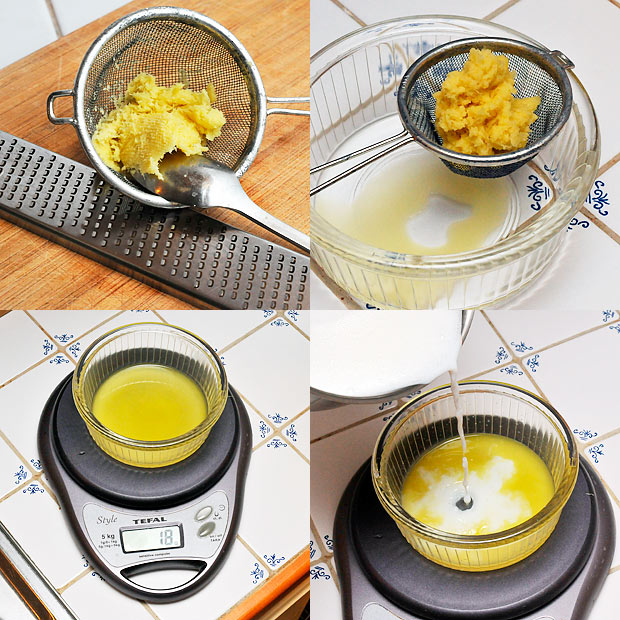
Armed with this scientific insight, a truly foolproof recipe for ginger milk curd emerges, prioritizing precision over guesswork. The key piece of equipment becomes a digital kitchen thermometer, indispensable for hitting the crucial temperature window.
Foolproof Ginger Milk Curd Recipe:
-
Ingredients:
- 250 mL skimmed milk
- 18 g fresh ginger juice (approximately 31 g peeled ginger or 43 g raw ginger)
- 20 g sugar
-
Method:
- Combine milk and sugar in a saucepan. Heat the mixture carefully, monitoring with a digital thermometer, until it reaches precisely 65°C. Remove from heat immediately.
- While the milk is heating, peel fresh ginger and finely microplane it. Firmly squeeze the grated ginger through a fine-mesh sieve or cheesecloth to extract 18 grams of fresh juice. Place this juice in the serving bowl(s).
- Once the milk reaches 65°C, pour it from a moderate height (e.g., 10-15 cm) directly into the ginger juice in the bowl. The height facilitates instant, adequate mixing without the need for stirring.
- Crucially, do NOT stir the mixture after pouring, as this can disrupt the delicate network of forming proteins and interfere with gel formation.
- Allow the mixture to set undisturbed at room temperature. A tender gel will typically form within 5-10 minutes.
- The curd can be served immediately, warm, or chilled in the refrigerator for a cooler dessert.
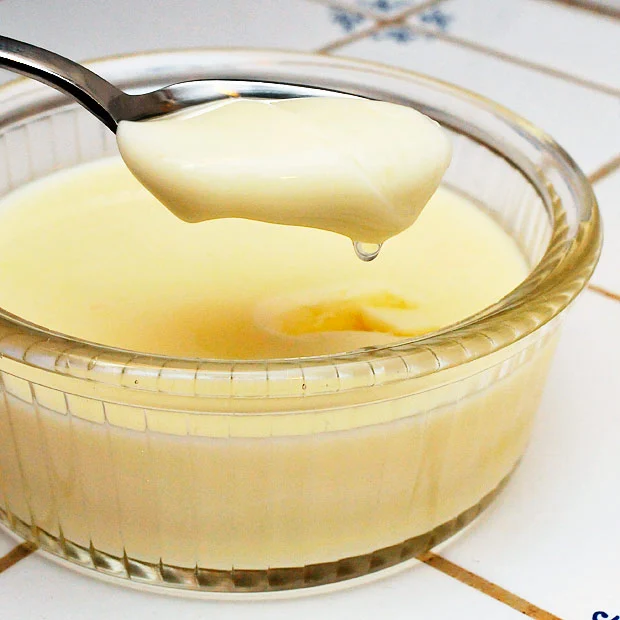
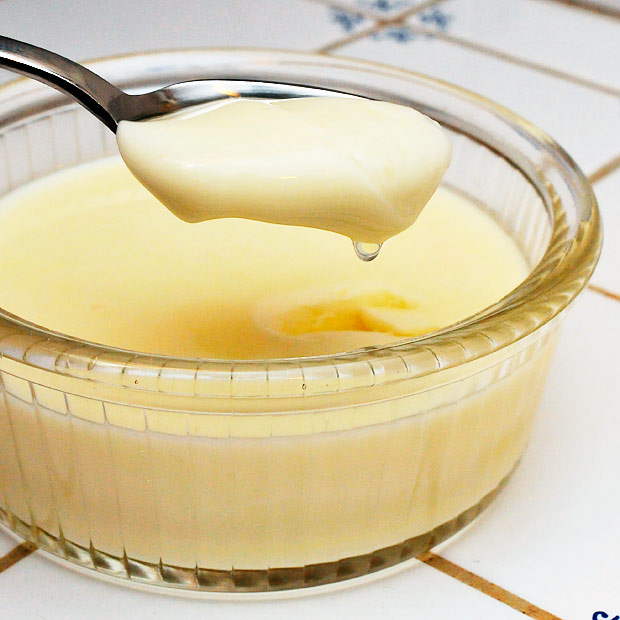
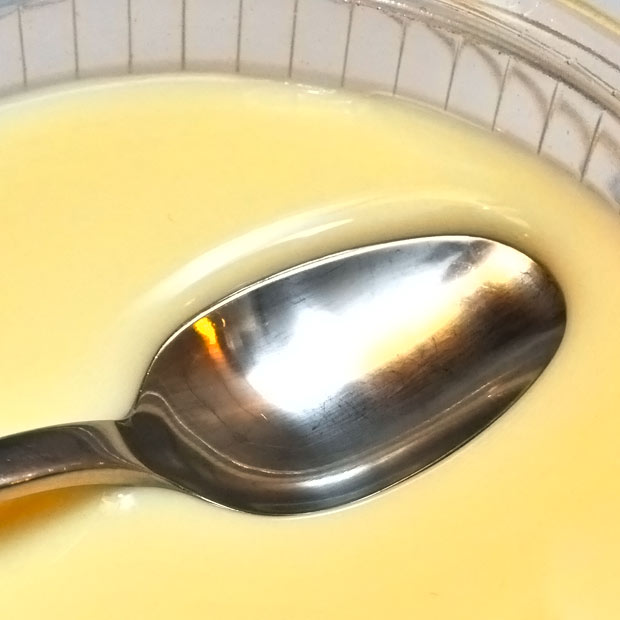
This recipe utilizes a milk-to-ginger juice ratio of approximately 14:1. While experimentation with ratios is possible, increasing ginger juice can lead to an overpoweringly strong ginger flavor, while significantly reducing it might compromise gel strength. The emphasis on fresh ginger juice and precise temperature control directly addresses the biochemical requirements of the ginger proteases, moving beyond the hit-or-miss nature of traditional methods. The resulting gel is remarkably tender, capable of supporting the weight of a spoon without breaking, yet exhibiting a slight elasticity, a hallmark of a perfectly set curd.
The Delicate Dance of Casein: Milk Protein Mechanics
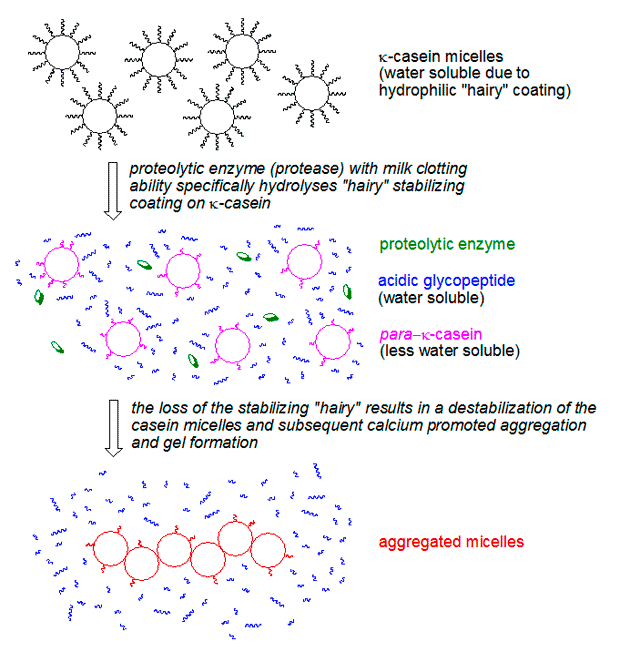
To fully appreciate the role of ginger proteases, one must understand their target: casein proteins in milk. Casein is not a single protein but a family of phosphoproteins that aggregate into large spherical structures called micelles. These micelles, which give milk its opaque white appearance, are held together by calcium ions. Crucially, the surface of these micelles is coated with kappa-casein (κ-casein), a unique protein featuring a water-soluble "hairy" glycopeptide tail extending into the surrounding liquid and a more hydrophobic para-κ-casein segment anchored to the micelle.
This "hairy" layer of κ-casein is vital for milk’s stability. It acts as a steric barrier, preventing the micelles from coming too close to each other and aggregating, thus keeping them dispersed (dissolved) in the aqueous phase. When ginger proteases (or chymosin from rennet) are introduced, they act as molecular scissors, specifically cleaving off the water-soluble glycopeptide tail of the κ-casein. This process leaves behind the para-κ-casein, effectively "shaving" the micelles and removing their protective layer.
Without the steric repulsion of the κ-casein tails, the now "shaved" micelles are free to collide and interact. The calcium ions naturally present in milk play a critical role at this stage, mediating the aggregation of these modified micelles. They link the hydrophobic surfaces of the para-κ-casein, causing the micelles to rapidly cluster together and form a three-dimensional network – the gel. This rapid aggregation is what allows the gel to form within minutes. However, the resulting gel is inherently fragile and prone to syneresis, the process where liquid (whey, in this case) separates from the gel matrix, often observed as clear drops accumulating at the surface or bottom of the curd. This syneresis is a natural consequence of the protein network contracting and expelling trapped liquid.
Optimizing for Success: Temperature, Milk Type, and Calcium
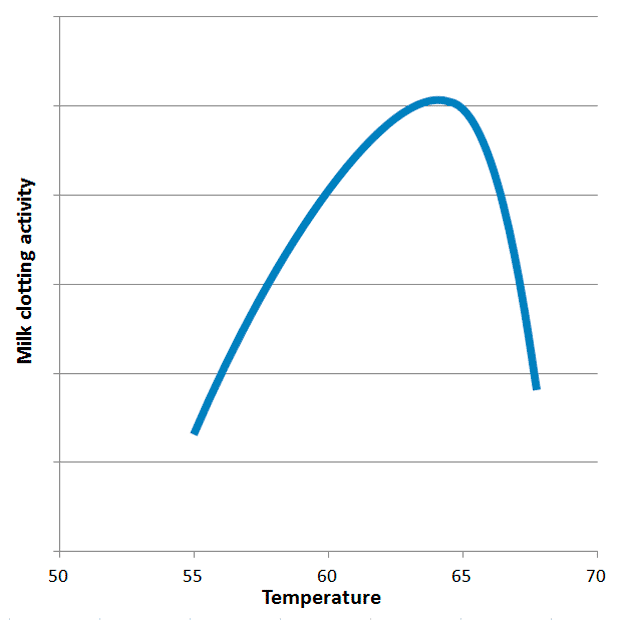
Beyond the core enzymatic action, several other factors influence the quality and strength of the ginger milk curd. The temperature of the milk before adding ginger juice is crucial not only for enzyme activity but also for the milk proteins themselves. Heating milk above 65°C, even if subsequently cooled to the optimal range, can reduce the strength of the final gel. This is because higher temperatures cause other milk proteins, particularly lactoglobulins, to denature and precipitate onto the κ-casein. This interference hinders the ability of ginger proteases to cleave the κ-casein effectively, resulting in a weaker or non-existent gel.
The type of milk also plays a significant role. Skimmed milk is often recommended for a stronger gel. Milk fat, present in whole milk, can interfere with the formation of the protein network, leading to a softer or less stable curd. Furthermore, since calcium ions are instrumental in bridging the "shaved" casein micelles, a higher concentration of calcium in the milk can contribute to a stronger, more robust gel. While standard dairy milk typically contains sufficient calcium, this highlights an area for potential future experimentation with calcium-fortified milks or calcium salts.
The Ephemeral Nature of Ginger Juice: PPO and Preservation
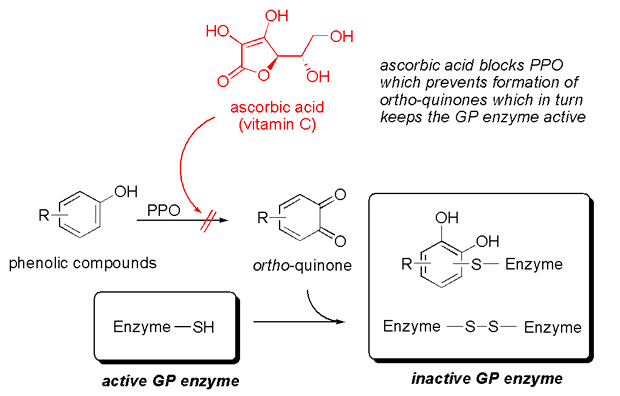
The ginger juice itself holds another scientific secret that impacts recipe success: its instability. Freshly squeezed ginger juice contains ginger proteases, but also another enzyme, polyphenol oxidase (PPO). PPO is notorious for causing enzymatic browning in fruits and vegetables, such as apples, by catalyzing the oxidation of phenolic compounds into ortho-quinones. In ginger juice, these ortho-quinones can then react with and inactivate the delicate ginger proteases. This explains why ginger juice has a short half-life – at 30°C, half of its enzyme activity can be lost within 20 minutes, plummeting to just 25% after 40 minutes.
This rapid degradation means that ginger juice cannot be prepared significantly in advance or stored for later use without a specific intervention. A well-known culinary trick to prevent browning in apples also works for ginger: adding ascorbic acid, or vitamin C. Ascorbic acid acts as an antioxidant, blocking the action of PPO and thereby preventing the inactivation of the ginger proteases. A small amount, around 0.2% by weight of the ginger juice, can effectively stabilize the enzymes, allowing for pre-preparation or brief storage of the juice if needed. This scientific understanding clarifies why "freshly squeezed" is not just a flavor preference but a critical requirement for successful gel formation.
Beyond the Bowl: Implications for Food Science and Culinary Innovation
The journey from a mysterious, often-failed dessert to a scientifically understood and foolproof recipe for ginger milk curd underscores the profound impact of scientific inquiry on culinary arts. It highlights that seemingly simple preparations often conceal complex biochemical interactions.
The detailed understanding of ginger proteases and their specific action on casein micelles has broader implications. It contributes to the growing body of knowledge on plant-derived enzymes as potential coagulants in the food industry. As demand for vegetarian and vegan products rises, plant-based rennets offer a sustainable and ethical alternative to animal-derived chymosin for cheesemaking. Research into ginger, kiwi, and melon proteases is a step towards developing new dairy and non-dairy curdling agents, potentially leading to innovative plant-based cheeses and desserts.
Furthermore, this case study serves as a powerful illustration of how scientific principles can demystify and refine traditional recipes, transforming inconsistent culinary practices into predictable and repeatable successes. It reinforces the importance of precise measurements, temperature control, and understanding ingredient interactions in the kitchen, bridging the gap between empirical cooking and applied food science.
Future Frontiers: A Call for Experimentation
While a foolproof recipe has been established, the realm of ginger milk curd offers ample opportunities for further exploration and experimentation, inviting both amateur and professional food scientists to delve deeper:
- Optimal Ginger Variety: Investigating if specific ginger varieties (e.g., old vs. young ginger) exhibit different protease activities or flavor profiles.
- Alternative Milk Types: Testing the efficacy of ginger proteases with plant-based milks (e.g., soy, almond, oat milk) to create vegan curds.
- Sugar Content: Exploring the impact of varying sugar concentrations on gel strength and setting time.
- Calcium Fortification: Quantifying the effect of added calcium (e.g., calcium chloride) on gel firmness and syneresis.
- Enzyme Concentration: Systematically varying the ginger juice concentration to determine the minimum required for gelation and its impact on texture and flavor.
- Storage Conditions: Further optimizing the storage of ginger juice with ascorbic acid to extend its shelf life without compromising enzyme activity.
- Sensory Analysis: Conducting blinded taste tests to evaluate the textural and flavor differences resulting from various experimental parameters.
The transformation of ginger milk curd from a temperamental delicacy to a reliable treat is a testament to the power of combining culinary tradition with scientific rigor. By understanding the precise roles of ginger proteases, casein micelles, and environmental factors like temperature, cooks can confidently achieve the tender, flavorful gel that has captivated palates for generations, shedding light on the intricate chemistry at play in our everyday kitchens.