
The pursuit of the perfect cup of coffee is a fascinating journey into the realms of chemistry, physics, and sensory science, as brewers navigate the intricate dance of extraction to unlock the desired flavors from roasted beans. Far from a simple act of pouring hot water over grounds, coffee brewing, particularly the popular pour-over method, represents an immensely complex system with a multitude of interconnected variables. Understanding these parameters and their correlations is key to moving beyond rudimentary brewing and towards a deliberate, repeatable, and ultimately superior coffee experience.
The Chemical Canvas of Coffee Extraction
A cup of coffee is a rich tapestry of thousands of chemical compounds, their concentrations spanning an astonishing nine orders of magnitude. These compounds, ranging from volatile aromatics to complex melanoidins, possess distinct solubilities and extraction rates. This inherent chemical diversity, while seemingly daunting, is precisely what offers the vast spectrum of flavors and the creative latitude in brewing. If all compounds extracted uniformly, the resulting brew would be a one-dimensional reflection of the bean, leaving little room for the nuance and variation that coffee enthusiasts cherish.
The ultimate goal for some is to achieve an "accurate reflection" of the soluble solids within the coffee bean. This often entails grinding as finely as possible and steeping for an extended duration, potentially even boiling the coffee, to ensure the extraction of slower-dissolving compounds. Such an approach, akin to a strong Turkish coffee (without added sugar or spices), can yield an extraction approaching 30% of the bean’s dry weight. While robust, this method frequently produces an over-extracted brew, characterized by bitterness and astringency. The consensus among specialty coffee professionals, guided by the Specialty Coffee Association (SCA) brewing control chart, suggests an ideal extraction yield between 18% and 22% of the dry coffee mass, paired with a Total Dissolved Solids (TDS) concentration of 1.15% to 1.35%. This window is widely considered to represent the optimal balance of sweetness, acidity, and body.
To achieve this nuanced balance, brewers often aim for a "selective extraction," a process where compounds are not extracted to the same degree. Despite common parlance, from a chemical perspective, this means aiming for an uneven extraction in the sense that certain desirable compounds are preferentially extracted while minimizing less desirable ones. The pour-over, or percolation, technique is a prime method for achieving this selectivity. It’s crucial to distinguish this from the historical coffee percolator, an early 19th-century invention where convection cycles heated coffee through a central tube and back over the grounds, a method that often led to over-extraction and bitterness due to repeated exposure to hot liquid. Modern pour-over, conversely, emphasizes a single pass of water through a bed of coffee grounds, leveraging gravity filtration.
The Intricate Dance of Pour-Over Brewing
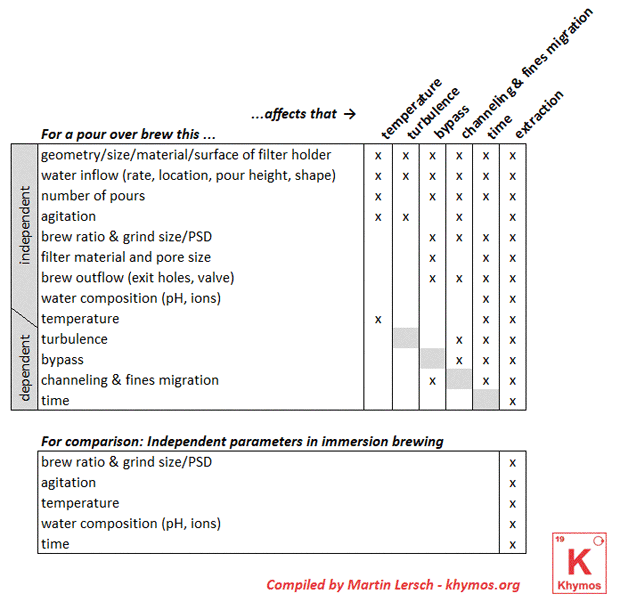
At its core, pour-over brewing appears deceptively simple: hot water is poured over ground coffee, and the resulting brew drips through a filter into a receptacle. However, beneath this simplicity lies a surprisingly intricate system with numerous adjustable parameters, many of which are deeply correlated. Beyond fundamental factors like brew ratio, grind size, water composition, and temperature, which significantly impact the final cup, additional variables exert their influence:
- Flow Rate: The speed at which water passes through the coffee bed.
- Pouring Technique: The pattern, height, and continuity of water application.
- Agitation/Turbulence: Stirring or the force of the pour affecting coffee bed saturation.
- Bloom: The initial wetting of the grounds, allowing CO2 to escape and ensuring even saturation.
- Contact Time: The total duration water is in contact with the coffee grounds.
- Bed Height/Geometry: The physical dimensions of the coffee bed within the dripper.
- Bypass: Water that flows around, rather than through, the coffee bed.
- Inflow and Outflow Control: Mechanisms that regulate water entry and exit.
- Filter Holder Design: Material, shape, and internal structure.
The interdependencies of these parameters introduce significant complexity. For instance, grind size directly influences the total surface area available for extraction. Finer grinds increase surface area, accelerating extraction, but also impede water flow, extending contact time and risking filter clogging. This can exacerbate "channeling," where water carves preferential paths of least resistance through the coffee bed, leading to under-extraction in some areas and over-extraction in others. As chemist Jonathan Gagné succinctly notes in his work on optimal percolation, "water is lazy," always seeking the easiest route. This often means bypassing the main coffee bed, particularly with finer grinds or drippers designed with internal ridges that facilitate flow along the filter’s sides, effectively diluting the brew without contributing to extraction.
A Historical Perspective on Brewing Innovation
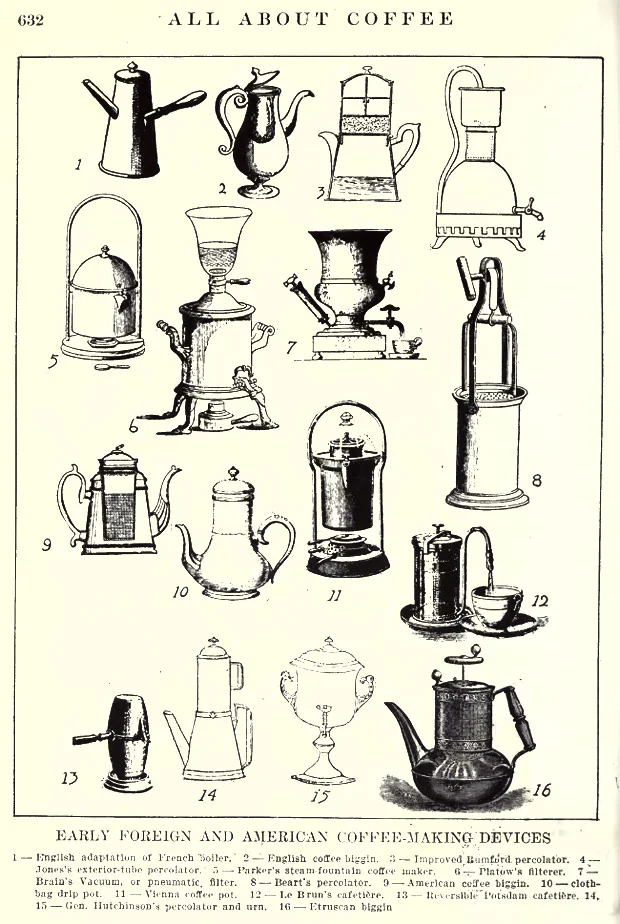
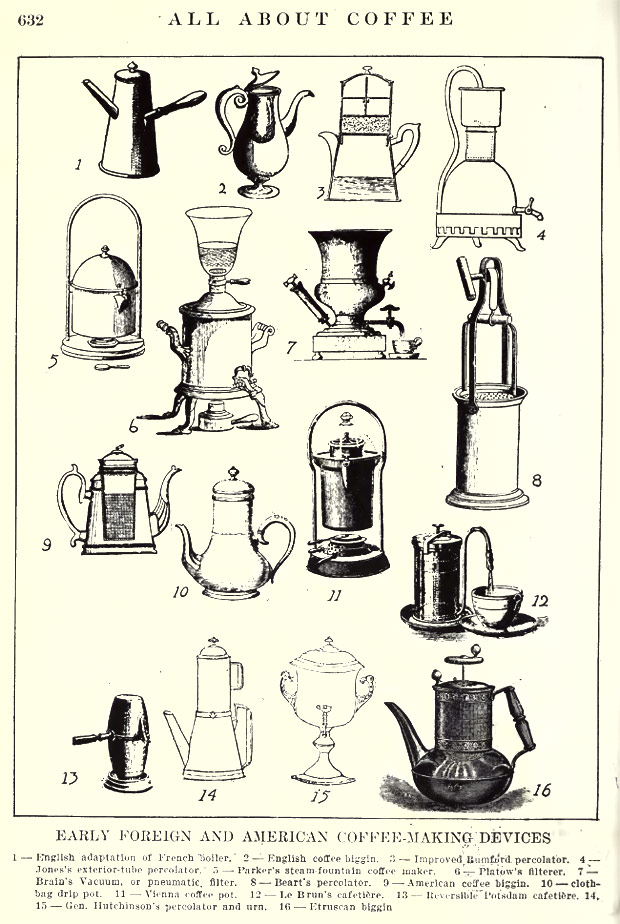
The quest for optimized coffee extraction is not a recent phenomenon. Historical records, such as those found in William H. Ukers’ monumental 1922 tome "All About Coffee," illustrate centuries of innovation in coffee maker design. Ukers’ illustrations reveal a fascinating chronology of drip coffee makers, from rudimentary designs to more elaborate contraptions, all attempting to "untie the coffee knot" and perfect the brewing process. This historical context underscores the enduring challenge and the continuous drive for refinement in coffee preparation.
In contemporary brewing, the market is flooded with a diverse array of pour-over devices, each subtly or dramatically different, reflecting various approaches to managing the complex variables of extraction. These differences are not arbitrary; they represent deliberate design choices aimed at influencing heat retention, bed geometry, flow dynamics, and bypass control.
- Material and Insulation: The choice of material impacts thermal stability. Metal, being an excellent heat conductor, can lead to rapid temperature loss unless insulated (e.g., Fellow Stagg X/XF with vacuum insulation) or possessing significant thermal mass. Plastic (like the Hario V60 polypropylene model) or ceramic are often preferred for their cost-effectiveness, sturdiness, and superior heat retention compared to uninsulated metal or fragile glass. Maintaining a consistent brew temperature, ideally between 90-96°C (195-205°F), is critical for optimal solubility of desirable compounds.
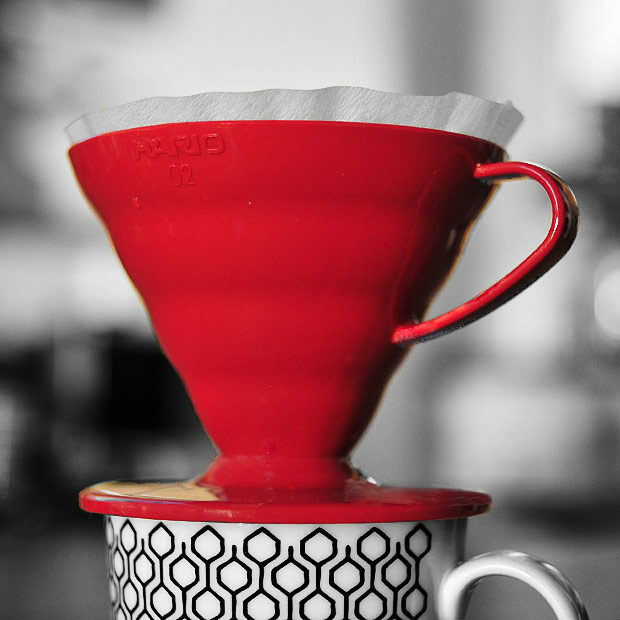
- Shape and Geometry: The physical form of the dripper, whether conical (Hario V60), trapezoidal (Melitta), or flat-bottomed (Kalita Wave), dictates the shape and depth of the coffee bed. A deep, narrow cone promotes a longer contact time and potentially more uniform extraction across the bed, though it can also slow flow. A flat-bottomed bed allows for faster flow but can be more susceptible to channeling if not managed correctly.
- Inside Wall Surface: The internal texture of the dripper walls plays a crucial role in filter adhesion and bypass. Smooth surfaces, as seen in the Chemex, encourage the paper filter to cling, minimizing bypass by directing water flow primarily through the bottom of the coffee bed. Conversely, ridges or patterns (common in V60s or Origami drippers) create channels for water to flow along the sides of the filter, potentially increasing bypass but also preventing clogging and speeding up draw-down.
- Filter Type: Paper filters are ubiquitous, known for producing a clean cup by trapping fines and oils. However, they can clog, especially with fine grinds. Fluted or W-folded filters (e.g., Kalita Wave) increase surface area, mitigating clogging and promoting faster flow. Metal filters, often found in permanent drippers, allow more fines and oils to pass, contributing to a fuller body but less clarity. The rare Karlsbader brewer, with its coarse ceramic grating, offers an extreme example of minimal filtration, yielding a brew with significant sediment and body.
- Inflow Control: The method of water delivery significantly impacts saturation uniformity. Goose-neck kettles, with their precise spouts, allow for controlled, gentle pours that minimize disturbance to the coffee bed, preventing channeling. Innovations like the Gabi Dripmaster B or Melodrip, which distribute water evenly through multiple small holes, further standardize inflow, promoting a perfectly flat and saturated coffee bed, though some designs may suffer from temperature loss.
- Exit Holes and Outflow Control: The number and size of exit holes, alongside filter material and dripper geometry, govern the overall flow rate. Large, single holes (V60) with ridged walls promote faster flow. Smaller, multiple holes (Kalita Wave) or smooth-walled drippers that restrict flow can prolong contact time. Some drippers, like the Clever Dripper or Hario Switch, incorporate shut-off valves, allowing for an initial immersion phase followed by a controlled percolation, offering brewers greater control over extraction time independent of grind size or brew ratio. This feature is particularly valuable for scaling recipes or compensating for grind inconsistencies.
- Bypass: The most critical aspect of pour-over design, bypass refers to water that avoids contact with the coffee grounds. This water dilutes the final brew without contributing to extraction, making it generally undesirable. Drippers that encourage the filter to cling to a smooth surface (like Chemex) minimize bypass. However, many drippers, particularly those with internal ridges or large exit holes, are designed with a degree of intentional bypass to ensure a certain flow rate and prevent clogging, especially when dealing with slightly finer grinds or an abundance of fines. The challenge, however, lies in the uncontrolled nature of this bypass, making it difficult to quantify its impact on individual brews. The ideal, from an extraction science perspective, is for the coffee bed itself to be the primary flow restrictor, not the brewing equipment, except for intentional on/off valves. This principle is elegantly embodied in cylindrical filter holders where the filter is situated entirely below the coffee bed, such as the Aeropress, Delter Coffee Press, or Tricolate, ensuring all water passes through the grounds.
The Pursuit of Repeatability: Immersion Brewing
The inherent complexity and variability of pour-over brewing, while offering unparalleled control to skilled baristas, can also lead to inconsistent results and fuel coffee preparation myths. Two individuals following the same "recipe" may achieve vastly different outcomes due to subtle variations in technique or environmental factors not adequately detailed in the recipe. This variability highlights a key desideratum for many brewers: repeatability.
This is where immersion brewing methods shine. Characterized by steeping all coffee grounds in water for a predetermined duration, immersion methods like the French press offer a robust and forgiving approach. The coffee slurry is typically stirred initially to ensure complete saturation and degasification. After the desired contact time, the brew is separated from the grounds by filtration, often via pressure filtration.
The robustness of immersion brewing stems from its reduced sensitivity to minute technique variations compared to pour-over. Recipe sharing among brewers is more likely to yield similar results. Moreover, brewing time can be controlled largely independently of grind size, offering a simpler pathway to consistency. As extraction progresses in an immersion brew, Total Dissolved Solids (TDS) and Extraction Yield (EY) increase over time, eventually leveling off as the system approaches equilibrium between the coffee brew and the grounds. While the grind size used in immersion is typically coarser than for fine-tuned pour-over, and brew temperatures may drop more quickly below the ideal 90°C (195°F), immersion brewing still achieves a selective extraction that can produce a wonderfully flavorful cup. Varying steep time, grind size, and brew ratio still allows for significant flavor customization.
The French press, a quintessential immersion brewer, employs a relatively open wire mesh filter. This allows a significant amount of coffee fines and oils to pass into the final cup, contributing to a characteristic full body and rich texture, often leaving a fine sediment. While some appreciate this mouthfeel, the extended contact of these fines can also contribute undesired bitterness. For a cleaner, brighter cup, many recommend filtering French press coffee through a paper filter post-brew, which effectively removes fines and some oils, showcasing a different facet of the coffee’s flavor profile. While robust, immersion brews can sometimes be perceived as less vibrant or "muted" compared to meticulously crafted pour-overs due to the less dynamic extraction environment.
The Enduring Quest for the Ultimate Brew
The journey through coffee extraction reveals a landscape of scientific principles, historical innovation, and sensory artistry. From the intricate chemical profiles of coffee compounds to the myriad design variations in brewing equipment, every element contributes to the final experience. While pour-over offers precision and control at the cost of complexity, immersion provides repeatability and robustness with a different sensory outcome.
The pursuit of the "very best cup of coffee we have ever tasted" remains an ongoing endeavor, a sentiment eloquently captured by fictional characters like Gale Boetticher from "Breaking Bad," whose elaborate coffee setup symbolized the scientific dedication some bring to the craft. The continuous innovation in brewing equipment and techniques, driven by both professional baristas and home enthusiasts, underscores the dynamic nature of this quest. As the understanding of coffee chemistry and fluid dynamics deepens, new ideas and technologies continue to emerge, promising to bring us ever closer to that elusive, perfect brew.