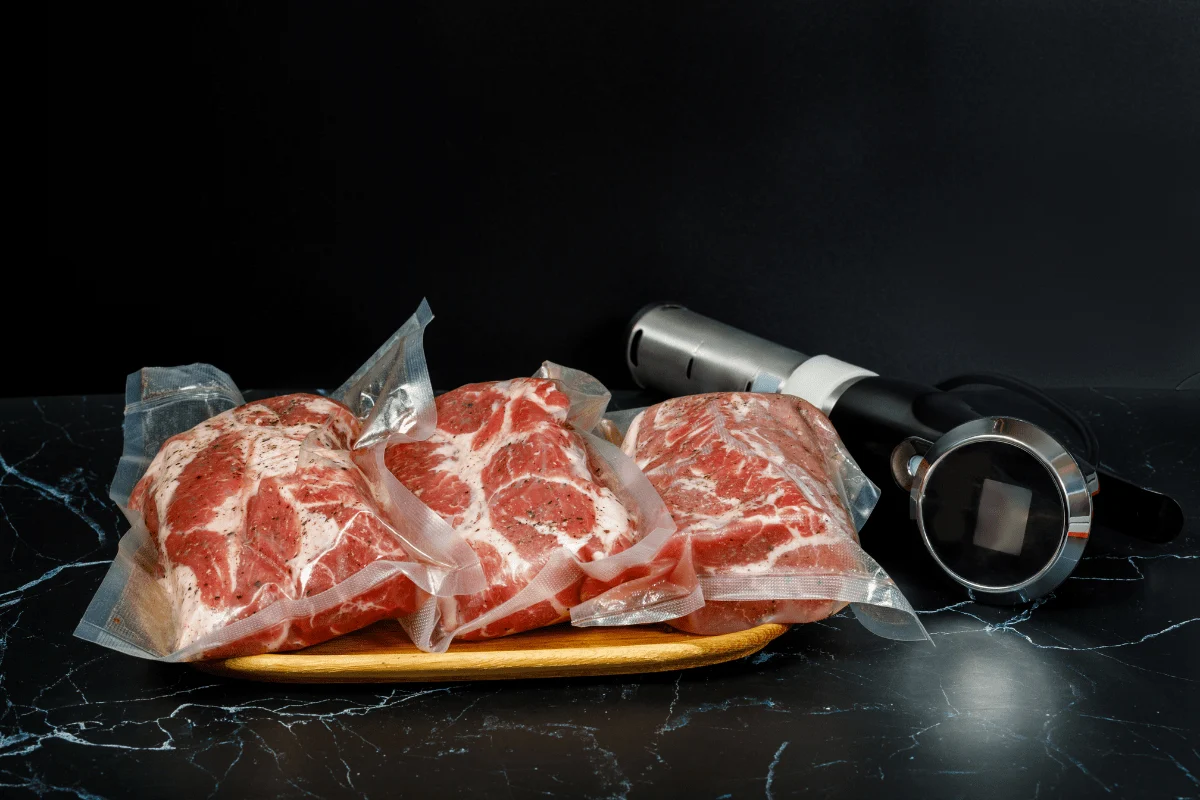

The culinary world is constantly evolving, and one of the most impactful advancements in recent decades has been the widespread adoption of sous vide cooking in professional kitchens. What began as an experimental technique in culinary schools has transitioned into an indispensable tool for chefs seeking unparalleled precision, consistency, and efficiency. This article delves into the world of commercial sous vide, exploring its origins, the technology behind it, the leading equipment available, and the significant benefits it brings to modern food service operations.
A Culinary Awakening: The Genesis of Commercial Sous Vide
My initial encounter with sous vide cooking was during my formative years at culinary school. We utilized a large, multi-compartment water bath to prepare proteins, meticulously comparing the results against traditional cooking methods. The transformative impact on texture and flavor was nothing short of astonishing. This early exposure coincided with a pivotal moment in the restaurant industry, as sous vide technology began to shed its experimental tag and become more accessible. This allowed for intensive, hands-on experience with the equipment, paving the way for its integration into professional kitchens. Today, drawing upon over a decade of experience with the industry’s premier commercial sous vide machines, this exploration aims to equip operators with the knowledge to select the right equipment, optimize their operations, and unlock substantial cost savings.
Our Top Picks for Commercial Sous Vide Equipment
In the demanding environment of a commercial kitchen, reliability, precision, and durability are paramount. After extensive testing and real-world application, two standout contenders emerge, each offering distinct advantages for different operational needs.
Best Overall: PolyScience Creative Series Sous Vide Commercial Circulator
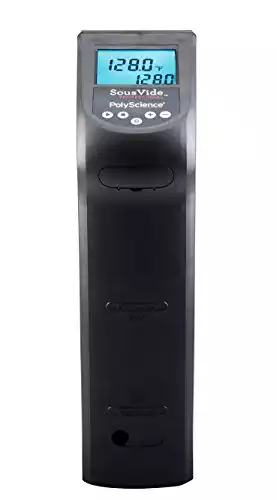
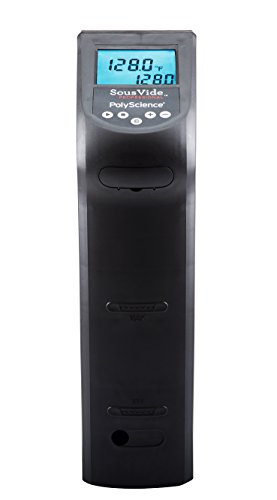
The PolyScience Chef circulator represents the zenith of commercial sous vide cooking. While it has earned accolades as an exceptional upgrade for home cooks, its true brilliance shines in a professional setting. This circulator masterfully blends robust power and remarkable accuracy into a remarkably compact and portable form factor.
The user interface is refreshingly straightforward, requiring only the selection of the desired cooking temperature to initiate the process. It is worth noting that this specific model does not feature a built-in timer, necessitating the use of an external device for time management. However, its large, backlit LCD display is a significant asset, providing clear visibility of both the current and target temperatures, allowing chefs to ascertain bath readiness and monitor temperature fluctuations when ingredients are introduced.
Despite its modest dimensions, this immersion circulator possesses the capability to precisely heat water baths up to 8 gallons, with a maximum temperature of 200°F. What truly distinguishes PolyScience sous vide machines from their competitors is the exceptional accuracy of their heating coils and the inherent durability of their water pumps. This model excels at maintaining consistent temperatures in large volumes of water, enabling multi-day cooking tasks without succumbing to overheating or temperature deviations. Furthermore, in the event of a power interruption, the PolyScience Chef circulator is engineered to automatically resume operation at the last set temperature, safeguarding against product spoilage even in the absence of immediate oversight. My personal experience includes utilizing this model for extended periods, with some recipes demanding up to 72 hours of continuous operation, a testament to its unwavering accuracy and dependability.
-
What We Like:
- Exceptional temperature accuracy and stability.
- Robust construction built for continuous, long-term use.
- Automatic restart feature after power interruptions.
- Compact and portable design.
- Easy-to-read, large backlit display.
-
What We Don’t:
- Lacks an integrated timer.
Best Value: Anova Culinary Sous Vide Precision Cooker Pro
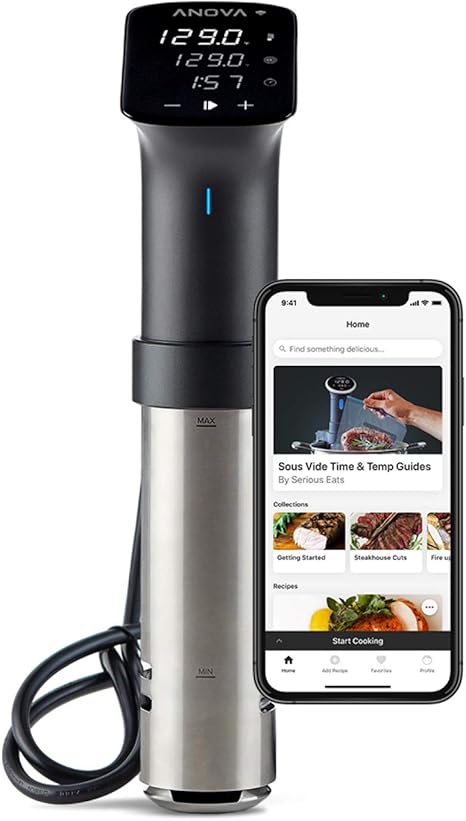
While not officially classified as a commercial unit, the Anova Precision Cooker Pro presents an compelling proposition for smaller operations or those with less intensive sous vide requirements. Its accuracy, reliability, and significantly lower price point make it an outstanding value. I have personally deployed this unit in a small restaurant setting, and it has consistently performed without failure. Its power for its size is remarkable, and the cost of acquiring two or three Anova Pros is often comparable to a single dedicated commercial unit.
This multi-unit approach offers a significant operational advantage, allowing for multiple water baths to be maintained simultaneously at different temperatures. This is particularly beneficial during extensive food preparation or when multiple proteins need to be cooked concurrently during service. Despite its more accessible price, the Anova Precision Cooker Pro does not compromise on performance. Its technical specifications rival those of higher-end models.
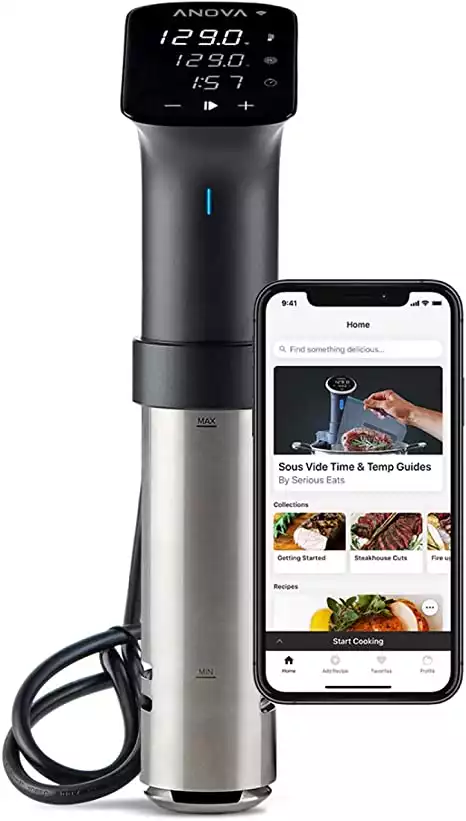
The control interface is intuitive, featuring touch-sensitive buttons on the unit itself, and the added convenience of wireless control via the Anova smartphone app. Notably, it includes a built-in timer, addressing a feature absent in my top pick. The precision of this cooker is noteworthy, delivering temperature accuracy within 0.09°F. Similar to its commercial counterparts, it is capable of extended continuous operation, boasting a remarkable lifespan of up to 10,000 hours.
The primary differentiator that prevents this unit from being a true commercial-grade appliance is its potential for reduced long-term durability under extreme conditions. While PolyScience circulators have a proven track record of over a decade of continuous use, the Anova unit, while reliable in my experience, has not yet endured the same extended test of time and the rigors of constant commercial use.
-
What We Like:
- Excellent price-to-performance ratio.
- High degree of temperature accuracy.
- Integrated timer.
- Smartphone app control and notifications.
- Ability to purchase multiple units for parallel cooking.
-
What We Don’t:
- Potentially less durable for extremely demanding, long-term commercial use compared to dedicated commercial units.
What to Look For in a Commercial Sous Vide System
Selecting the appropriate sous vide equipment for a commercial kitchen involves a careful consideration of several key factors. Understanding these elements will ensure an investment that aligns with operational needs and budget.
Type of Cooker: Immersion Circulator vs. Other Commercial Cooking Options
Immersion circulators stand out as a leading choice for precision cooking in commercial kitchens due to their accuracy, portability, ease of storage, and cost-effectiveness when compared to other specialized cooking appliances.
Water Oven
A water oven is a self-contained unit that integrates a water reservoir, heating element, and circulation motor. While capable of achieving similar precision to immersion circulators and offering the convenience of a dedicated appliance, water ovens are often larger and less flexible in terms of container size. Users are typically limited to the vessel provided with the unit, which may not always be ideal for diverse cooking tasks.
Combi-Oven
The combi-oven is a versatile powerhouse in professional kitchens, utilizing a combination of dry heat and steam. While it offers a broad range of cooking capabilities, it generally falls short of the pinpoint accuracy of immersion circulators, particularly for low-temperature applications. Furthermore, combi-ovens represent a significant financial investment, with prices starting in the thousands and quickly escalating. While they can cook vacuum-sealed items, their efficiency and precision for low-temperature sous vide are limited.

Power, Wattage, and Speed: The Engine of Performance
The power output, measured in wattage, directly influences a sous vide machine’s ability to heat water and the size of the water bath it can effectively manage. Commercial-grade units typically operate between 1000 and 1200 watts. Anything below this range generally indicates a unit designed for household use.
In this power bracket, smaller water baths (3-5 gallons) can typically reach the target temperature within approximately 15 minutes, while larger baths (around 8 gallons) may require up to double that time. Pre-heating the water source can significantly reduce these initial heating times. Higher wattage machines also exhibit a superior ability to rapidly restore the target temperature after the introduction of cold ingredients into the bath.
Precision: The Cornerstone of Sous Vide
The essence of sous vide cooking lies in its exact temperature control. Even entry-level home units typically achieve accuracy within 0.1°F. Any commercial unit falling below this benchmark should be carefully scrutinized.
Regarding temperature ranges, most immersion circulators offer similar capabilities. Few culinary applications require temperatures below 100°F, which is the starting point for most models. Maximum temperatures generally cap around 200°F. Exceeding this threshold often renders the benefits of sous vide redundant, as conventional methods like boiling water or combi-ovens become equally effective.
Compatible Containers: Leveraging Existing Infrastructure
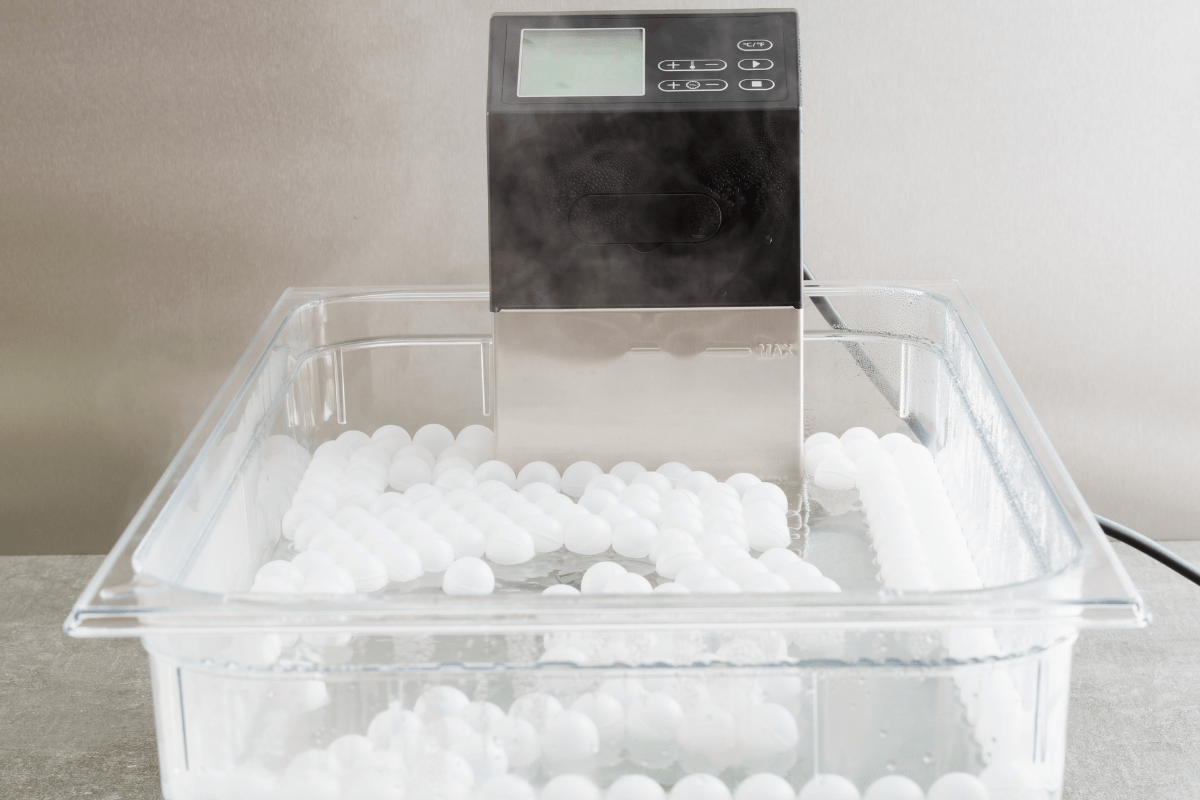
For sous vide cooking, readily available commercial food storage containers, such as Cambro polycarbonate boxes, are ideal. Their robust construction and standardized sizes make them perfectly suited for water baths. Many kitchens already utilize these for inventory management, making them a practical and cost-effective choice. Larger 8-gallon versions are available for bulk cooking, while smaller 3-gallon containers are suitable for more modest tasks.
Controls: Simplicity and Clarity
The control panels on immersion circulators should be intuitive and straightforward. The primary function required is the precise setting of the cooking temperature. An easily readable, backlit or LED display is crucial for at-a-glance monitoring, even in low-light conditions or from a distance.
While wireless connectivity and app control are common in home models, and exemplified by the Anova Pro, they may not be a primary concern in all commercial settings. However, the ability of the Anova app to provide completion notifications can be a useful convenience.
Vacuum Sealer: An Essential Sous Vide Companion
While not an absolute prerequisite, a vacuum sealer is highly recommended for commercial sous vide operations. It ensures that food bags are completely waterproof, allowing for denser packing of items in the water bath and preventing any risk of water infiltration that could dilute or spoil the food.
Vacuum sealing also enhances marination processes and contributes to more consistent cooking results. The development of faster and more effective marination, coupled with improved cooking consistency, significantly elevates the overall quality of the finished product.
Care and Maintenance: Ensuring Longevity
Commercial sous vide immersion circulators are designed for durability and ease of maintenance. Regular cleaning, avoiding prolonged submersion of the control unit, and routine upkeep will ensure years of problem-free operation.
Primary maintenance tasks include cleaning the heating coil and removing any debris that may accumulate in the circulator pump. The coil should be wiped clean regularly. For stubborn buildup, running a cleaning cycle with a solution of equal parts water and white vinegar is effective. Maintaining a clean water bath and using only water are crucial for the longevity of the water pump. Periodically, inspect the pump housing and remove any obstructions with tweezers or a toothpick.
What You Can Expect to Spend
A genuine commercial-grade immersion circulator typically commands a price of around $1000. While this may seem substantial, it is often one of the more economical pieces of equipment found in a professional kitchen. For operations with less frequent sous vide usage or those seeking a more budget-friendly option, the Anova Culinary Sous Vide Precision Cooker Pro offers a compelling alternative at a few hundred dollars.
Frequently Asked Questions About Commercial Sous Vide
What Is a Commercial Sous Vide Used For?
Commercial sous vide applications are vast, spanning from bar service to savory and pastry preparations. A primary use is for cooking and holding proteins during service, eliminating guesswork in doneness and expediting the delivery of food to diners. It is also employed for the precise cooking of eggs, where minute temperature variations can significantly alter texture.
Would I Be Better Off With a Commercial or Home-Use Sous Vide?
For home use, commercial models are generally unnecessary. Modern home sous vide units offer comparable accuracy at a fraction of the cost. The primary advantage of commercial units lies in their enhanced durability, often exceeding typical home requirements, and sometimes including commercial use and sanitation certifications.
What Type and Size of Cooking Vessel Will I Need?
The 4.5-gallon Cambro food boxes are well-suited for most common sous vide applications. Larger pots can also be used, though they may not fit as conveniently. For cooking larger items like 3-pound bone-in pork chops, 8-gallon Cambro models are necessary.
Is There a Cost Economy or Value-Add Benefit to Cooking with Sous Vide in a Commercial Kitchen?
Sous vide cooking offers significant cost savings and enhances consistency in commercial kitchens. Its precise temperature control minimizes over- or under-cooking, directly reducing food waste. It also frees up valuable oven and stovetop space, alleviating competition for cooking resources.
What Happens If My Power Supply Is Interrupted?
Many commercial circulators, including the PolyScience Chef and Anova Pro, feature an auto-restart function. This ensures that if power is interrupted, the unit will resume cooking at the last set temperature once power is restored. This is a critical feature for multi-day cooking projects.
My Recommendation for Commercial Sous Vide Implementation
Integrating commercial sous vide into your operation is a strategic decision that promises both cost efficiencies and enhanced culinary execution. The PolyScience Chef circulator stands as a benchmark for durability and accuracy, a proven performer in demanding environments. While its initial investment is higher, its long-term reliability and performance represent a sound value when juxtaposed with the cost of other professional kitchen equipment.
For smaller establishments or those with less frequent sous vide demands, the Anova Culinary Sous Vide Precision Cooker Pro offers an attractive, more economical solution. It delivers impressive accuracy and power, making it a capable performer for a wide range of applications.
Regardless of the chosen unit, the selection of appropriately sized containers for your water bath is essential. The inclusion of a wire rack can further optimize your sous vide setup. By embracing this transformative cooking technique, commercial kitchens can elevate their offerings, streamline their processes, and achieve a new level of culinary excellence.