
The quest for culinary perfection, particularly in the art of bread making, often begins with a humble wish for a slightly larger oven. For many passionate home bakers, this initial aspiration gradually transforms into a determined search for specialized equipment capable of elevating their craft. This is precisely the journey described by a seasoned baker who, after mastering the nuances of smaller-batch bread production, found themselves actively seeking a solution to bake six loaves at a time – a goal that, while modest by professional bakery standards, represents a significant leap in a domestic setting. The transition to handling larger quantities of dough naturally fuels a desire for enhanced efficiency, allowing the baker to redirect their focus towards the more intricate aspects of bread making: flavor development, precise fermentation control, dough handling techniques, and artful shaping. For this baker, the Rofco bread oven emerged as the logical and progressive step in their evolving baking journey.
This progression is a familiar narrative for those who embark on the path of expanding their home baking endeavors. It often stems from a subtle, yet persistent, growth of passion that can eventually consume the home kitchen. Some bakers, driven by this burgeoning obsession, might further extend their ambitions into establishing nano or micro-bakeries, or venture into selling their creations at local farmers’ markets. Regardless of the specific catalyst for scaling up production, this comprehensive guide aims to serve as a singular resource, consolidating essential information on the tools, optimal times, temperatures, and other crucial tips gleaned from extensive experience with the Rofco bread oven. Furthermore, this guide is designed to assist prospective buyers in determining if a Rofco oven aligns with their baking aspirations, or to provide a foundational understanding for those who have recently acquired one, enabling them to commence their journey and eventually refine their unique Rofco baking process.
Understanding the Rofco Bread Oven: A Professional Tool for the Home
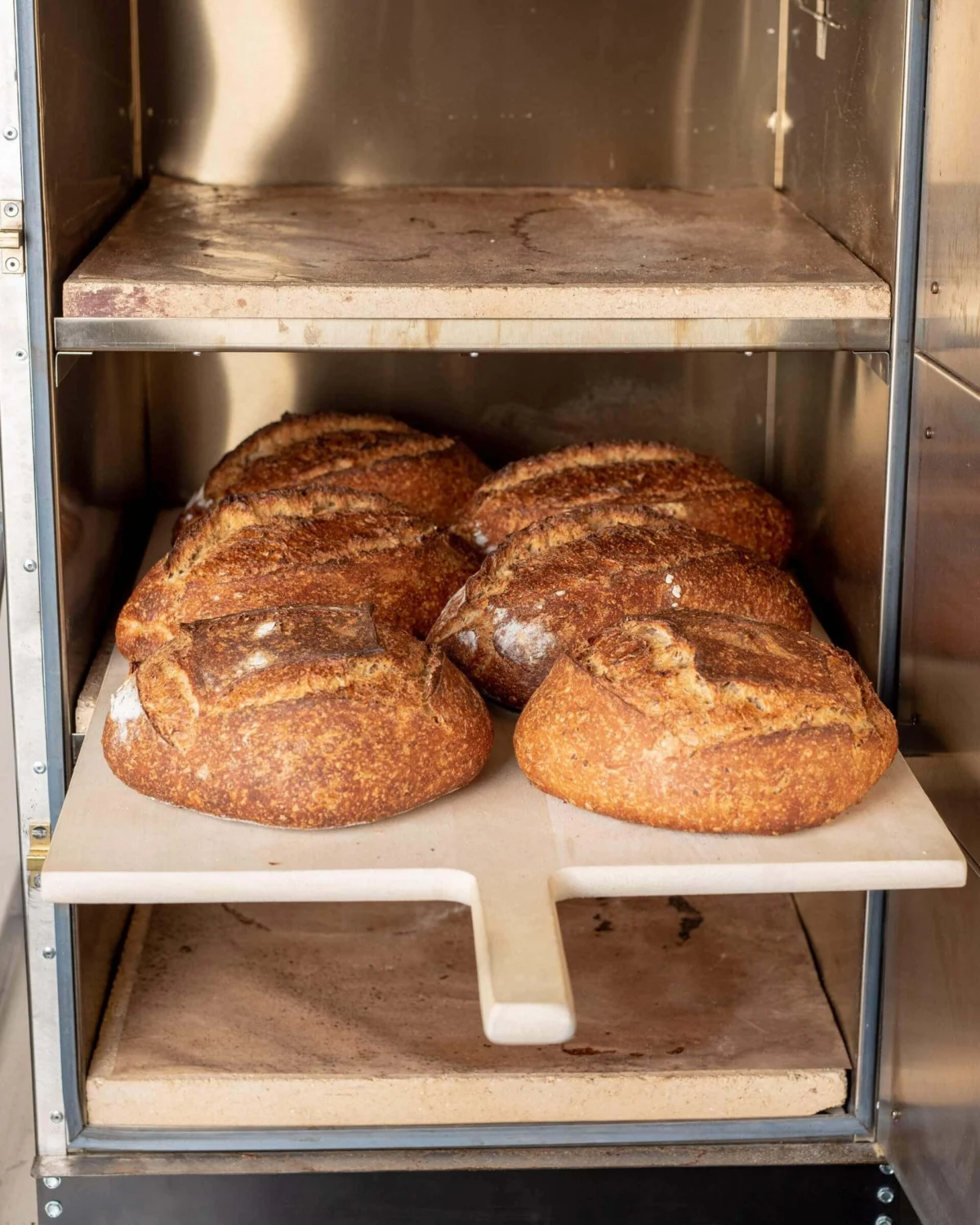
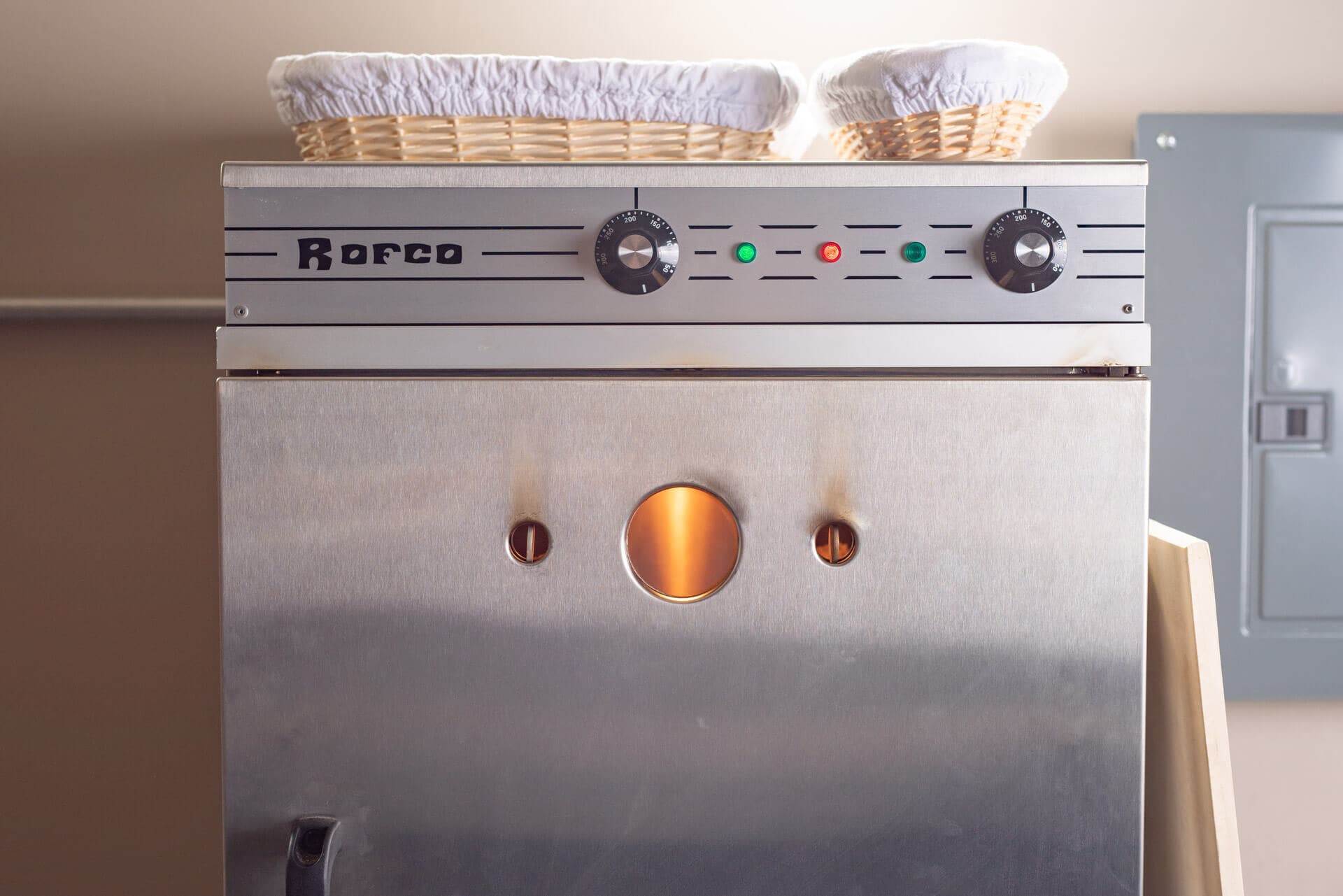
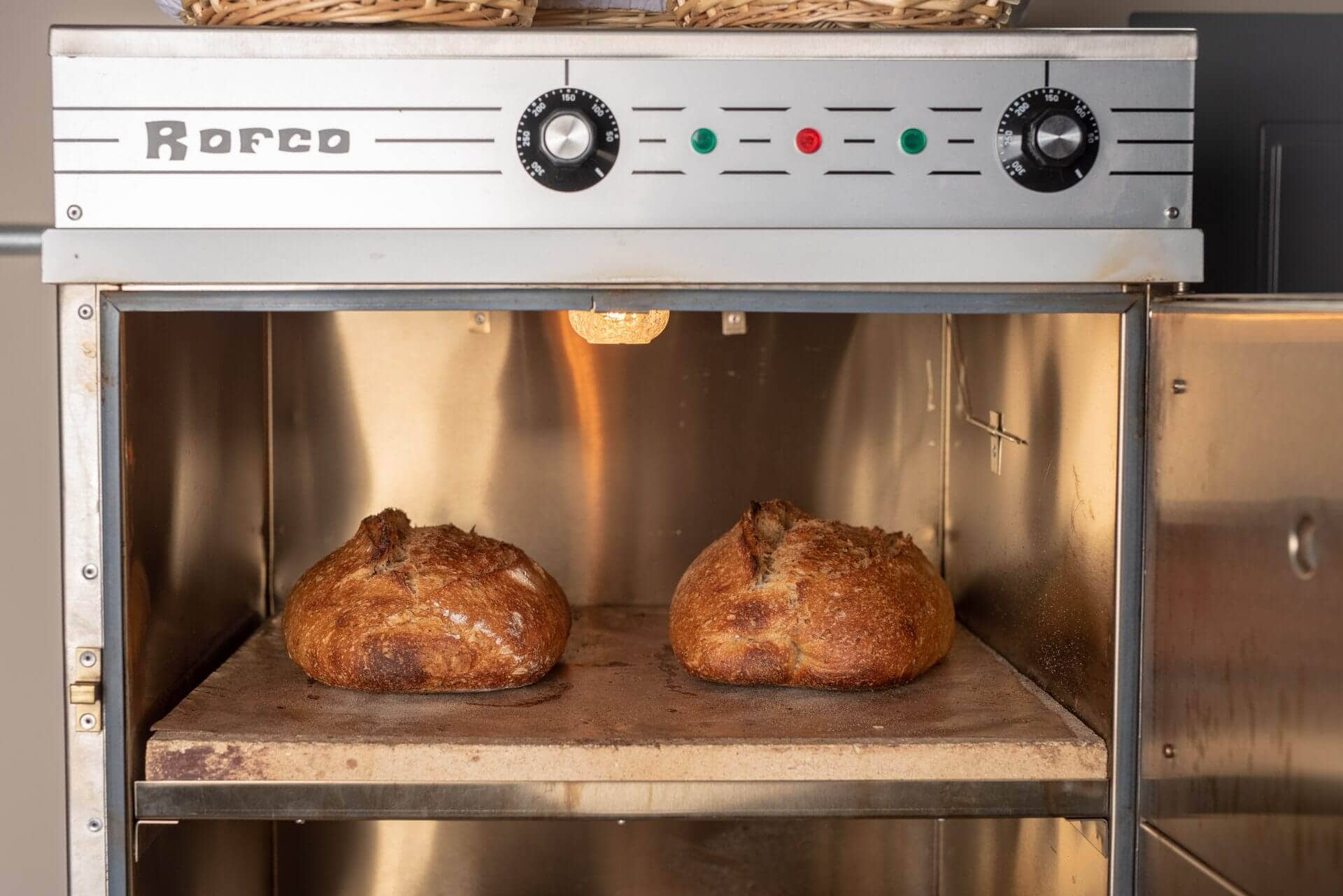
The Rofco bread oven is a Belgian-engineered, brick-lined oven specifically designed for the demanding task of baking bread. Available in a range of sizes, the model under discussion is the Rofco B40, the largest offering, featuring three expansive square baking decks. Its design is characterized by a robust, no-nonsense construction and a fully sealed oven chamber. A key advantage of the Rofco is its minimal external radiant heat emission, allowing for placement adjacent to walls or other appliances without significant heat concerns, although the exterior does become hot to the touch. The oven is equipped with three substantial chamotte (refractory brick) deck stones, each 1-3/8 inches thick. These stones possess a remarkable capacity for heat retention, even after extended preheating and subsequent door openings during dough loading. This sustained heat retention makes the Rofco exceptionally well-suited for multiple consecutive baking sessions, requiring only brief recovery periods between batches to reach optimal temperature.
Powering the Rofco: Electrical Requirements
Operationally, the Rofco utilizes standard 220V AC single-phase power, a common electrical standard found in many households for appliances. In the United States, this typically corresponds to a 6-20P cord plug and a 6-20R receptacle. For safe and efficient operation, it is advisable to have a qualified electrician install a dedicated receptacle and breaker within your home’s electrical panel specifically for the oven. This ensures adequate power supply and safety compliance.
Versatility in Baking: From Personal Batches to Large Gatherings
While the Rofco B40 is adept at handling large-scale baking for events, festivals, and gatherings, its true value for the dedicated home baker lies in its consistent ability to efficiently bake batches of 4 to 6 loaves. Its straightforward, utilitarian design makes it a reliable workhorse, delivering precisely what is needed, when it is needed. The author acquired their Rofco oven from Pleasant Hill Grain in the US, a vendor noted for its exceptional customer service. They have consistently demonstrated responsiveness to inquiries, even assisting with minor issues such as a faulty door clasp. While a discount was received on this particular oven, the insights and recommendations provided in this guide are entirely independent and based on personal experience.
A Resounding Recommendation: The Rofco’s Place in the Home Bakery
To address a key question directly: yes, the Rofco bread oven is unequivocally recommended. It represents a superb piece of equipment for any baker looking to expand their capabilities beyond the limitations of a standard home oven, particularly when aiming for more than two loaves at a time. Its simplicity of design, the ease with which its components can be repaired, and its consistent, even baking performance make it an outstanding choice for both home and emerging professional bread bakers.
Mastering Dough Placement: Optimizing Space on the Rofco Decks
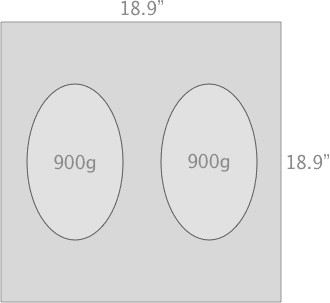
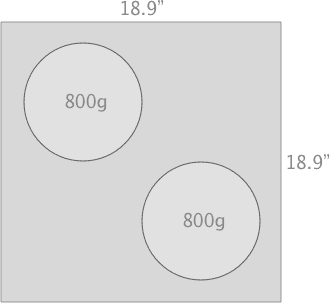
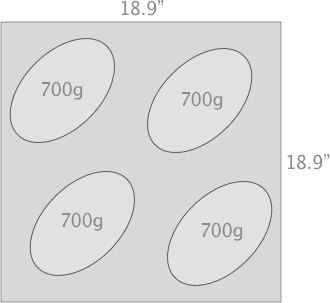
A fundamental aspect of baking with the Rofco, especially when maximizing output, is the strategic placement of dough on its decks. This can be likened to a real-life game of Tetris, where the objective is to bake the maximum number of loaves without them touching, while simultaneously ensuring an even bake across all items. While the author has not extensively pushed the boundaries of this capacity, they have observed other bakers who have refined this art to a science. The following illustrates three common dough arrangements utilized for home baking, with the configuration of two 900g batards per deck being the most frequently employed scenario.
It is important to note that in these diagrams, oval shapes represent the typical batard loaf, circles represent boules, and each deck of the Rofco B40 measures 18.9 inches by 18.9 inches. The top edge of each square depicted signifies the rear of the oven, while the bottom edge denotes the front, where the door is located.

Common Dough Configurations for the Rofco B40
- Configuration 1: Two 900g Batards per Deck (Most Common)
- This arrangement offers ample space for each loaf to expand, facilitating excellent crust development and oven spring.
- Configuration 2: Two 800g Boules per Deck
- Similar to the batard configuration, this allows for good air circulation around the round loaves.
- Configuration 3: Four 700g Loaves per Deck
- This configuration pushes the capacity of each deck, requiring careful spacing to ensure even baking.
Utilizing Baking Trays for Smaller Items
The Rofco oven also includes square steel trays. These trays are invaluable for baking smaller items such as buns, rolls, or even large square pizzas. They simplify the process of transferring multiple small items into and out of the oven and are effective in containing any spills or errant dough.
The Crucial Element: Steaming in the Rofco Oven
As emphasized in various bread-baking guides, the initial steaming phase within the oven is paramount for achieving optimal dough rise and a desirable crust. The Rofco’s design, with its sealed oven chamber and lack of an exhaust fan, is advantageous in retaining steam until the front vents are opened. However, it differs from professional ovens that offer automated steam injection. Fortunately, several effective manual methods can be employed to introduce sufficient steam.
Method 1: The High-Pressure Sprayer
The author’s preferred steaming method involves using a commercial-grade pressure sprayer. Set to its finest mist setting and filled with water, the sprayer is pressurized. After loading the dough onto the decks, the baker systematically sprays each deck for approximately 10-12 seconds, starting from the bottom and working upwards. A crucial point to remember is to avoid spraying the glass of the oven light fixture, as thermal shock can cause it to crack. A second misting is applied to each deck just before fully closing the oven door. To vent the steam, the oven door is carefully opened slightly, allowing steam to escape before the door is fully closed and the circular vents on the door are tilted to their open position.
Method 2: Steam Pods
Rofco offers optional rectangular steel steam pods that can be preheated within the oven and placed on the sides of each deck. Pouring water or ice cubes into these pods generates steam when the oven door is closed. While effective, these pods occupy valuable deck space, which can be a limitation when maximizing loaf capacity. The steam dissipates as the water evaporates, and venting is achieved through the door’s circular vents.
The Rofco Baking Process: A Step-by-Step Guide
The baking process in a Rofco oven is subject to ongoing refinement, with times, temperatures, and procedures being continually adjusted based on the specific dough formula. The following outlines a reliable, go-to process for most bread recipes.
The Rofco features two control knobs: the left controls the top heating element, and the right controls the bottom element. Indicator lights illuminate when each respective heating element is active.
Preheating:
Ensure the oven is empty, and both the left and right dials are set to 240°C (482°F). A preheating period of 1.5 hours is recommended to ensure the brick decks are thoroughly saturated with heat.
Loading the Dough:
Once preheated, prepare your baking setup. Lay a pizza peel on a stable surface next to the oven, place a silicone baking mat on it, and arrange two more mats nearby. Gently turn out your dough onto the mats, score each loaf, and then use the peel to slide the first sheet with dough into the oven. Repeat this process for the remaining dough.
Baking Schedule:
| Step | Action | Temperature | Duration |
|---|---|---|---|
| 1 | Preheat oven (door and vents closed) | 240°C (482°F) | 1 hour 30 minutes |
| 2 | Bake with steam | 150°C (302°F) | 20 minutes |
| 3 | Vent steam (briefly open door, then open circular vents) & adjust temp | 220°C (428°F) | 10 minutes |
| 4 | Final bake (reshuffle loaves if necessary for even browning) | 150°C (302°F) | 20-30 minutes |
Upon completion of the baking cycle, remove the loaves and silicone mats using the peel and transfer them to wire racks for cooling. The oven can then be turned off or reheated for subsequent batches.
Essential Tools for Rofco Oven Baking
Several tools significantly enhance the Rofco baking experience.
High-Performance Electric Sprayer
For those opting against steam pods, a commercial-grade electric spray bottle is highly recommended. Models like the Electric Spray Bottle offer a powerful, fine mist at the touch of a button, delivering substantial steam into the oven with remarkable efficiency.

Customized Oven Equipment Stand
Elevating the Rofco oven can greatly improve ergonomics for loading and unloading. A custom-cut stainless steel equipment stand, such as the Regency 30" x 30" 16-Gauge Stand, provides a sturdy platform. For added mobility and stability, consider equipping the stand with casters. Customizing the leg height, for instance, to 18 inches, can achieve a comfortable working height.
Large Wooden Pizza Peel
A generously sized wooden pizza peel is indispensable for safely transferring dough into and out of the hot oven. A peel with a width matching the oven’s deck dimensions (approximately 18.9 inches for the Rofco B40) is ideal. The American Metalcraft 18" x 29.5" peel with an 18-inch width is a suitable option, offering a balance of size, weight, and durability.
Post-Baking Efficiency: Drying Proofing Baskets
A clever tip for utilizing the residual heat of the Rofco oven after baking is to place proofing baskets (bannetons) inside. This quickens the drying process of the damp liners or canvas, allowing for immediate storage and preventing the development of mold.

Looking Ahead: Furthering Your Baking Expertise
As with any new piece of baking equipment, there may be an initial adjustment period where baking quality might see a slight dip. The advice is to select a straightforward sourdough recipe and practice it consistently until proficiency with the Rofco is achieved. For those in the market for a Rofco oven, Pleasant Hill Grain is consistently praised for its customer service.
For bakers looking to invest in more professional-grade equipment, exploring options like the Famag spiral dough mixer, capable of handling substantial dough batches up to 8 kilograms, or the Ooni Halo Pro Spiral Mixer, suitable for smaller batches and microbakery testing, are worthwhile considerations. For those envisioning even larger baking capacities, the RackMaster 2020 Bread Oven, featuring larger decks, presents another avenue for exploration.
Happy baking!