
The annual Consumer Electronics Show (CES) in Las Vegas, a bellwether for technological advancements, alongside IFA in Berlin last fall, buzzed with a singular, compelling narrative: the ascendance of humanoid robots. No longer confined to the realm of science fiction, these sophisticated machines were showcased as potent, multifaceted tools poised to revolutionize both professional and domestic spheres. From folding laundry and pouring beverages to meticulously preparing meals, the past year seemed to validate NVIDIA CEO Jensen Huang’s prescient prediction that 2025 and beyond would witness a monumental surge in physical AI, or robotics, permeating nearly every facet of our lives. However, as the culinary world embraces automation, a crucial question emerges: will humanoids become the de facto robotic form factor in our kitchens, or will more specialized designs, like the industrial robotic arms of Moley or the integrated countertop systems such as Chefee, dominate the landscape?
The Shifting Landscape of Kitchen Robotics
While the allure of a fully autonomous humanoid chef is undeniable, the immediate future of automated home cooking likely lies not with bipedal robots, but with advanced countertop appliances. This perspective is gaining traction among a new wave of startups that are meticulously crafting sophisticated cooking robots. These devices are envisioned as the sophisticated offspring of beloved kitchen staples like the Thermomix and the Anova Precision Oven, augmented with the capacity for automatic ingredient dispensing and seamless transitions between various cooking functions to prepare complete meals.
The concept of automated countertop cooking is not entirely novel. Early iterations, such as the Sereniti cooking appliance, emerged over a decade ago. Since then, a steady stream of innovation has followed, with companies like Else Labs (developing the Oliver system), GammaChef, and more recently, Posha and Nosh, pushing the boundaries of what’s possible. Among these, Posha appears to be at the forefront of bringing a consumer-ready home cooking robot to market. Else Labs, while initially focused on home solutions, has largely redirected its efforts towards developing cooking appliances for office and commercial environments. Nosh, meanwhile, has been steadily building momentum, notably through a successful Kickstarter campaign that has garnered significant financial backing.
Posha: The "Thermomix Plus Plus" Evolution
Raghav Gupta, CEO of Posha, articulates a clear evolutionary trajectory for his company’s product, drawing a direct parallel between Posha and the iconic Thermomix. "What Posha is, is actually Thermomix plus plus," Gupta stated, highlighting the significant leap in automation and intelligence. He further elaborated on this advancement, comparing the transition from Thermomix to Posha to the evolution from a vehicle with advanced driver-assistance systems to a fully autonomous vehicle. "In Thermomix, you still have to be around your device. You still have to be behind the wheel," Gupta explained. "In Posha, you don’t have to be behind the wheel anymore. It’s like the Waymo equivalent of driving. You can sit in the back seat, read a book while your self-driving car takes you from point A to point B." This analogy effectively underscores Posha’s ambition to liberate users from the constant supervision and active involvement traditionally required for automated cooking.
Nosh: Addressing the "Burden" of Home Cooking
Amit Gupta (no relation to Raghav Gupta), co-founder of Nosh, approaches the challenge from a similar perspective, emphasizing the daily drudgery of home cooking. "Eating right is impossible because cooking is a burden," Amit Gupta articulated to The Spoon last year. Nosh has resonated with this sentiment, successfully raising over $800,000 through a Kickstarter campaign for its initial robot generation. Like Posha, Nosh’s strategy hinges on the belief that the immediate future of cooking robotics will not feature mobile, leg-equipped machines, but rather contained, countertop systems designed to automate the repetitive and time-consuming aspects of meal preparation. Amit Gupta describes Nosh as a "kitchen in a box," a comprehensive system engineered to automate not only temperature and timing but also the nuanced judgment calls inherent in cooking. This focus on contained, appliance-like automation aligns closely with consumer preferences anticipated for the next five to ten years.

The Long Road to Humanoid Kitchen Assistants
While the immediate focus is on these specialized countertop solutions, the long-term potential of humanoids in the kitchen remains a significant consideration. The realization of this vision hinges on two critical factors: accessibility and the ability to perform everyday tasks with reliability. Much like the early training models of the 2010s paved the way for the autonomous driving era, current efforts in robotics and AI are concentrated on building extensive datasets to enable robots to move and operate effectively in real-world environments.
Initiatives like Instawork, which equips temporary workers with body cameras as they perform routine tasks, are contributing to this data collection effort. This approach echoes the principles of the EPIC Kitchens project, a university research initiative launched in 2018. EPIC Kitchens aimed to capture physical interactions on video to train computer vision systems for robotics. Today, these newer endeavors are scaling up the collection of real-world training data by orders of magnitude, fueled by substantial investments flowing into the AI-meets-robotics sector.
Bridging the Gap: From Early Adopters to Mainstream Adoption
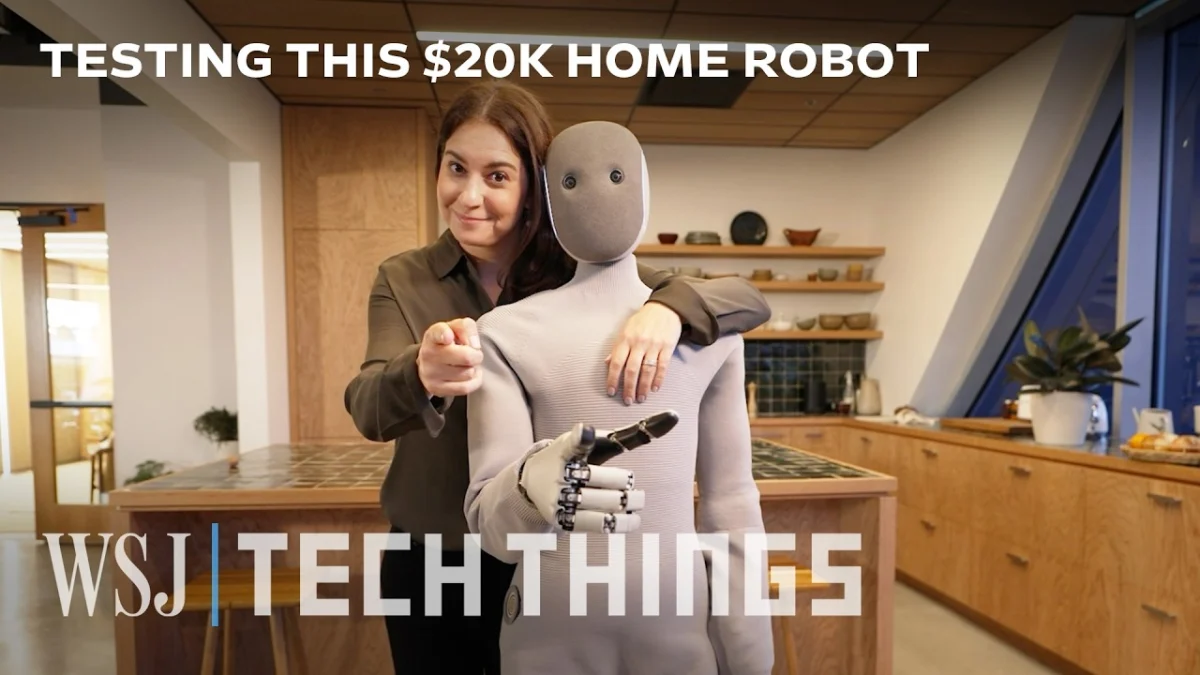
Currently, renting robots can cost approximately $500 per day. However, as demonstrated by recent tests with early-stage humanoid robots like the NEO 1, many of these systems are still geared towards early adopters. A significant hurdle remains: these robots are not yet sufficiently trained to perform complex, useful tasks like cooking. Furthermore, many current systems, including models like Neo 1, rely on teleoperation, meaning a human operator remotely monitors and controls the robot’s actions within a user’s home in real time. This limitation highlights the substantial development still required before such robots can function autonomously and reliably in a domestic setting.
The Transformative Potential for Independent Living
In the long term, as humanoid robots mature and gain the capability to reliably handle tasks such as cooking and other domestic chores, their potential to enhance independent living becomes profound. This is particularly relevant for individuals facing mobility, dexterity, or other challenges that impact their ability to live independently. As global populations age and the costs of managed care continue to escalate, humanoid robots could offer a crucial solution, enabling greater autonomy and improving the quality of life for seniors and individuals with disabilities.
The increasing integration of voice assistants like Alexa into the lives of older adults, providing easy access to information, timers, and entertainment, serves as a precursor to the potential adoption of more advanced robotic assistance. For an octogenarian mother who relies on such technology for daily convenience, the transition to a robotic assistant, especially one capable of assisting with the increasingly challenging task of cooking, might represent a natural and welcome evolution.
While the futuristic image of a two-legged robot preparing meals in our kitchens may indeed be the ultimate destination, the immediate future of kitchen robotics is far more likely to manifest in the form of sophisticated, space-saving countertop appliances. These innovations promise to bring advanced automation and culinary intelligence into homes, addressing the practical needs and desires of consumers in the near term, while paving the way for more ambitious robotic integrations down the line.