
The allure of a fully automated kitchen, once confined to the realm of science fiction, has recently surged into mainstream discussion, propelled by prominent tech events like IFA and CES. These exhibitions showcased a dazzling array of robotics, from sophisticated industrial arms to the much-hyped humanoid robots, painting a vivid picture of a future where physical AI permeates nearly every facet of our lives. Jensen Huang, CEO of NVIDIA, famously predicted a significant acceleration in physical AI capabilities by 2025 and beyond, a vision that seemed to be coming to fruition with robots demonstrating tasks ranging from folding laundry to preparing meals. However, as the initial excitement settles, a crucial question emerges: will the humanoid robot be the ultimate solution for our home kitchens, or will more specialized, appliance-like automation take precedence in the near to mid-term?
The Rise of Humanoid Robots and Their Kitchen Aspirations
The past year has witnessed an unprecedented surge in the development and public demonstration of humanoid robots. These sophisticated machines, capable of complex manipulation and navigation, have ignited imaginations about their potential to revolutionize domestic chores. Exhibitions at IFA in the fall and CES in Las Vegas provided a platform for companies to unveil robots performing increasingly intricate tasks, fueling speculation about their impending integration into everyday life. The ability of these robots to mimic human movements and adapt to dynamic environments has led many to believe that the era of widespread physical AI assistance is not only imminent but inevitable.
NVIDIA CEO Jensen Huang’s pronouncements have been particularly influential in shaping this narrative. His prediction of a "massive acceleration in physical AI" by 2025 and beyond has served as a guiding star for many in the robotics industry. This forecast has been interpreted as a signal that the technological hurdles preventing the widespread adoption of advanced robots are rapidly being overcome. From performing delicate tasks like pouring beverages to engaging in more complex operations like cooking, the showcased capabilities of these humanoid robots have lent significant weight to Huang’s optimistic outlook.
Countertop Automation: The Pragmatic Kitchen Solution
Despite the impressive strides in humanoid robotics, the immediate future of automated home cooking may lie not in bipedal machines, but in more specialized, countertop-based solutions. While the vision of a robot chef with opposable thumbs is compelling, practical considerations such as cost, complexity, safety, and the sheer volume of specialized tasks required for cooking present significant challenges for widespread consumer adoption in the short term.
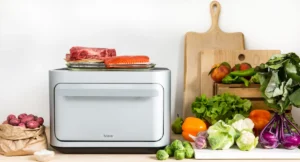
Instead, the market is seeing a growing focus on advanced countertop cooking appliances. These devices are designed to offer a high degree of automation for the repetitive and time-consuming aspects of meal preparation. They represent an evolution of familiar multi-function cookers, integrating sophisticated AI to manage multistep cooking processes with minimal human intervention.
This approach is being actively pursued by a new wave of startups. These companies are creating "countertop cooking robots" that can be described as a hybrid of highly advanced kitchen appliances like the Thermomix and precision cooking devices such as the Anova Precision Oven. The key differentiator is their ability to automatically dispense ingredients, seamlessly transition between different cooking functions, and orchestrate an entire meal from start to finish.
A Decade of Evolution: From Sereniti to Posha and Nosh
The concept of automated countertop cooking is not entirely new. Early pioneers began exploring this space over a decade ago. The Sereniti cooking appliance was one of the first to garner attention, signaling the nascent potential of such devices. Since then, the landscape has evolved, with companies like Else Labs (initially with its "Oliver" robot) and GammaChef contributing to the development of automated kitchen solutions.
More recently, startups like Posha and Nosh have emerged as frontrunners, each with distinct strategies and progress toward market viability. Posha appears to be the most advanced in bringing a fully integrated home cooking robot to consumers. Else Labs/Oliver, while a significant early player, has largely shifted its focus to building cooking appliances for commercial and office environments, reflecting a strategic pivot based on market demands and technological feasibility for those sectors. Nosh, meanwhile, has been building considerable momentum, particularly through its successful Kickstarter campaign for its first-generation robot.
The "Thermomix Plus Plus" Philosophy: Posha’s Vision
Posha’s CEO, Raghav Gupta, articulates a clear lineage between his company’s innovation and established kitchen appliances. He views Posha as an evolution of the Thermomix, describing it as "Thermomix plus plus." This analogy effectively captures the leap in functionality. While the Thermomix significantly streamlines cooking by automating many steps, it still requires active user involvement and oversight.

Gupta likens the transition from Thermomix to Posha to the difference between a car with advanced driver-assistance systems and a fully autonomous vehicle. "In Thermomix, you still have to be around your device. You still have to be behind the wheel," he explained. "In Posha, you don’t have to be behind the wheel anymore. It’s like the Waymo equivalent of driving. You can sit in the back seat, read a book while your self-driving car takes you from point A to point B." This highlights Posha’s ambition to offer a hands-off cooking experience, freeing up users’ time and mental load.
Addressing the "Burden" of Cooking: Nosh’s Approach
Amit Gupta (no relation to Raghav Gupta), co-founder of Nosh, echoes this sentiment with a strong emphasis on the daily challenges of home cooking. "Eating right is impossible because cooking is a burden," he stated in a previous interview with The Spoon. Nosh’s strategy aligns with Posha’s in its focus on contained, countertop automation, aiming to tackle the repetitive and time-consuming aspects of meal preparation.
Nosh’s recent Kickstarter campaign successfully raised over $800,000 for its initial robot, demonstrating significant consumer interest in their vision. Amit Gupta describes Nosh as a "kitchen in a box," a comprehensive system designed to automate not only the heating and timing of dishes but also the nuanced decision-making processes that are integral to successful cooking. This suggests a sophisticated AI capable of understanding and adapting to the complexities of culinary arts.
The Long Road to Humanoid Integration: Data, Training, and Accessibility
The widespread adoption of humanoid robots in the home, particularly for complex tasks like cooking, hinges on several critical factors: accessibility, affordability, and the ability to perform a broad range of everyday tasks reliably. While current advancements are impressive, they often cater to early adopters and specialized commercial applications.
The development of these advanced robots is heavily reliant on massive datasets that capture real-world interactions. Efforts to collect this data are accelerating. For instance, Instawork equips temporary workers with body cameras as they perform various tasks, providing valuable insights into human movement and task execution. This approach builds upon earlier academic research, such as the EPIC Kitchens project launched in 2018, which focused on capturing physical interactions on video to train computer vision systems for robotics. These modern initiatives are scaling data capture by orders of magnitude, fueled by substantial investment in the AI and robotics sectors.
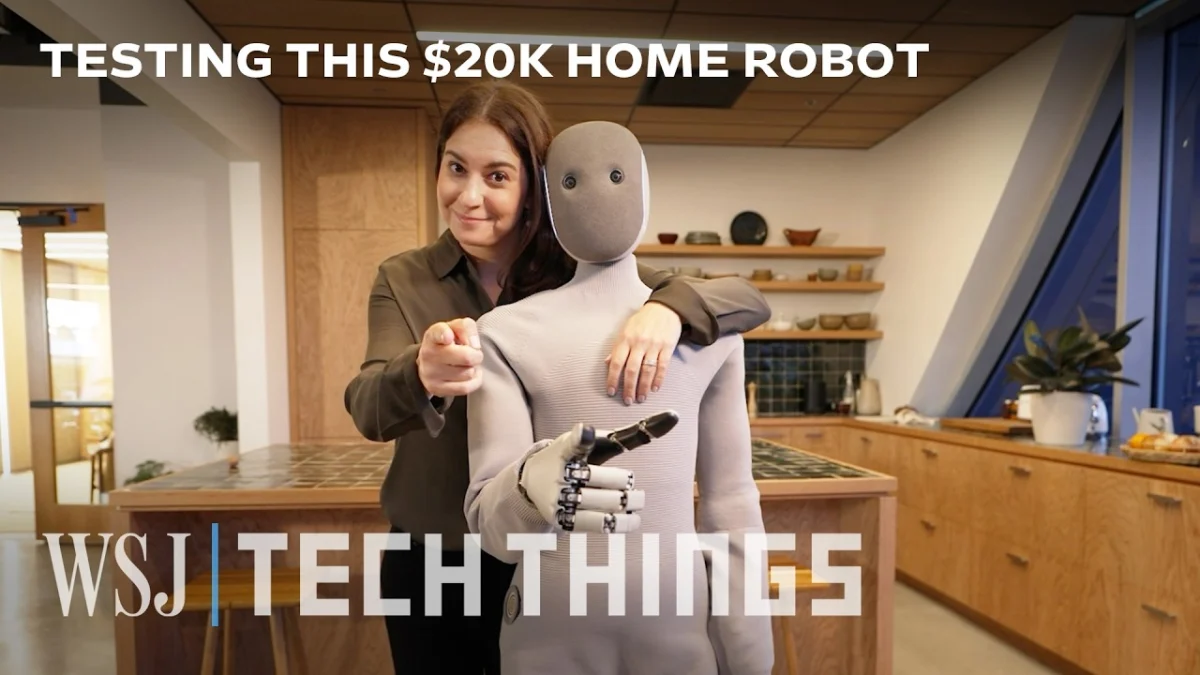
However, the cost of entry remains a significant barrier. While robots can be rented for approximately $500 per day, this is prohibitive for most consumers. Furthermore, many current humanoid systems, like the NEO 1 tested by Joanna Stern of the WSJ, are still teleoperated. This means a human operator is remotely controlling the robot in real-time, underscoring the current limitations in autonomous functionality. For these robots to become truly ubiquitous in homes, they must transition from being remotely controlled novelties to fully autonomous assistants capable of independent operation.
The Transformative Potential for Independent Living
Looking beyond the immediate kitchen applications, the long-term implications of capable humanoid robots are profound, particularly for individuals seeking to maintain independent living. As populations age globally and the costs of managed care continue to rise, robots that can reliably assist with daily tasks could become indispensable. For elderly individuals or those with mobility or dexterity challenges, a humanoid robot could provide a crucial layer of support, enabling them to live more comfortably and safely in their own homes.
Consider the experience of an octogenarian living independently, who already finds value in simple voice assistants like Alexa for accessing information, setting timers, or playing music. The transition to a robotic assistant, especially one capable of assisting with increasingly challenging tasks like cooking, might not be as formidable as it initially seems. For many, the familiar interface of a voice assistant could serve as a stepping stone to interacting with more advanced robotic companions.
Conclusion: The Evolving Landscape of Kitchen Robotics
The immediate future of kitchen robotics is likely to be dominated by sophisticated, countertop-based appliances that offer advanced automation and intelligent cooking capabilities. These devices represent a pragmatic and accessible evolution of existing kitchen technology, addressing the daily burden of meal preparation for a broad consumer base.
However, the long-term vision of humanoid robots seamlessly integrating into our homes, assisting with a wide array of tasks including complex culinary endeavors, remains a powerful aspiration. As data collection, AI training, and hardware development continue to advance, and as costs decrease, the prospect of bipedal assistants in our kitchens becomes increasingly plausible. For now, the future of kitchen robotics is more likely to be found sitting quietly on the counter, but the journey towards the walking, cooking humanoid has undeniably begun.