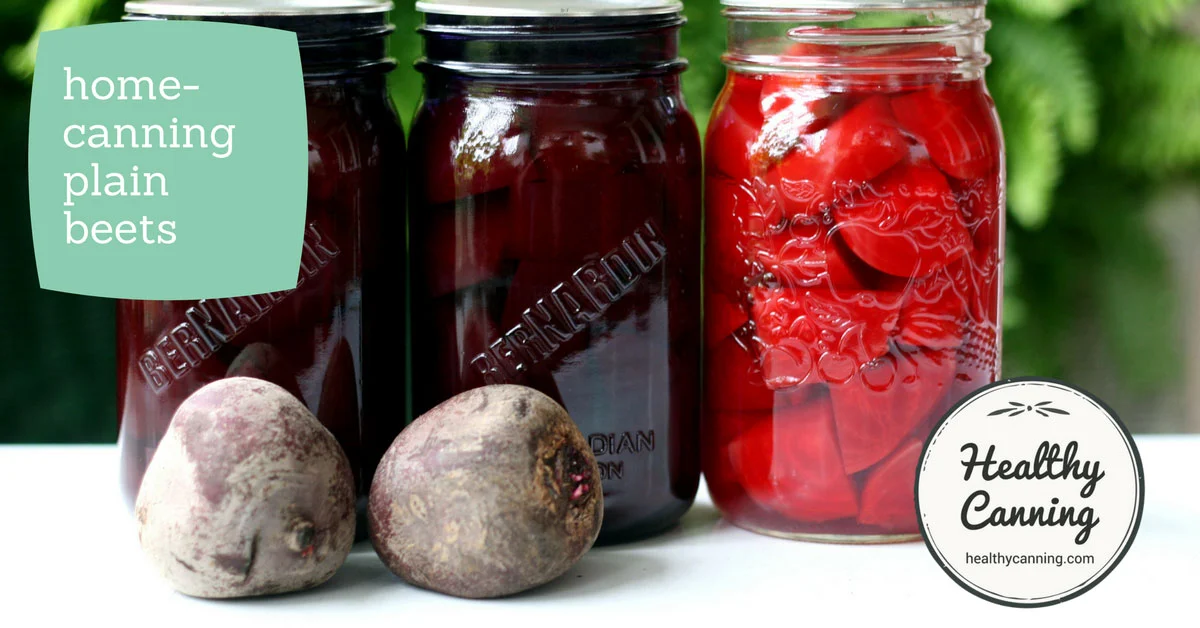

The practice of home food preservation serves as a bridge between seasonal harvests and year-round food security, yet it requires a rigorous adherence to scientific protocols to ensure consumer safety. Among the various vegetables preserved in home kitchens, the beet (Beta vulgaris)—referred to as beetroot in the United Kingdom and other Commonwealth nations—stands as a nutritional powerhouse that requires specific, high-temperature processing. According to the United States Department of Agriculture (USDA) and the National Center for Home Food Preservation (NCHFP), plain beets are classified as a low-acid food. This classification mandates the use of pressure canning technology to eliminate the risk of foodborne illnesses, most notably botulism.
The Scientific Mandate for Pressure Canning
The primary concern in the preservation of low-acid vegetables like beets is the bacterium Clostridium botulinum. This microorganism thrives in the anaerobic (oxygen-free) environment of a sealed canning jar. While the bacteria themselves are destroyed at boiling temperatures, their spores are remarkably heat-resistant. In a low-acid environment (pH greater than 4.6), these spores can survive a standard boiling water bath, eventually germinating and producing a deadly neurotoxin.

To neutralize these spores, the internal temperature of the food must reach 240°F (116°C). This temperature can only be achieved under pressure. Experts from the "Putting Food By" series, a seminal resource in the field of food preservation, emphasize that plain beets rank alongside green beans as significant potential carriers of the botulinum toxin if processed incorrectly. Historical data from 1990 to 2012 confirms this risk, documenting at least ten cases of botulism in the United States directly attributed to beets that were processed using a water bath method rather than a pressure canner. Consequently, food safety authorities maintain a zero-tolerance policy regarding the processing method: plain beets must be pressure canned without exception.
Historical Evolution of Canning Standards
The transition to standardized pressure canning for beets was not an overnight development but the result of decades of refining agricultural science. As early as 1926, the USDA’s Farmers’ Bulletin No. 1471 provided explicit instructions for the steam-pressure canning of "baby beets," citing the "risk of poisoning from occasional contamination with botulinus bacteria." At that time, the recommended processing time for quart jars was 40 minutes at 10 pounds of pressure.
However, the trajectory of safety advice was not always linear. During the Second World War, resource scarcity led to some deviations in published guidance. Because metal was rationed for the war effort, pressure canners were difficult to obtain. Some university extension bulletins from the mid-1940s suggested an "acid method," which involved adding a small amount of vinegar to beets to allow for water bath processing. Modern science has since debunked this approach, noting that the amount of vinegar used was insufficient to safely lower the pH level to a point where C. botulinum could not thrive. Today, these historical anomalies serve as a cautionary tale for home preservers, reinforcing the importance of using current, lab-tested USDA guidelines rather than "vintage" recipes.
Preparation and Quantitative Guidelines
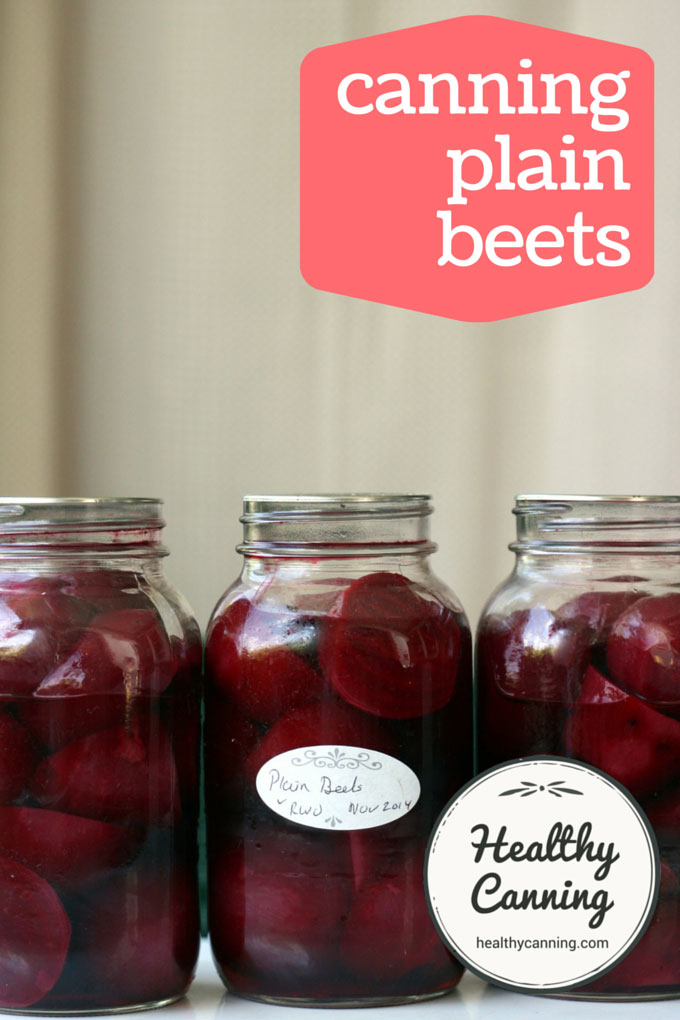
Achieving a high-quality canned product begins with the selection of the raw material. For home canners, the quantity of beets required is a critical logistical consideration. On average, 1.25 kilograms (approximately 3 pounds) of beets are needed to fill a one-litre (one-quart) jar. For a full canner load of seven quarts, a harvester would need approximately 21 pounds of beets.
The preparation process is designed to minimize bacterial load and maximize aesthetic appeal. The USDA recommends a "Hot Pack" method for beets. The roots must be pre-cooked until the skins can be easily removed. Safety protocols require that beets be peeled before canning; this is not merely a matter of texture but a safety measure to reduce the soil-borne microorganisms that reside on the skin.
During pre-cooking, it is advised to leave at least two inches of the stem and the taproot intact. This technique is intended to reduce "bleeding," or the loss of the beet’s deep red pigment, although some color loss is inevitable during high-pressure processing. Once peeled, the beets can be left whole if they are small (less than two inches in diameter), or sliced and cubed if they are larger.

Technical Processing Specifications
The actual canning process requires precision regarding time, pressure, and headspace. The standard headspace for beets is 3 centimeters (1 inch), which allows for the expansion of the food and the exhaustion of air during the cooling process.
The processing times are strictly defined:
- Half-litre (pint) jars: 30 minutes
- One-litre (quart) jars: 35 minutes
The required pressure is determined by the type of gauge used and the altitude of the kitchen. At altitudes between 0 and 300 meters (0-1,000 feet), a weighted gauge should be set to 10 pounds (69 kPa), while a dial gauge should read 11 pounds (76 kPa). For those living at higher elevations, the pressure must be increased to compensate for the lower boiling point of water. For example, above 1,000 feet, the pressure on a weighted gauge must be increased to 15 pounds. Failure to adjust for altitude results in under-processing, which compromises the safety of the final product.
The Chemistry of Color: Betalaines and Oxidation
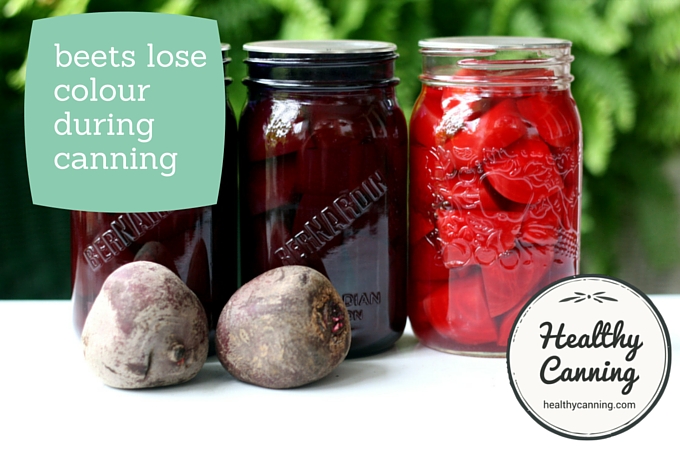
One of the most common concerns among home canners is the loss of the beet’s vibrant red hue. The pigments in beets, known as betalaines, are highly sensitive to the intense heat of a pressure canner. This can result in the beets appearing pale or even brownish immediately after the canning cycle is complete.
Research from the Penn State Extension indicates that this reaction is often reversible. The betalaines can undergo a chemical stabilization over time, and it is common for the color of the canned beets to darken and return to a rich red after several days of storage at room temperature. Furthermore, variety selection plays a significant role in color retention. Varieties such as ‘Detroit Dark Red’ and the cylindrical ‘Formanova’ are noted for their ability to withstand high temperatures while maintaining their internal pigmentation.
Nutritional Profile and Culinary Utility
Home-canned beets are not only a logistical convenience but also a nutritional asset. A standard 250-gram serving (approximately one cup) of cooked beets provides roughly 124 calories, 4 grams of protein, and 3.6 grams of dietary fiber. They are naturally low in fat and, when canned at home, can be processed without added sodium, making them an ideal choice for individuals on heart-healthy diets.

The culinary applications for plain canned beets are extensive. Because they are already cooked and peeled, they can be integrated into weeknight meals with minimal effort. They are frequently served warm with sour cream and dill, or tossed in fats such as olive oil or duck fat for rapid oven roasting. Furthermore, they serve as the base for traditional dishes like Borscht or modern interpretations such as beet and coconut milk curries.
Judging Criteria for Quality Control
For those participating in agricultural fairs or simply seeking to maintain the highest household standards, the NCHFP provides specific judging criteria for canned beets. A "perfect" jar should exhibit:
- Uniformity: Slices or cubes should be consistent in size to ensure even heat penetration.
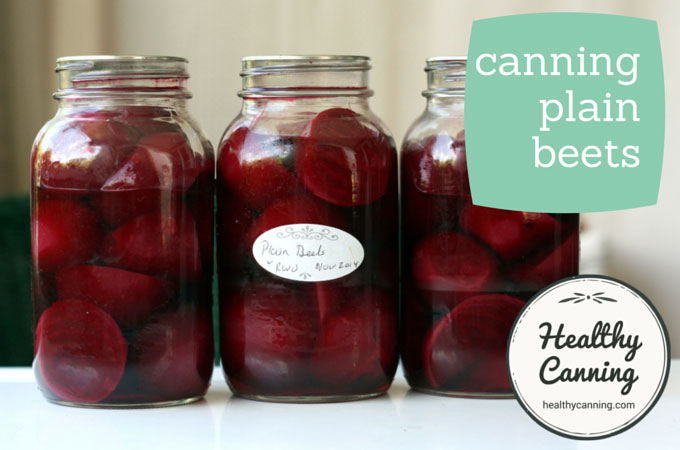
- Clarity of Liquid: The packing liquid should be a clear, sparkling red, free from cloudiness, sediment, or floating pieces of skin.
- Texture: The beets should be firm and free from a fibrous or "woody" appearance, which is common in over-mature beets (those exceeding three inches in diameter).
- Aesthetics: The color should be deep and even, without white rings or brownish discoloration.
Broader Impact and Implications
The resurgence of interest in home canning reflects a broader societal shift toward food sovereignty and sustainable living. By preserving beets at home, consumers reduce their reliance on industrial supply chains and minimize food waste during peak harvest seasons. However, this return to traditional skills must be underpinned by modern scientific literacy.
The insistence on pressure canning for plain beets is a prime example of how public health guidelines protect the community. While the risk of botulism is statistically low when procedures are followed, the severity of the illness—which can cause paralysis and respiratory failure—necessitates strict adherence to proven methods. By following the USDA and NCHFP guidelines, home canners can enjoy the fruits of their labor with the confidence that their pantry is filled with safe, high-quality, and nutritious provisions. In the landscape of modern food preservation, the pressure canner remains an indispensable tool for the safe management of the harvest.