
A culinary masterpiece that marries delicate crispness with a soft, marshmallowy interior, the homemade meringue roulade stands as a show-stopping dessert, perfectly suited for special occasions. This naturally gluten-free confection offers endless possibilities for customization, promising a sensory experience that often surpasses its visual appeal. Often likened to a more pliable cousin of the classic pavlova, the meringue roulade distinguishes itself through its ability to be elegantly rolled around clouds of creamy filling, tangy lemon curd, or vibrant fruit jams, creating an unforgettable melt-in-your-mouth texture.
Historical Roots and Culinary Evolution of Meringue and Roulades
The origins of meringue are steeped in culinary history, with various claims to its invention. One popular theory attributes its creation to a Swiss confectioner named Gasparini in the town of Meiringen, Switzerland, in the 18th century, from which the name is thought to derive. Another suggests its French roots, with early recipes appearing in French cookbooks. Regardless of its exact birthplace, meringue quickly became a staple in European patisseries, evolving into different forms, including French meringue (raw egg whites and sugar), Italian meringue (egg whites whipped with hot sugar syrup), and Swiss meringue (egg whites and sugar heated over a double boiler before whipping). Each method yields slightly different textures and stabilities, influencing their application in various desserts. The meringue used for a roulade typically falls into a category that balances stability with a degree of pliability, often achieved through a method similar to French or Swiss meringue with additional stabilizers.
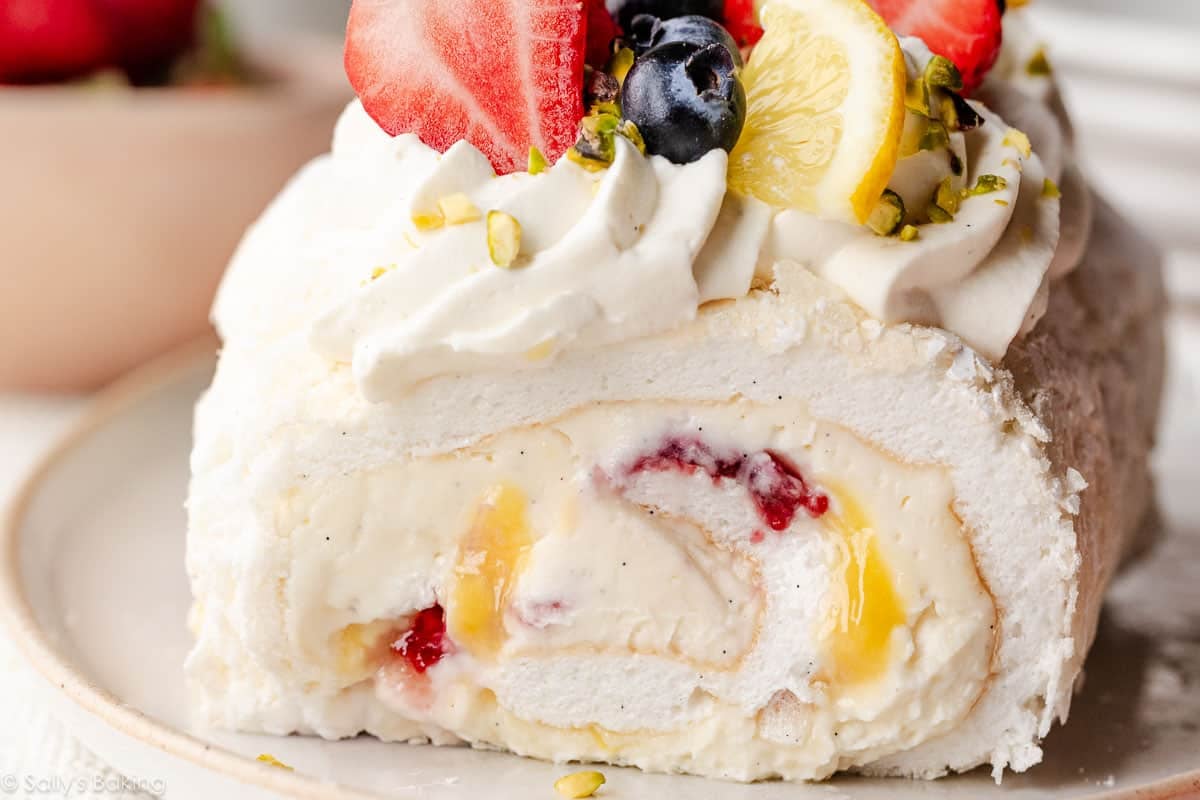
The concept of a "roulade" itself refers to a dish, sweet or savory, that is rolled up. In the dessert world, cake roulades (like the classic Swiss roll) are well-known, involving a thin sponge cake baked and then rolled while warm to prevent cracking, before being filled. Applying this technique to meringue presented a unique challenge due to its inherent fragility. The innovation of a meringue roulade marries the ethereal quality of meringue with the elegant presentation of a rolled dessert, offering a lighter, often gluten-free alternative to traditional cake rolls. This evolution reflects a broader trend in pastry arts towards lighter, more texturally diverse, and diet-friendly options.
The Science Behind the Meringue: A Delicate Balance
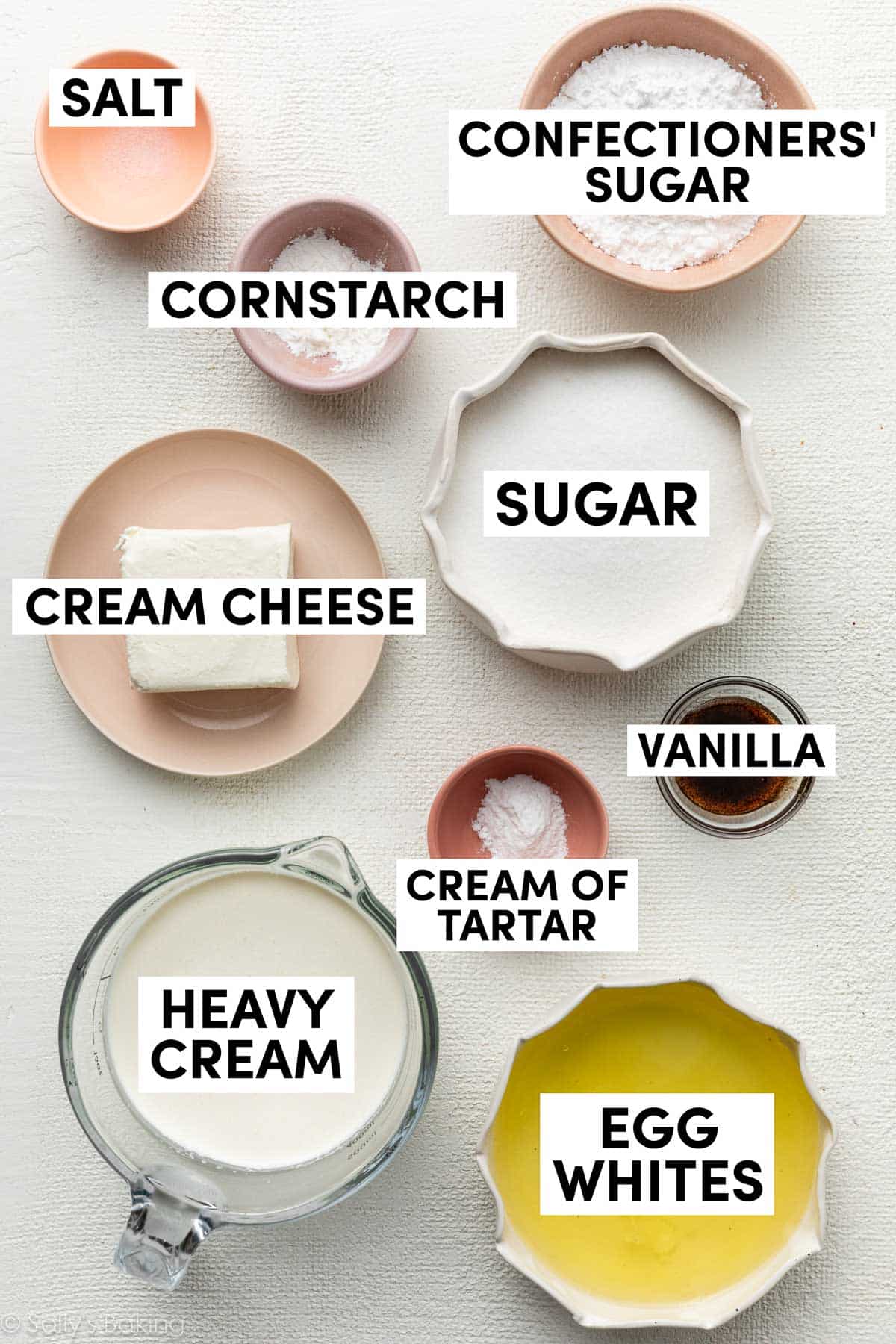
Creating the perfect meringue for a roulade is a testament to applied culinary science, where a handful of simple ingredients transform into a complex structure. The primary components—egg whites, sugar, and an acid (like cream of tartar or lemon juice)—each play a crucial role.
Egg whites are primarily composed of water and proteins. When egg whites are whipped, mechanical agitation (from a whisk or mixer) causes the proteins to denature, or unfold. These unfolded proteins then form a network, trapping air bubbles and creating a foam. The addition of an acid, such as cream of tartar, stabilizes this protein network, preventing it from collapsing and allowing the meringue to hold its volume and shape more effectively. Without an acid, the proteins might not denature optimally, leading to a weaker, less stable foam.
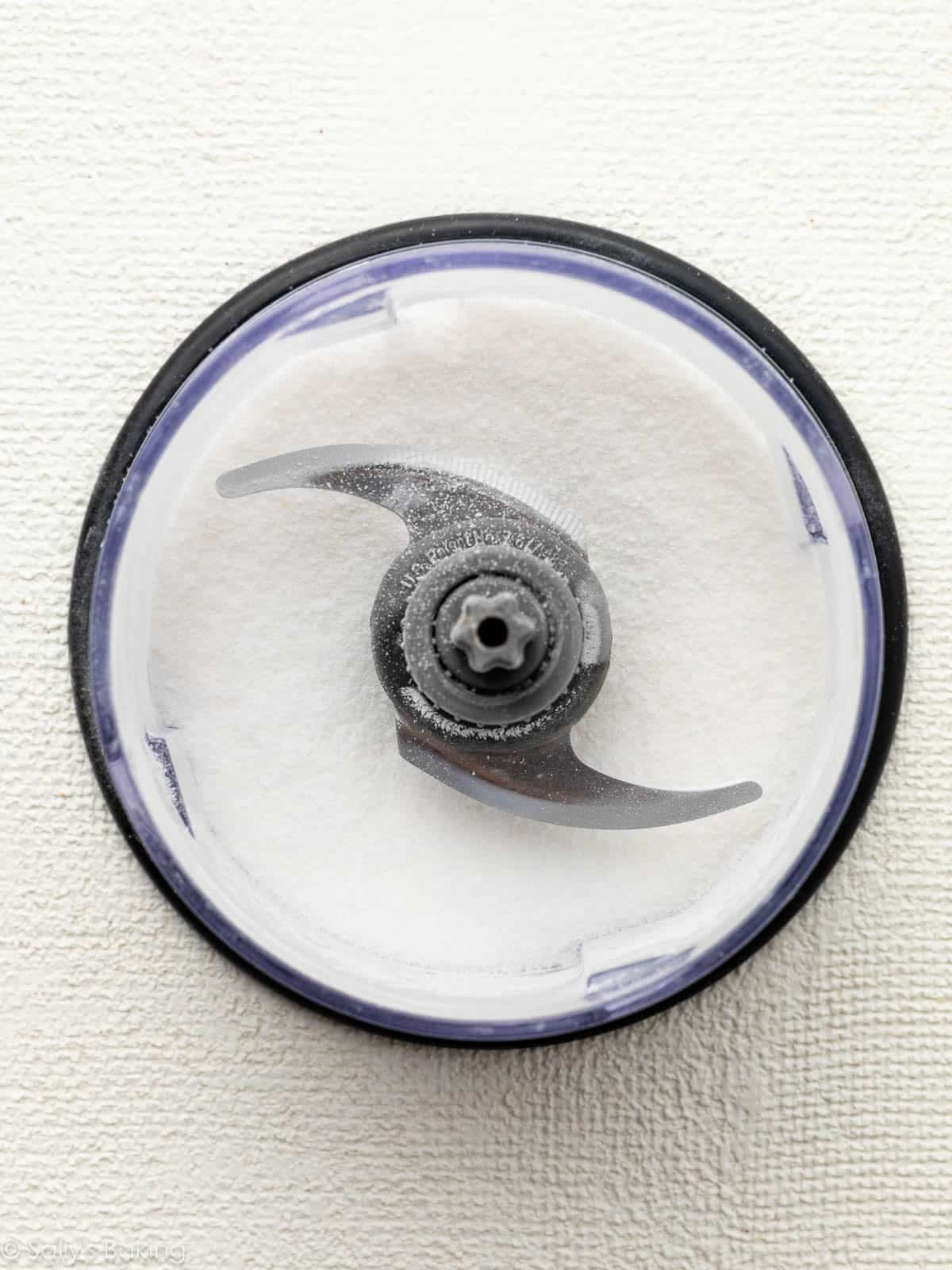
Sugar is introduced gradually into the whipped egg whites. Beyond adding sweetness, sugar plays a vital structural role. It dissolves in the moisture of the egg whites, forming a syrup that further stabilizes the protein network. The sugar molecules bind to the denatured proteins, strengthening the foam and preventing the air bubbles from coalescing and escaping. The gradual addition of sugar ensures it dissolves properly, contributing to a smooth, glossy meringue. Undissolved sugar crystals can lead to a gritty texture and even "weeping," where sugar syrup leaks from the meringue. For this reason, superfine or caster sugar is often recommended, as its smaller crystals dissolve more readily than granulated sugar. If only granulated sugar is available, a brief pulse in a food processor can achieve the desired fineness, as demonstrated in the initial preparation steps.
Cornstarch, though not always present in traditional meringues, is a strategic addition in roulade recipes. It acts as a tenderizer and an additional stabilizer. When baked, cornstarch absorbs moisture, contributing to the meringue’s soft, marshmallowy interior while helping to prevent it from becoming overly dry and brittle, which is critical for successful rolling. This careful balance of ingredients ensures the meringue bakes to a delicately crisp exterior while retaining a flexible, chewy core.
Mastering the Meringue Base: A Step-by-Step Approach
The successful execution of a meringue roulade hinges on precision and attention to detail, transforming what appears to be a simple process into a rewarding culinary endeavor. Seasoned bakers often emphasize the importance of preparation and understanding each stage.
-
Ingredient Quality and Preparation: The journey begins with the ingredients. Fresh, room-temperature egg whites are preferred as they whip to a greater volume than cold ones. Ensuring all equipment—mixing bowls and whisks—are impeccably clean and grease-free is paramount. Even a tiny trace of fat can prevent egg whites from whipping properly. As previously noted, superfine sugar is ideal; if using granulated, processing it briefly into a finer consistency is a critical first step.
-
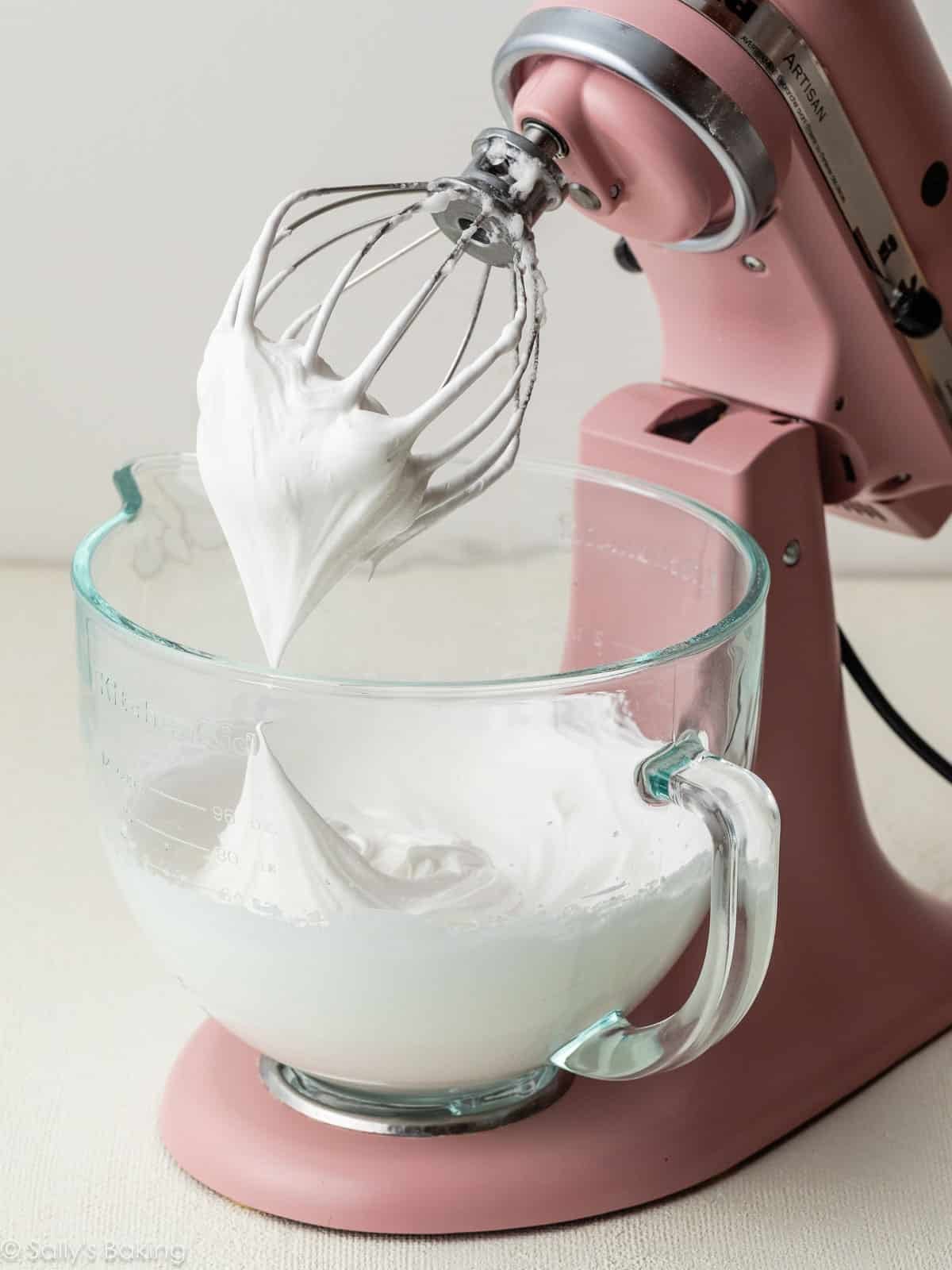
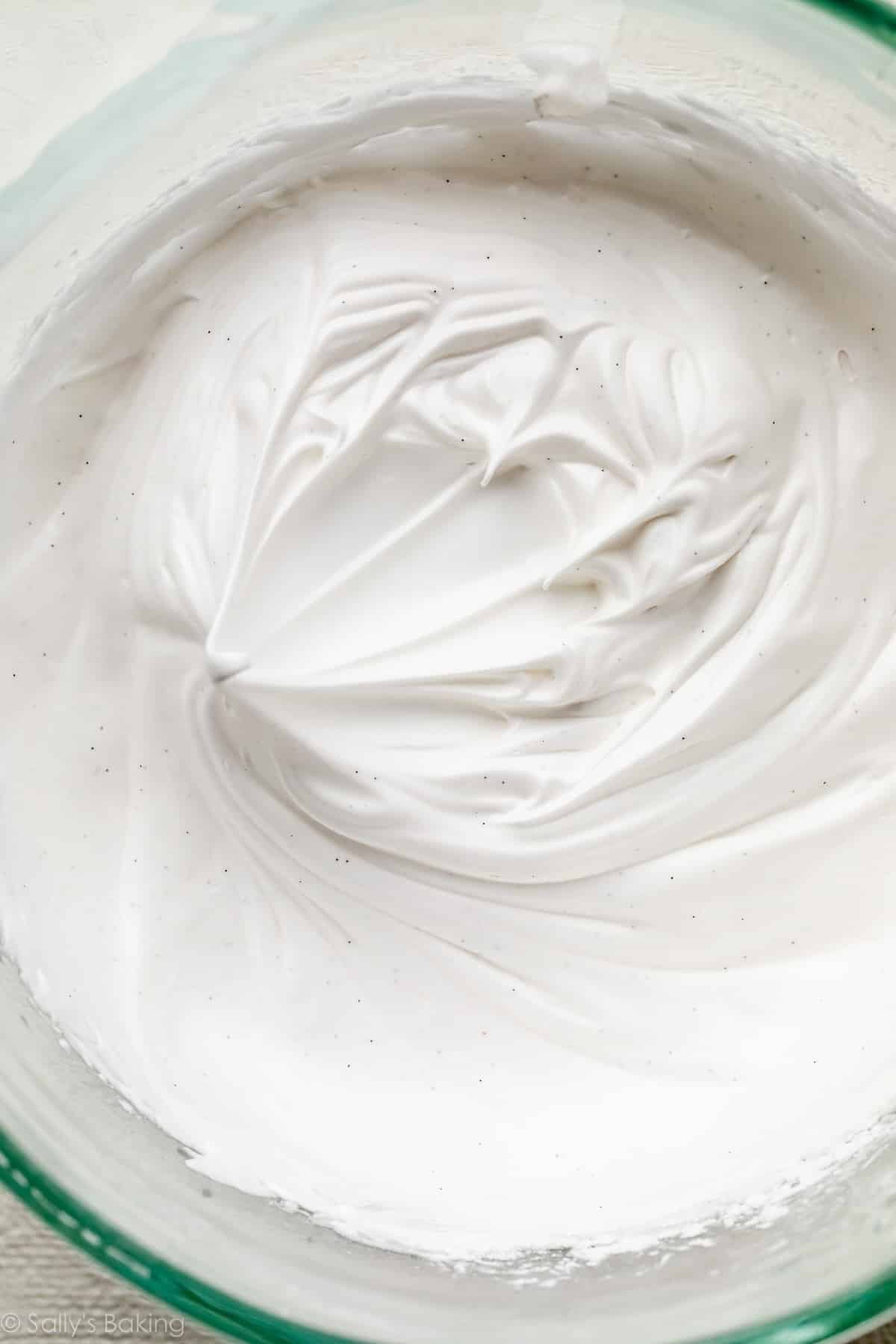
Whipping to Perfection: The whipping process is a gradual build-up of structure. Egg whites are initially whipped until foamy, at which point the cream of tartar is added to begin stabilizing the proteins. Sugar is then introduced, one tablespoon at a time, allowing each addition to dissolve thoroughly before the next. This slow incorporation ensures a stable, glossy meringue. The goal is "stiff peaks"—when the mixer is stopped and the whisk attachment lifted, the meringue peak should stand upright without drooping, indicating sufficient aeration and stability. Over-whipping can lead to a dry, grainy meringue that is difficult to spread and prone to cracking.
-
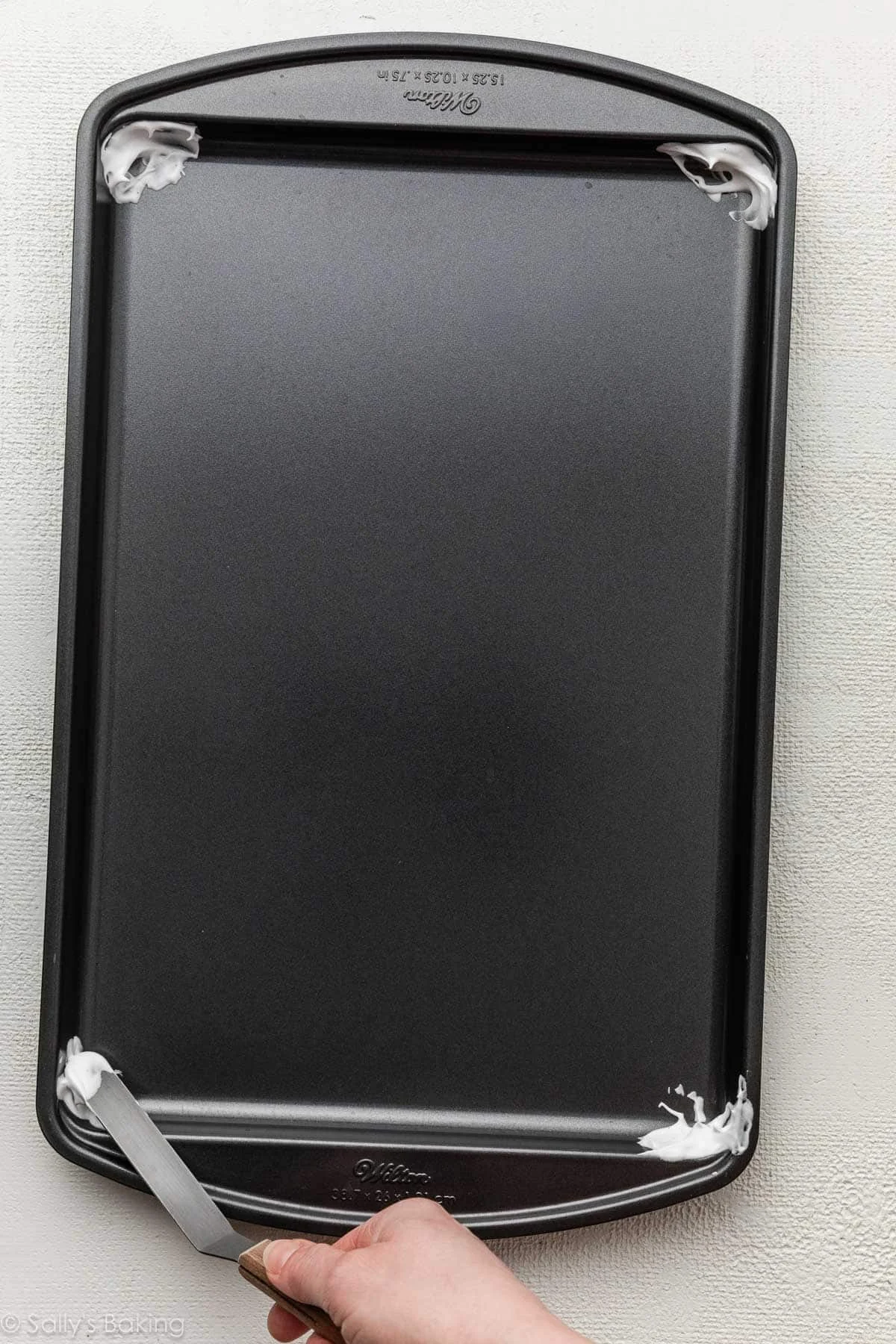
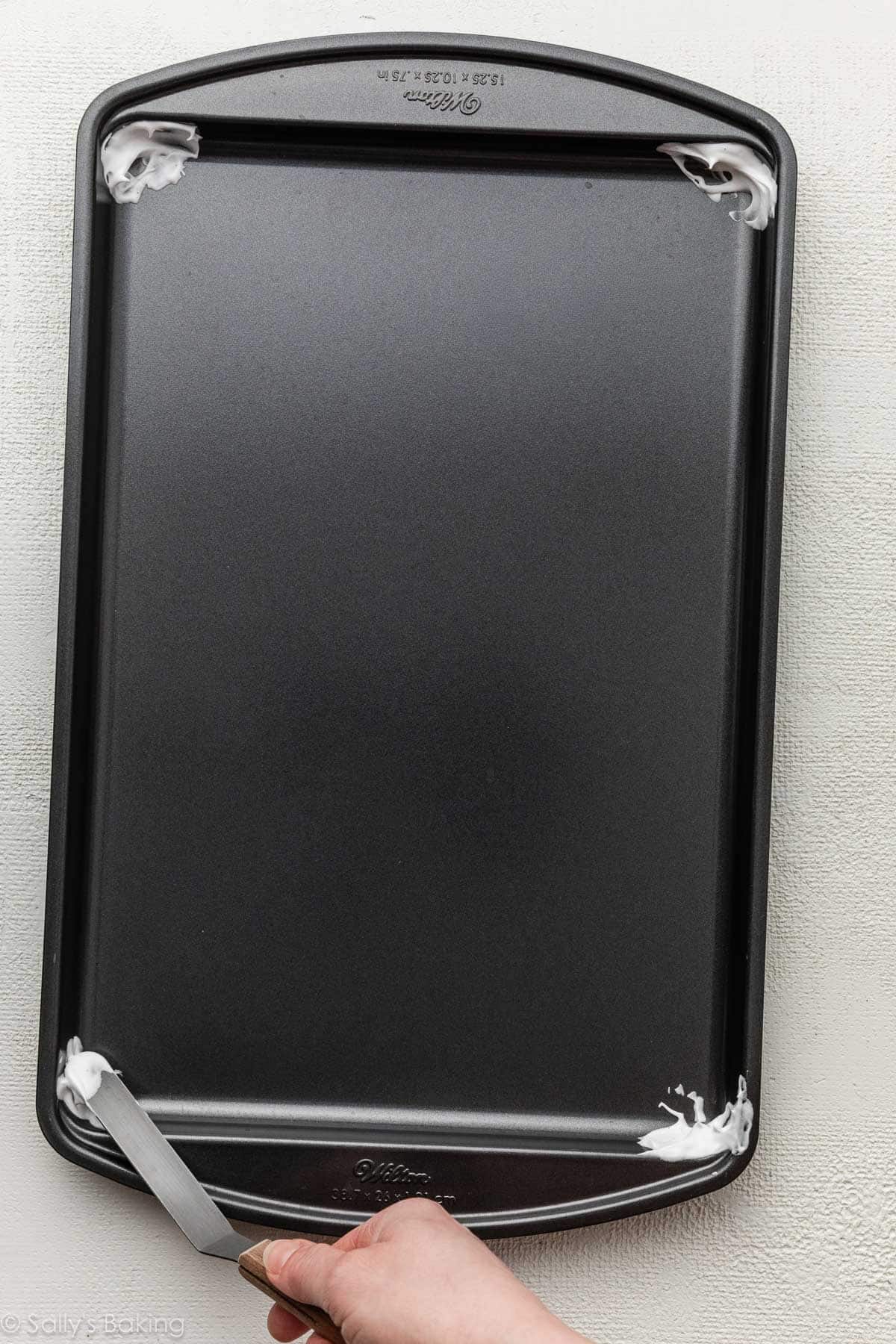
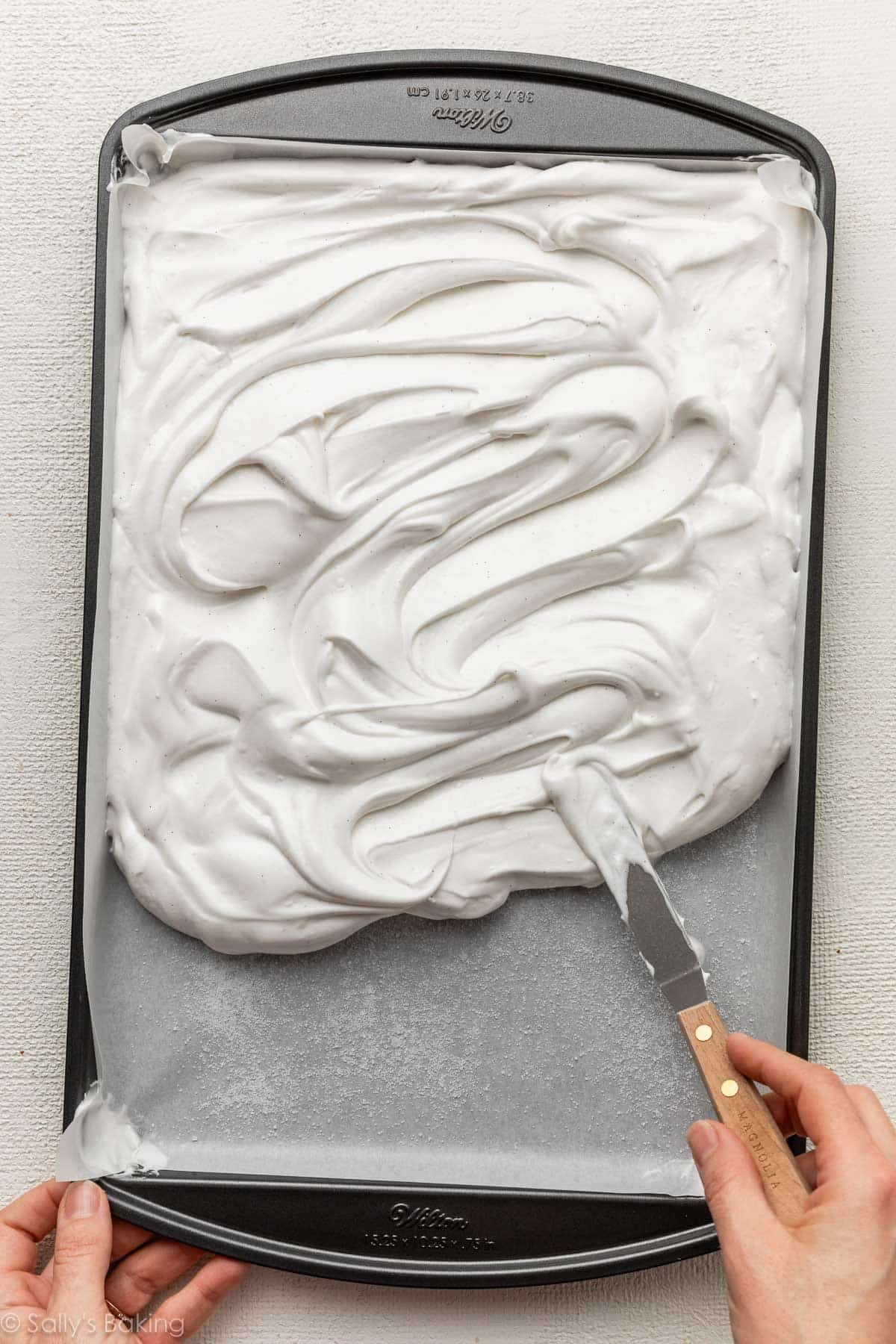
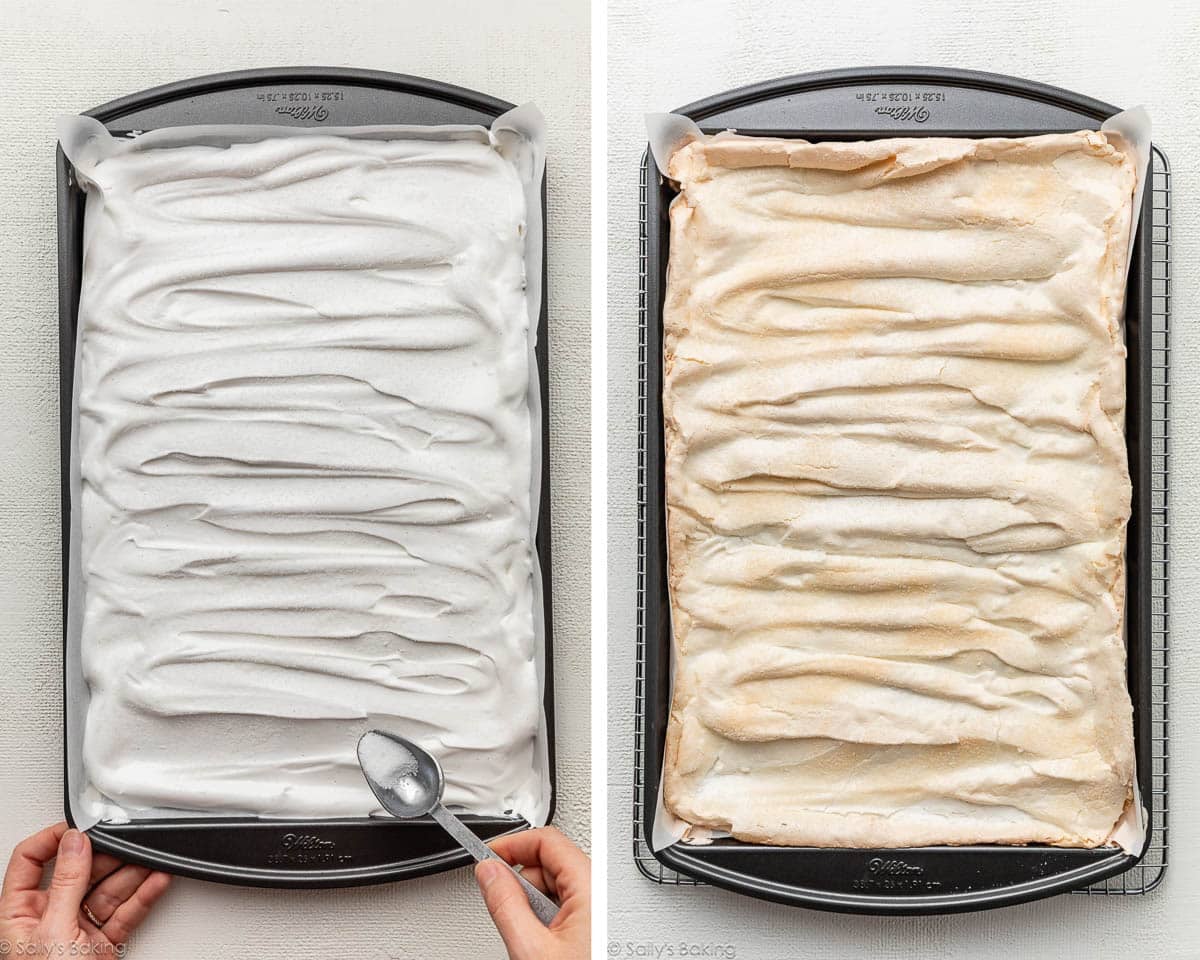
Baking for Dual Texture: Once the meringue is prepared, it is carefully spread onto a parchment-lined baking sheet. A small offset spatula is often recommended for achieving an even layer. A common technique, advised by many pastry chefs, is to lightly dust the parchment with granulated sugar before spreading the meringue; this minor detail significantly aids in preventing the baked meringue from sticking, which can be a major source of frustration during the crucial peeling step. Baking temperature and duration are critical. The oven should be preheated accurately. The meringue bakes until its top is just set—not wet or tacky—and feels lightly crisp on the surface yet springy underneath when gently touched. Visually, it should remain pale, with only the slightest hint of golden color, indicating that the sugars have caramelized minimally while the interior retains its soft consistency. Over-baking will lead to a dry, brittle meringue that is impossible to roll without significant cracking.
The Critical Rolling Technique: A Moment of Truth
One of the most anxiety-inducing yet crucial steps in creating a meringue roulade is the initial roll, often referred to as the "training roll." This technique, similar to that used for traditional cake rolls, conditions the warm meringue to adopt a rolled shape before the filling is added.
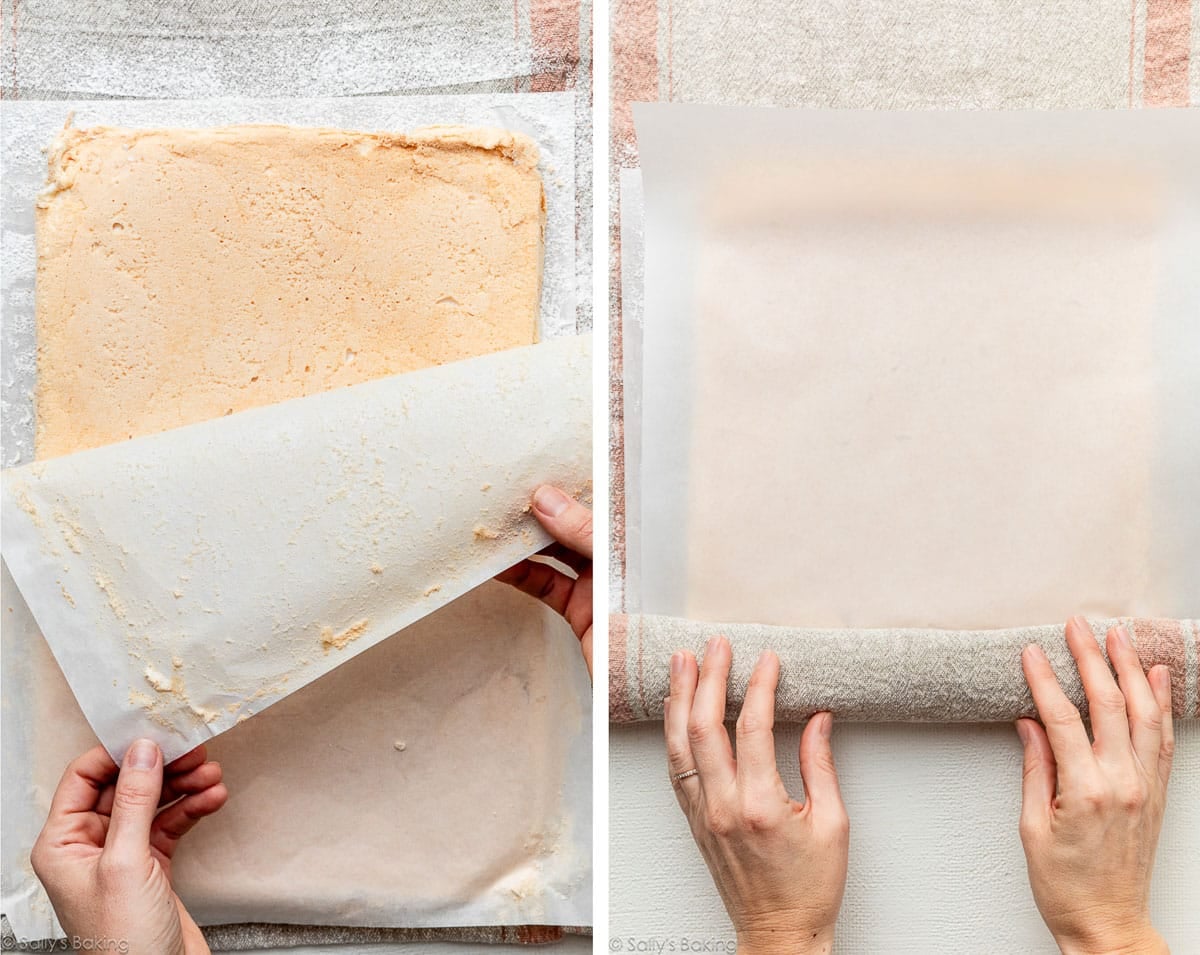
Culinary experts consistently advise that the meringue must still be warm for this initial roll. Allowing it to cool for too long will render it brittle and prone to shattering. A cooling period of precisely 10 minutes post-baking is often cited as the "sweet spot." During this brief window, preparations for rolling are made: a clean kitchen towel is laid out, topped with a fresh sheet of parchment paper, and lightly dusted with confectioners’ sugar.
Once the 10-minute cooling period is complete, the baked meringue is carefully inverted onto the prepared parchment and towel. The original baking parchment is then slowly and gently peeled away. Any resistance can indicate either over-baking or insufficient sugar dusting on the original parchment. A second light dusting of confectioners’ sugar is applied to the exposed meringue surface, followed by another fresh sheet of parchment. Starting from one of the shorter ends, the meringue is then gently but firmly rolled up with the parchment and towel, creating a tight spiral. This "training" step imparts the memory of the rolled shape, making the final, filled roll much more manageable and reducing the likelihood of severe cracks. The rolled meringue is then set aside to cool completely while the filling is prepared.
Crafting the Stable Cream Filling: Enhancing Flavor and Structure
While the meringue cools, attention turns to the filling, which is integral to both the flavor profile and the structural integrity of the roulade. Unlike standard whipped cream, which can soften and weep over time, a stabilized cream filling is preferred for a meringue roulade to maintain its form and texture.
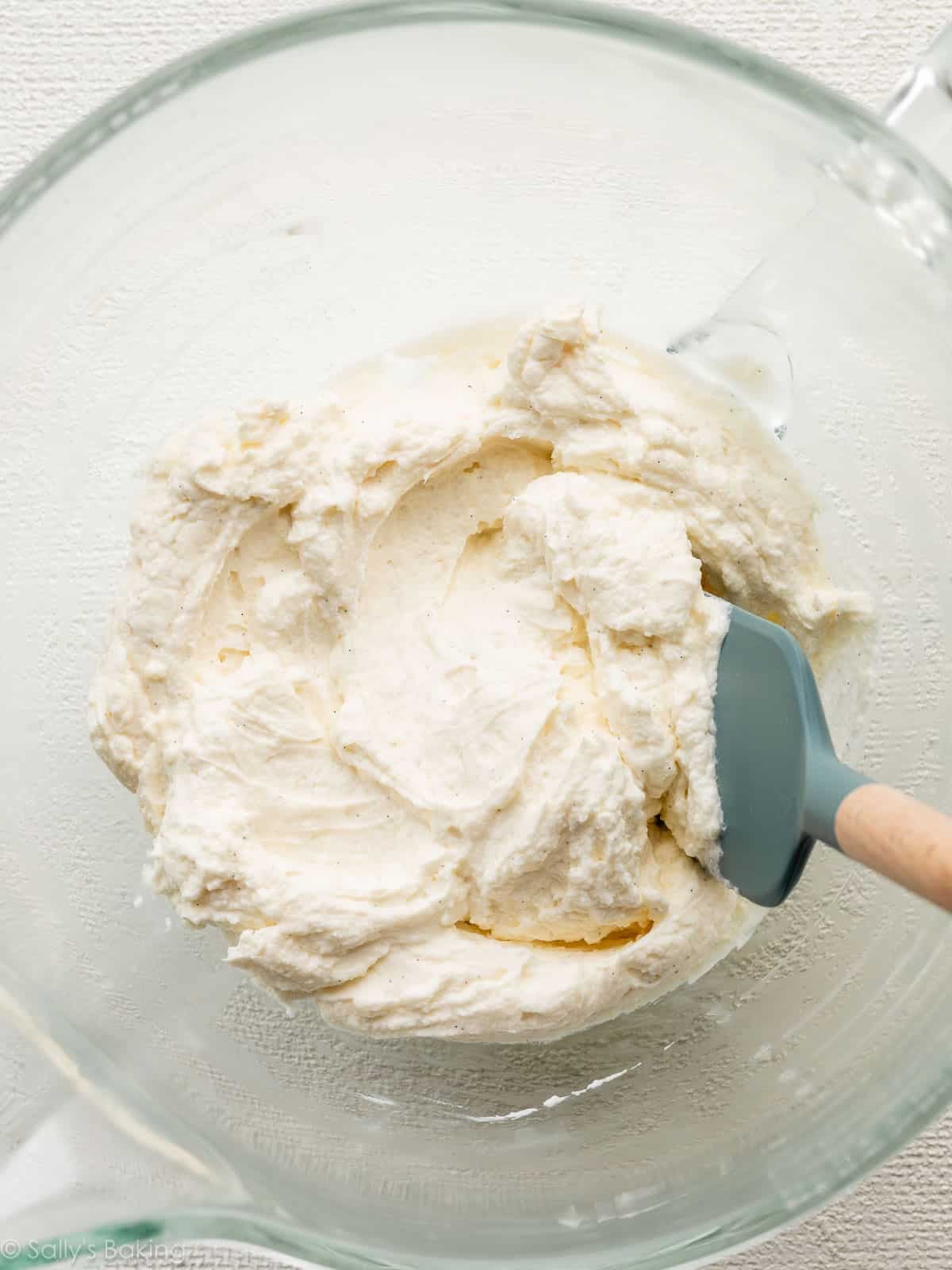
This recipe typically calls for a cream cheese-based filling, which provides a richer flavor and significantly improved stability compared to plain whipped cream. Alternatively, mascarpone cheese can be used, offering a similar stabilizing effect with a slightly different flavor nuance, as seen in fillings for fruit tarts. The process involves separately whipping heavy cream, sugar, and vanilla until soft peaks form. Cream cheese (or mascarpone), softened to room temperature, is then beaten until smooth to ensure a lump-free texture. Finally, the two components are gently folded together, creating a stable, luscious cream that holds its shape well within the roulade.
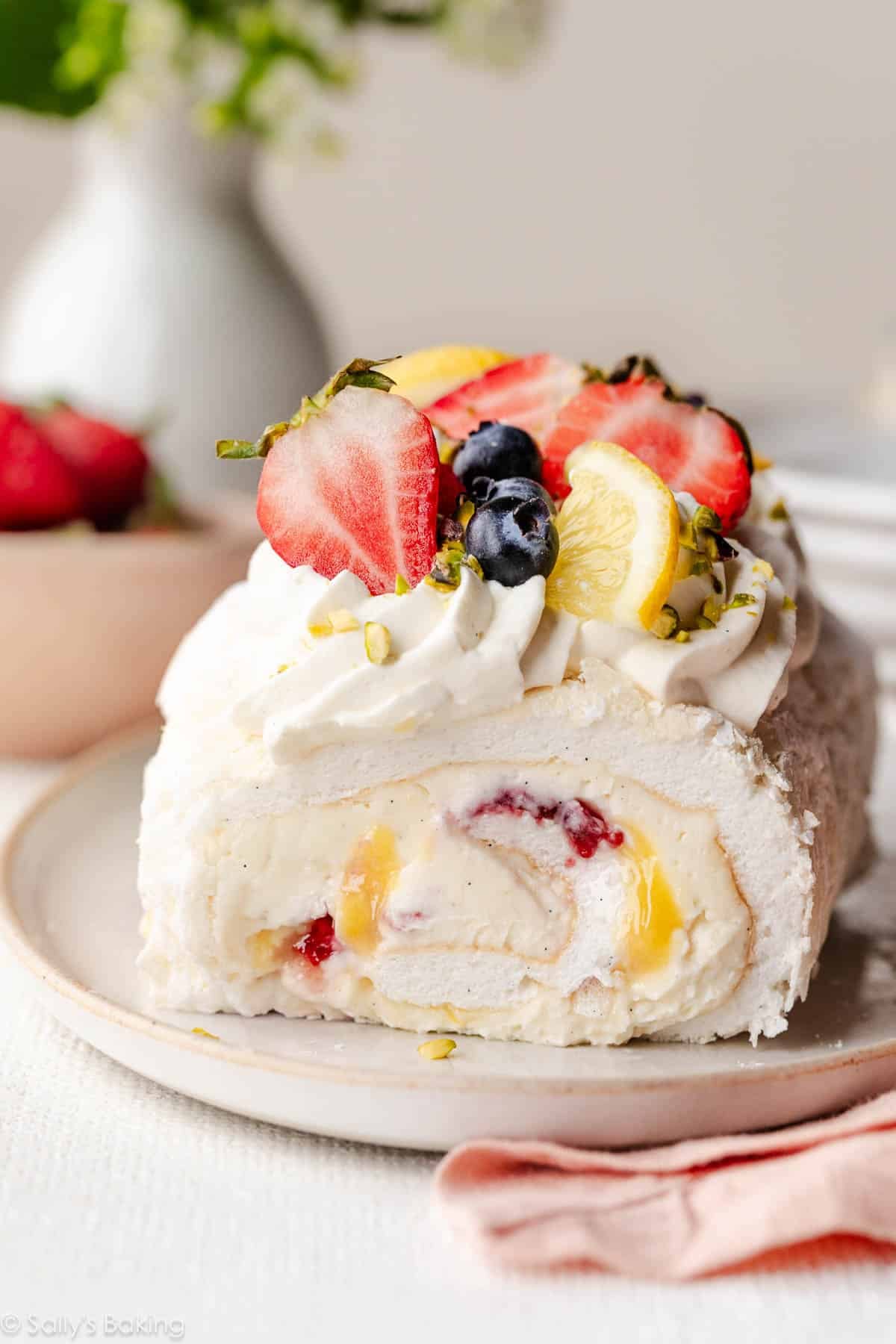
The versatility of the meringue roulade truly shines with the addition of complementary flavors. Dollops of tangy lemon curd provide a bright counterpoint to the sweet meringue and rich cream, while raspberry jam introduces a burst of fruity tartness and a beautiful swirl of color. Other popular choices include passion fruit curd, strawberry jam, or even chocolate ganache for a more decadent option.
Assembling the Roulade: Precision and Patience
With the meringue cooled and the filling ready, the final assembly commences. The cooled meringue is gently unrolled. It is important to manage expectations at this stage; a few small, superficial cracks are entirely normal and part of the rustic charm of a meringue roulade. However, if the meringue crumbles into large pieces, it typically indicates over-baking or that it was allowed to cool too long before the initial "training" roll. Even in such scenarios, all is not lost; the pieces can often be artfully reassembled, and the filling spread over the cracks, which will be camouflaged by garnishes.
The prepared cream filling is then spread evenly over the unrolled meringue, extending almost to the edges. This is the stage where additional flavor elements like lemon curd or fruit jams are artfully swirled into the cream, creating both visual appeal and a burst of contrasting taste.
The final roll is executed without the towel. Using the bottom piece of parchment paper to assist, the meringue is rolled up from the short end, gently guiding it to form a neat spiral. The key is to roll it firmly enough to ensure a compact structure but not so tightly that it causes excessive cracking or forces the filling out. Once rolled, the meringue roulade can be carefully transferred to a serving platter.
Customization and Presentation: The Art of Garnish
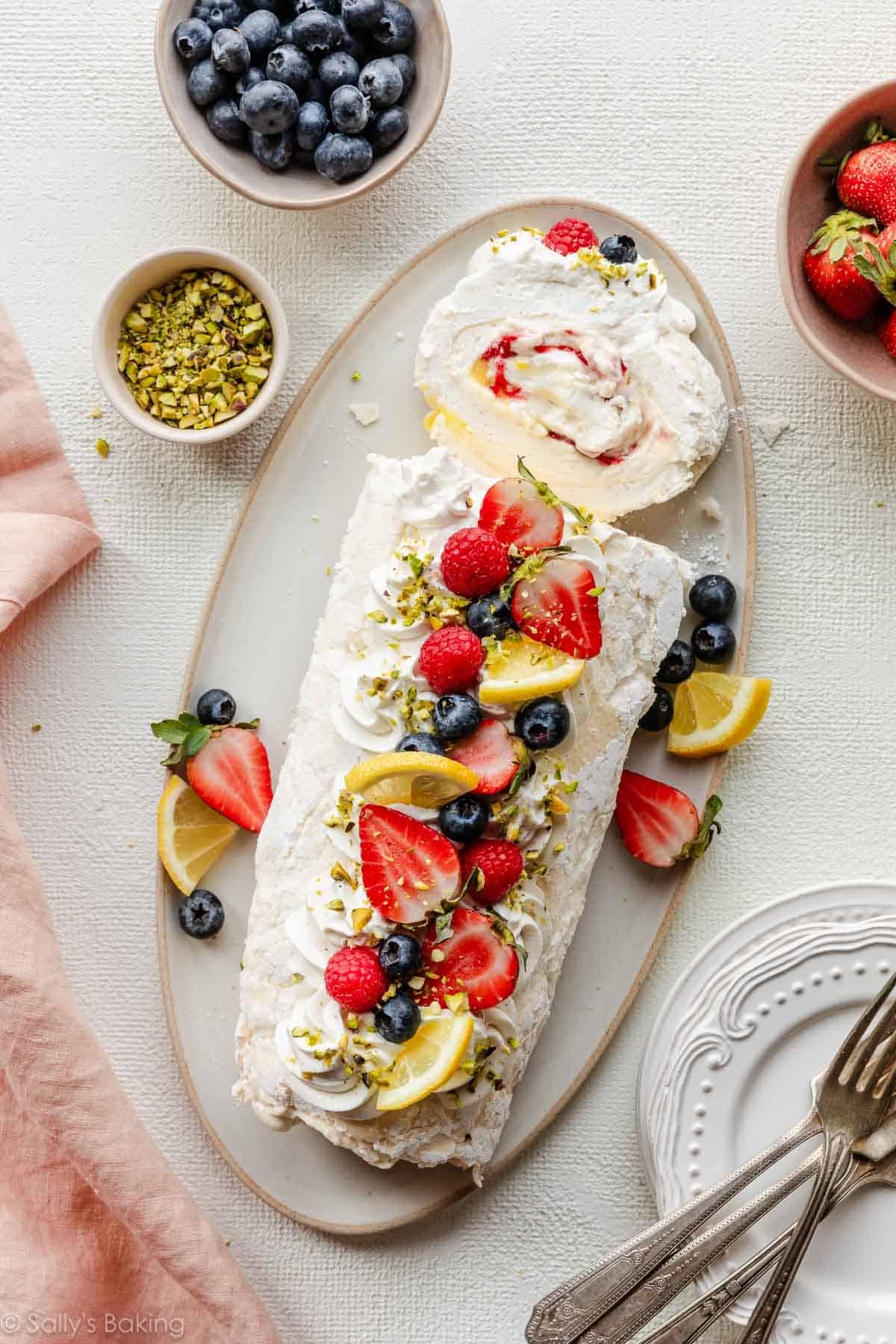
The beauty of the meringue roulade extends beyond its intricate preparation to its limitless potential for customization and presentation. While the intrinsic visual appeal of the swirled interior is undeniable, thoughtful garnishes elevate it to a truly spectacular dessert.
Common garnish ideas, favored by home bakers and professionals alike, include a simple dusting of confectioners’ sugar, which adds a delicate finish and hides any minor imperfections on the exterior. Fresh berries, such as raspberries, strawberries, blueberries, or mixed berries, provide vibrant color, fresh flavor, and a natural sweetness that complements the meringue and cream. Citrus zest (lemon, lime, or orange) adds a fragrant, zesty aroma and a pop of color. Toasted nuts, like pistachios or almonds, introduce a textural contrast and nutty flavor. Chocolate shavings or a drizzle of melted chocolate can enhance richness, while a light dusting of cocoa powder offers a sophisticated, slightly bitter note. For a touch of elegance, edible flowers can transform the roulade into a work of art. The choice of garnish can also echo the internal flavors, for example, lemon slices for a lemon curd filling, or extra jam for a fruit-filled roulade.
Troubleshooting Common Meringue Challenges: Insights from Experience
Creating a meringue roulade is an advanced baking skill that comes with a learning curve. Understanding common challenges and their solutions is key to success and builds confidence.
- Cracking: A few small cracks are normal and contribute to the dessert’s handmade charm. Extensive cracking, however, often points to the meringue being over-baked (too dry and brittle), cooled for too long before the initial roll (losing its flexibility), or rolled too tightly. Culinary instructors often advise a gentle but firm hand during rolling, and precise adherence to cooling times.
- Stickiness: Meringue’s texture can be significantly impacted by humidity. Sugar is hygroscopic, meaning it attracts moisture from the air. In very humid conditions, the meringue can absorb moisture, becoming sticky and potentially unstable. Ensuring the parchment paper is lightly dusted with granulated sugar before spreading the meringue is a critical preventive measure against sticking to the baking surface.
- Weeping: Meringue "weeps" when liquid (sugar syrup) leaks from its structure. If this occurs immediately, it’s typically a sign of under-beating the egg whites or, more commonly, that the sugar was not fully dissolved during whipping. Undissolved sugar crystals can break down, creating a syrup that seeps out. Using superfine sugar and ensuring the meringue reaches stiff, glossy peaks before stopping the mixer are crucial steps to prevent weeping. It is also normal for meringue to weep slightly if refrigerated for extended periods, as the sugar absorbs moisture over time.
Practical Considerations: Making Ahead and Storage
While the meringue roulade is undeniably at its peak when enjoyed fresh, sometimes practicalities dictate partial preparation in advance. Culinary experts generally agree that the assembled roulade is best consumed within a few hours of assembly to preserve its delicate textures. Over time, the meringue will naturally soften as it absorbs moisture from the cream filling, and the roll may flatten slightly.
For those needing to prepare ahead, the individual components offer flexibility. The baked meringue sheet can be made in advance, rolled with parchment and a towel (without filling), and stored at room temperature for up to a day, or even frozen for longer periods (though this can slightly affect texture). The cream filling can also be prepared a day in advance and refrigerated. The optimal strategy for make-ahead is to prepare both components separately and then assemble the roulade just a couple of hours before serving. This minimizes the time the meringue is in contact with the moist filling, thus preserving its crisp-chewy contrast.
The Reward of Advanced Baking: Bragging Rights and Culinary Joy
The meringue roulade is considered an advanced baking recipe not because it employs overly complex techniques or exotic ingredients, but because it demands technical precision, patience, and a keen eye for visual cues throughout its preparation. However, the reward for this dedicated effort is truly significant: a dessert that inspires immense pride and offers a unique textural and flavor experience.
Beyond the sheer delight of its taste, successfully crafting a meringue roulade builds invaluable culinary confidence. It hones skills in meringue preparation, understanding ingredient interactions, and mastering delicate assembly. The "bragging rights" that come with presenting such a beautiful, homemade confection are well-earned. Moreover, the emphasis, as many experienced bakers will attest, should always be on the taste. While a perfectly unblemished exterior is aspirational, the soft swirls, the delicate cracks, and the vibrant filling are all part of its charm. The joy derived from creating and sharing this remarkable dessert far outweighs any minor aesthetic imperfections. It is a sophisticated yet achievable masterpiece for any dedicated baker.