
The American Homebrewers Association (AHA) has officially entered a transformative era, marking 2025 as a watershed year defined by its transition into a fully independent, stand-alone nonprofit organization. This strategic pivot represents one of the most significant structural changes in the association’s nearly five-decade history, moving away from its long-standing position as a division of the Brewers Association (BA). As the organization navigates this new landscape of independence, its leadership and member base are spearheading a comprehensive revitalization designed to ensure the long-term sustainability of the homebrewing hobby in the United States and abroad.
The transition to independence has been characterized by a rigorous focus on organizational autonomy, financial transparency, and a renewed commitment to its core mission. By establishing itself as a self-governed nonprofit, the AHA aims to provide more direct value to its members while advocating for the interests of hobbyists without the constraints of a larger corporate umbrella. This move comes at a critical time for the craft beverage industry, as homebrewing serves as the foundational pipeline for professional brewing talent and innovation.
Historical Context and the Road to Independence
To understand the magnitude of the AHA’s current evolution, one must look back to its inception in 1978. Founded by Charlie Papazian and Charlie Matzen in Boulder, Colorado, the AHA was established shortly after President Jimmy Carter signed H.R. 1337, which legalized homebrewing at the federal level for the first time since Prohibition. For decades, the AHA operated in tandem with the professional brewing community, eventually merging into the Brewers Association.
However, as the professional craft beer industry matured and faced its own set of economic challenges, the needs of hobbyist brewers began to diverge from those of commercial production breweries. The decision to move toward independence, finalized in 2024 and implemented throughout 2025, allows the AHA to refocus exclusively on the amateur enthusiast. This "founding board" era is seen as a return to the grassroots origins of the movement, albeit with the sophisticated infrastructure of a modern national association.
The chronology of this transition began in earnest in April 2024, when the AHA Board of Directors provided an initial update regarding the separation from the Brewers Association. Throughout the subsequent months, the organization has worked to decouple its digital assets, financial systems, and membership databases, all while maintaining the high level of service expected by its global constituency.
A New Strategic Vision for a Modern Hobby
Central to the AHA’s new identity is a refined strategic plan that emphasizes community and accessibility. The organization’s stated vision—"a homebrewer in every neighborhood and a homebrew club in every community"—serves as a North Star for its 2025 and 2026 initiatives. This vision reflects a shift from merely providing technical resources to actively fostering local ecosystems of fermentation.
This strategic plan is built upon several pillars:
- Advocacy and Legal Protection: Ensuring that the rights of homebrewers are protected at the state and local levels, including the ability to transport homebrew to competitions and club meetings.
- Education and Excellence: Maintaining the gold standard of brewing education through Zymurgy Magazine and the National Homebrew Competition (NHC).
- Community Development: Providing the tools and frameworks necessary for local clubs to thrive in a post-pandemic social environment.
- Inclusivity and Growth: Expanding the hobby to include a more diverse range of participants and fermentation styles, including mead, cider, and kombucha.
2025 Milestones and Accomplishments
Since the pivotal board update in April, the AHA has achieved several operational milestones that validate its capacity for independent management. A primary focus has been the successful execution of the National Homebrew Competition, which remains the largest and most prestigious event of its kind in the world. By maintaining the integrity and scale of the NHC during a year of internal restructuring, the AHA demonstrated its operational resilience.
Furthermore, the association has prioritized the continued publication of Zymurgy Magazine. Long considered the "journal of record" for the homebrewing community, the magazine has undergone a subtle editorial shift to better reflect the diverse interests of the modern brewer while retaining the technical depth that veteran members demand.
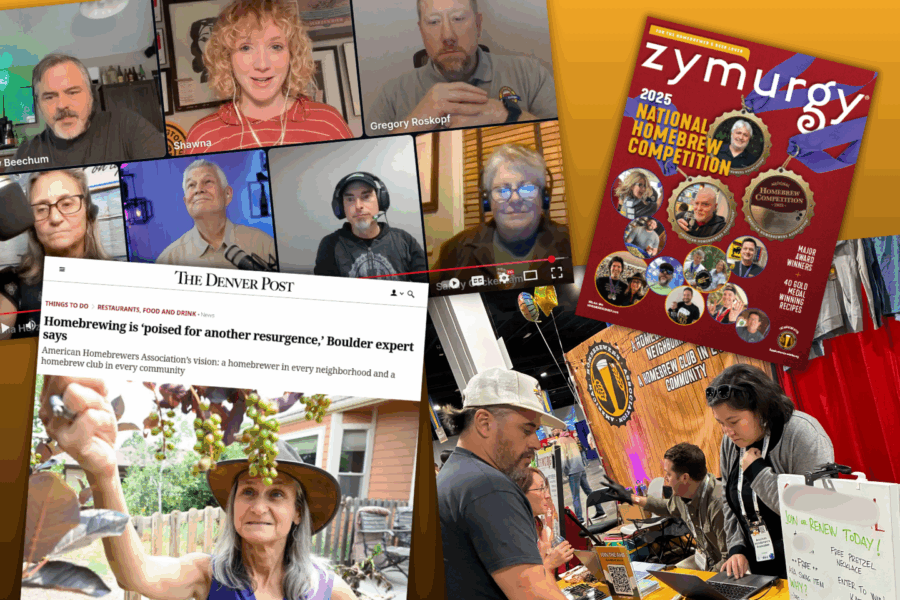
In terms of member engagement, the AHA has introduced "Zymurgy Live" sessions, which have evolved from simple webinars into interactive town-hall-style events. A notable example is the November 5 session, which was made open to the general public. This move was a calculated effort to increase transparency and showcase the value of membership to the broader brewing community. By allowing non-members to hear directly from the founding board, the AHA is actively lowering the barrier to entry for prospective participants.
Data-Driven Insights into the Homebrewing Landscape
The AHA’s push for independence is supported by data indicating the continued cultural relevance of homebrewing. According to industry surveys, there are an estimated 1.1 million homebrewers in the United States who produce more than 1.4 million barrels of beer annually. Perhaps more importantly, approximately 90% of professional craft brewers began their careers as homebrewers.
The economic impact of the hobby is also significant. The American homebrewing industry supports hundreds of small businesses, including Local Homebrew Supply Shops (LHBS), which act as community hubs. The AHA’s new independent status allows it to work more closely with these retailers to create a symbiotic relationship that benefits the entire supply chain.
Despite these strong numbers, the hobby has faced headwinds, including the closure of some local shops and a shift in consumer spending habits. The AHA’s strategic plan is a direct response to these trends, focusing on "hyper-local" engagement to counteract the decline of traditional retail spaces.
Operational Upgrades and the 2026 Roadmap
Looking ahead to 2026, the AHA has outlined an ambitious roadmap focused on digital infrastructure and member benefits. A major component of this plan is the launch of a new, modernized website. The current digital presence, while functional, is being overhauled to provide a more intuitive user experience, better search functionality for the association’s massive recipe database, and streamlined membership management.
The 2026 goals also include:
- Enhanced Member Deals: Expanding the network of breweries and retailers that offer discounts to AHA members, providing a tangible return on the cost of annual dues.
- Refined Advocacy Tools: Creating "advocacy kits" for members to use when engaging with local legislators regarding fermentation-friendly laws.
- Expanded Competition Support: Developing new software tools to help local and regional competitions run more efficiently.
- Educational Diversification: Introducing more video-based content and interactive brewing courses to cater to younger, more visual learners.
The association has acknowledged that these upgrades require significant time and capital. The leadership’s call for "patience fueled by progress" highlights the reality of building a nonprofit from the ground up while simultaneously maintaining national operations.
Industry Implications and Broader Impact
The independence of the AHA has broader implications for the craft beer industry at large. By separating from the Brewers Association, the AHA can now take more agile and perhaps more provocative stances on issues that affect hobbyists but might be peripheral to commercial brewers. This includes advocating for the legalization of home-distilling (a topic often avoided by commercial entities) and pushing for more relaxed regulations regarding the public sampling of home-produced beverages.
Industry analysts suggest that a strong, independent AHA is vital for the health of the professional sector. As commercial craft beer faces a period of market saturation and consolidation, the "innovation lab" of homebrewing becomes even more essential. The AHA’s focus on technical excellence ensures that the next generation of professional brewers will enter the industry with a high degree of proficiency and a deep respect for the craft.
Furthermore, the AHA’s emphasis on community building serves as a counterweight to the increasing digitalization of social life. By fostering local clubs, the association is helping to maintain the "third place"—social environments separate from home and work—that are crucial for societal well-being.
Conclusion: A Community-Led Future
The American Homebrewers Association’s journey in 2025 is a testament to the power of a dedicated member base. While the "Founding Board" provides the strategic direction, it is the thousands of individual brewers, judges, and volunteers who provide the momentum. The transition to a stand-alone nonprofit is not merely a legal change; it is a reaffirmation of the belief that homebrewing is a culturally significant art form that deserves its own dedicated representation.
As the weather cools and brewing season hits its peak, the AHA stands as a revitalized entity, ready to tackle the challenges of 2026 and beyond. Through a combination of historical reverence, modern strategic planning, and a commitment to advocacy, the association is ensuring that the spirit of Charlie Papazian’s original vision remains vibrant for generations of brewers to come. The message from the board is clear: the AHA exists for the members, and because of the members, the future of homebrewing remains bright.