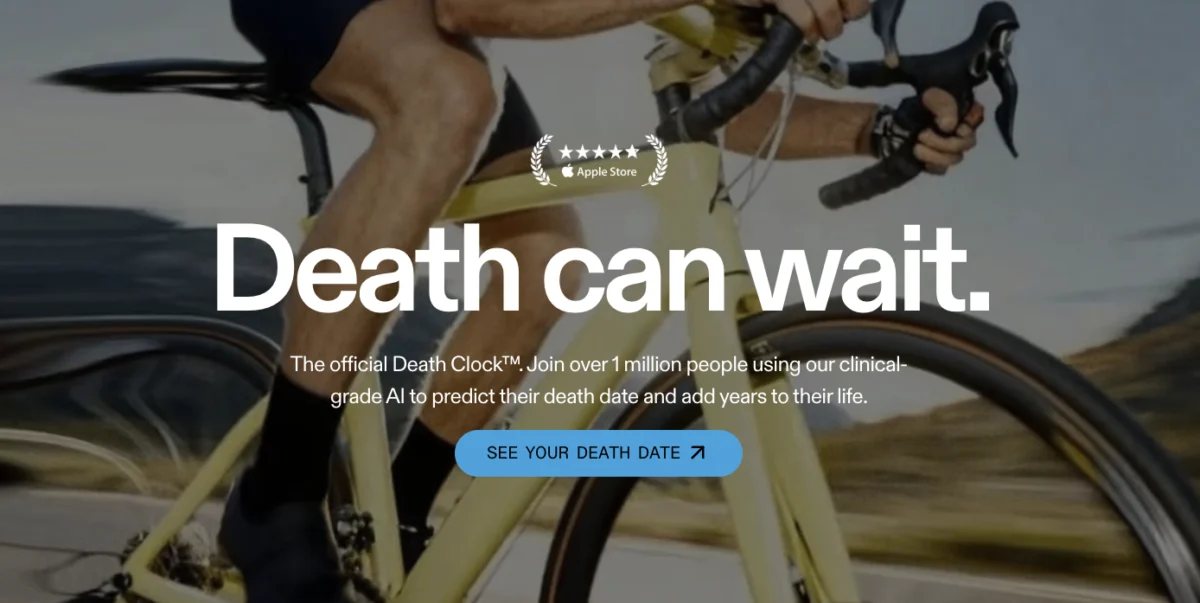

What do you do when your company is on the brink of collapse? For Brent Franson, the answer was a radical pivot that led to the creation of Death Clock, an app that aims to provide users with an estimated expiration date. This unconventional approach emerged from the ashes of a previous venture, a health-tracking application that, despite raising $10 million, ultimately failed to gain traction. The genesis of Death Clock, as revealed in an episode of The Spoon Podcast, was a calculated gamble born out of necessity and a deep-seated disillusionment with the existing healthcare system’s efficacy in promoting preventative health and behavioral change, particularly in areas like addiction.
Franson himself acknowledged the provocative nature of the app’s name, admitting on the podcast, "It’s probably a really, really stupid idea to actually name it Death Clock. But if it’s a good idea, it’s a really good idea. It’s an 80 percent chance it’s a terrible idea. But there’s a 20 percent chance that it’s a really good idea." This candid admission highlights the high-stakes nature of his entrepreneurial journey and the audacious strategy behind the app’s launch. Against considerable odds, Death Clock defied expectations, transforming into a viral sensation. The app’s provocative moniker undoubtedly played a significant role in its rapid ascent, but beneath the surface-level shock value lies a more profound thesis, forged by Franson’s own experiences with the failures of his previous company and his critical assessment of a healthcare system he believes is ill-equipped to foster genuine, long-term health improvements.
The Genesis of a Controversial Concept
The development of Death Clock can be traced back to Franson’s previous entrepreneurial endeavor, a health-tracking application that garnered significant investment but ultimately faltered. This experience left him with a profound skepticism regarding the traditional healthcare industry’s capacity to effectively drive preventative health and behavioral modification. "What I became pretty convinced of in my life is that our healthcare system is just not very good at helping people change behavior," Franson stated. "It’s not good at preventative health. And that’s really obvious in addiction." This conviction formed the bedrock upon which Death Clock was conceived.
The app’s core functionality, like many contemporary Silicon Valley innovations, is powered by artificial intelligence. This AI is trained on extensive longevity studies, compelling users to confront their mortality in a direct and data-driven manner. Franson elaborated on the AI’s training and predictive capabilities: "We trained an AI on 1,200 longevity studies to make a few predictions. One, it predicts the day you’re going to die. And two, it predicts how much longer it thinks you can live if you manage your health." This dual predictive model is designed not merely to forecast an inevitable end but to offer a tangible incentive for proactive health management.
The immediate reception to Death Clock was a significant surprise to the company’s founders. The app rapidly climbed the charts in app stores across numerous countries, indicating a strong, perhaps latent, demand for preventative health tools that operate outside the established medical framework. This overwhelming response validated Franson’s belief that a significant market existed for accessible, data-driven health insights.
Expanding the Vision: The Launch of Life Lab
Building on the unexpected success of Death Clock, the company announced a significant expansion of its offerings this week with the introduction of Life Lab. This new initiative is an AI-powered health concierge service, integrated directly within the Death Clock application. Life Lab aims to provide consumers with a comprehensive, personalized health roadmap, a concept Franson describes as a "private doctor quality roadmap."
The service achieves this by integrating a range of advanced health tracking capabilities, including nationwide blood testing, detailed biomarker monitoring, and the secure uploading of physician records. This holistic approach allows Life Lab to construct a detailed profile of an individual’s health status, enabling more nuanced and effective preventative recommendations.
Franson articulated the societal disparity that Life Lab seeks to address: "The number one factor that determines how long you’re going to live is how much money you have. Basically, the more money you have, the more you can opt out of the healthcare system and cash pay for good preventative health." Life Lab’s ambition is to democratize access to this level of personalized, proactive healthcare by leveraging software and advanced analytics, thereby bridging the gap often created by financial barriers and exclusive access to elite medical services.
Navigating the Longevity Landscape
Positioned at the forefront of Silicon Valley’s burgeoning longevity movement, Franson offered a critical perspective on the broader trend of seeking extended lifespans and the surge in investor interest within this sector. While acknowledging the genuine underlying demand for improved health and longevity, he expressed strong reservations about what he perceives as excessive claims and a lack of ethical grounding at the industry’s fringes.

"Selling immortality is one of the oldest frauds in the book," Franson asserted. "If you’re insinuating that if you buy my stuff, you might not die, I think that’s reckless. And I think it gives everybody in the space a bad name." His critique targets the more extreme and often unsubstantiated claims made by some within the longevity space, emphasizing a concern that such practices could tarnish the reputation of legitimate research and innovation.
Instead of pursuing the elusive goal of immortality, Franson and Death Clock have set a more grounded and attainable objective: to empower 100 million people to live ten years longer. "That’s not live forever. That’s just being healthier for longer," he clarified. This focus on tangible, incremental improvements in healthspan, rather than radical life extension, reflects a pragmatic and ethically responsible approach to the complex field of longevity.
Data-Driven Insights and Future Implications
The underlying data powering Death Clock and Life Lab draws from extensive scientific literature. Longevity studies, encompassing fields such as epidemiology, genetics, and lifestyle research, provide the foundation for the AI’s predictive models. For instance, the Centers for Disease Control and Prevention (CDC) in the United States reports that average life expectancy at birth has been a subject of significant fluctuation, influenced by factors like chronic disease prevalence, public health interventions, and socioeconomic conditions. In 2021, life expectancy at birth in the U.S. was estimated to be 76.4 years, a decrease from previous years, highlighting the persistent challenges in maintaining and improving population health.
Similarly, research published in journals like Nature Aging and The Lancet frequently explores the multifactorial nature of aging and the impact of lifestyle choices, diet, exercise, and medical interventions on lifespan and healthspan. A meta-analysis of over 200 studies on lifestyle factors and mortality, published in the Journal of the American Medical Association (JAMA), indicated that adherence to healthy lifestyle behaviors could add as much as 12 years to life expectancy. Death Clock’s AI, trained on such data, aims to translate these broad statistical correlations into personalized actionable insights for individual users.
The integration of blood testing and biomarker tracking within Life Lab aligns with advancements in personalized medicine. Biomarkers, such as C-reactive protein (CRP) for inflammation, HbA1c for blood sugar control, and various lipid profiles for cardiovascular health, are increasingly recognized as crucial indicators of disease risk and overall health status. The ability to continuously monitor these markers and correlate them with user-provided health data and lifestyle choices allows for a dynamic and responsive approach to health management.
Broader Impact and Analysis
The emergence of Death Clock and Life Lab signifies a potential paradigm shift in how individuals engage with their health. By offering accessible, AI-driven insights, these platforms challenge the traditional gatekeeping role of the medical establishment and empower consumers to take a more proactive stance in their well-being. The implications are far-reaching:
- Democratization of Preventative Health: Life Lab’s ambition to level the playing field by providing sophisticated health roadmaps irrespective of socioeconomic status could significantly impact public health outcomes, particularly for underserved populations.
- Behavioral Change Catalyst: The direct confrontation with mortality, coupled with personalized predictions for improved healthspan, could serve as a powerful motivator for behavioral change, addressing the persistent challenge of adherence to healthy habits.
- Integration with Traditional Healthcare: While operating outside the traditional system, platforms like Death Clock and Life Lab could eventually foster a more collaborative relationship with healthcare providers. Physician record integration, for example, suggests a pathway for these tools to complement, rather than solely replace, conventional medical care.
- Ethical Considerations and Data Privacy: As with any AI-driven health application, robust ethical frameworks and stringent data privacy measures are paramount. Ensuring transparency in AI algorithms and safeguarding sensitive personal health information will be critical for user trust and long-term adoption.
- Market Disruption: The success of Death Clock suggests a significant unmet need for innovative health solutions. This could spur further investment and competition within the digital health and longevity sectors, leading to a wave of new technologies and services.
Franson’s cautious yet determined approach, focused on enhancing healthspan rather than chasing the unattainable ideal of immortality, positions Death Clock as a potentially influential player in the evolving landscape of personal health and wellness. The company’s ability to combine a provocative brand identity with sophisticated AI and a clear, achievable mission may prove to be a winning strategy in a market increasingly saturated with both genuine innovation and unsubstantiated hype.
The full conversation with Brent Franson is available for listening on Apple Podcasts and Spotify.