
The journey from the ocean’s depths to a consumer’s plate is often fraught with unseen compromises, leading to a disheartening reality: the fish gracing many grocery store counters is rarely at its peak of freshness. While bustling fishing hubs like Seattle pride themselves on swift delivery, a nascent venture-backed startup, Shinkei, asserts that the true determinant of seafood quality is not the post-capture transit, but rather the critical moments immediately following a fish’s catch. This innovative company is leveraging advanced robotics and artificial intelligence to fundamentally alter the seafood supply chain, promising Michelin-quality fish at commodity prices.
Shinkei CEO Saif Khawaja elaborated on the core issue plaguing conventional seafood handling. "Most fish available at a mass-market retailer were handled on the boat in a way that releases stress hormones, lactic acid," Khawaja explained. This physiological response, he detailed, accelerates quality degradation. "This stuff makes the meat more acidic, primes bacteria growth, and in turn speeds the shelf life and decay of meat quality." The common practice of fish being left to struggle on deck, he posits, triggers these detrimental stress responses, a stark contrast to the rapid, humane, and quality-preserving methods Shinkei champions.
Revolutionizing Onboard Processing with Poseidon
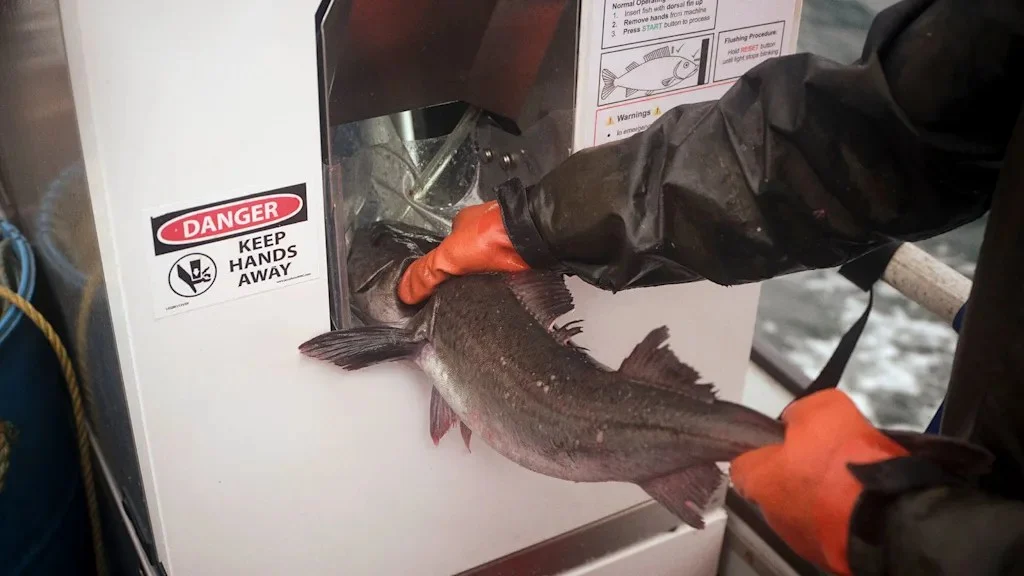
At the heart of Shinkei’s solution is a sophisticated, computer-vision-powered robot named Poseidon. This machine is designed for immediate intervention once live fish are introduced. Utilizing artificial intelligence, Poseidon scans each fish to determine the most efficient and least stressful method for euthanasia. The process is remarkably swift, taking approximately six seconds per fish. This typically involves a precise brain spike to ensure instantaneous and humane death, followed by a gill cut to facilitate immediate blood drainage.
The apparent harshness of this method is justified by Khawaja’s pragmatic approach to animal welfare and product quality. He argues that fish experience significant stress from the moment they are caught. By prioritizing rapid euthanasia and processing, Shinkei aims to mitigate this stress, which directly translates to a superior end product. The company’s ambitious goal is to integrate fish into the Poseidon system within roughly a minute of landing, a critical window to preempt meaningful quality decline. This rapid, precise handling is a stark departure from traditional methods that can leave fish struggling for extended periods, exacerbating stress and compromising texture and flavor.
The Economics of Speed: Reducing Waste, Extending Shelf Life
Beyond the promise of enhanced taste and texture, Shinkei’s technology offers a compelling solution to the pervasive problem of food waste within the seafood industry. Khawaja highlighted that by minimizing stress and accelerating processing, Shinkei significantly extends the shelf life of fish. Traditionally, a suffocated fish might enter rigor mortis within approximately seven hours. Shinkei’s method, however, can extend this timeframe to up to 60 hours, creating a substantial buffer against premature spoilage.
This extended shelf life has profound implications for the entire supply chain. Khawaja cited specific examples, noting that black cod handled traditionally might remain fresh for four to five days, whereas Shinkei-processed fish can maintain optimal quality for up to two weeks. This dramatic improvement not only reduces the likelihood of product loss at retail but also provides distributors with greater logistical flexibility. The ability to transport fish via trucking rather than relying on expensive and carbon-intensive air freight becomes a viable option, further contributing to cost efficiencies and sustainability.
The dual benefits of reduced acidification (from lower stress hormones) and efficient blood removal are key to this shelf-life extension. Blood, when left to diffuse through the flesh, acts as a prime breeding ground for bacteria, accelerating decomposition. By removing it swiftly, Shinkei effectively removes a significant catalyst for spoilage. This compounding effect ensures that the fish reaches consumers in a far superior state, with a longer window of optimal consumption.
A Novel Business Model: Direct-to-Consumer Through Branding
While the technological prowess of Shinkei is evident, their business model is equally innovative. Instead of outright selling the Poseidon hardware to fishermen and processors, Shinkei maintains ownership of the machinery, placing it on partner boats through zero-cost leases. This arrangement is coupled with an exclusive purchasing agreement, granting Shinkei the first right of refusal on all catches processed by their machinery.

This strategy allows Shinkei to control the quality of the fish from the source and build a direct-to-consumer brand, Seremony. The company is actively cultivating "Seremony Grade" as a mark of exceptional quality, akin to established culinary certifications. Their success in securing partnerships with globally recognized, Michelin-starred restaurants underscores the efficacy of their approach. Recently, Seremony has also expanded its reach into high-profile retail channels, including Wegmans in Manhattan and FreshDirect in New York, signaling a broader market acceptance.
This vertically integrated model allows Shinkei to capture a larger share of the value chain, ensuring that the premium quality achieved on the boat is maintained and recognized all the way to the consumer. It also provides them with invaluable data on catch volumes, species, and processing times, which informs their ongoing research and development efforts.
Technological Foundations and Future Innovations
The AI models powering Shinkei’s operations are developed in-house, a testament to the company’s commitment to proprietary technology. Their computer vision stack, informed by research akin to facial recognition but applied to piscine visages, performs critical tasks such as species identification, precise landmark detection on the fish, and the generation of optimal cutting paths for efficient processing. This meticulous attention to detail ensures that each fish is handled with unparalleled precision.
Shinkei is not resting on its laurels and is actively developing new technological advancements. One such project is Kronos, a weight-estimation model integrated into the Poseidon machine. Kronos provides real-time catch data to the Shinkei sales team, enabling them to initiate sales discussions and secure commitments for the catch before the vessel even docks. This proactive approach streamlines the sales cycle and minimizes pre-sale delays.
Another promising development is Nira, a system designed to predict shelf life using an array of sensors. By integrating sensor data, Shinkei aims to provide accurate, real-time quality assessments for fish at any point in the supply chain. "We integrate sensor data into a model, and we will be able to generate ground truth at any point in the supply chain for what shelf life and quality is for that fish," Khawaja stated. This predictive capability will further enhance logistical planning and reduce the risk of spoilage.
Investment and Future Trajectory
The company’s innovative approach and demonstrable success have attracted significant investor interest. Shinkei recently closed a $22 million Series A funding round, co-led by Founders Fund and Interlagos, with participation from notable investors including Yamato Holdings, Shrug, CIV, Jaws, and Mantis. This substantial investment signals strong confidence in Shinkei’s vision and its potential to disrupt the global seafood market.
While Shinkei currently operates with eight boats sourcing species like black cod, rockfish, and red snapper along the U.S. West Coast, Texas, and Massachusetts, their long-term aspirations remain focused on solidifying the Seremony brand. Khawaja has definitively stated that the company is not open to a model where they sell their hardware to fishermen who do not integrate their catch into the Seremony pipeline. The immediate priority is establishing "Seremony Grade" as a recognized standard of excellence.
The implications of Shinkei’s technology are far-reaching. By addressing the fundamental challenges of freshness and waste at the point of capture, they are poised to redefine consumer expectations for seafood quality. Their model also presents a blueprint for how technology can create more sustainable and efficient food systems, potentially inspiring similar innovations across other perishable goods industries. The success of Shinkei’s ambitious venture could very well lead to a future where "just-caught" freshness is not an aspirational phrase, but a tangible reality for seafood lovers worldwide.