
After a significant three-year hiatus from regular online content, a practical and highly effective solution for managing daily household demands has re-emerged from the culinary world, highlighting the enduring relevance of a simple, well-structured paper grocery list in navigating the complexities of contemporary living. This system, refined over six years, addresses the pervasive challenge of time scarcity, often termed "tidsklemma" in Norwegian culture, by streamlining the essential task of meal planning and grocery shopping, ultimately fostering more consistent home cooking amidst busy schedules.
The Pervasive Challenge of "Tidsklemma" and Modern Household Management
The concept of "tidsklemma," which loosely translates to "the time squeeze" or "time crunch," encapsulates the modern predicament where individuals, particularly those balancing full-time employment with family obligations, find themselves constantly pressed for time. This phenomenon is not unique to Norway but is a global reality, with studies consistently indicating that adults spend significant portions of their non-working hours on household chores, meal preparation, and errands. For instance, data from the Bureau of Labor Statistics in the United States often shows that on an average day, individuals aged 25 to 54 spend upwards of two hours on household activities, including grocery shopping and food preparation. This relentless demand on personal time often leads to decision fatigue, increased reliance on convenience foods, and a reduction in home-cooked meals, despite widespread intentions to eat healthier and save money.
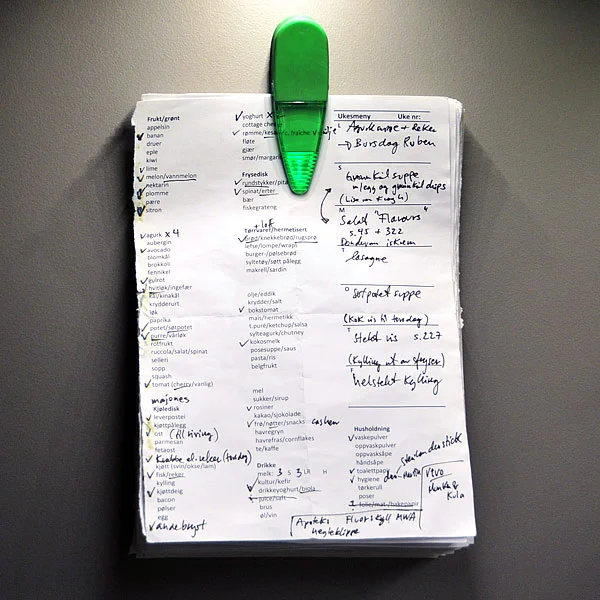
In this context, the development of an optimized, generic grocery list represents a strategic countermeasure against the relentless march of daily demands. The author of the system, despite a long pause in blogging, consistently engaged in home cooking, a testament to the efficacy of their approach. Their method centers on a pre-compiled, categorized list that adapts to family preferences and local supermarket layouts, transforming what could be a weekly chore into a swift, efficient process. This proactive planning minimizes mental load and maximizes efficiency, demonstrating a practical application of time management principles in a domestic setting.
A Chronology of Refinement: Six Years of Iterative Improvement
The journey of this particular grocery list is one of continuous adaptation and refinement, spanning more than six years. Initially conceived as a basic aid, the list underwent numerous iterations, evolving from a rudimentary collection of items to a sophisticated, yet simple, tool tailored to specific family needs and local retail environments. The process involved:
- Initial Compilation: The very first version likely captured the most frequently purchased staples, reflecting the foundational dietary habits of the household.
- Categorization and Layout Alignment: Over time, the list was meticulously organized into food categories (e.g., dairy, produce, dry goods) that mirrored the physical layout of the primary grocery store. This strategic arrangement ensures a logical flow during shopping, reducing backtracking and saving precious minutes in the aisles.
- Personalization and Preference Integration: As family tastes evolved, new items were added, and less frequently consumed ones were removed. This dynamic aspect allowed the list to remain relevant, reflecting current culinary interests and dietary requirements. For example, the author notes how items entered the list when children were young and subsequently left as they grew, illustrating the list’s organic nature.
- Feedback Loop and Archival Review: A critical component of its evolution involves printing multiple copies (typically 10-20 at a time). When these copies run out, a quick review of the past several weeks’ lists informs further adjustments. This periodic retrospective analysis ensures that the generic list remains optimized, incorporating new discoveries, seasonal items, or changing family dynamics. This iterative process underscores the principle that the list is inherently a "work-in-progress," never truly finalized but always adaptable.
This chronological development highlights a disciplined approach to household management, transforming a mundane task into an optimized system through consistent effort and thoughtful adjustment. It exemplifies how small, consistent improvements can yield significant long-term benefits in personal efficiency.
The Enduring Superiority of Paper in a Digital Age
In an era dominated by digital solutions and countless grocery list applications, the author makes a compelling case for the continued relevance and even superiority of a paper-based system. This preference for analog over digital is not born of technophobia but rather a deep understanding of practical utility and cognitive efficiency. Key arguments for paper include:
- "Superb Resolution" and Comprehensive Overview: Unlike most digital apps that often require scrolling or switching between screens, a physical A5-sized paper list offers a complete overview of both the weekly menu and the entire shopping list on a single, compact sheet. This allows for immediate visual processing of all necessary information, reducing cognitive load and the potential for oversight.
- Tactile and Portable Convenience: A paper list can be folded and easily slipped into a pocket, providing immediate access without the need to unlock a phone, navigate apps, or worry about battery life. Its physical presence in hand allows for quick check-offs and annotations, a fluidity that digital interfaces often struggle to match in a busy supermarket environment.
- Ample Space for Notes and Customization: Despite its compact size, the A5 format, especially when utilizing both sides, provides ample room for adding specific specifications (e.g., "organic," "ripe," "sugar-free"), quantities, or impromptu items. This flexibility allows for real-time adaptation during the shopping trip, a feature often cumbersome in rigid digital templates.
- Reduced Distractions: A paper list serves its sole purpose without the potential for notifications, messages, or other digital distractions that can pull focus away from the task at hand. This singular focus contributes to a more efficient and less stressful shopping experience.
- Effortless Archiving and Review: Physical lists are easily archived, providing a tangible record of past purchases and meal plans. This simplifies the process of reviewing and updating the generic list, offering a clear historical perspective on consumption patterns and necessary adjustments. In contrast, managing digital archives across various apps can sometimes be less intuitive or require more active data management.
This robust defense of paper underscores a broader trend where, despite technological advancements, certain analog tools retain their value due to inherent practical advantages in specific contexts. For tasks requiring quick, comprehensive visual processing and tactile interaction, paper often remains unparalleled.
Integrating Menu Planning for Enhanced Efficiency and Reduced Decision Fatigue
A cornerstone of this efficient system is the seamless integration of weekly menu planning directly onto the grocery list. This synergy between planned meals and necessary ingredients significantly amplifies the list’s utility:
- Direct Ingredient Reminder: By listing the planned meals alongside the shopping items, the menu serves as a constant, implicit reminder of ingredients needed. A quick glance at "Lasagna" might immediately prompt the shopper to double-check for ricotta cheese or specific herbs, preventing forgotten items.
- Simplified Recipe Access: For recipes from cookbooks, the author simply includes a page number. This minimalist approach works effectively because the cook often remembers which cookbook the recipe originates from, making full recipe names unnecessary. This demonstrates an understanding of personal knowledge and context in optimizing information display.
- Reduced Cognitive Load Before Shopping: The act of planning the menu for the week ahead, typically done once, eliminates the daily decision fatigue of "what’s for dinner tonight?" This pre-emptive planning liberates mental energy for other tasks and ensures that all necessary ingredients are purchased in a single trip.
- Combatting Impulse Buys: With a clear menu and corresponding ingredient list, shoppers are less likely to deviate into impulse purchases driven by hunger or indecision. This structured approach contributes to more targeted shopping, potentially leading to financial savings and reduced food waste. According to various consumer studies, unplanned purchases can account for a significant portion of a shopper’s bill, making a pre-planned list a powerful tool for budgeting.
The integration of menu planning transforms the grocery list from a mere inventory into a comprehensive weekly household management tool, ensuring both efficiency in shopping and consistency in meal preparation.
Embracing Flexibility: The Art of Strategic Deviation
While the system champions structured planning, it explicitly acknowledges the importance of flexibility and the need to deviate from the weekly dinner plan when circumstances dictate. This nuanced approach recognizes that life is unpredictable and that rigid adherence to a plan can sometimes be counterproductive or lead to missed opportunities.
- Responding to Spontaneity: The author emphasizes that social invitations, such as a spontaneous dinner with friends, should always take precedence over a pre-planned meal. This highlights a healthy balance between organization and social engagement, preventing the plan from becoming a restrictive burden.
- Acknowledging Exhaustion: On days when exhaustion sets in, the plan allows for pragmatic deviations, such as opting for takeout. This acknowledges the realities of modern life and prioritizes well-being over strict adherence to a schedule, preventing burnout and fostering a sustainable approach to home cooking.
- Inspirational vs. Practical Cooking: The article subtly addresses the contrast between "inspirational cooking," where meals are decided based on fresh availability or daily cravings, and the more structured approach. While inspirational cooking is lauded for those with ample time, the system caters to the majority facing "tidsklemma," where practical planning is a necessity. The core argument is that while deviations occur, the existence of a plan significantly increases the overall frequency of home-cooked meals.
This principle of "strategic deviation" is critical. It ensures that the system remains a helpful guide rather than an oppressive regimen, promoting sustainable cooking habits by accommodating the ebb and flow of daily life.
Broader Implications and Societal Impact
The simple, yet effective, generic grocery list system offers a cascade of positive implications extending beyond individual household efficiency:
- Enhanced Household Efficiency and Time Management: By streamlining a weekly chore, the system frees up valuable time and mental energy, allowing individuals and families to dedicate more resources to other activities, hobbies, or simply relaxation. This contributes to a better work-life balance and overall well-being.
- Financial Savings and Budgeting: A well-planned grocery list is a powerful tool against impulse buying and ensures that only necessary items are purchased. This disciplined approach can lead to significant savings on weekly grocery bills, allowing for better household budgeting and allocation of funds.
- Reduced Food Waste: By planning meals and purchasing specific ingredients, households are less likely to buy excess produce or perishables that might spoil before consumption. This directly contributes to reducing household food waste, a growing environmental and economic concern globally. According to the United Nations Environment Programme, roughly one-third of the food produced for human consumption is lost or wasted globally, highlighting the individual impact of mindful shopping.
- Promotion of Healthier Eating Habits: Planning meals in advance often encourages more balanced and nutritious choices compared to last-minute decisions driven by hunger or convenience. This proactive approach can lead to a greater intake of fresh ingredients and a reduction in processed foods, fostering healthier dietary habits within the family.
- Stress Reduction and Cognitive Load Management: The elimination of daily "what’s for dinner" dilemmas and the simplified shopping process significantly reduce cognitive load and associated stress. Organizational psychology consistently points to the benefits of externalizing memory and decision-making for reducing mental fatigue, and this system is a prime example.
- Sustainability and Environmental Consciousness: Beyond reducing food waste, a structured approach to shopping can also encourage more conscious consumption. When individuals are aware of what they need, they may be less susceptible to marketing ploys for unnecessary items, contributing to a more sustainable consumption pattern.
In essence, this practical innovation, born from personal experience and refined over time, offers a scalable solution to common modern challenges. It serves as a reminder that sometimes the most effective tools are not the most technologically advanced, but those that are intuitive, adaptable, and deeply aligned with human behavior.
Accessibility and Invitation to Adopt
To facilitate wider adoption and benefit, the author has made their latest iteration of the generic grocery list template readily available for download. These templates are provided in various convenient formats, including Norwegian A4, English A4, and English legal sizes, ensuring accessibility across different geographical and printing standards. This open-source approach encourages individuals to experiment with the system, adapt it to their unique family dynamics, and contribute to its ongoing evolution through feedback. The underlying message is clear: while no two lists will ever be identical, the fundamental principles of proactive planning and iterative refinement offer a universal pathway to greater efficiency and reduced stress in the modern kitchen.