
Khymos, a pioneering blog dedicated to the intricate science of molecular gastronomy and experimental cooking, has announced a significant backend infrastructure upgrade and a comprehensive redesign of its user interface. This modernization effort includes the consolidation of its online presence under the primary domain khymos.org, a long-awaited transition to a responsive WordPress theme for optimal mobile device viewing, and the unveiling of a newly designed brand logo. These strategic enhancements aim to improve user experience, broaden accessibility, and reinforce the blog’s standing as a premier resource in its specialized field.
The Genesis and Impact of Khymos: A Culinary Science Pioneer
Founded by Dr. Martin Lersch, a Norwegian chemist and passionate culinary innovator, Khymos emerged in the mid-2000s as a crucial digital platform for exploring the scientific underpinnings of food and cooking. At a time when molecular gastronomy was gaining traction in professional kitchens but remained largely inaccessible to the broader public, Lersch’s blog served as an invaluable bridge, translating complex scientific principles into practical culinary applications. His meticulous research, detailed experiments, and clear explanations resonated with a diverse audience, from professional chefs and food scientists to enthusiastic home cooks.
Molecular gastronomy, a term coined by physical chemist Hervé This and physicist Nicholas Kurti, explores the physical and chemical transformations of ingredients that occur in cooking. It moves beyond traditional recipe following, seeking to understand why certain techniques work, often leading to innovative dishes and novel ingredient combinations. Pioneers like Ferran Adrià of elBulli and Heston Blumenthal of The Fat Duck brought molecular gastronomy to global prominence, pushing the boundaries of culinary art. Khymos, in this context, democratized much of this knowledge, providing accessible articles on topics ranging from spherification and sous-vide cooking to the science of emulsions and gels. Lersch’s approach, rooted in scientific rigor yet presented with clarity, quickly established Khymos as an indispensable online repository for anyone interested in the intersection of science and cuisine. The blog’s influence extended to inspiring countless home cooks to experiment with scientific techniques and encouraging a more analytical approach to food preparation.
A Necessary Evolution: Addressing the Digital Divide
The digital landscape has undergone a profound transformation since Khymos first launched. In the early days of blogging, desktop computers were the primary means of accessing web content, and website design largely catered to this format. However, the proliferation of smartphones and tablets in the late 2000s and early 2010s ushered in the era of mobile internet, dramatically altering how users consume information. Data from Statista consistently shows that mobile devices now account for well over 50% of global website traffic, underscoring the imperative for mobile-optimized content.
For years, users attempting to access Khymos on smartphones or tablets encountered a desktop-optimized layout, often resulting in frustrating navigation, minuscule text, and cumbersome image viewing. This situation, as the blog’s creator candidly admitted, was an oversight that "should have been done years ago." The delay, while understandable given the solo nature of such projects and the depth of content creation involved, highlighted a growing disparity with contemporary web standards. The recent upgrades specifically address this critical usability issue, ensuring that the wealth of knowledge contained within Khymos is now readily accessible regardless of the device used.
The Technical Overhaul: Domain Consolidation and Responsive Design
The migration of the blog from its subdomain, blog.khymos.org, to the root domain, khymos.org, represents a strategic consolidation of its digital footprint. This move is not merely an aesthetic one but carries significant implications for search engine optimization (SEO) and brand authority. By centralizing content under the primary domain, Khymos aims to enhance its search engine visibility, making it easier for new users to discover its rich repository of knowledge and reinforcing its brand identity as the definitive online destination for molecular gastronomy insights. All old URLs have been meticulously redirected, ensuring that existing links and bookmarks remain functional, preventing broken links and preserving the site’s accumulated SEO value. This careful planning minimizes disruption and ensures a smooth transition for both users and search engines.
Perhaps the most user-centric improvement is the adoption of a responsive WordPress theme. WordPress, as the world’s most popular content management system, offers a vast ecosystem of themes and plugins that facilitate such modernizations. A responsive design automatically adjusts the layout and content of a website to fit the screen size of the device it’s being viewed on. This means that whether a reader is using a large desktop monitor, a tablet, or a compact smartphone, the Khymos website will provide an optimal viewing and interaction experience. Text will be legible without zooming, images will scale appropriately, and navigation menus will adapt for touch interaction. This enhancement is crucial not only for user satisfaction but also for search engine rankings, as Google’s mobile-first indexing policy prioritizes mobile-friendly websites in its search results. The implementation of a responsive theme directly addresses a long-standing need from the user base and aligns Khymos with current best practices in web development.
Beyond the visible changes, the announcement of "major upgrades and repairs behind the scenes" suggests a comprehensive technical refresh. This likely includes server migration to a more robust or optimized hosting environment, database optimization for faster content retrieval, updates to core WordPress files and plugins for enhanced security and performance, and potentially the implementation of caching mechanisms to speed up page loading times. These foundational improvements, while less apparent to the casual user, are critical for the long-term stability, security, and efficiency of the blog, ensuring a seamless experience and protecting against potential vulnerabilities.
A New Visual Identity: The Khymos Logo and its Scientific Symbolism
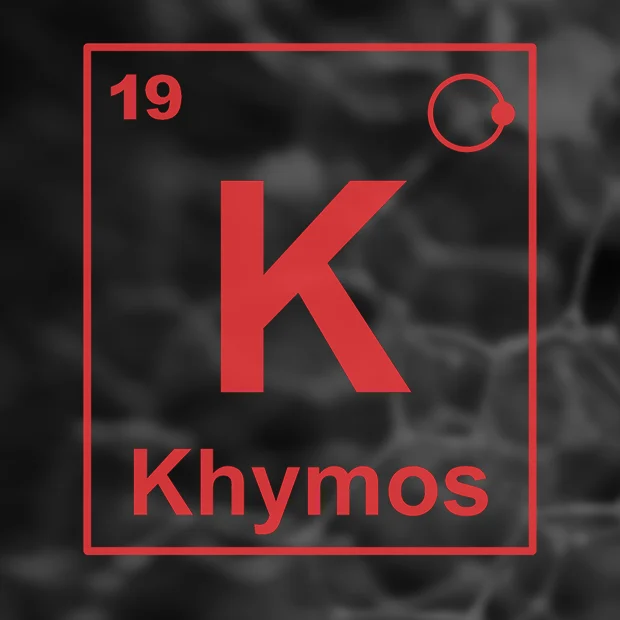
Accompanying these technical overhauls is the introduction of a refreshed brand logo, designed to encapsulate the essence of Khymos’s mission and its scientific foundation. The new emblem features a stylized ‘K’ within a ring, adorned with a single prominent dot. This design is replete with layers of meaning, reflecting both the blog’s identity and the scientific principles it champions.
The primary inspiration for the ‘K’ extends beyond merely being the inaugural letter of Khymos. It also serves as the elemental symbol for Potassium, element number 19 on the periodic table. Potassium, a vital mineral, plays a crucial role in numerous biological processes, including nerve function, muscle contraction, and maintaining fluid balance—all of which have direct and indirect connections to the perception and enjoyment of food. It is abundant in many ingredients central to culinary exploration, from fruits and vegetables to meats and dairy. Understanding the chemical properties and interactions of such elements at a molecular level is fundamental to the very subjects Khymos explores. By linking its identity to a foundational chemical element, the logo subtly reinforces the blog’s commitment to scientific accuracy and the molecular aspect of its focus.
The dot on the ring further enriches this scientific narrative. It symbolizes Potassium’s single electron in its outermost shell, known as its valence electron. This characteristic makes potassium highly reactive, readily forming ionic bonds by donating this electron. In a broader metaphorical sense, this symbolizes the fundamental building blocks of chemistry and the simple yet profound interactions that define the structure and behavior of ingredients—the very ‘molecular’ aspect of molecular gastronomy. This subtle nod to atomic structure highlights the deep scientific curiosity that underpins Khymos’s content, inviting readers to delve beyond the surface of culinary techniques into the underlying chemical reactions that make food taste, feel, and transform the way it does. The logo, therefore, functions as a concise visual manifesto, declaring the blog’s dual identity as both a culinary resource and a scientific educator.
Inferred Reactions and Broader Implications
While no official statements from the broader food science community or specific reader testimonials were included in the initial announcement, the enhancements are anticipated to be warmly received by its dedicated readership. Long-time followers, who have valued Khymos for its unique content despite its past technical limitations, are expected to appreciate the improved accessibility. The candid acknowledgement by Dr. Lersch that mobile optimization "should have been done years ago" suggests an understanding of user feedback and a genuine commitment to addressing these needs.
The implications of these upgrades are far-reaching for Khymos and its readership. For existing users, the shift to a responsive design means an end to the frustrations of navigating a non-optimized site on mobile devices, facilitating easier access to articles, recipes, and scientific discussions while on the go. This enhanced accessibility is expected to increase engagement, encouraging more frequent visits and deeper exploration of the blog’s extensive archives. The streamlined experience means less time struggling with navigation and more time absorbing the rich content.
For potential new readers, particularly those who primarily access the internet via mobile, the optimized experience lowers the barrier to entry, potentially expanding Khymos’s global audience. As interest in food science, experimental cooking, and sustainable culinary practices continues to grow, a modernized Khymos is well-positioned to capture this expanding demographic, serving as an authoritative and user-friendly entry point into these fascinating fields. The improved SEO from domain consolidation and mobile-friendliness will also naturally lead to greater organic discovery, drawing in a new generation of curious minds who might otherwise have overlooked the site due to its previous technical shortcomings.
Furthermore, this modernization effort reinforces the importance of consistent digital upkeep for any online content platform. In an increasingly competitive and technologically dynamic online environment, continuous adaptation is not merely an advantage but a necessity for relevance and longevity. Khymos’s commitment to these significant upgrades demonstrates a forward-thinking approach, ensuring that its valuable content remains vibrant, discoverable, and user-friendly for years to come.
In conclusion, the strategic upgrades to Khymos represent more than just a technical facelift; they signify a thoughtful adaptation to contemporary digital standards, a reinforcement of its brand identity, and a renewed commitment to its mission. By embracing mobile accessibility, streamlining its online presence, and refining its visual identity, Khymos has not only addressed long-standing user needs but has also proactively positioned itself for continued relevance and growth in the dynamic world of online food science communication. The journey of exploration into molecular gastronomy continues, now more accessible and engaging than ever before, ensuring that Dr. Lersch’s pioneering work continues to inspire and educate a global audience.