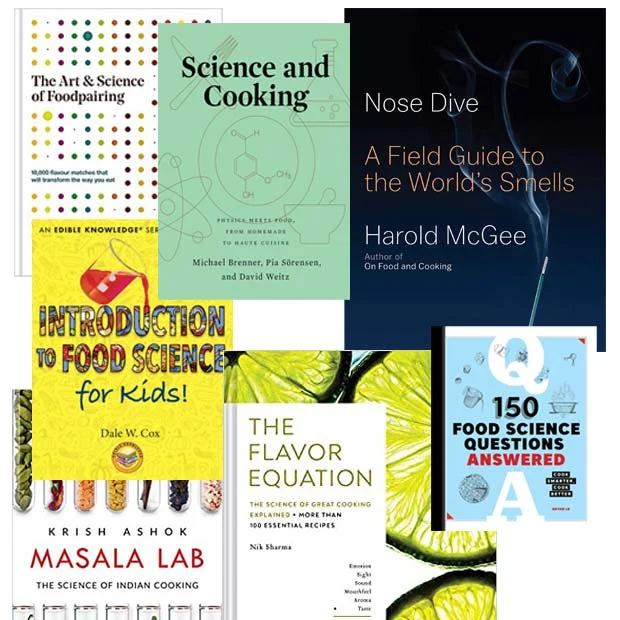

After an extended seven-year hiatus from its celebrated book recommendations, the influential Khymos blog has returned, offering a meticulously curated list of titles from 2020 that bridge the gap between culinary artistry and scientific understanding. Known for its discerning eye for books that imbue food with a "scientific touch," Khymos’s re-emergence in this niche literary landscape is a significant event for enthusiasts, professionals, and home cooks alike seeking to deepen their understanding of gastronomic principles. The blog, which last published book recommendations in 2013, underscores the continuous evolution and mainstream appeal of food science, presenting a diverse selection ranging from practical recipe guides with integrated scientific insights to profound explorations of sensory experiences.
The Evolution of Culinary Science Literature: A Retrospective
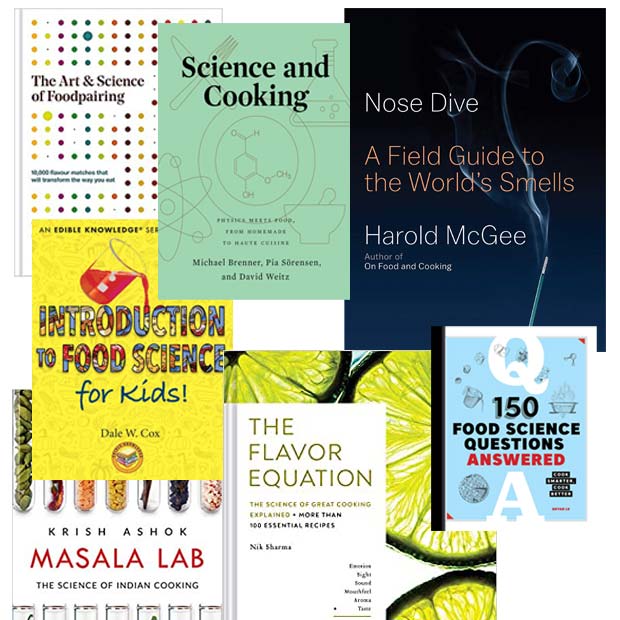
The period between Khymos’s last recommendations in 2013 and its current 2020 compilation marks a transformative era in culinary literature. The early 2010s saw a burgeoning interest in molecular gastronomy, largely popularized by pioneering chefs and authors who dared to apply scientific methods to the kitchen. Blogs like Khymos played a pivotal role in disseminating this knowledge, acting as trusted arbiters in a nascent field. However, as the initial novelty of "molecular gastronomy" matured, the focus shifted towards a more integrated approach, often termed "culinary science" or "the science of cooking," which emphasizes fundamental principles applicable to everyday cooking rather than avant-garde techniques alone. This shift, driven by a desire for practical knowledge and deeper comprehension, is clearly reflected in the 2020 selections, which prioritize accessible scientific explanations and tangible applications.
During Khymos’s hiatus, the market for food science books expanded significantly. Publishers recognized a growing demand from an increasingly curious public, spurred by the proliferation of cooking shows, food documentaries, and the democratization of culinary knowledge through online platforms. This period saw a notable rise in "explainer" cookbooks, often penned by chefs with a scientific bent or scientists with a passion for food. The enduring influence of figures like Harold McGee, whose seminal work On Food and Cooking: The Science and Lore of the Kitchen (first published in 1984, revised 2004) ignited interest in countless individuals, paved the way for a new generation of authors to delve deeper into specific aspects of food science. The current list from Khymos serves as a vital update, capturing the essence of this evolving landscape and showcasing the latest contributions to a field that continues to grow in sophistication and accessibility.
Spotlight on 2020: Essential Reads for the Scientifically Curious Cook
The 2020 recommendations highlight several key trends in food science publishing: the seamless integration of scientific principles directly into recipes, deep dives into specific sensory experiences, academic approaches made accessible to a broader audience, and the application of scientific rigor to diverse culinary traditions worldwide.
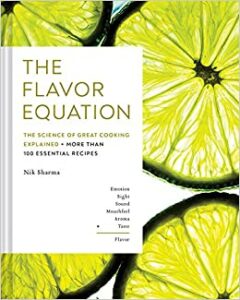
1. The Flavor Equation by Nik Sharma
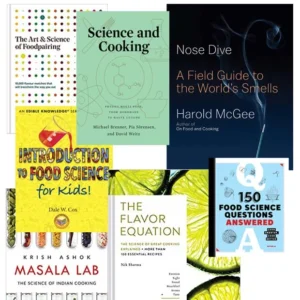
The Flavor Equation, authored by the acclaimed food writer and photographer Nik Sharma, stands out for its innovative approach to demystifying flavor. Spanning 352 pages, this 2020 publication features approximately 100 recipes, each thoughtfully interwoven with scientific explanations. Sharma’s unique contribution lies in his "The Flavor Approach" sections embedded within each recipe, offering concise scientific hints that elucidate the ‘why’ behind specific ingredients and techniques. This method seamlessly integrates scientific principles into the cooking process, empowering home cooks to understand and manipulate flavor profiles rather than merely follow instructions. The book dedicates its remaining third to a broader exploration of flavor from various perspectives, making complex scientific concepts easily digestible for a general audience. The inclusion of metric units is a notable bonus, catering to a global readership and reflecting a growing standard in scientific culinary texts. Food industry experts often commend Sharma for his ability to translate intricate chemical and physical interactions into practical, inspiring culinary guidance, making The Flavor Equation a highly recommended resource for both novice and experienced cooks.
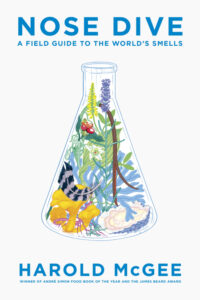
2. Nose Dive: A Field Guide to the World’s Smells by Harold McGee
Harold McGee, an undisputed titan in the realm of food science writing, presents his latest magnum opus, Nose Dive: A Field Guide to the World’s Smells. At a formidable 688 pages, this 2020 release ventures beyond the kitchen, offering an exhaustive exploration of olfaction in its broadest sense. For anyone whose interest in food and cooking from a scientific perspective was kindled by McGee’s foundational On Food and Cooking, Nose Dive represents a natural, albeit specialized, progression. The book meticulously discusses volatile molecules responsible for scents across the entire spectrum of existence, not just those related to food. Despite its detailed scientific nomenclature, McGee’s accessible writing style ensures that the depth of the science does not deter the curious reader. His ability to render complex chemical structures and their sensory perceptions into engaging narratives makes Nose Dive an essential reference for understanding the unseen world of aromas. The culinary community widely recognizes McGee’s profound impact, and Nose Dive further solidifies his legacy as a master explainer, pushing the boundaries of sensory science literature. It is poised to become a definitive guide, inspiring a deeper appreciation for one of our most fundamental senses.
3. Science and Cooking: Physics Meets Food, From Homemade to Haute Cuisine by Michael Brenner, Pia Sørensen, and David Weitz
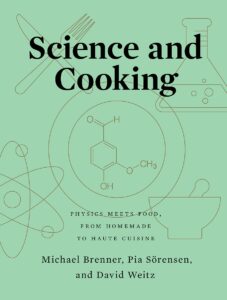
This 320-page volume, Science and Cooking: Physics Meets Food, From Homemade to Haute Cuisine, published in 2020, originates from the renowned "Science and Cooking" course first launched ten years prior at Harvard University. Taught by authors Michael Brenner (applied mathematics), Pia Sørensen (chemistry), and David Weitz (physics), the course and subsequently the book, demonstrate a masterful integration of diverse scientific disciplines with culinary practice. The popularity of the course is underscored by the availability of many of its lectures on YouTube, featuring a pantheon of notable chefs, scientists, and authors. The book mirrors this interdisciplinary approach, explaining complex physical and chemical phenomena in the context of food preparation. It skillfully intertwines scientific principles with practical recipes, making the abstract tangible for readers. The authors’ varied scientific backgrounds ensure a comprehensive yet coherent exploration of topics ranging from emulsions and foams to heat transfer and crystallization. Like The Flavor Equation, this book also provides the convenience of metric units, further cementing its appeal in global scientific and culinary education circles. It serves as an excellent resource for anyone interested in the academic underpinnings of cooking, bridging the gap between theoretical science and practical application.
4. The Art and Science of Foodpairing by Peter Coucquyt, Bernard Lahousse, and Johan Langenbick
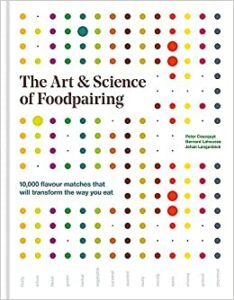
The Art and Science of Foodpairing, a 388-page work from 2020, delves into the fascinating and sometimes contentious concept of flavor pairing. Authored by Peter Coucquyt, Bernard Lahousse, and Johan Langenbick, this book is a culmination of extensive research by the Foodpairing company, a venture that Khymos has followed closely, including an interview with Bernard Lahousse and reports from The Flemish Primitives conferences. Food pairing, which posits that ingredients sharing similar aroma compounds will naturally complement each other, has been a subject of both acclaim and critique within the culinary world. While some critics argue it oversimplifies taste and texture, proponents, including the authors, demonstrate how a scientific understanding of volatile molecules can unlock unprecedented culinary combinations. The book articulates how the scientific identification of shared aroma components can inspire novel and harmonious dishes, showcasing where scientific data informs the "art" of cooking. It provides a robust framework for creative experimentation in the kitchen, guaranteeing inspiration whether one adheres strictly to the science or uses it as a springboard for artistic expression. This publication solidifies the Foodpairing company’s contribution to modern gastronomy, offering a comprehensive guide to a powerful culinary tool.
5. Masala Lab by Krish Ashok
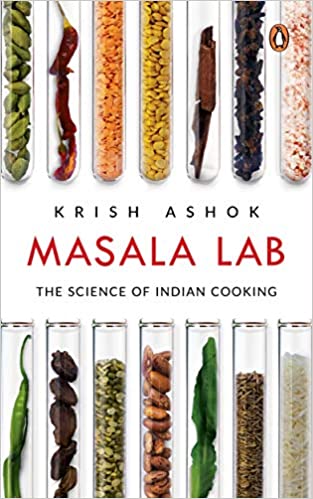
Krish Ashok’s Masala Lab, published in 2020 and spanning 280 pages, represents a vital and welcome expansion of scientific cooking literature into regional cuisines. Ashok, an electronic/software engineer, applies his analytical curiosity to the rich and complex world of Indian cooking. This book is particularly significant because it breaks away from the predominantly Western-centric focus often found in food science books, demonstrating that scientific principles are universally applicable to all culinary traditions. By dissecting the science behind traditional Indian cooking methods and ingredients, Ashok offers fresh perspectives on familiar dishes, empowering cooks to understand and optimize their processes. The excitement surrounding Masala Lab is palpable, particularly for those who appreciate the scientific deconstruction of diverse gastronomic practices. While the book’s primary availability through Amazon India highlights a regional focus, its potential to inspire similar scientific explorations of other global cuisines is immense, paving the way for a more inclusive understanding of food science.
6. 150 Food Science Questions Answered: Cook Smarter, Cook Better by Bryan Le
Bryan Le’s 150 Food Science Questions Answered: Cook Smarter, Cook Better, a concise 198-page book from 2020, offers an accessible entry point for individuals new to integrating a scientific mindset into their cooking. Structured in a user-friendly Q&A format, the book covers fundamental topics such as cooking basics, flavor principles, main ingredient groups, and crucial food safety and storage guidelines. Its design makes it an ideal reference tool, allowing readers to quickly look up specific queries. Beyond its utility as a quick guide, a casual browse through its pages is likely to spark interest and reveal intriguing insights into everyday culinary phenomena. This book serves as an excellent foundational text, equipping readers with the essential scientific knowledge to make more informed decisions in the kitchen, ultimately leading to smarter and better cooking outcomes. It embodies the essence of practical food science for the everyday cook.
7. Introduction to Food Science for Kids!: A Kitchen-Based Workbook by Dale W Cox
Dale W Cox’s Introduction to Food Science for Kids!: A Kitchen-Based Workbook, a 112-page publication from 2020, explicitly targets a younger audience, introducing children to fundamental chemical and physical concepts through the engaging medium of the kitchen. The title itself succinctly encapsulates its mission. The kitchen, with its myriad transformations and reactions, provides an unparalleled hands-on laboratory for children to observe and experiment with scientific principles. This workbook is invaluable for fostering early scientific literacy and curiosity, making abstract concepts tangible and fun. By framing cooking as a series of scientific experiments, Cox encourages critical thinking and observation skills in children, laying a foundation for future interest in STEM fields. Educational experts frequently emphasize the importance of experiential learning, and this book delivers precisely that, transforming meal preparation into an exciting journey of discovery for the next generation of scientists and chefs.
Broader Impact and Implications: The Enduring Appeal of Culinary Science
The renewed recommendations from Khymos underscore a broader cultural shift towards a more informed and scientific approach to food. The market for food science literature has shown consistent growth, reflecting a public increasingly eager to move beyond simple recipe following to understand the underlying principles of why food behaves the way it does. This trend is supported by data indicating a steady rise in sales of non-fiction culinary books that delve into scientific topics, often driven by the success of popular science communicators and media personalities.
These books collectively serve multiple purposes. For the home cook, they offer empowerment, transforming mundane tasks into opportunities for experimentation and deeper understanding. For professional chefs, they provide a framework for innovation, enabling them to push boundaries and create novel dishes with predictable results. In educational settings, from culinary schools to university science departments, these texts are becoming indispensable, bridging the gap between theoretical science and its practical application in gastronomy. The Harvard "Science and Cooking" course, for example, exemplifies the academic recognition of this interdisciplinary field. Industry experts note a growing demand for literature that demystifies the culinary process, suggesting that these books are meeting a critical need in the market.
The enduring value of curated resources like the Khymos blog, particularly in an era of information overload, cannot be overstated. By meticulously selecting and reviewing titles, the blog acts as a trusted guide, helping readers navigate a vast and sometimes overwhelming literary landscape. The inclusion of titles like Masala Lab also highlights a crucial move towards globalizing food science, acknowledging and celebrating the scientific intricacies of diverse culinary traditions. This expansion beyond traditional Western culinary science enriches the field and promotes a more inclusive understanding of gastronomy. The return of Khymos’s recommendations underscores the enduring relevance of curated content in a crowded information landscape, providing valuable insight for both enthusiasts and practitioners.
Conclusion
The return of Khymos’s book recommendations is more than just a list; it is a reaffirmation of the blog’s commitment to advancing the understanding of food science. The 2020 selections collectively represent the cutting edge of culinary-scientific literature, offering a blend of practical application, profound sensory exploration, academic rigor, and cultural diversity. As the intersection of science and cooking continues to captivate and educate, these books serve as essential tools for anyone looking to "cook smarter, cook better," and truly appreciate the intricate dance of flavors, textures, and aromas that define our culinary experiences. The blog’s renewed activity promises to continue guiding readers through the fascinating and ever-expanding world where physics meets food.