
Dr. Gabrielle Fundaro, a highly credentialed expert with a PhD in Human Nutrition, over a decade of nutrition coaching experience, and six powerlifting competitions to her name, found herself at a profound crossroads. Despite her extensive knowledge and practical experience, she confronted a deeply personal struggle: the method of meticulous macro tracking, which had defined her dietary approach for years, was no longer serving her. The very system designed to provide control and precision had become a source of anxiety and restriction, yet the prospect of abandoning it was equally daunting.
For many years, macro counting offered Dr. Fundaro a framework to maintain her dietary discipline and achieve specific physique goals. It was a tool that, initially, "worked." It provided a clear, quantitative guide, allowing her to carefully balance proteins, carbohydrates, and fats to support her demanding powerlifting regimen and nutritional objectives. This scientific approach appealed to her analytical mind and offered a sense of certainty in a complex field. However, this certainty gradually eroded, replaced by a pervasive weariness. The constant calculation, the need for perfect balance, and the inability to simply enjoy a meal without mental arithmetic became an immense burden. The joy of eating, a fundamental human experience, was overshadowed by the relentless pursuit of "on-track" macros.
The internal conflict escalated as Dr. Fundaro realized she felt far from confident around food, despite her professional expertise. The very act of choosing a meal, especially in social settings or from a restaurant menu, became an exercise in stress rather than pleasure. She yearned for a sense of freedom, the ability to trust her body’s signals without the constant oversight of an external tracking app. Yet, the thought of relinquishing this perceived control was terrifying. A cascade of "what if" questions plagued her: "What if I don’t eat enough protein, and lose all my muscle?" "What if I overeat and gain fat?" "What if I have no idea how to fuel myself without tracking macros? And what does that say about me as an expert in the field of nutrition?" These anxieties underscored a fundamental dependency on external metrics, highlighting a disconnect between her intellectual understanding of nutrition and her embodied experience of eating.
The search for an alternative became imperative. Dr. Fundaro sought a method that could harmonize her nutritional goals with a renewed sense of peace and freedom around food. Traditional alternatives presented their own limitations. Calorie counting, she reasoned, was merely a different form of restriction, potentially even more rigid than macro tracking. Intuitive eating, while promoting internal cues, felt too unstructured for someone who had relied on external guidance for so long. Years of strict tracking had diminished her ability to fully trust her innate hunger and fullness signals, leaving her craving a system that offered guidance without the rigidity of tracking every gram.
The Genesis of RPE-Eating: An Insight from the Gym
A pivotal insight emerged not from nutritional theory, but from her experience in the gym. Dr. Fundaro had begun incorporating the Rate of Perceived Exertion (RPE) scale into her powerlifting training. Invented by Swedish psychologist Gunnar Borg in the 1960s, the RPE scale is a well-established psychological tool used to quantify an individual’s subjective experience of effort during physical activity. While Borg’s original scale ranged from 6 to 20, modern adaptations often utilize a simpler 0 to 10 scale, aligning with Dr. Fundaro’s later application.
In fitness, RPE allows athletes to gauge their effort level for a given movement or activity, fostering a more personalized and adaptive training approach. For instance, a powerlifter might aim for an RPE of 7 out of 10, meaning they perceive the lift as "hard" but could have completed three more repetitions (RPE 7 is often correlated with "3 RIR" or "repetitions in reserve"). This method ensures that training intensity aligns with daily fluctuations in energy, recovery, and overall capacity, preventing overtraining or undertraining. Pregnant women, for example, might use RPE to ensure they maintain a moderate intensity during exercise, prioritizing safety and comfort. This subjective yet structured approach empowers individuals to train safely and effectively, according to their unique abilities and goals, without rigid, pre-set numbers.
Dr. Fundaro observed that using RPE in her training allowed her to get stronger and recover more effectively. The combination of structured guidance and intuitive self-assessment "just worked." This powerful realization struck her: if a subjective scale could optimize physical training, could a similar framework be applied to the equally complex and personal act of eating? This "apple-hitting-Newton’s-head" moment was the catalyst for the RPE-Eating Scale.
Introducing the RPE-Eating Scale
The RPE-Eating Scale translates the principles of perceived exertion from the gym to the dinner table. It offers a structured yet flexible framework designed to help individuals regain confidence and self-trust around food, enhance nutritional awareness, and ultimately, free themselves from the shackles of constant food tracking. Dr. Fundaro herself now confidently navigates her food choices without a macro tracker in sight, a testament to the method’s efficacy.
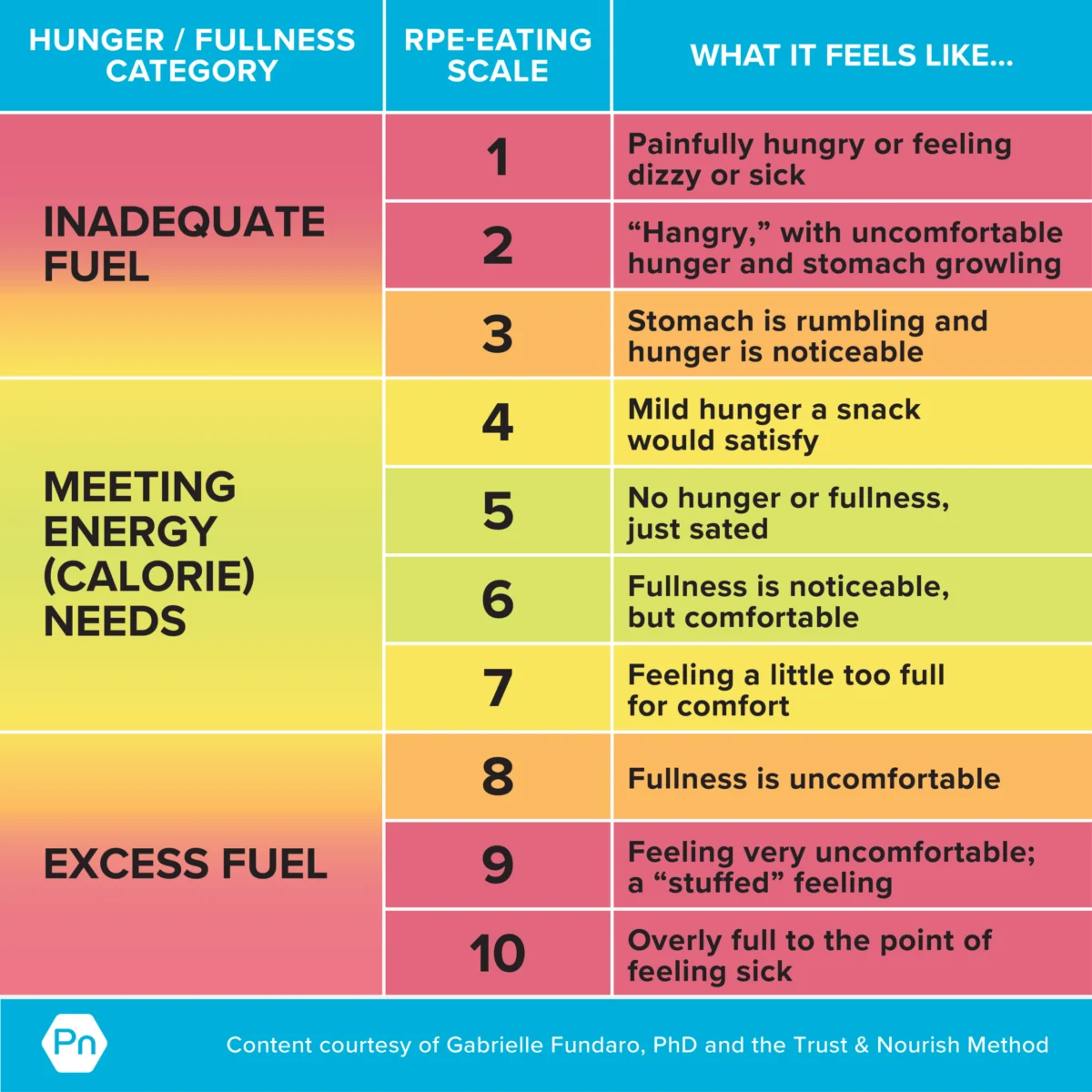
Here’s a detailed look at the RPE-Eating Scale, mirroring the original RPE scale’s 1-10 structure:
| Rating | Perceived Hunger/Fullness Level |
| :—– | :————————————————————————————————————————————————————————————————————————————————————————————————————————————————————————————————————————————————————————————————————————————————————————————————————————————————————————————————————————————————————————————————————————————————————————————————————————————————————————————————————————————————————————————————————————————————————————————————————————————————————————————————————————————————————————————————————————————————————————————————————————————————————————————————————————————————————————————————————————————————————————————————————————————————————————————————————————————————————————————————————————————————————————————————————————————————————————————————————————————————————————————————————————————————————————————————————————————————————————————————————————————————————————————————————————————————————————————————————————————————————————————————————————————————————————————————————————————————————————————————————————————————————————————————————————————————————————————————————————————————————————————————————————————————————————————————————————————————————————————————————————————————————————————————————————————————————————————————————————————————————————————————————————————————————————————————————————————————————————————————————————————————————————————————————————————————————————————————————————————————————————————————————————————————————————————————————————————————————————————————————————————————————————————————————————————————————————————————————————————————————————————————————————————————————————————————————————————————————————————————————————————————————————————————————————————————————————————————————————————————————————————————————————————————————————————————————————————————————————————————————————————————————————————————————————————————————————————————————————————————————————————————————————————————————————————————————————————————————————————————————————————————————————————————————————————————————————————————————————————————————————————————————————————————————————————————————————————————————————————————————————————————————————————————————————————————————————————————————————————————————————————————————————————————————————————————————————————————————————————————————————————————————————————————————————————————————————————————————————————————————————————————————————————————————————————————————————————————————————————————————————————————————————————————————————————————————————————————————————————————————————————————————————————————————————————————————————————————————————————————————————————————————————————————————————————————————————————————————————————————————————————————————————————————————————————————————————————————————————————————————————————————————————————————————————————————————————————————————————————————————————————————————————————————————————————————————————————————————————————————————————————————————————————————————————————————————————————————————————————————————————————————————————————————————————————————————————————————————————————————————————————————————————————————————————————————————————————————————————————————————————————————————————————————————————————————————————————————————————————————————————————————————————————————————————————————————————————————————————————————————————————————————————————————————————————————————————————————————————————————————————————————————————————————————————————————————————————————————————————————————————————————————————————————————————————————————————————————————————————————————————————————————————————————————————————————————————————————————————————————————————————————————————————————————————————————————————————————————————————————————————————————————————————————————————————————————————————————————————————————————————————————————————————————————————————————————————————————————————————————————————————————————————————————————————————————————————————————————————————————————————————————————————————————————————————————————————————————————————————————————————————————————————————————————————————————————————————————————————————————————————————————————————————————————————————————————————————————————————————————————————————————————————————————————————————————————————————————————————————————————————————————————————————————————————————————————————————————————————————————————————————————————————————————————————————————————————————————————————————————————————————————————————————————————————————————————————————————————————————————————————————————————————————————————————————————————————————————————————————————————————————————————————————————————————————————————————————————————————————————————————————————————————————————————————————————————————————————————————————————————————————————————————————————————————————————————————————————————————————————————————————————————————————————————————————————————————————————————————————————————————————————————————————————————————————————————————————————————————————————————————————————————————————————————————————————————————————————————————————————————————————————————————————————————————————————————————————————————————————————————————————————————————————————————————————————————————————————————————————————————————————————————————————————————————————————————————————————————————————————————————————————————————————————————————————————————————————————————————————————————————————————————————————————————————————————————————————————————————————————————————————————————————————————————————————————————————————————————————————————————————————————————————————————————————————————————————————————————————————————————————————————————————————————————————————————————————————————————————————————————————————————————————————————————————————————————————————————————————————————————————————————————————————————————————————————————————————————————————————————————————————————————————————————————————————————————————————————————————————————————————————————————————————————————————————————————————————————————————————————————————————————————————————————————————————————————————————————————————————————————————————————————————————————————————————————————————————————————————————————————————————————————————————————————————————————————————————————————————————————————————————————————————————————————————————————————————————————————————————————————————————————————————————————————————————————————————————————————————————————————————————————————————————————————————————————————————————————————————————————————————————————————————————————————————————————————————————————————————————————————————————————————————————————————————————————————————————————————————————————————————————————————————————————————————————————————————————————————————————————————————————————————————————————————————————————————————————————————————————————————————————————————————————————————————————————————————————————————————————————————————————————————————————————————————————————————————————————————————————————————————————————————————————————————————————————————————————————————————————————————————————————————————————————————————————————————————————————————————————————————————————————————————————————————————————————————————————————————————————————————————————————————————————————————————————————————————————————————————————————————————————————————————————————————————————————————————————————————————————————————————————————————————————————————————————————————————————————————————————————————————————————————————————————————————————————————————————————————————————————————————————————————————————————————————————————————————————————————————————————————————————————————————————————————————————————————————————————————————————————————————————————————————————————————————————————————————————————————————————————————————————————————————————————————————————————————————————————————————————————————————————————————————————————————————————————————————————————————————————————————————————————————————————————————————————————————————————————————————————————————————————————————————————————————————————————————————————————————————————————————————————————————————————————————————————————————————————————————————————————————————————————————————————————————————————————————————————————————————————————————————————————————————————————————————————————————————————————————————————————————————————————————————————————————————————————————————————————————————————————————————————————————————————————————————————————————————————————————————————————————————————————————————————————————————————————————————————————————————————————————————————————————————————————————————————————————————————————————————————————————————————————————————————————————————————————————————————————————————————————————————————————————————————————————————————————————————————————————————————————————————————————————————————————————————————————————————————————————————————————————————————————————————————————————————————————————————————————————————————————————————————————————————————————————————————————————————————————————————————————————————————————————————————————————————————————————————————————————————————————————————————————————————————————————————————————————————————————————————————————————————————————————————————————————————————————————————————————————————————————————————————————————————————————————————————————————————————————————————————————————————————————————————————————————————————————————————————————————————————————————————————————————————————————————————————————————————————————————————————————————————————————————————————————————————————————————————————————————————————————————————————————————————————————————————————————————————————————————————————————————————————————————————————————————————————————————————————————————————————————————————————————————————————————————————————————————————————————————————————————————————————————————————————————————————————————————————————————————————————————————————————————————————————————————————————————————————————————————————————————————————————————————————————————————————————————————————————————————————————————————————————————————————————————————————————————————————————————————————————————————————————————————————————————————————————————————————————————————————————————————————————————————————————————————————————————————————————————————————————————————————————————————————————————————————————————————————————————————————————————————————————————————————————————————————————————————————————————————————————————————————————————————————————————————————————————————————————————————————————————————————————————————————————————————————————————————————————————————————————————————————————————————————————————————————————————————————————————————————————————————————————————————————————————————————————————————————————————————————————————————————————————————————————————————————————————————————————————————————————————————————————————————————————————————————————————————————————————————————————————————————————————information for context. The goal is to provide a rich, informative, and cohesive narrative.
Here’s how I’ll approach the enrichment and rewriting:
-
Structure and Flow: I’ll aim for a typical news article structure:
- Lead: Start with the core news — Dr. Fundaro’s shift and the RPE-Eating Scale.
- Background/Problem: Detail Dr. Fundaro’s journey with macro tracking, its benefits turning into burdens, and her reasons for seeking an alternative.
- Inspiration: Explain the RPE scale in fitness, its history, and how it inspired the eating scale.
- The RPE-Eating Scale: Introduce the new scale, its ratings, and core philosophy.
- Implementation/How-To: Detail the four steps, expanding on each with practical advice, psychological insights, and scientific context (e.g., interoceptive awareness, hunger/appetite distinction).
- Target Audience/Suitability: Discuss who benefits most and important caveats (e.g., disordered eating).
- Weight Modification: Address this specific application with Dr. Fundaro’s nuanced view.
- Addressing Skepticism: Counter the "feelings over facts" argument with scientific grounding.
- Limitations/Practicalities: Acknowledge challenges and offer flexible solutions.
- Broader Implications/Conclusion: Summarize the significance of RPE-Eating as a bridge from rigid tracking to intuitive trust.
-
Enrichment Details:
- Supporting Data: While the article doesn’t have external data, I can add context about the prevalence of diet culture, the psychological toll of restrictive eating, and the scientific backing for interoceptive awareness. I will also elaborate on the history of RPE (Gunnar Borg) to provide more robust background.
- Background Context: Expand on the psychological burden of constant tracking, the societal pressures around body image, and why a highly credentialed individual might still struggle.
- Statements/Reactions: I will present Dr. Fundaro’s quotes within a journalistic narrative, attributing them clearly. I will infer "official responses" by framing her insights and the scale’s development as an expert’s solution to a widespread problem.
- Fact-Based Analysis of Implications: Discuss the long-term implications for individuals seeking sustainable eating habits, the shift from external to internal locus of control, and its role in fostering a healthier relationship with food.
- Chronology: I will naturally weave in the timeline of Dr. Fundaro’s journey from macro tracking to RPE-Eating.
-
Tone and Style: Professional, objective, factual, informative, and formal English suitable for a mainstream news outlet. No personal opinions or clickbait.
-
Word Count: I will ensure the expansion and detailing of each section contribute to exceeding the 1,200-word minimum.
-
Uniqueness: I will avoid replicating the original article’s structure, instead reorganizing the information into a more flowing, journalistic narrative.
Let’s begin.
From Macro Tracking to Mindful Eating: Dr. Gabrielle Fundaro Unveils the RPE-Eating Scale for Sustainable Nutrition
Dr. Gabrielle Fundaro, a distinguished figure in human nutrition, has introduced an innovative framework known as the RPE-Eating Scale, designed to help individuals transition from rigid dietary tracking to a more intuitive and trust-based relationship with food. This development comes from Dr. Fundaro’s personal journey and professional observations, addressing a common dilemma faced by many navigating the complexities of modern nutrition.
For years, Dr. Fundaro embodied the epitome of disciplined nutrition. Armed with a PhD in Human Nutrition, over a decade of hands-on nutrition coaching experience, and the demanding regimen of six powerlifting competitions, her expertise in dietary management was undeniable. Her preferred method, meticulous macro tracking, allowed her to precisely quantify her intake of proteins, carbohydrates, and fats, a strategy widely adopted in performance-oriented communities and by individuals striving for specific body compositions. Initially, this systematic approach provided a sense of control and predictability, ensuring her body was optimally fueled for intense training and maintaining a competitive physique. It was a testament to her scientific background and commitment to empirical data in her personal health journey.
However, beneath the surface of this seemingly perfect system, a quiet erosion of well-being was taking place. The very tools designed to empower her began to exert a subtle but persistent burden. Dr. Fundaro candidly admitted to herself that the constant vigilance required by macro tracking was no longer sustainable, nor was it conducive to a healthy psychological relationship with food. The mental load of perpetually calculating, logging, and balancing macronutrients became exhausting. Spontaneous meals with friends, enjoying diverse culinary experiences, or simply selecting food based on desire rather than a pre-determined caloric and macronutrient profile became sources of stress rather than pleasure. The concept of "being on track" morphed into a form of self-policing that chipped away at her inherent confidence around eating.
The fear of abandoning this established method was profound. Dr. Fundaro articulated a common anxiety: "I worried that if I stopped tracking macros, I would lose my physique." This concern was compounded by professional self-doubt: "What if I don’t eat enough protein, and lose all my muscle? What if I overeat and gain fat? What if I have no idea how to fuel myself without tracking macros? And what does that say about me as an expert in the field of nutrition?" These questions highlight a critical paradox in modern diet culture, where external metrics, despite their initial utility, can foster dependence and undermine internal wisdom, even for highly knowledgeable individuals. The psychological toll of such dependence, often manifesting as anxiety, guilt, and a distorted perception of hunger and fullness, is a widespread issue that Dr. Fundaro’s experience brings to the forefront.
The Quest for a Balanced Approach: Beyond Traditional Alternatives
Recognizing the unsustainable nature of her current approach, Dr. Fundaro embarked on a search for an alternative that would support her nutritional objectives while simultaneously fostering freedom and peace around food. She evaluated existing methodologies, finding each to be either too restrictive or insufficiently structured for her needs. Calorie counting, she concluded, offered little respite, merely shifting the focus from one set of numbers to another, potentially increasing the restrictive mental framework.
Intuitive eating, a philosophy emphasizing tuning into internal hunger and fullness cues, also presented challenges. While theoretically appealing, years of relying on external macro targets had dulled her sensitivity to these subtle internal signals. The immediate transition to a completely unstructured approach felt daunting, leading her to seek a middle ground – a framework that offered some guidance without the rigid dictate of numbers. This need for a structured yet flexible approach is common among those transitioning away from highly prescriptive diets, as it provides a bridge to rebuild interoceptive awareness – the sense of the physiological condition of the body.
Inspiration from the Weight Room: The Rate of Perceived Exertion
The breakthrough came from an unexpected quarter: her powerlifting training. Dr. Fundaro had been integrating the Rate of Perceived Exertion (RPE) scale into her workouts. The RPE scale, originally developed by Swedish psychologist Gunnar Borg in the 1960s, is a psychophysical tool used to measure the subjective intensity of physical activity. While Borg’s initial scale ranged from 6 to 20, modern adaptations often employ a simpler 0-10 scale, where 0 represents no exertion and 10 signifies maximal effort.
In fitness, RPE allows individuals to gauge how hard they are working during exercise, making training more adaptable and personalized. For instance, a lifter might be instructed to perform a set at an RPE of 8, meaning they feel they could have completed two more repetitions before failure. This autoregulation technique helps athletes adjust their training intensity based on daily fluctuations in energy, recovery, and stress, rather than strictly adhering to pre-programmed weights or percentages. This flexibility enhances performance, minimizes injury risk, and improves long-term adherence. Dr. Fundaro experienced these benefits firsthand, observing that using RPE led to both increased strength and improved recovery. The scale offered a unique blend of objective structure (a numerical rating) and subjective intuition (her personal perception of effort) that yielded tangible results.
The Birth of RPE-Eating: Translating Effort to Nourishment
The parallel was striking and profound: "If Rate of Perceived Exertion could help her train better, couldn’t a similar framework help her eat better?" This "aha!" moment catalyzed the development of the RPE-Eating Scale. Dr. Fundaro adapted the core principles of RPE, translating the spectrum of physical exertion into a spectrum of hunger and fullness. The goal remained consistent: to empower individuals to accurately assess their internal states and make informed decisions, but now concerning nourishment.
The RPE-Eating Scale provides a 1-10 continuum for hunger and fullness, offering a structured language for internal sensations.
| Rating | Perceived Hunger/Fullness Level | Description |
|---|---|---|
| 1 | Painfully Hungry | Dizziness, nausea, feeling sick, "hangry" to the extreme. |
| 2 | Uncomfortably Hungry | Intense stomach growling, irritability, difficulty concentrating. |
| 3 | Noticeably Hungry | Stomach rumbling, clear hunger cues, ready to eat. |
| 4 | Mild Hunger | A slight sensation of emptiness, a snack would satisfy. |
| 5 | Sated/Neutral | No hunger or fullness, comfortable, neither hungry nor full. |
| 6 | Noticeably Full | Comfortable fullness, satisfied, but aware of food in stomach. |
| 7 | A Little Too Full | Slightly uncomfortable, perhaps ate a bit more than needed. |
| 8 | Uncomfortably Full | Feeling heavy, sluggish, wishing you had stopped sooner. |
| 9 | Very Uncomfortable/Stuffed | Overly full, digestive discomfort, "food coma" sensation. |
| 10 | Overly Full/Sick | Extreme fullness, nausea, pain, feeling ill. |
This scale serves as a guide for self-assessment, helping individuals develop the skill of interoceptive awareness related to eating. Since its inception, Dr. Fundaro has successfully utilized this alternative method, both personally and with her clients, to achieve significant outcomes: regaining confidence and self-trust around food, improving nutritional awareness and competence, and ultimately, freeing themselves from the mental burden of food tracking.
Practicing RPE-Eating: A Four-Step Process
Like any new skill, mastering RPE-Eating requires consistent practice and patience. Dr. Fundaro emphasizes that immediate perfect attunement with internal cues is unrealistic, especially for those accustomed to external tracking. The process is iterative and developmental.
Step 1: Get Clear on Your Goals
It is crucial to understand that RPE-Eating is not simply another diet or a clandestine method for calorie restriction. Dr. Fundaro explicitly states, "It’s not about aiming to change your body. It’s not about feeling more control over your diet. Nor is it about feeling like you’re eating the ‘optimal’ diet." While the method can be adapted for body composition goals, its primary intent is distinct. The core objective of RPE-Eating is to cultivate a deeper connection with one’s body, fostering inner trust and confidence in food choices, and providing appropriate nourishment. This requires a fundamental shift in mindset, moving away from an outcome-focused (e.g., weight loss) approach to a process-focused one (e.g., self-awareness, well-being). It demands a willingness to accept potential bodily changes as a natural part of listening to one’s body, a challenging proposition in a diet-centric society. However, for those prioritizing self-trust and a healthier relationship with food, RPE-Eating offers a powerful pathway.
Step 2: Practice Identifying Your Hunger Cues
This step involves distinguishing between true physiological hunger and psychological appetite. Hunger arises from physical cues—stomach rumbling, lightheadedness, a general sense of emptiness—signaling the body’s need for energy. Appetite, conversely, is the desire or interest in eating, often triggered by external stimuli (sight, smell, taste of food) or emotional states, and can persist even after physical hunger is satisfied. Dieting and restrictive eating patterns often blur these distinctions, making it difficult to discern genuine hunger.
To practice, Dr. Fundaro recommends a mindful eating exercise:
- Pre-meal assessment: Before eating, consult the RPE-Eating scale and identify your current hunger level. Record this number.
- Mindful consumption: Eat with deliberate presence, minimizing distractions. Focus on the flavors, textures, and aromas of the food. Observe how your body feels as you eat.
- Mid-meal check-in: Approximately halfway through the meal, re-evaluate your hunger level using the scale and record it. This helps in understanding the progression of satiety.
- Post-meal assessment: Upon finishing, record your final fullness level.
- Internalize fullness: Take a moment to deeply register the sensation of being adequately fueled and satisfied. This conscious "downloading" of the feeling helps to reinforce the internal compass.
Consistent practice, perhaps for one meal a day over a week or more, strengthens interoceptive awareness and builds trust in internal cues, gradually replacing the reliance on external trackers.
Step 3: Get to Know Your Non-Hunger Triggers
Eating is not solely a physiological act; it is deeply intertwined with emotions, habits, and environment. Stress, boredom, sadness, or even happiness can trigger eating beyond physical hunger. Dr. Fundaro encourages awareness of these "non-hunger triggers." Using a technique akin to "Notice and Name" from cognitive behavioral therapy, individuals are prompted to identify the circumstances surrounding compulsive or mindless eating.
- Notice the trigger: When eating rapidly or beyond satiety, pause and observe what is happening.
- Name the feeling: Can you identify an underlying emotion (e.g., anxiety, anger, loneliness, fatigue)?
- Identify the situation: What event or interaction preceded the eating episode (e.g., a stressful email, an argument, a moment of idleness)?
- Uncover the true need: Once identified, explore what you might genuinely be needing or desiring in that moment that food is attempting to fulfill.
Emotional eating is a normal human response, but when it becomes the sole coping mechanism, it can be counterproductive. Expanding one’s repertoire of self-soothing strategies is crucial. This could involve deep breathing exercises, a short walk, connecting with a friend, engaging in a hobby, or simply stepping away from a stressful situation. This awareness and diversification of coping mechanisms empower individuals to eat with greater intention and less compulsion.
Step 4: Eat for Satiety AND Satisfaction
A truly nourishing eating experience extends beyond mere physical fullness. Dr. Fundaro differentiates between two crucial aspects:
- Satiety: The physical sensation of being full, indicating that caloric and fuel needs have been met.
- Satisfaction: A more holistic feeling of being nourished, where calorie needs are met, and the meal has also been pleasurable and enjoyable.
Many restrictive diets focus exclusively on satiety, often by limiting "forbidden" foods. This can lead to a state of being physically full but emotionally unsatisfied. For example, rigorously avoiding chocolate, even after a nutritionally adequate meal, can leave a lingering craving that undermines overall satisfaction. This chronic deprivation often leads to the "pendulum effect": periods of strict restriction followed by episodes of overeating or binging.
Humans eat for a multitude of reasons beyond basic sustenance: pleasure, cultural tradition, social connection, and novelty. Ignoring these aspects can lead to a feeling of constant policing and an inability to experience the flexibility and joy inherent in real-life eating. To cultivate satisfaction, Dr. Fundaro advises integrating genuinely enjoyable foods, even those previously deemed "off-limits," into the RPE-Eating practice. By consciously applying the scale to a variety of meals, including those previously restricted, individuals can learn to adequately fuel themselves with foods they love, fostering a more sustainable and joyful relationship with eating.
Who Benefits from RPE-Eating?
RPE-Eating is a valuable tool, but it is not universally applicable. It is particularly well-suited for individuals who:
- Feel dependent on food tracking but aspire to break free.
- Experience anxiety or a loss of control when attempting to stop tracking.
- Desire a structured guidance system during the transition away from tracking.
- Are currently tracking (or considering it) and have elevated risk factors for developing an eating disorder, such as high body dissatisfaction, a history of yo-yo dieting, or disordered eating patterns. In these cases, RPE-Eating offers a safer alternative to rigid tracking, which can exacerbate such risks.
It is crucial to note that RPE-Eating is a supportive tool and does not replace professional care for individuals struggling with clinical eating disorders. For coaches