
After years of meticulously logging every bite, Dr. Gabrielle Fundaro, a highly credentialed expert in human nutrition, reached a pivotal realization: the very method she championed, macro tracking, was no longer serving her. Despite a robust academic background, over a decade of nutrition coaching experience, and six powerlifting competitions showcasing her physical prowess, Dr. Fundaro found herself grappling with profound anxiety surrounding food choices. Her dependence on macro counting, once a tool for staying "on track," had transformed into a restrictive burden, eroding her confidence and peace of mind.
The Expert’s Dilemma: When a Tool Becomes a Tether
Dr. Fundaro’s journey reflects a common paradox in the wellness world. Macro tracking, the practice of monitoring macronutrient intake (proteins, carbohydrates, and fats) to achieve specific health or physique goals, gained immense popularity for its precision and data-driven approach. For many, including Dr. Fundaro initially, it offered a sense of control and a clear path to understanding dietary composition. It provided a tangible framework for optimizing nutrition, particularly for athletes or those with specific body composition targets. Indeed, studies have shown that tracking can be effective for short-term goal achievement by increasing dietary awareness and adherence.
However, for Dr. Fundaro, the meticulous balancing act of macros eventually led to exhaustion. The constant calculations, the inability to spontaneously enjoy a meal without mental gymnastics, and the pervasive fear of "going sideways" with her health or physique became unbearable. This sentiment resonates with a growing number of individuals who find that long-term, rigid tracking can foster an unhealthy relationship with food, shifting focus from internal hunger cues and enjoyment to external metrics. The mental load associated with perpetual tracking can be significant, leading to burnout, social isolation, and even orthorexia-like tendencies, where the obsession with "healthy" eating becomes detrimental to well-being.
The thought of abandoning this ingrained practice, however, was terrifying. Her internal dialogue echoed the fears of many who rely on external food guidance: "What if I don’t eat enough protein, and lose all my muscle?" "What if I overeat and gain fat?" "What if I have no idea how to fuel myself without tracking macros? And what does that say about me as an expert in the field of nutrition?" These questions highlight the psychological dependence that can develop, where self-worth and professional identity become intertwined with adherence to a specific dietary method.
A Search for Freedom: Beyond Restriction and Pure Intuition
Dr. Fundaro’s struggle ignited a quest for an alternative—a method that could support her nutritional goals while simultaneously restoring a sense of freedom and peace around food. She quickly ruled out calorie counting, recognizing it as equally, if not more, restrictive than macro tracking. The underlying principle remained the same: external quantification overriding internal signals.
Intuitive eating, another popular approach, also presented challenges. While it emphasizes tuning into internal hunger and fullness cues, Dr. Fundaro, after years of relying on "external" cues like macro targets, felt disconnected from her own instincts. She desired more structure than intuitive eating alone seemed to offer, a bridge between rigid tracking and complete reliance on potentially dulled internal signals. This highlights a crucial gap for many transitioning away from structured diets: the need for a guided re-learning of internal bodily wisdom. Research on intuitive eating suggests it can improve body image and reduce disordered eating behaviors, but its successful implementation often requires a period of re-education and trust-building with one’s own body, especially after prolonged dietary restriction.
The Genesis of an Idea: RPE in the Gym, RPE at the Table
A breakthrough emerged from an unexpected quarter: her powerlifting training. Dr. Fundaro had been utilizing the Rate of Perceived Exertion (RPE) scale to guide her lifts. Invented by Swedish psychologist Gunnar Borg in the 1960s, RPE is a psychophysical scale designed to measure the subjective intensity of physical activity. Though Borg’s original scale ranged from 6 to 20, modern adaptations often use a more accessible 0 to 10 scale, which Dr. Fundaro favored.
The RPE scale in fitness allows individuals to quantify their effort during a movement or activity, making it a valuable tool for safe and effective training tailored to individual ability and goals. For instance, a powerlifter might aim for an RPE of 7/10 for a warm-up set, meaning they perceive it as "vigorous" but could still perform a few more repetitions. A pregnant woman might use it to ensure she’s not over-exerting herself, aiming for a moderate RPE of 4-5. The power of RPE lies in its subjective nature; while a coach can provide guidelines, the ultimate interpretation of effort rests with the individual, fostering autonomy and body awareness.
Dr. Fundaro observed that by using RPE in her training, she was not only getting stronger but also recovering more effectively. This combination of structure—the numerical scale and general guidelines—and intuition—her personal interpretation of that number—proved incredibly effective. It was this "aha!" moment, akin to Newton’s apple, that sparked the idea: If RPE could revolutionize her training, couldn’t a similar framework be applied to eating?
Introducing the RPE-Eating Scale: A Hybrid Approach to Nourishment
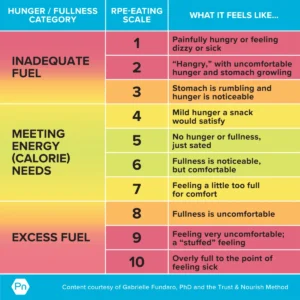
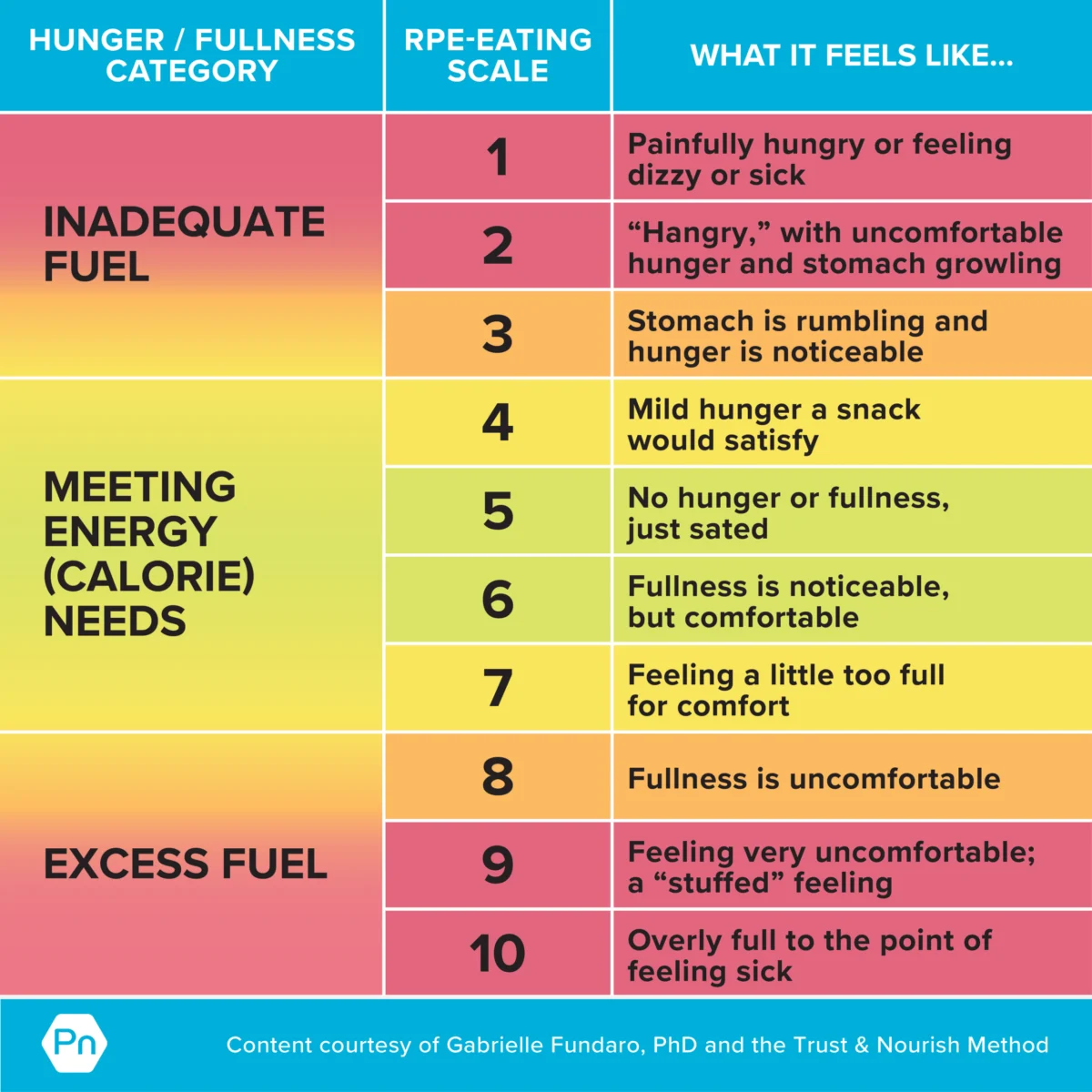
With this foundational insight, the RPE-Eating Scale was born. Dr. Fundaro adapted the 0-10 RPE framework to gauge internal hunger and fullness cues, providing a structured yet highly personalized system for navigating food choices. This innovative method has since empowered Dr. Fundaro and her clients to regain confidence and self-trust around food, improve nutritional awareness and competence, and ultimately, liberate themselves from the confines of rigid food tracking. Dr. Fundaro, the nutrition expert who once feared giving up macros, now confidently trusts her eating choices, with no tracker in sight.
The RPE-Eating Scale, mirroring its fitness counterpart, provides a spectrum of internal sensations:
| Rating | Perceived Hunger/Fullness Level |
| :—– | :—————————————————————————————————————————————————————————————————————————————————————————————————————————————————————————————————————————————————————————————————————————————————————————————————————————————————————————————————————————————————————————————————————————————————————————————————————————————————————————————————————————————————————————————————————————————————————————————————————————————————————————————————————————————————————————————————————————————————————————————————————————————————————————————————————————————————————————————————————————————————————————————————————————————————————————————————————————————————————————————————————————————————————————————————————————————————————————————————————————————————————————————————————————————————————————————————————————————————————————————————————————————————————————————————————————————————————————————————————————————————————————————————————————————————————————————————————————————————————————————————————————————————————————————————————————————————————————————————————————————————————————————————————————————————————————————————————————————————————————————————————————————————————————————————————————————————————————————————————————————————————————————————————————————————————————————————————————————————————————————————————————————————————————————————————————————————————————————————————————————————————————————————————————————————————————————————————————————————————————————————————————————————————————————————————————————————————————————————————————————————————————————————————————————————————————————————————————————————————————————————————————————————————————————————————————————————————————————————————————————————————————————————————————————————————————————————————————————————————————————————————————————————————————————————————————————————————————————————————————————————————————————————————————————————————————————————————————————————————————————————————————————————————————————————————————————————————————————————————————————————————————————————————————————————————————————————————————————————————————————————————————————————————————————————————————————————————————————————————————————————————————————————————————————————————————————————————————————————————————————————————————————————————————————————————————————————————————————————————————————————————————————————————————————————————————————————————————————————————————————————————————————————————————————————————————————————————————————————————————————————————————————————————————————————————————————————————————————————————————————————————————————————————————————————————————————————————————————————————————————————————————————————————————————————————————————————————————————————————————————————————————————————————————————————————————————————————————————————————————————————————————————————————————————————————————————————————————————————————————————————————————————————————————————————————————————————————————————————————————————————————————————————————————————————————————————————————————————————————————————————————————————————————————————————————————————————————————————————————————————————————————————————————————————————————————————————————————————————————————————————————————————————————————————————————————————————————————————————————————————————————————————————————————————————————————————————————————————————————————————————————————————————————————————————————————————————————————————————————————————————————————————————————————————————————————————————————————————————————————————————————————————————————————————————————————————————————————————————————————————————————————————————————————————————————————————————————————————————————————————————————————————————————————————————————————————————————————————————————————————————————————————————————————————————————————————————————————————————————————————————————————————————————————————————————————————————————————————————————————————————————————————————————————————————————————————————————————————————————————————————————————————————————————————————————————————————————————————————————————————————————————————————————————————————————————————————————————————————————————————————————————————————————————————————————————————————————————————————————————————————————————————————————————————————————————————————————————————————————————————————————————————————————————————————————————————————————————————————————————————————————————————————————————————————————————————————————————————————————————————————————————————————————————————————————————————————————————————————————————————————————————————————————————————————————————————————————————————————————————————————————————————————————————————————————————————————————————————————————————————————————————————————————————————————————————————————————————————————————————————————————————————————————————————————————————————————————————————————————————————————————————————————————————————————————————————————————————————————————————————————————————————————————————————————————————————————————————————————————————————————————————————————————————————————————————————————————————————————————————————————————————————————————————————————————————————————————————————————————————————————————————————————————————————————————————————————————————————————————————————————————————————————————————————————————————————————————————————————————————————————————————————————————————————————————————————————————————————————————————————————————————————————————————————————————————————————————————————————————————————————————————————————————————————————————————————————————————————————————————————————————————————————————————————————————————————————————————————————————————————————————————————————————————————————————————————————————————————————————————————————————————————————————————————————————————————————————————————————————————————————————————————————————————————————————————————————————————————————————————————————————————————————————————————————————————————————————————————————————————————————————————————————————————————————————————————————————————————————————————————————————————————————————————————————————————————————————————————————————————————————————————————————————————————————————————————————————————————————————————————————————————————————————————————————————————————————————————————————————————————————————————————————————————————————————————————————————————————————————————————————————————————————————————————————————————————————————————————————————————————————————————————————————————————————————————————————————————————————————————————————————————————————————————————————————————————————————————————————————————————————————————————————————————————————————————————————————————————————————————————————————————————————————————————————————————————————————————————————————————————————————————————————————————————————————————————————————————————————————————————————————————————————————————————————————————————————————————————————————————————————————————————————————————————————————————————————————————————————————————————————————————————————————————————————————————————————————————————————————————————————————————————————————————————————————————————————————————————————————————————————————————————————————————————————————————————————————————————————————————————————————————————————————————————————————————————————————————————————————————————————————————————————————————————————————————————————————————————————————————————————————————————————————————————————————————————————————————————————————————————————————————————————————————————————————————————————————————————————————————————————————————————————————————————————————————————————————————————————————————————————————————————————————————————————————————————————————————————————————————————————————————————————————————————————————————————————————————————————————————————————————————————————————————————————————————————————————————————————————————————————————————————————————————————————————————————————————————————————————————————————————————————————————————————————————————————————————————————————————————————————————————————————————————————————————————————————————————————————————————————————————————————————————————————————————————————————————————————————————————————————————————————————————————————————————————————————————————————————————————————————————————————————————————————————————————————————————————————————————————————————————————————————————————————————————————————————————————————————————————————————————————————————————————————————————————————————————————————————————————————————————————————————————————————————————————————————————————————————————————————————————————————————————————————————————————————————————————————————————————————————————————————————————————————————————————————————————————————————————————————————————————————————————————————————————————————————————————————————————————————————————————————————————————————————————————————————————————————————————————————————————————————————————————————————————————————————————————————————————————————————————————————————————————————————————————————————————————————————————————————————————————————————————————————————————————————————————————————————————————————————————————————————————————————————————————————————————————————————————————————————————————————————————————————————————————————————————————————————————————————————————————————————————————————————————————————————————————————————————————————————————————————————————————————————————————————————————————————————————————————————————————————————————————————————————————————————————————————————————————————————————————————————————————————————————————————————————————————————————————————————————————————————————————————————————————————————————————————————————————————————————————————————————————————————————————————————————————————————————————————————————————————————————————————————————————————————————————————————————————————————————————————————————————————————————————————————————————————————————————————————————————————————————————————————————————————————————————————————————————————————————————————————————————————————————————————————————————————————————————————————————————————————————————————————————————————————————————————————————————————————————————————————————————————————————————————————————————————————————————————————————————————————————————————————————————————————————————————————————————————————————————————————————————————————————————————————————————————————————————————————————————————————————————————————————————————————————————————————————————————————————————————————————————————————————————————————————————————————————————————————————————————————————————————————————————————————————————————————————————————————————————————————————————————————————————————————————————————————————————————————————————————————————————————————————————————————————————————————————————————————————————————————————————————————————————————————————————————————————————————————————————————————————————————————————————————————————————————————————————————————————————————————————————————————————————————————————————————————————————————————————————————————————————————————————————————————————————————————————————————————————————————————————————————————————————————————————————————————————————————————————————————————————————————————————————————————————————————————————————————————————————————————————————————————————————————————————————————————————————————————————————————————————————————————————————————————————————————————————————————————————————————————————————————————————————————————————————————————————————————————————————————————————————————————————————————————————————————————————————————————————————————————————————————————————————————————————————————————————————————————————————————————————————————————————————————————————————————————————————————————————————————————————————————————————————————————————————————————————————————————————————————————————————————————————————————————————————————————————————————————————————————————————————————————————————————————————————————————————————————————————————————————————————————————————————————————————————————————————————————————————————————————————————————————————————————————————————————————————————————————————————————————————————————————————————————————————————————————————————————————————————————————————————————————————————————————————————————————————————————————————————————————————————————————————————————————————————————————————————————————————————————————————————————————————————————————————————————————————————————————————————————————————————————————————————————————————————————————————————————————————————————————————————————————————————————————————————————————————————————————————————————————————————————————————————————————————————————————————————————————————————————————————————————————————————————————————————————————————————————————————————————————————————————————————————————————————————————————————————————————————————————————————————————————————————————————————————————————————————————————————————————————————————————————————————————————————————————————————————————————————————————————————————————————————————————————————————————————————————————————————————————————————————————————————————————————————————————————————————————————————————————————————————————————————————————————————————————————————————————————————————————————————————————————————————————————————————————————————————————————————————————————————————————————————————————————————————————————————————————————————————————————————————————————————————————————————————————————————————————————————————————————————————————————————————————————————————————————————————————————————————————————————————————————————————————————————————————————————————————————————————————————————————————————————————————————————————————————————————————————————————————————————————————————————————————————————————————————————————————————————————————————————————————————————————————————————————————————————————————————————————————————————————————————————————————————————————————————————————————————————————————————————————————————————————————————————————————————————————————————————————————————————-How to stop focusing on macros without losing your physique.
Dr. Gabrielle Fundaro, a highly accomplished professional with a PhD in Human Nutrition, a decade-plus of nutrition coaching experience, and six powerlifting competitions, found herself trapped in a rigid relationship with food. Despite her extensive knowledge and practical experience, she candidly admitted that years of meticulous macro tracking had become a burden, fostering anxiety rather than confidence around her food choices. Her internal struggle, "I worried that if I stopped tracking macros, I would lose my physique," encapsulates a pervasive fear among fitness enthusiasts and body-conscious individuals. This article delves into Dr. Fundaro’s journey, the innovative solution she developed—the RPE-Eating Scale—and how it offers a pathway to food freedom, self-trust, and sustained nutritional awareness without the constant vigilance of macro counting.
The Evolution of a Nutrition Expert’s Personal Challenge
For many years, macro tracking served Dr. Fundaro well. It provided a structured approach to eating, aligning her diet with her demanding powerlifting regimen and academic understanding of human nutrition. The precision of tracking macronutrients—proteins, carbohydrates, and fats—allowed for optimized fuel, recovery, and body composition management, which is often crucial for competitive athletes. Indeed, numerous studies and anecdotal evidence support the efficacy of macro tracking for specific goals like muscle gain, fat loss, or performance enhancement, particularly when guidance from a qualified professional is involved. It offers a tangible way to understand the nutritional content of food and make informed choices.
However, the efficacy of a tool can diminish when its application becomes excessively rigid or long-term. For Dr. Fundaro, the initial benefits gradually gave way to significant mental fatigue. The constant need to measure, log, and balance her macros began to overshadow the joy of eating. Simple pleasures, like choosing an item off a restaurant menu without calculating its nutritional breakdown, became sources of stress. This psychological burden is a frequently reported side effect of prolonged, strict dietary tracking, which can inadvertently lead to disordered eating patterns, increased anxiety, and a diminished sense of intuitive eating. Research indicates that while tracking can enhance awareness, an over-reliance on external metrics can erode internal hunger and fullness cues, fostering a disconnect from the body’s natural signals.
The idea of discontinuing macro tracking triggered a cascade of anxieties for Dr. Fundaro. The fear of losing muscle mass due to insufficient protein intake, the worry of unexpected fat gain from overeating, and the profound concern about losing her ability to fuel herself without external guidance were paramount. Beyond personal fears, there was also the professional implication: "What does that say about me as an expert in the field of nutrition?" This highlights the immense pressure, both internal and external, that professionals in health and fitness often face to embody the very practices they advocate, even when those practices become personally unsustainable.
Seeking a Balanced Alternative: Beyond Extremes
Driven by her growing dissatisfaction, Dr. Fundaro embarked on a quest for a more sustainable and psychologically healthier approach to nutrition. She sought a method that would support her physical goals while simultaneously cultivating a sense of freedom and peace around food.
Traditional calorie counting was immediately dismissed as it merely replaced one set of numbers with another, offering no true liberation from the restrictive mindset. The core issue, she realized, was the reliance on external metrics rather than internal wisdom.
Intuitive eating, which encourages individuals to honor hunger and fullness cues and eat what their body desires, presented a different challenge. After years of overriding her body’s natural signals with precise macro targets, Dr. Fundaro’s interoceptive awareness—her ability to sense internal bodily states—had diminished. She felt she lacked the necessary trust in her own instincts to fully embrace an entirely intuitive approach and desired a framework that offered some structure during this re-learning phase. This is a critical point for many who transition from highly restrictive diets; jumping directly to unguided intuitive eating can be overwhelming without a bridge to re-establish body awareness.
The "Aha!" Moment: RPE’s Crossover Potential
The breakthrough came from an unlikely, yet profoundly logical, source: her powerlifting training. Dr. Fundaro had been successfully incorporating the Rate of Perceived Exertion (RPE) scale into her workouts. The RPE scale, initially developed by Gunnar Borg in the 1960s, is a subjective measure of exercise intensity. While Borg’s original scale ranged from 6 to 20, modern adaptations often use a simpler 0-10 scale, where 0 is no exertion and 10 is maximum effort.
In fitness, RPE empowers individuals to gauge their effort level during training sessions, allowing for dynamic adjustments based on daily readiness, fatigue, and recovery. For instance, instead of rigidly aiming for a specific weight for a certain number of repetitions, a lifter might aim for an RPE of 8, meaning they have only two repetitions left in the tank. This autoregulatory approach allows for flexible training that optimizes performance and minimizes overtraining, as evidenced by numerous studies in sports science. Dr. Fundaro found that by using RPE, she was not only achieving better strength gains but also experiencing improved recovery. This blend of objective structure (the numerical scale) and subjective interpretation (her personal feeling of effort) resonated deeply.
It was then that the profound realization struck her: if RPE could provide a flexible yet structured guide for physical exertion, why couldn’t a similar framework be applied to the equally subjective experience of eating? This epiphany laid the groundwork for the RPE-Eating Scale.
The RPE-Eating Scale: A New Paradigm for Nutritional Awareness
The RPE-Eating Scale is Dr. Fundaro’s innovative adaptation of the RPE concept to hunger and fullness. It provides a 0-10 scale for assessing internal cues related to energy intake, much like the fitness RPE assesses physical effort.
The RPE-Eating Scale:
| Rating | Perceived Hunger/Fullness Level | Fuel Category |
|---|