
The casual remark, uttered by a highly competent legal professional named Anna, underscored a pervasive challenge confronting modern public health: the tendency to seek specialized, often niche, solutions for fundamental well-being issues, frequently overlooking the profound impact of basic, consistent lifestyle choices. Anna, known for her critical thinking and ability to discern superficial trends, found herself exploring a new BPA-free tupperware set as a potential avenue to address a long-standing goal of losing 15 pounds. This focus emerged from recent readings suggesting microplastics in food containers could disrupt hormones and contribute to weight gain.
This revelation came shortly after Anna had candidly shared her struggles with gym consistency, reliance on takeout meals, and a habit of sacrificing sleep for late-night "doom scrolling." When queried about prioritizing more fundamental changes—like consistent workouts or home-cooked meals—her response was telling: "Yeah, but I’ve tried that a thousand times. If it were that simple, it would have worked already." This sentiment encapsulates a widespread societal trap: the deferral or dismissal of difficult, yet demonstrably effective, habit changes in favor of perceived "magic bullets" that promise transformative results with less effort.
The Pervasive Allure of "Magic Bullets"
The human inclination to seek quick fixes for complex problems is not new, but it has been amplified in the modern era. From the rise of fad diets in the mid-20th century, promising rapid weight loss through extreme caloric restriction or specific food group eliminations, to contemporary trends like detox cleanses, biohacking supplements, and highly specialized exercise regimens, the market for "easy buttons" in health and wellness continues to thrive. Social media platforms and the burgeoning wellness industry often play a significant role in promoting these niche solutions, frequently backed by anecdotal evidence or preliminary research, rather than robust scientific consensus.
This continuous search for novel approaches often distracts individuals from the core tenets of health. Hours are spent researching the "ultimate" workout program or the "optimal" superfood, time that could otherwise be dedicated to simply executing a basic, effective routine already understood. The act of purchasing new gear, subscribing to a popular supplement, or consuming content about potential changes can create a temporary illusion of progress. Similarly, waiting for the "perfect" moment—more inspiration, motivation, or less busyness—can indefinitely delay meaningful action. Yet, genuine, lasting change only materializes through consistent, tangible efforts, however unglamorous they may seem. Humans are adept at devising intricate psychological mechanisms to sidestep the unsexy, often difficult, actions that truly drive improvement.
The "Basics Barrier": A Critical Public Health Challenge
The foundational pillars of good health are remarkably simple and widely understood: regular exercise, a diet rich in nutritious, minimally processed foods, adequate protein intake, consistent quality sleep, and the avoidance or reduction of excessive alcohol and drug consumption. While additional factors like positive social relationships and stress management are also crucial, even the initial list of five core behaviors is infrequently met. Data from various public health organizations consistently highlight this "basics barrier."
According to a study referenced in the original discussion, only a meager six percent of Americans consistently perform all five basic health behaviors. This staggering statistic implies that nearly 94 percent of the population struggles with adherence to these fundamental practices. Expanding this to include slightly more advanced, yet still basic, behaviors—such as consuming five servings of fruits and vegetables daily, optimizing protein intake, and effective stress management—would likely shrink this percentage even further.
The implications of this widespread non-adherence are profound. Public health bodies like the Centers for Disease Control and Prevention (CDC) and the World Health Organization (WHO) consistently report alarming rates of lifestyle-related chronic diseases. Obesity rates continue to climb globally, contributing to the soaring prevalence of Type 2 diabetes, cardiovascular diseases, and certain cancers. Physical inactivity remains a significant risk factor, with a substantial portion of adults failing to meet recommended guidelines for aerobic and strength-training activities. Dietary patterns are often characterized by high intake of ultra-processed foods, refined sugars, and unhealthy fats, while consumption of whole fruits, vegetables, and lean proteins lags. Furthermore, chronic sleep deprivation has become an epidemic, linked to impaired cognitive function, weakened immune systems, and an increased risk of metabolic disorders. These statistics underscore that the challenge is not a lack of knowledge about healthy behaviors, but a pervasive struggle with consistent execution.
Expert Perspectives: Unpacking Behavioral Traps
Behavioral psychologists and public health experts offer crucial insights into why individuals, even those with high cognitive abilities, fall into these traps. Several cognitive biases contribute to the "basics barrier":

-
Ambition Overload (The Planning Fallacy): Many individuals, when motivated to change, set overly ambitious goals, creating elaborate plans to overhaul multiple aspects of their lives simultaneously. This often involves a "planning fallacy," where people underestimate the time, energy, and resources required to complete tasks, especially when projecting into the future. They overestimate their future self’s capacity for discipline and motivation, leading to an unrealistic expectation that a radically different lifestyle can be adopted overnight. This initial burst of idealistic planning provides temporary psychological relief, but the complexity and demands of such grand schemes often clash with the realities of an already busy life, leading to rapid burnout and feelings of failure. This self-blame ("lack of willpower") then reinforces a narrative of struggle, fulfilling a self-defeating prophecy.
-
Belief in Niche or "Cutting-Edge" Solutions (Novelty Effect & Distrust of Simplicity): The notion that "if it were that simple, everyone would be healthy" is a deeply ingrained belief. This mindset drives individuals away from proven fundamentals towards the allure of novelty. New diets, supplements, or exercise gadgets promise an advantage, a secret, or an easier path that supposedly bypasses the common struggles. This can be attributed to the "novelty effect," where new experiences are inherently more engaging and exciting than repetitive, familiar ones. Moreover, a certain distrust of simple advice can arise; if basic behaviors are so effective, why isn’t everyone performing them? This leads to a search for more complex, "expert" solutions, which often prove unsustainable, inaccessible, or ineffective, ultimately distracting from the core actions that genuinely yield results.
-
The Pursuit of Perfection (All-or-Nothing Thinking): A significant barrier is the belief that efforts and results must be flawless to be meaningful. The health and fitness industry often implicitly or explicitly promotes an image of unattainable perfection—organic-only diets, marathon-running capabilities, and rigid morning routines. This "all-or-nothing" mentality leads to paralysis. When individuals inevitably fall short of an idealized standard, they often abandon their efforts entirely, viewing any deviation from perfection as a complete failure. This overlooks the fundamental truth that human health is inherently imperfect and subject to the unpredictable nature of life—stressful work periods, family demands, illness, or seasonal indulgences. Accepting that "perfect" health is an illusion and that even highly healthy individuals face challenges can be vulnerable, but it is crucial for sustainable progress. The irony is that accommodating one’s "worst self"—the one prone to indulgence or inertia—is often essential for achieving a realistic "best self."
Overcoming the Inertia: Strategies for Sustainable Change
Recognizing these behavioral traps is the first step towards fostering more effective and sustainable health habits. Public health initiatives and individual coaching strategies emphasize a pragmatic, compassionate approach to change:
-
Explore the "Why" Before the "How": Before embarking on any change, a deep exploration of underlying motivations is critical. Understanding why a particular change is desired, and being clear about the consequences of not taking action, provides a more profound and enduring drive. Techniques like "The 5 Whys" help individuals drill down to core values and intrinsic motivations, which are far more resilient than superficial desires when challenges arise. This intrinsic motivation acts as a sustained force, propelling individuals forward even when external motivation wanes.
-
Prioritize High-Impact Actions: Effective change necessitates realistic prioritization. It’s impossible to do "all the things" simultaneously. Focusing on the most impactful actions related to a specific goal—typically encompassing movement, nutrition, and recovery practices—is paramount. This aligns with the Pareto principle, where 20% of efforts yield 80% of results. For instance, instead of attempting a complete dietary overhaul, starting with increasing vegetable intake or ensuring adequate protein can have disproportionately positive effects. Selecting one or two specific, achievable daily actions within these domains ensures focus and prevents ambition overload.
-
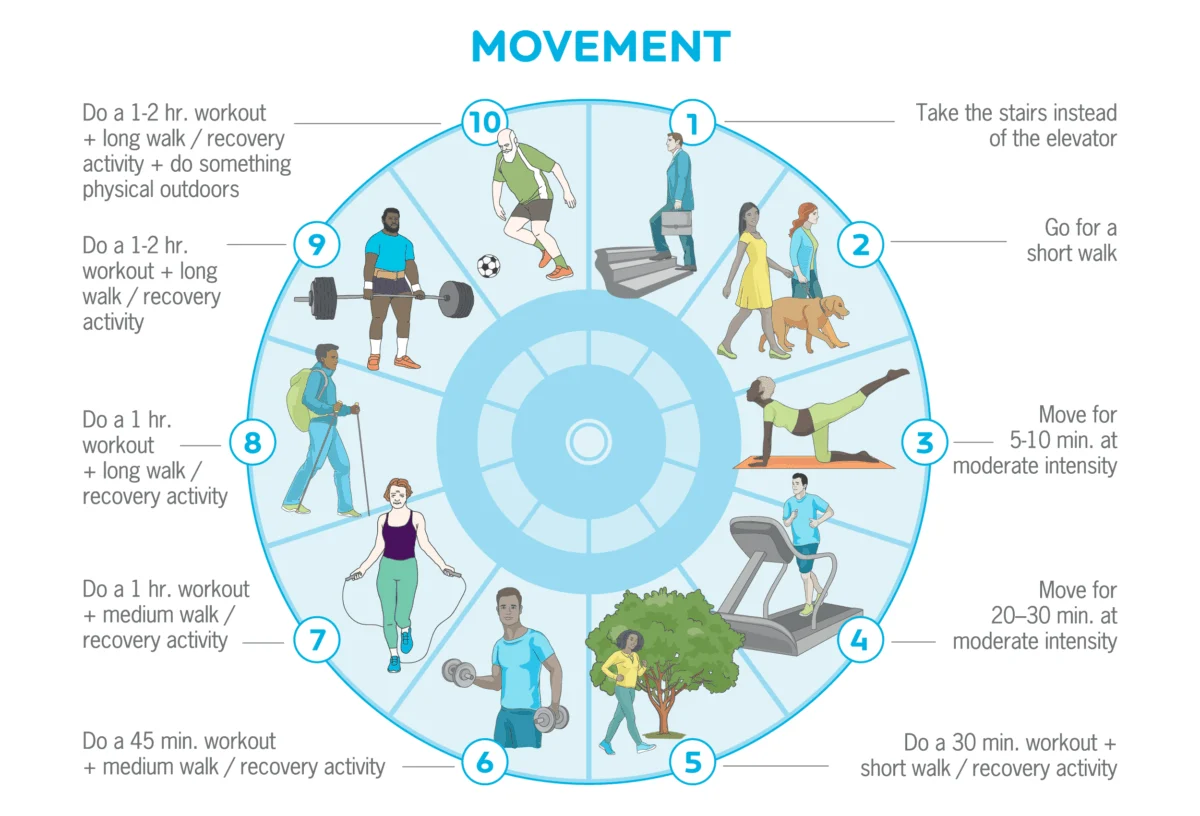
Implement the "Floor and Ceiling" Approach for Flexibility: Acknowledging the unpredictable nature of life, adopting a flexible goal-setting strategy is vital. This involves defining a "floor"—the absolute minimum action that can be consistently performed even on the worst day (e.g., five minutes of walking, one extra serving of vegetables)—and a "ceiling"—the maximum effort achievable on an ideal day (e.g., an hour-long intense workout, comprehensive meal prep). This creates a flexible range of actions, allowing individuals to "dial" their efforts up or down based on life’s demands. Crucially, performing the "floor" action is considered a success, not a failure. This paradigm shift—viewing health habits as being on a dial rather than an on/off switch—fosters consistency and prevents the abandonment of efforts during challenging periods.
-
Engineer a Supportive Ecosystem: Willpower and good intentions alone are often insufficient for sustained behavioral change. A more powerful strategy involves proactively shaping one’s environment to make desired actions the "obvious" choice and undesired actions more difficult. This concept, known as "choice architecture" or "environmental nudges," recognizes that our surroundings significantly influence our behaviors. Examples include conducting a "kitchen makeover" to stock healthy foods prominently and relegate less healthy options to inaccessible locations, or strategically placing workout clothes where they are easily seen. Public health research consistently shows that access is a primary driver of behavior; people in neighborhoods with affordable, healthy food options eat better, and those with accessible gyms exercise more. While large-scale environmental changes might be challenging, individuals can exert considerable control over their immediate surroundings by making healthy options more convenient and unhealthy ones less so, thus building an ecosystem that makes failing nearly impossible.
The Long-Term Imperative: Embracing "Good Enough"
The journey to better health is rarely linear and almost never perfect. For individuals accustomed to striving for perfection, particularly in academic or professional settings, the concept of "C+ effort" can be challenging to accept. However, this approach advocates for compassion and acceptance of inherent human imperfection. It emphasizes working with vulnerabilities rather than constantly battling against them. There will be periods of peak performance, where "A" efforts are possible and celebrated. But equally important is the ability to sustain "C+" efforts during less ideal times, knowing that consistent "good enough" far surpasses sporadic attempts at perfection followed by abandonment.
Ultimately, living a healthy and meaningful life requires a continuous commitment to doing one’s best, while simultaneously embracing flexibility, acknowledging mistakes, and navigating through challenging days or seasons. The true power lies not in the elusive pursuit of flawlessness, but in the enduring consistency of fundamental actions. In a world saturated with complex health claims and quick-fix promises, the enduring wisdom of focusing on the basics—and executing them with compassionately consistent effort—remains the most effective and sustainable path to well-being. The collective societal benefit of widespread adoption of these foundational behaviors would be transformative, addressing many of the chronic health crises that plague modern populations.