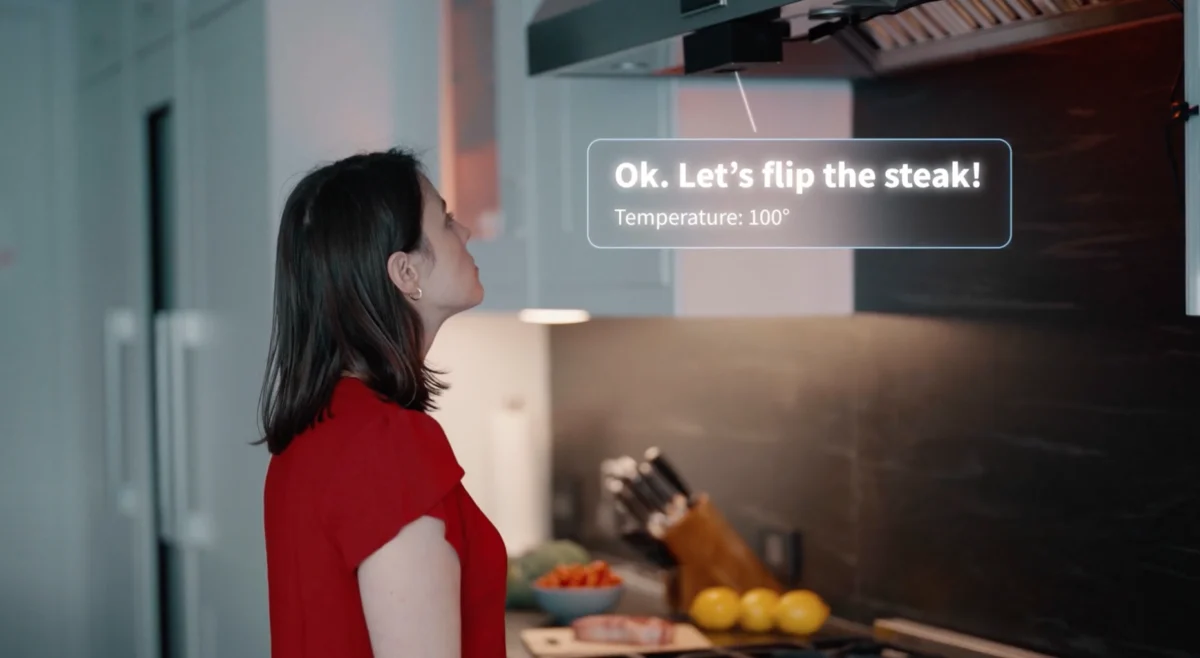

The bustling innovation landscape of CES 2026, typically a showcase for futuristic robotics and ambitious smart home concepts, might have led some to expect a new kitchen assistant from startup Gambit Robotics to resemble the many anthropomorphic machines that roamed the Las Vegas convention floor. However, Gambit’s latest offering, poised for a Kickstarter launch on January 27th, presents a more familiar, yet technologically advanced, approach to home cooking. This device, rather than a physical robot, draws inspiration from the guided cooking systems that began to emerge in the smart kitchen over the past decade, enhanced with a sophisticated computer-vision-driven twist.
The AI Sous Chef: Gambit’s Vision for the Modern Kitchen
At the heart of Gambit Robotics’ innovation is the eponymous "Gambit," an AI sous chef designed to demystify the cooking process and empower home cooks of all skill levels. This device, positioned above the stovetop, utilizes an AI-powered computer vision system to meticulously monitor the cooking environment. By detecting heat patterns and tracking the progress of food in the pan, Gambit can observe what is happening directly on the cooktop, monitor burner activity in real-time, and sense subtle temperature fluctuations.
The system’s versatility lies in its ability to ingest a wide range of culinary instructions. Users can input recipes from various sources, including websites, photographs of handwritten recipe cards, or cherished family favorites. Gambit then intelligently breaks down these recipes into actionable steps, providing guidance as the user cooks. This interaction is facilitated by a "conversational" voice interface and a companion Gambit application, offering a seamless and intuitive user experience.
Nicole Maffeo, co-founder of Gambit Robotics, emphasizes the system’s adaptive nature. "Gambit provides guidance and coaching that you can turn on or off," she explained. "It includes educational nudges designed to help users improve over time. You can even leave the kitchen with confidence, knowing Gambit is keeping an eye on things." This capability is particularly significant for busy households where multitasking is a necessity.
A Broader Ecosystem: The Future Beyond the Stovetop
While the immediate focus is on the Gambit device, the company’s long-term vision extends far beyond a single kitchen appliance. Maffeo and co-founder Eliot Horowitz envision an interconnected ecosystem of kitchen assistants. This future ecosystem would incorporate devices capable of understanding the contents of a user’s pantry and refrigerator, seamlessly integrating grocery shopping, meal planning, and the execution of those plans.
This ambitious roadmap is built upon a robust platform developed by Horowitz for his company, Viam. Viam has been described as a "WordPress for robotics," providing a foundational layer for developing and deploying robotic systems. This underlying technology allows Gambit to explore future integrations, potentially including robotic arms for more automated kitchen tasks or deeper integrations with existing smart appliances.
In the near term, Gambit Robotics is actively exploring software licensing opportunities with appliance manufacturers. The company aims to integrate its advanced computer vision and thermal sensing technology into existing kitchen hardware, such as range hoods. "We don’t need to own every piece of hardware," Maffeo stated. "If there’s a hood above a stove, that software should be there." This strategy suggests a commitment to widespread adoption and a desire to embed their AI capabilities into the fabric of modern kitchens.
The Genesis of Gambit: A Timeline of Innovation
The journey of Gambit Robotics is rooted in the founders’ extensive experience in technology and robotics. Eliot Horowitz, a co-founder of MongoDB, brought his expertise in building scalable data platforms to the venture. Nicole Maffeo, with her background in product development and user experience, complements Horowitz’s technical acumen.
The development of Gambit can be seen as a response to the evolving demands of the home kitchen and the advancements in artificial intelligence. The initial exploration into guided cooking systems began roughly a decade ago, with companies like Hestan, ChefSteps, and Thermomix pioneering the integration of software, sensors, and cooking hardware. While these early efforts faced challenges in achieving widespread consumer adoption, they laid the groundwork for what is now possible with more sophisticated AI.

Gambit’s emergence at CES 2026 signifies a maturation of these concepts, leveraging recent breakthroughs in machine learning and computer vision to offer a more intelligent and adaptable cooking assistant. The decision to launch on Kickstarter reflects a strategy to engage directly with early adopters, gather valuable feedback, and build a community around their product before a broader retail rollout.
Supporting Data and Market Context
The smart kitchen market has seen steady growth, with various reports indicating a rising consumer interest in connected appliances and automated solutions. According to a recent industry analysis, the global smart kitchen market was valued at approximately $15 billion in 2023 and is projected to grow at a compound annual growth rate (CAGR) of over 12% through 2030. This growth is driven by factors such as increasing disposable incomes, the proliferation of smart home technology, and a growing demand for convenience and efficiency in daily tasks.
However, the "guided cooking" segment has historically presented unique challenges. Products that relied on proprietary smart cookware or appliances often faced high price points and limited interoperability. Gambit’s approach, focusing on a mountable device that works with existing cookware and recipes, aims to circumvent some of these barriers.
The pricing strategy for Gambit includes a retail price point of approximately $500 for the hardware, with early Kickstarter backers expected to receive a discount. This is complemented by a monthly subscription fee, anticipated to range between $9 and $15. This subscription model is becoming increasingly common in the smart home sector, providing ongoing revenue for software updates, new features, and enhanced AI capabilities. The company is targeting the third quarter of the current year for product shipments to consumers.
Analysis of Implications and Future Outlook
Gambit Robotics’ innovative approach to guided cooking presents both significant opportunities and potential hurdles. The technology itself is undoubtedly impressive, showcasing the power of AI and computer vision in a practical, everyday application. The involvement of experienced entrepreneurs like Horowitz and Maffeo lends credibility to the venture and suggests a strong foundation for future development.
One key challenge for Gambit will be consumer comprehension. The product is not a cooking device in itself but a guidance system. Clearly communicating its value proposition – that it assists and educates rather than physically cooks – will be crucial for market penetration. The promised benefits, while similar to those offered by earlier guided cooking products, will need to be demonstrably superior and more accessible to justify the investment.
The pricing structure, a $500 device coupled with a monthly subscription, represents a considerable commitment for consumers. Historically, consumers have shown a degree of reluctance to invest in entirely new kitchen product categories, especially at this price point. The success of Gambit will hinge on its ability to convince consumers that the enhanced cooking experience, reduced food waste, and potential for skill improvement are worth the ongoing cost.
Despite these challenges, the potential for Gambit to redefine guided cooking is substantial. By leveraging AI and a modular platform, the company is well-positioned to adapt and evolve. The integration of computer vision and thermal sensing offers a unique level of insight into the cooking process, enabling more precise guidance and preventative measures against common cooking errors, such as burning food.
The broader implication of Gambit’s strategy is the potential to democratize advanced cooking techniques. By breaking down complex recipes and providing real-time feedback, the system can empower individuals to explore a wider range of culinary creations, fostering greater confidence and enjoyment in the kitchen.
As Gambit Robotics embarks on its Kickstarter campaign, the industry will be watching closely. The company’s success could signal a new wave of AI-driven kitchen innovation, moving beyond novelty gadgets to provide tangible, intelligent assistance that enhances the daily lives of home cooks. The integration of AI into our kitchens, once a distant futuristic concept, appears to be rapidly becoming a present-day reality, and Gambit Robotics is poised to play a significant role in this evolution, paving the way for a future where guided cooking is more accessible, intelligent, and ultimately, more successful.