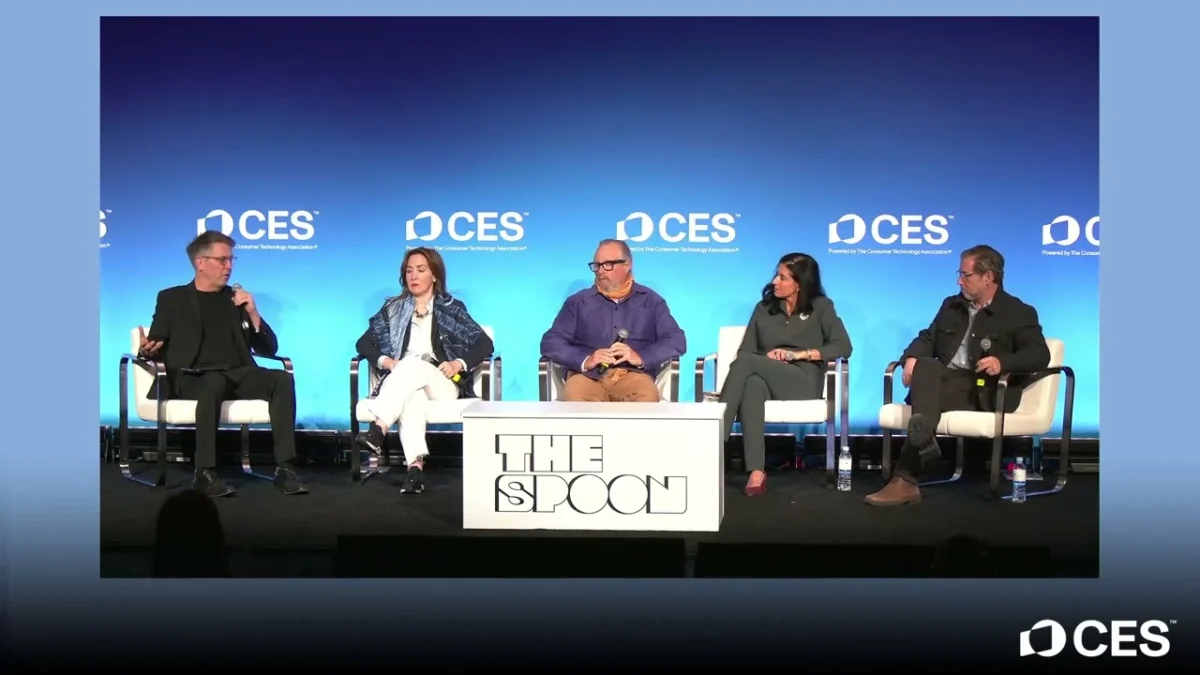

The transformative power of real-time physiological data, particularly continuous glucose monitoring (CGM), was a central theme at CES 2026, as explored during The Spoon’s Food Tech Conference. The widespread availability of over-the-counter CGMs, like the Stelo device, is not only revolutionizing personal dietary habits but also igniting discussions about their potential to reshape public health outcomes on a global scale. This paradigm shift is driven by the unprecedented volume of personalized data, offering individuals actionable insights that were previously confined to clinical settings.
The Personal Revelation of Continuous Glucose Monitoring
The journey of understanding one’s own body through technology was vividly illustrated by a personal account that served as a catalyst for this discussion. After adopting a Stelo CGM for a few weeks, the profound impact on dietary choices became evident. The stark revelation that sugary snacks caused blood sugar levels to "shoot into the stratosphere," while salads and vegetables maintained them at manageable levels, underscored the device’s educational value. Furthermore, the immediate effect of light exercise, even a brief post-meal walk, in swiftly bringing glucose levels down, highlighted the dynamic interplay between lifestyle and metabolic health. This personal experience naturally led to a broader question: could democratizing access to CGMs and their associated insights lead to a significant improvement in societal health over time? The potential for millions to experience similar dietary awakenings fueled the exploration of this concept.
CES 2026: A Nexus for Health Tech Innovation
The annual Consumer Electronics Show (CES) in Las Vegas serves as a critical barometer for emerging technologies across various sectors, including health and wellness. CES 2026, held in early January, featured a significant focus on digital health, with innovations ranging from advanced wearables to AI-driven diagnostics. The Spoon’s Food Tech Conference, a recurring event within CES, provided a dedicated platform for thought leaders to delve into the intersection of technology, food, and health. The session titled "From Brainwaves to Blood Sugar: How Next-Gen Tech Shapes Diets" was strategically curated to encompass a diverse range of perspectives, featuring experts from the medical field, burgeoning startups, venture capital, and academic research. This deliberate mix aimed to foster a comprehensive dialogue on the current state and future trajectory of health-influencing technologies.
The Data Deluge: From Sparse Readings to Rich Insights
Dr. Howard Zisser, a physician and a veteran in diabetes technology development, who was instrumental in the early iterations of CGM systems in the early 2000s, emphasized the paradigm shift brought about by over-the-counter CGMs. Historically, CGM technology was exclusively designed for individuals diagnosed with diabetes. However, the advent of accessible, non-prescription devices has democratized this powerful tool. "Instead of one or two readings a day, you suddenly have 300, 500, 600 readings a day," Dr. Zisser explained. "You start to see trends. What happens when you fast, when you exercise, during a menstrual cycle. You get a rich data set that’s your data personally." This wealth of information allows users to move beyond generalized dietary advice and understand the precise impact of their choices on their individual physiology.
The actionable nature of glucose data was a key point of discussion. Unlike more elusive biomarkers such as cortisol, which are challenging to influence in real-time, glucose levels are highly responsive to immediate behavioral changes. "You see it, and you can change your behavior," Dr. Zisser stated. "Next time, you make a different choice." He drew a compelling analogy to learning to drive, comparing glucose feedback to a speedometer. Without it, drivers operate on guesswork, unaware of their speed. With a speedometer, they can learn how their actions—accelerating or decelerating—translate directly into outcomes. Similarly, CGM data provides users with immediate feedback, enabling them to learn and adapt their dietary habits for better metabolic control.
Beyond Hardware: AI-Powered Glucose Prediction
While the efficacy of hardware-based CGMs is undeniable, scaling their adoption to the hundreds of millions of individuals with undiagnosed prediabetes or metabolic dysfunction presents a significant challenge. Noosheen Hashemi, founder and CEO of January AI, articulated this challenge, proposing an AI-driven alternative. Her company leverages machine learning models, trained on extensive historical CGM data, to predict glucose responses without the need for a wearable sensor. "Our claim to fame is creating the world’s first continuous glucose monitor with AI," Hashemi declared. This innovative approach utilizes inputs such as age, weight, activity level, sleep patterns, and food intake to generate directionally accurate predictions of glucose fluctuations. This technology holds the potential to reach a broader demographic, offering insights into metabolic health for those who may not opt for or be able to afford continuous sensor wear.
The Persistence Problem: Sustaining Behavioral Change
Despite the unprecedented access to actionable data, the challenge of long-term behavioral adherence remains a significant hurdle. Sherry Frey, VP of Total Wellness at NielsenIQ, presented research highlighting a common pattern: even after receiving a diagnosis and making initial dietary adjustments, individuals often revert to their previous habits within months. "We actually see about nine months in that a lot of behavior reverted," Frey observed. "When people were maybe less engaged and a little tired of having to eat differently." This trend underscores a critical insight for the health technology sector: sustained engagement requires more than just presenting raw data. It necessitates context, interpretation, and ongoing motivation to embed new behaviors into daily life.

NielsenIQ data also indicates a significant expansion in the adoption of wearables and health-tracking technologies beyond the affluent early adopter demographic. Notably, one of the fastest-growing user segments includes individuals receiving SNAP benefits. This demographic is increasingly utilizing these tools for chronic disease management rather than solely for fitness optimization, signaling a growing recognition of technology’s role in broader health equity. "The addressable market is much larger than people with diabetes," Frey asserted, emphasizing the potential for these technologies to impact a diverse range of health needs.
Actionable Insights and the Pitfalls of Misinformation
The concept of empowering consumers with data, akin to the impact of smart thermostats like Nest on energy consumption, was discussed as a potential driver for lasting change. Peter Bodenheimer, U.S. Venture Partner at PeakBridge VC, concurred that data-driven insights can indeed prompt sustained behavioral shifts, but only if they are actionable. "Insights that tell you, ‘if I do this, then something good or bad happens,’ tend to be the things that people respond to and maintain," he noted. This highlights the crucial distinction between data provision and data interpretation for behavioral impact.
However, the panel also acknowledged the potential downsides of constant physiological feedback. An overwhelming influx of data can lead to confusion, anxiety, and the propagation of misinformation. Hashemi shared an anecdote of a user who mistakenly believed their blood sugar should never exceed 110 mg/dL, a misconception likely fueled by social media rather than clinical understanding. "Metabolic fitness is how you go from fasted to fed efficiently," she clarified. "It’s a preposterous idea to keep your blood sugar the same all the time. So yes, there’s a lot of misinformation." Dr. Zisser reinforced this point, stressing that the interpretation of glucose readings is highly dependent on individual context, personal goals, and unique physiology. A glucose spike, for instance, carries vastly different implications for a professional athlete compared to an individual with diabetes or someone focused on weight loss.
The Horizon of Next-Generation Sensors and Data Ownership
Looking ahead, the discussion extended to other emerging technologies that promise deeper insights into internal bodily functions. Hashemi pointed to the development of implantable sensors capable of continuously monitoring multiple analytes for extended periods, potentially years. Research is also progressing on the real-time measurement of substances such as lactate, ketones, alcohol, and eventually insulin. "Yeah, there’s definitely implantables," Hashemi confirmed. "There’s one that reads 20 different analytes, including glucose. It lives, you have to inject it under your skin. It can live 900 days. And it’s still in animals. It’s not in humans yet. But these things are coming."
As the spectrum of measurable biological signals expands, so too do concerns surrounding data privacy, trust, and ownership. Frey highlighted a dichotomy in consumer sentiment: while many desire a unified view of their health data, a significant portion remains apprehensive about embedded sensors, fearing potential misuse of their information by insurers, governments, or corporations. Conversely, others believe that the tangible benefits derived from these technologies—such as improvements in sleep, energy levels, or cognitive focus—can foster trust over time. "No government, no doctor can make somebody healthy," Hashemi asserted. "The only person that can do that is yourself." This sentiment underscores the ultimate agency of the individual in managing their health, with technology serving as a powerful enabler.
The Dawn of Personalized Nutrition and Empowered Health
The convergence of biological data, artificial intelligence, and contextual understanding is propelling the field of personalized nutrition toward a more precise future. While perfect precision may remain elusive, the panelists concurred that the industry is making significant strides. "The gold lives in the combination of data," Hashemi remarked, envisioning a future where consumer-generated health data seamlessly integrates with clinical care, particularly within the expanding landscape of value-based healthcare models.
Ultimately, the profound promise of next-generation health technologies may lie less in the realm of perfect prediction and more in the empowerment of individuals. Dr. Zisser proposed a forward-thinking approach: introducing these feedback mechanisms to young students during their formative years, as they are learning fundamental dietary habits. "When my dad taught me how to drive, he didn’t put me in a car without a speedometer, right? It’s like, have feedback, I have information. And so to give people that access to that, and not that they would need it all the time, but so they can learn how their choices impacts their glucose," he articulated.
This pedagogical approach holds significant potential. Reflecting on personal experiences, the notion of having had early access to insights about how specific foods impacted blood sugar levels at a younger age suggests a vastly different long-term health outlook. The integration of such technologies into educational frameworks could foster a generation equipped with a deeper, more intuitive understanding of their own metabolic responses, leading to healthier choices and improved lifelong well-being. The ongoing evolution of these technologies, driven by innovation and a growing understanding of human physiology, points towards a future where individuals are more informed, empowered, and ultimately, in control of their own health journeys.