
The past year has indelibly marked global consciousness with the pervasive concept of exponential growth, a phenomenon primarily observed in the distressing context of the SARS-CoV-2 virus’s relentless spread. This mathematical principle, often counterintuitive in its progression, demonstrates how seemingly innocuous initial stages can rapidly escalate into overwhelming scale. Just as the ancient "wheat and chessboard problem" vividly illustrates—where a single grain on the first square leads to a staggering harvest on the last—exponential phenomena appear dormant for extended periods before manifesting explosive growth. This inherent characteristic partly explains why COVID-19 case numbers frequently seemed to "skyrocket out of nowhere," catching populations and public health systems off guard despite early warnings. Paradoxically, the very lockdowns and societal shifts necessitated by this exponential viral spread inadvertently catalyzed another, more positive, exponential surge: a dramatic increase in home baking, particularly with yeast. In regions like Norway, where supply chains strained under unprecedented demand, yeast sachets became a precious commodity, often sold out for weeks or even months. Yet, for many, the fundamental biological principle of yeast’s own exponential growth offered a quiet solution, ensuring a continuous supply for those who understood its simple, yet powerful, mechanism.
The Unseen Threat: Exponential Viral Propagation and Public Health
The early months of the global health crisis brought the abstract concept of exponential growth into stark, tangible reality. Epidemiologists and public health officials grappled with explaining how a handful of initial infections could, within weeks, transform into a widespread pandemic. The mathematical model underpinning viral transmission posits that if each infected individual passes the virus to more than one other person (represented by the basic reproduction number, R0), the number of cases will grow exponentially. For SARS-CoV-2, early estimates of R0 often hovered between 2 and 3, meaning each infected person could, on average, infect two or three others. This seemingly small multiplier leads to a rapid doubling of cases over time, creating the steep upward curve that became synonymous with pandemic graphs.
The counterintuitive nature of this growth curve lies in its initial slow progression. For example, if R0 is 2 and the doubling time is three days, it might take a week or two for cases to go from 10 to 40, a seemingly manageable increase. However, within another two weeks, those 40 cases could multiply to 640, and in yet another two weeks, to over 10,000. This delayed but explosive acceleration often led to a false sense of security in the early stages, followed by a sudden realization of crisis proportions as healthcare systems became overwhelmed. Public health campaigns worldwide focused on "flattening the curve" – a direct attempt to reduce the R0 through measures like social distancing, mask-wearing, and lockdowns, thereby slowing the exponential spread and buying critical time for medical preparedness.
Lockdown’s Unexpected Culinary Consequence: A Global Baking Renaissance
As societies adjusted to unprecedented lockdowns, quarantines, and remote work, millions found themselves with significantly altered daily routines and increased time at home. This dramatic shift created fertile ground for a widespread culinary phenomenon: a global renaissance in home baking. For many, baking became a therapeutic escape from the anxiety of the pandemic, offering a sense of control and comfort amidst uncertainty. The rhythmic kneading of dough, the patient waiting for it to rise, and the rewarding aroma of freshly baked bread provided solace and a tangible sense of accomplishment. Others embraced baking as a new hobby, an educational activity for children, or a practical response to concerns about food security and the availability of store-bought goods.
This surge in demand for baking ingredients had immediate and far-reaching effects on supply chains. Supermarket shelves that once held ample stocks of flour, sugar, and especially yeast, quickly emptied. Reports from various countries, including the anecdotal observation from Norway, highlighted acute shortages of instant dry yeast. Manufacturers, accustomed to predictable demand patterns, struggled to scale up production quickly enough to meet the unprecedented consumer frenzy. Retailers reported sales of flour and yeast skyrocketing by 100-200% or more in some periods, forcing consumers to adapt, often leading to innovative ingredient substitutions or a deeper dive into the science of baking itself. This period also saw a remarkable increase in interest in sourdough starters, a self-sustaining leavening agent that offered independence from commercial yeast supplies, further underscoring the ingenuity of home bakers facing shortages.
The Microscopic Engine: Understanding Yeast and its Exponential Power
At the heart of this baking revolution, and indeed many culinary traditions, lies Saccharomyces cerevisiae, commonly known as baker’s or brewer’s yeast. This single-celled microorganism is a master of exponential growth, a biological marvel that transforms simple ingredients into complex, aromatic foods. Yeast primarily reproduces asexually through a process called budding, where a new cell forms as an outgrowth of the parent cell, eventually detaching to become an independent organism.
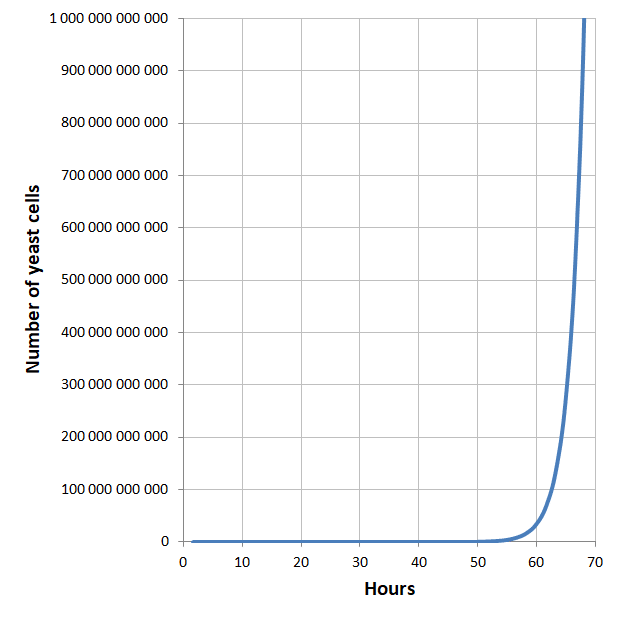
Under ideal conditions—a warm environment (typically 25-35°C or 77-95°F), ample nutrients (sugars from flour), and sufficient moisture and oxygen—a single yeast cell can complete its life cycle and divide into two new cells in approximately 100 minutes. This doubling time, though seemingly modest, underpins the remarkable exponential growth observed. Let’s trace this proliferation:
- Initial: 1 yeast cell
- After 100 minutes: 2 cells
- After 200 minutes: 4 cells
- After 24 hours (1440 minutes): With approximately 14.4 doubling cycles, the single cell could theoretically multiply into about 2^14.4 ≈ 21,900 cells. (The original article states "about 16,000 cells," reflecting real-world conditions where optimal growth might not be sustained for the entire 24 hours).
- After 48 hours (2880 minutes): Roughly 28.8 doubling cycles would yield 2^28.8 ≈ 380 million cells. (The article states "268 million cells").
- Before 3 days (e.g., 70 hours or 4200 minutes): Approximately 42 doubling cycles could result in 2^42 ≈ 4.4 trillion cells. (The article states "on the order of a trillion yeast cells").
This staggering rate of reproduction explains why a tiny amount of yeast can leaven a substantial dough given enough time. A standard 50-gram block of compressed fresh yeast, for instance, contains an estimated trillion yeast cells. Commercial yeast production facilities meticulously control environmental factors like temperature, pH, aeration, and nutrient supply (often molasses) to maximize this exponential growth for a limited period, producing vast quantities of yeast efficiently. However, in a home baking environment, conditions are rarely perfectly optimized, leading to a slower but equally effective fermentation process.
Optimizing Fermentation: The Art of Less Yeast and More Time
The principle of "less yeast, more time" became a guiding mantra for many home bakers during the ingredient shortages, transforming a necessity into a preferred technique for superior bread. This approach leverages yeast’s exponential growth while simultaneously enhancing the dough’s flavor profile and structure. When a smaller quantity of yeast is used, the fermentation process unfolds more slowly, allowing a longer period for enzymatic reactions within the dough and for the development of beneficial microorganisms.
One significant advantage of extended, slow fermentation (often referred to as bulk fermentation or cold fermentation) is the opportunity for lactic acid bacteria (LAB) to proliferate alongside the yeast. LAB, naturally present in flour, produce organic acids like lactic and acetic acid, which contribute complex, nuanced flavors and aromas to the bread, moving beyond the simple yeasty taste of quick-fermented doughs. These acids also help strengthen the gluten network, leading to a more extensible dough and a better crumb structure with larger, more irregular air pockets. Furthermore, slower fermentation can improve the digestibility of the bread by breaking down complex carbohydrates and proteins.
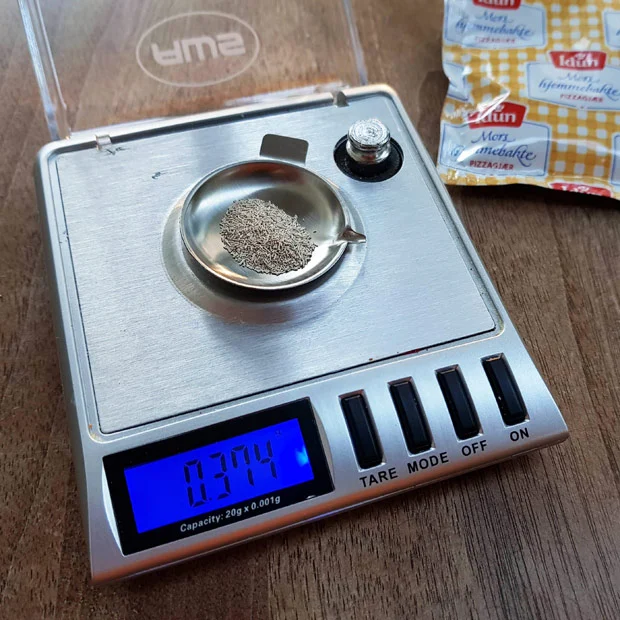
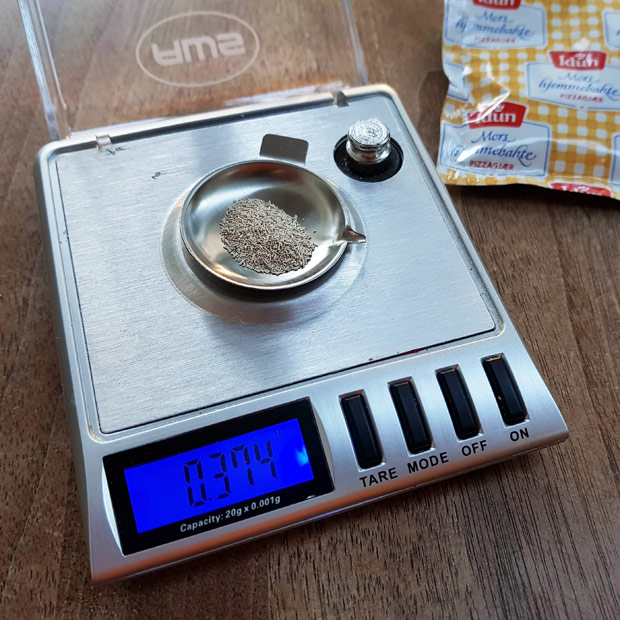
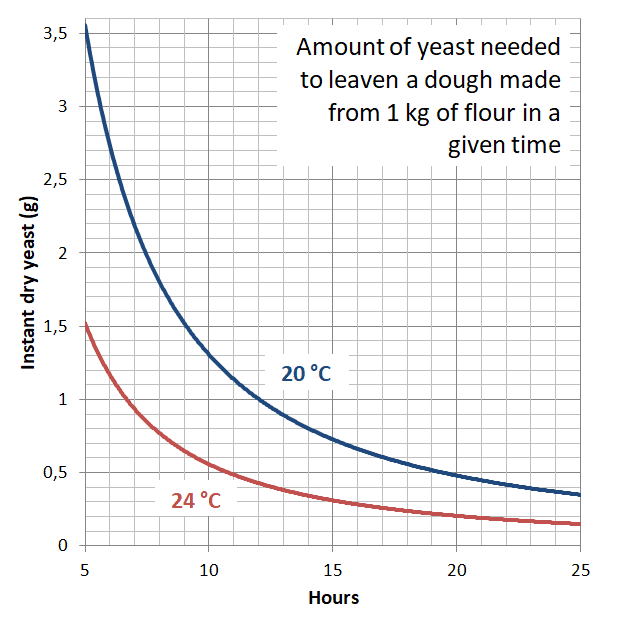
For home bakers seeking precision in this method, tools have become invaluable. Small digital balances capable of measuring quantities as minute as 0.001 grams, once considered laboratory equipment, are now readily available and affordable for kitchen use. These scales allow bakers to accurately portion the tiny amounts of instant dry yeast required for long, slow ferments. For instance, to leaven a dough made with 1 kilogram of wheat flour over 20 hours at a moderate temperature of 20°C (68°F), an astonishingly small quantity—just 0.48 grams of instant dry yeast—is sufficient. This precise measurement ensures that the dough ferments optimally without over-proofing or developing undesirable off-flavors from excessive yeast activity.
Technological Aids for the Home Baker: The PizzApp+ Revolution
The digital age has brought sophisticated tools to the home kitchen, simplifying complex baking calculations and empowering enthusiasts to achieve professional-level results. Among these, specialized baking applications have proven particularly useful for managing yeast quantities and fermentation schedules. The PizzApp+ for Android, for example, stands out as a highly practical utility for those aiming to master dough preparation, especially for pizzas.
PizzApp+ (and similar applications) revolutionizes how home bakers approach fermentation by providing a user-friendly interface to calculate precise ingredient ratios based on desired outcomes. Users can input various parameters:
- Flour Weight: The total amount of flour used in the recipe.
- Hydration: The percentage of water relative to flour, influencing dough consistency.
- Salt and Oil: Proportional amounts of these essential ingredients.
- Fermentation Time: The crucial duration for which the dough will be allowed to rise, ranging from a few hours to several days.
- Temperature: The ambient temperature during fermentation, which significantly impacts yeast activity.
- Yeast Type: The app typically allows selection between fresh compressed yeast, active dry yeast, instant dry yeast, and even liquid or firm sourdough starters, each requiring different conversion factors.
By adjusting these variables, the app dynamically calculates the exact amount of leavening agent needed. This eliminates guesswork and ensures consistent results, whether one desires a rapid rise or a prolonged, flavor-developing fermentation. For instance, the app can demonstrate how reducing the yeast from a standard 7-gram sachet to less than half a gram necessitates a much longer proofing period but yields a more complex flavor profile. Such applications not only educate bakers on the science behind their craft but also provide the precision required to conserve precious ingredients and achieve specific textural and aromatic qualities in their baked goods.
Sourdough vs. Instant Yeast: A Culinary Conundrum
The pandemic-induced baking boom also sparked a significant debate and exploration into the merits of sourdough versus instant dry yeast. While instant dry yeast offered convenience and predictability, the allure of sourdough, with its self-sustaining starter and complex flavor profile, captivated many.
Sourdough relies on a "starter," a symbiotic culture of wild yeasts and lactic acid bacteria cultivated from flour and water. This starter provides natural leavening and imparts a distinctive tangy flavor, often described as more complex and nuanced than yeast-leavened breads. Advocates praise sourdough for its perceived health benefits, including improved digestibility due to the breakdown of gluten and phytic acid, and the satisfaction of a truly artisanal process. The creation and maintenance of a sourdough starter became a badge of honor for many home bakers during lockdown, offering a sense of connection to ancient traditions and self-sufficiency.
However, the convenience of instant dry yeast remains undeniable. It is shelf-stable, requires no prior activation, and can be directly mixed into dry ingredients, offering a reliable and relatively fast leavening solution. For busy individuals or those new to baking, instant dry yeast provides a consistent and forgiving experience, ensuring a successful rise without the commitment and meticulous care required for a sourdough starter. Despite the surge in sourdough popularity, instant dry yeast continued to be a vital ingredient for its ease of use, making it the go-to choice for countless recipes, from everyday breads to elaborate pastries. The choice often comes down to a baker’s priorities: the deep flavors and artisanal craft of sourdough versus the efficiency and dependable results of instant dry yeast.
Broader Implications and Lasting Legacy
The unprecedented events of the past year have left an indelible mark on various facets of life, including our relationship with food and fundamental scientific concepts. The pervasive discussion of exponential growth, initially alarming in its viral context, has inadvertently broadened public understanding of this powerful mathematical principle, demonstrating its relevance far beyond epidemiology—into biology, economics, and even the kitchen. This increased scientific literacy, born out of necessity, represents a significant, if unexpected, educational legacy of the pandemic.
On a societal level, the global baking renaissance suggests a lasting shift in consumer habits. While the extreme shortages of yeast and flour have largely abated, many individuals have rediscovered the joys and benefits of home cooking and baking. This renewed appreciation for homemade food may contribute to a sustained interest in culinary skills, potentially influencing purchasing decisions towards local produce, artisanal ingredients, and kitchen gadgets that support these new hobbies. The demand for small, precise kitchen scales and baking apps like PizzApp+ indicates a growing sophistication among home cooks, eager to apply scientific principles to their craft.
Ultimately, the story of exponential growth during this period is a multifaceted one. It illustrates humanity’s vulnerability to rapidly spreading biological threats, the resilience of communities in adapting to new realities, and the timeless appeal of foundational activities like baking. From the microscopic world of Saccharomyces cerevisiae multiplying exponentially to leaven a loaf of bread, to the macroscopic scale of a virus spreading across continents, the principle of exponential growth has permeated our collective experience, teaching us profound lessons about interconnectedness, patience, and the powerful forces at play in both nature and our kitchens. The convenience of instant dry yeast, once taken for granted, emerged as a symbol of both scarcity and ingenuity, its simple sachets holding the promise of comfort and culinary creativity through the power of its hidden, exponential life.