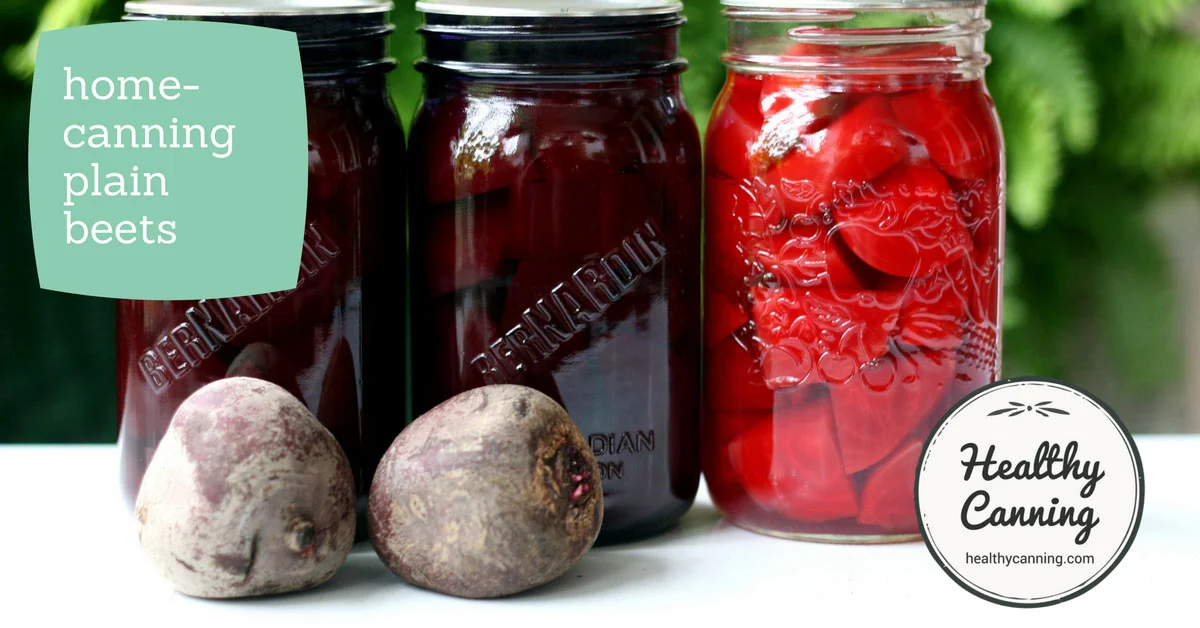

The home preservation of plain beets, scientifically known as Beta vulgaris, represents a cornerstone of traditional food storage, yet it remains one of the most technically demanding tasks for the modern home canner due to the strict safety protocols required. While the convenience of retrieving a jar of ready-to-eat beets during the winter months is a significant culinary advantage, the process is governed by rigid microbiological standards established by the United States Department of Agriculture (USDA) and the National Center for Home Food Preservation (NCHFP). Beets are classified as a low-acid vegetable, meaning they possess a pH level higher than 4.6. This chemical profile necessitates the use of a pressure canner to reach temperatures of 240°F (116°C) or higher, which is the only reliable method to eliminate the heat-resistant spores of Clostridium botulinum. This comprehensive guide details the essential procedures, historical context, and scientific imperatives for canning plain beets safely.
The Microbiological Imperative: Why Pressure Canning is Mandatory
The primary concern in home canning low-acid foods is the prevention of botulism, a rare but potentially fatal paralytic illness caused by a nerve toxin produced by Clostridium botulinum bacteria. These bacteria thrive in the anaerobic (oxygen-free), moist, and low-acid environment found inside a sealed canning jar. While the bacteria themselves can be destroyed at boiling temperatures, their spores can survive 212°F (100°C) indefinitely. Only the intense heat generated under pressure can ensure these spores are neutralized.

Public health records provide a sobering justification for these requirements. Between 1990 and 2012, at least ten documented cases of botulism in the United States were directly linked to home-canned beets that had been processed in a boiling water bath rather than a pressure canner. Experts from the NCHFP and authors of the seminal text "Putting Food By" emphasize that plain beets rank alongside green beans as the most common carriers of botulinum toxin when improperly preserved. Consequently, the scientific consensus is absolute: there is no safe alternative to pressure canning for plain, non-pickled beets. If a pressure canner is unavailable, the only safe preservation alternatives are freezing the beets or acidifying them through a validated pickling recipe to lower the pH below 4.6.
Preparation and Quantitative Guidelines
To achieve a high-quality finished product, the selection and preparation of the raw material are critical. On average, home canners should anticipate needing approximately 1.25 kilograms (roughly 3 pounds) of beets to yield a single one-liter (US quart) jar. For those working with medium-sized beets (approximately 9 cm or 3 inches in diameter), 10 raw beets with the skins intact will weigh roughly 2 kilograms (4.5 pounds).
The preparation process begins with the "Hot Pack" method, which is the only recommended technique for beets due to their firm-fleshed nature. Before canning, beets must be pre-cooked to facilitate the removal of skins and to reduce the initial bacterial load. It is a standard requirement that all vegetables intended for pressure canning be peeled; this step is not merely for aesthetics but serves as a vital safety measure to remove soil-borne bacteria that reside on the surface of the root.
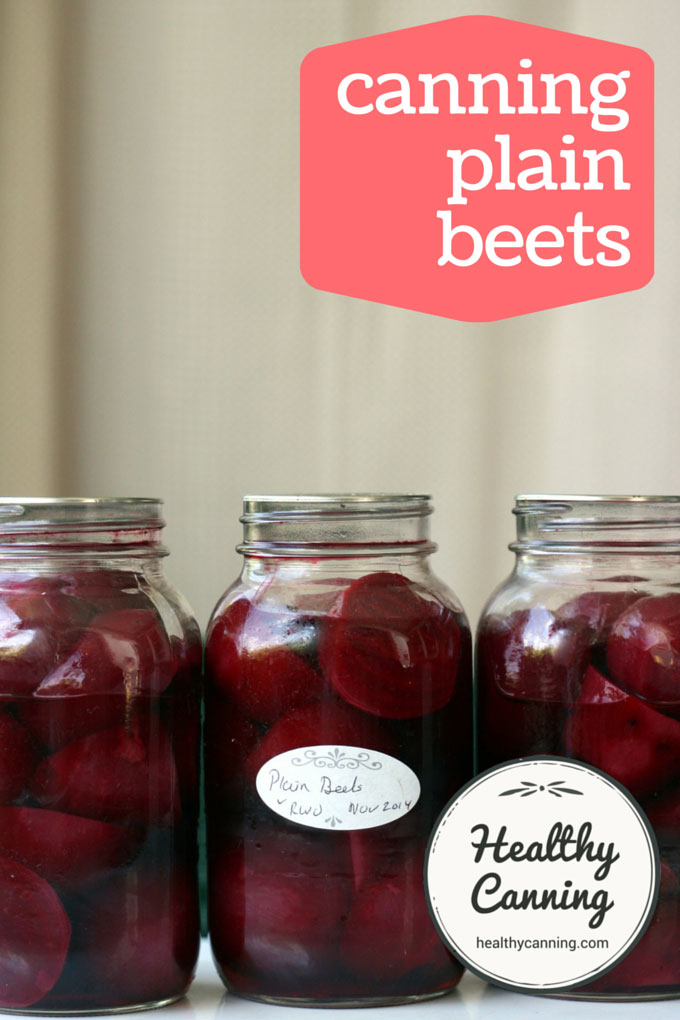
To minimize color loss during the pre-cooking phase, it is recommended to leave approximately two inches (5 cm) of the stem and the entire taproot attached to the beet. Boiling the beets in this state helps "seal" the pigments within the tuber. The duration of this initial boil depends on the size of the beets, but they should be cooked only until the skins can be easily slipped off. Once peeled, the beets can be left whole if they are smaller than two inches in diameter, or sliced and cubed if they are larger.
The Pressure Canning Protocol: Step-by-Step
The USDA procedure for plain beets requires meticulous attention to detail regarding headspace, pressure, and timing.
- Jar Preparation: Beets should be packed into hot, sterilized half-liter (pint) or one-liter (quart) jars.
- Packing: The beets must be packed while hot. If the beets have cooled during the peeling process, they should be reheated (either by a brief boil or microwave) before being placed in the jars.
- Headspace: A consistent headspace of 3 cm (1 inch) must be maintained at the top of the jar to allow for food expansion and the proper formation of a vacuum seal during the cooling process.
- Liquid and Seasoning: Boiling water should be poured over the beets, maintaining the 1-inch headspace. While salt may be added for seasoning (typically 1/2 teaspoon per pint or 1 teaspoon per quart), it is not a preservative in this process and may be omitted for those on sodium-restricted diets.
- Processing: The jars are then processed in a pressure canner. For those using a weighted-gauge canner at altitudes between 0 and 300 meters (0–1000 feet), the requirement is 10 pounds of pressure. At altitudes above 300 meters, this must be increased to 15 pounds to account for the lower boiling point of water.
Processing times are strictly defined: 30 minutes for half-liter (pint) jars and 35 minutes for one-liter (quart) jars. Failure to adjust for altitude or reducing processing time can result in an under-processed product that is unsafe for consumption.
Technical Data and Reference Table
The following table summarizes the processing requirements for plain beets in a weighted-gauge pressure canner:
| Jar Size | Processing Time | 0 – 300m (0-1000ft) Pressure | Above 300m (1000ft) Pressure |
|---|---|---|---|
| Half-Litre (1 US Pint) | 30 Minutes | 10 lbs | 15 lbs |
| 1 Litre (1 US Quart) | 35 Minutes | 10 lbs | 15 lbs |
For dial-gauge canners, the pressure should be set to 11 lbs for altitudes up to 2,000 feet, with incremental increases for higher elevations.
Quality Control: The Science of Color and Judging
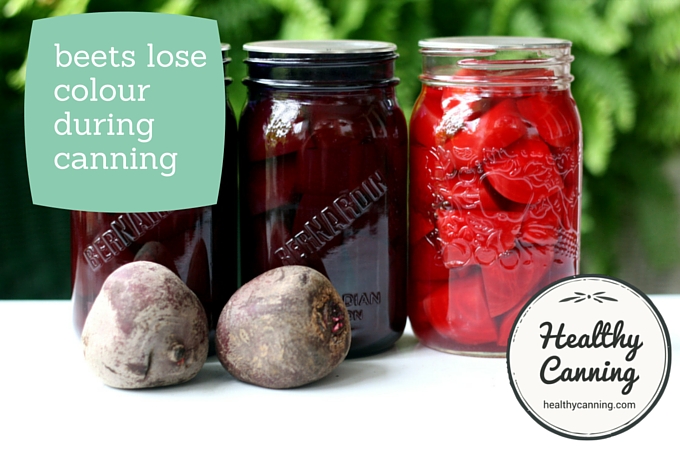
One of the most common challenges in canning beets is the loss of their vibrant red color. The pigments responsible for the beet’s hue, known as betalaines, are highly sensitive to high temperatures. During the intense heat of pressure canning, these compounds can undergo a chemical transformation into a colorless state.
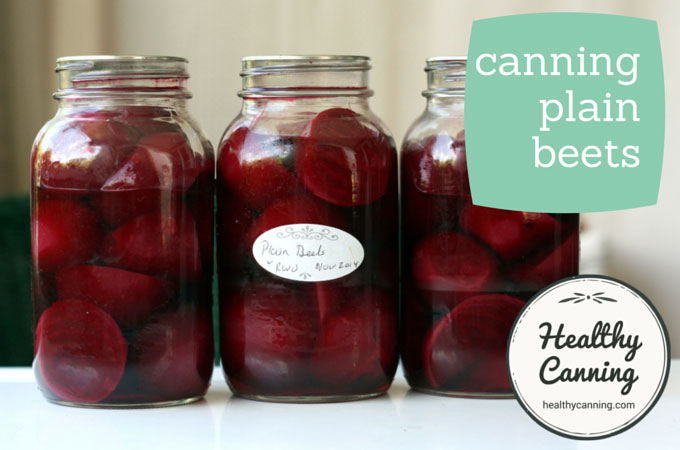
According to research from the Penn State Extension, this reaction is often reversible. It is common for beets to appear pale or brownish immediately after processing, only for the deep red color to return after the jars have sat at room temperature for several days or weeks. To optimize color retention, experts suggest selecting specific varieties known for their stability, such as ‘Detroit Dark Red’ or ‘Formanova.’
When judging the quality of home-canned beets, the NCHFP looks for specific criteria:
- Uniformity: Pieces should be of similar size and shape to ensure even heat penetration.
- Clarity: The liquid should be clear and free of sediment or cloudiness.
- Texture: Beets should be firm and free from fibrous "woody" textures, which often occur in beets larger than 3 inches in diameter.
- Purity: The product must be completely free of skins, stems, and roots.
Historical Context and the Evolution of Safety Standards
The history of beet canning reflects the broader evolution of food science and the gradual understanding of thermal death times for bacteria. As early as 1926, the USDA Farmers’ Bulletin No. 1471 explicitly recommended pressure canning for "baby beets," citing the risk of botulism in water-bath methods. At that time, the recommended processing time was actually five minutes longer than today’s standards, reflecting a more conservative approach in the early days of pressure technology.

However, the path to modern safety was not linear. During the Second World War, resource shortages led to a regression in some educational materials. In 1944, some university extension bulletins promoted an "Acid Method," which suggested that adding a small amount of vinegar to beets would make them safe for a 90-minute boiling water bath. This advice was based on the flawed assumption that minimal acidification could compensate for lower temperatures. Modern testing has thoroughly debunked this, proving that such small amounts of vinegar do not sufficiently lower the pH to inhibit C. botulinum. This historical anomaly serves as a reminder that "old family recipes" or vintage manuals may contain dangerous misinformation that contradicts current life-saving science.
Nutritional Profile and Culinary Utility
Home-canned beets remain a nutritional powerhouse. A standard 250g serving (approximately one cup) of cooked, canned beets provides roughly 124 calories, 4 grams of protein, and 3.6 grams of dietary fiber. They are an excellent source of folate, manganese, and potassium. Because the canning process involves "Hot Packing" in water, the sodium content remains negligible (approximately 2mg per serving) unless the consumer chooses to add salt during the packing process.
The culinary versatility of plain canned beets is extensive. Unlike pickled beets, which are dominated by vinegar and sugar, plain canned beets retain their earthy, sweet profile. They can be quickly reheated and served with sour cream and dill, or drained and tossed in fats such as olive oil or duck fat for rapid oven roasting. They also serve as a foundational ingredient for traditional dishes like Borscht or modern applications such as spicy beet and carrot curries.
Conclusion and Safety Summary
The preservation of plain beets through pressure canning is a rewarding endeavor that bridges the gap between seasonal harvest and year-round food security. However, it is a process that leaves no room for improvisation. The transition from a raw root to a shelf-stable jar involves complex thermodynamics and microbiology. By adhering to the USDA-validated processing times, maintaining proper headspace, and—most importantly—utilizing a calibrated pressure canner, home processors can ensure that their pantry remains both delicious and safe. As food safety experts reiterate, when it comes to the question of whether plain beets require pressure canning, the answer remains a definitive and scientifically backed "yes."