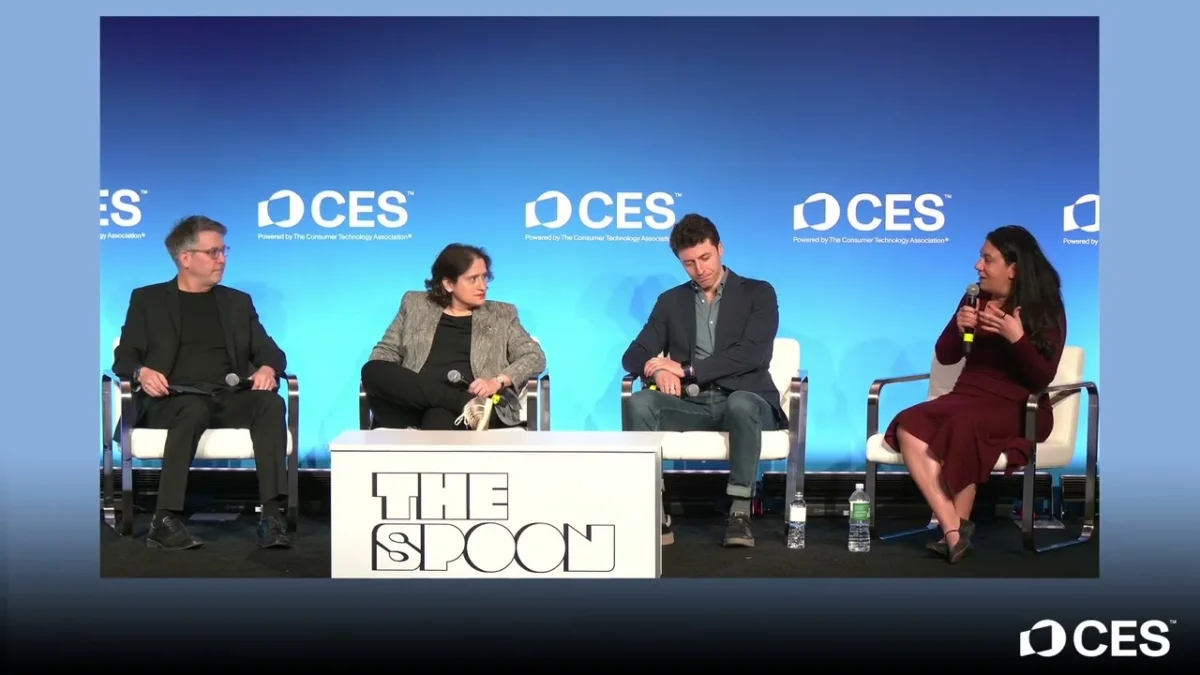

The landscape of the modern kitchen, long envisioned as a futuristic hub of robotic chefs and AI assistants, is undergoing a significant redefinition, with a growing emphasis on subtle technological integration and the enduring appeal of specialized countertop appliances over ambitious humanoid robots. This paradigm shift was a central theme at The Spoon’s recent Food Tech conference held in Las Vegas, where a panel of industry experts convened to discuss the evolving trajectory of kitchen innovation.
The discussion, featuring Robin Liss, CEO of Suvie; Jonathan Blutinger, Senior Design Engineer at Smart Design; and Nicole Papantoniou, Director of the Kitchen Appliances Lab at the Good Housekeeping Institute, challenged the long-held notion that the kitchen of the future would be dominated by complex, autonomous robotic systems. Instead, the consensus pointed towards a more pragmatic and user-centric approach, where technology serves to reduce everyday friction and enhance existing culinary practices rather than replace them entirely.
A Decade of Smart Kitchen Evolution: Learning from Past Missteps
The conversation commenced with a retrospective look at the smart kitchen’s journey over the past decade. Nicole Papantoniou highlighted a key learning from the early days of smart appliance development: the tendency to introduce technology without addressing genuine consumer needs. "A lot of people were putting smart features into products that you didn’t really need," Papantoniou observed, citing the example of voice-activated coffee makers as a solution to a problem many consumers didn’t perceive. The prevailing sentiment among the panel was that true innovation lies in seamless friction reduction – making everyday tasks easier and more intuitive, often without the user even consciously recognizing the technological assistance.
Jonathan Blutinger echoed this sentiment, critiquing the over-engineering prevalent in early smart kitchen products. "Just because you can doesn’t necessarily mean you should," he stated, emphasizing that technological advancements must be rooted in demonstrable human needs. This perspective suggests a move away from feature-driven innovation towards solutions that genuinely improve the user experience and integrate organically into daily routines.
The AI Revolution: From Buzzword to Background Integration
The proliferation of "AI-powered" claims at recent technology expos, including CES, has raised questions about the potential for a repeat of the "slap Wi-Fi on everything" era of connected appliances. Robin Liss, however, drew a distinction between the current AI landscape and the early days of IoT connectivity. "Almost all these products have embedded software or cloud-connected software," Liss explained. "The way we look at AI is it’s not some all-encompassing model… it’s integrations into steps of the process." This suggests a more nuanced application of AI, focusing on optimizing specific stages of food preparation and kitchen management rather than attempting a holistic, overarching intelligence.
Blutinger identified the overuse of the term "AI" by marketers as a significant hurdle. He posited that while the integration of AI into products is inevitable, its visibility and the terminology used to describe it will likely diminish over time. "That word alone has created such a stigma around it," he remarked. "The technology should not be upfront and personal. It should be invisible in a sense." This notion of invisible technology, where AI functions seamlessly in the background, is predicted to foster greater consumer acceptance. Papantoniou concurred, forecasting that "Once people stop advertising that it’s AI and it’s just part of the normal product, it’ll be way more accepted." This shift implies that the true success of AI in the kitchen will be measured by its unobtrusive contribution to a better user experience.
The Practicality of Task-Specific Automation Over Humanoid Robots
The persistent question of when humanoid robots will become a common fixture in home kitchens yielded a consistent response of skepticism from the panel. Echoing sentiments from other discussions on food robotics, the experts suggested that widespread adoption of such sophisticated machines in domestic settings remains a distant prospect. "I still think that’s really soon for us to be seeing it in the home kitchen," stated Papantoniou, estimating that even a five-year timeline for significant presence is optimistic.
Robin Liss underscored the significant safety and practical challenges associated with food robotics. "Food is inherently dangerous, and kitchen appliances dealing with high heat are inherently dangerous," she noted. The complexities of ensuring robots can operate safely around humans, especially in dynamic and potentially hazardous kitchen environments, remain a formidable obstacle, even in commercial settings.

In lieu of complex, multi-functional humanoid robots, the panel advocated for task-specific automation. Blutinger argued that human capabilities in the kitchen are incredibly diverse, and attempting to replicate this entire spectrum with a single robotic system is inefficient. "We have to be perfect for so many things. It’s not like cooking takes up 100% of our time. So if we’re trying to optimize for just automation in the kitchen, why do we need these complex articulated (robot) arms doing things? Why not just have like a simple little one degree of freedom rotating thing that just rotates our sauce?" This perspective champions the development of smaller, more focused robotic aids designed to perform specific, repetitive tasks, thereby offering practical and cost-effective solutions.
Countertop Appliances: The Enduring Reign of Specialized Innovation
Despite ongoing advancements in built-in kitchen systems, the panel unanimously agreed that innovation will continue to thrive within the realm of specialized countertop appliances. Robin Liss pointed to the significant market success and growth of companies like Breville and Shark Ninja as evidence of this trend. "I would say that probably the reason you’re seeing so many, the proliferation of lots of little countertop appliances, which makes me very happy, is because the innovation is happening there," Liss explained. She further elaborated on the economic drivers, noting that "Breville is larger than Whirlpool, Shark Ninja is many multiples larger than Whirlpool. It’s because all of the innovation is happening on the countertop because of that replacement cycle challenge of major appliances." The inherent difficulty and cost associated with replacing major built-in appliances incentivizes innovation in more accessible, modular countertop solutions.
Nicole Papantoniou offered a pragmatic assessment of multifunctional appliances, acknowledging their improvement but highlighting persistent limitations. "There is that stigma that multifunctional appliances don’t do everything well. And while it’s gotten a lot better, I would say like an air fryer function in an oven is not going to compete with your basket air fryer." This underscores a consumer preference for devices that excel at a specific function, even if it means occupying additional counter space. This focus on specialized performance contributes to the sustained popularity and market dominance of individual countertop appliances.
The Future Kitchen: Personalization, Reduced Friction, and Enhanced Living
Looking ahead, the panelists painted a cohesive vision of the kitchen’s near-term future, characterized by increased personalization, a significant reduction in daily friction, and a focus on enhancing overall quality of life.
Papantoniou predicted a rise in consumer adoption driven by a decrease in apprehension and a greater appreciation for the convenience offered by smart technology. "People are adopting it more and not being so scared of it and not judging it as harshly, I think, as they did in the past. I think people actually do want their coffee maker to start working while they’re still in their bedroom. So I think that’s gonna just be coming more," she stated, highlighting the growing acceptance of subtle technological integrations that simplify daily routines.
Blutinger reiterated the paramount importance of usability and friction reduction. "I think just reduce friction in the kitchen. That’s the biggest thing if you’re trying to innovate in the kitchen space," he emphasized. This focus suggests that future innovations will be judged by their ability to streamline tasks, minimize effort, and make the cooking process more accessible and enjoyable.
Robin Liss concluded with an optimistic outlook centered on human well-being. "I think it’s healthier, more personalized food, cooked how you want it," Liss envisioned. "You’re getting to spend, most importantly, is families getting to spend time with each other happily enjoying meals for those everyday weeknight meals rather than spending an hour, mom spending an hour prepping the food or wasting money on really expensive delivery, right? It’s like a better life for people because they’re eating healthy, good food at home, saving money, and spending time with their loved ones." This vision encapsulates a future where technology empowers individuals and families to lead healthier, more connected lives by simplifying home cooking, reducing financial strain, and freeing up valuable time for shared experiences.
The full discussion, offering deeper insights into these evolving trends and providing a visual representation of the discussions, was made available for viewing, underscoring the ongoing dialogue and innovation shaping the future of our kitchens. The integration of subtle technology, the continued dominance of specialized countertop appliances, and a steadfast focus on user needs and reduced friction are the defining characteristics of the kitchen’s next evolutionary phase.