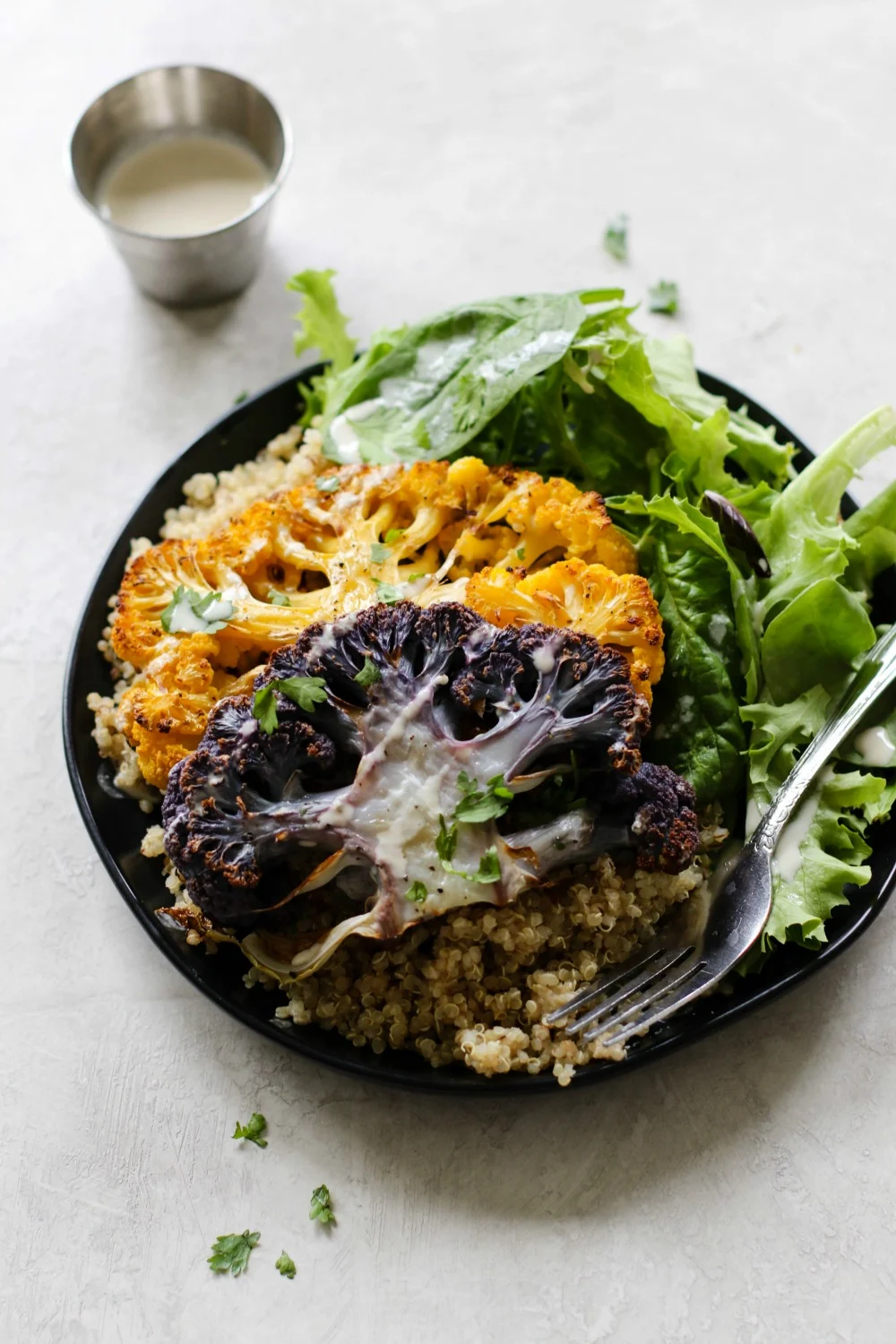

A burgeoning trend in the culinary world, particularly within the realm of health-conscious eating and efficient meal preparation, is the rise of plant-based dishes that offer both nutritional value and satisfying flavors. Among these, the "Cauliflower Steak With Quinoa & Tahini Meal Prep" has emerged as a noteworthy option, designed to address common challenges associated with increasing vegetable intake and preparing wholesome lunches for busy individuals. This comprehensive meal prep solution focuses on transforming the humble cauliflower into a hearty centerpiece, complemented by nutrient-dense quinoa and a zesty tahini dressing, offering a well-rounded and appealing dining experience.
The core appeal of this meal prep lies in its ability to convert skeptics of vegetable-centric meals. Traditionally, vegetables can be perceived as bland, bitter, or lacking in textural appeal, posing a hurdle for many consumers aiming for healthier dietary habits. This recipe directly confronts these perceptions by employing a preparation method that yields a cauliflower steak that is both visually appealing and gastronomically pleasing. The roasting process is key, achieving a delightful crispness on the exterior while maintaining a tender, yielding interior. This textural contrast, coupled with the inherent mild sweetness of roasted cauliflower, makes it a far more engaging component of a meal than typically prepared vegetables.
Beyond the star ingredient, the inclusion of quinoa provides a substantial base that contributes to satiety and sustained energy release. Quinoa, a complete protein source, offers all nine essential amino acids, making it a valuable addition for those seeking plant-based protein. Its fluffy texture and mild, nutty flavor provide a neutral canvas that allows the other components of the meal to shine. The ensemble is further elevated by a creamy, lemony tahini sauce. Tahini, a paste made from ground sesame seeds, lends a rich, savory depth, while lemon juice cuts through the richness with a bright, acidic note. This dressing acts as a unifying element, binding the flavors and textures of the cauliflower and quinoa into a harmonious whole.
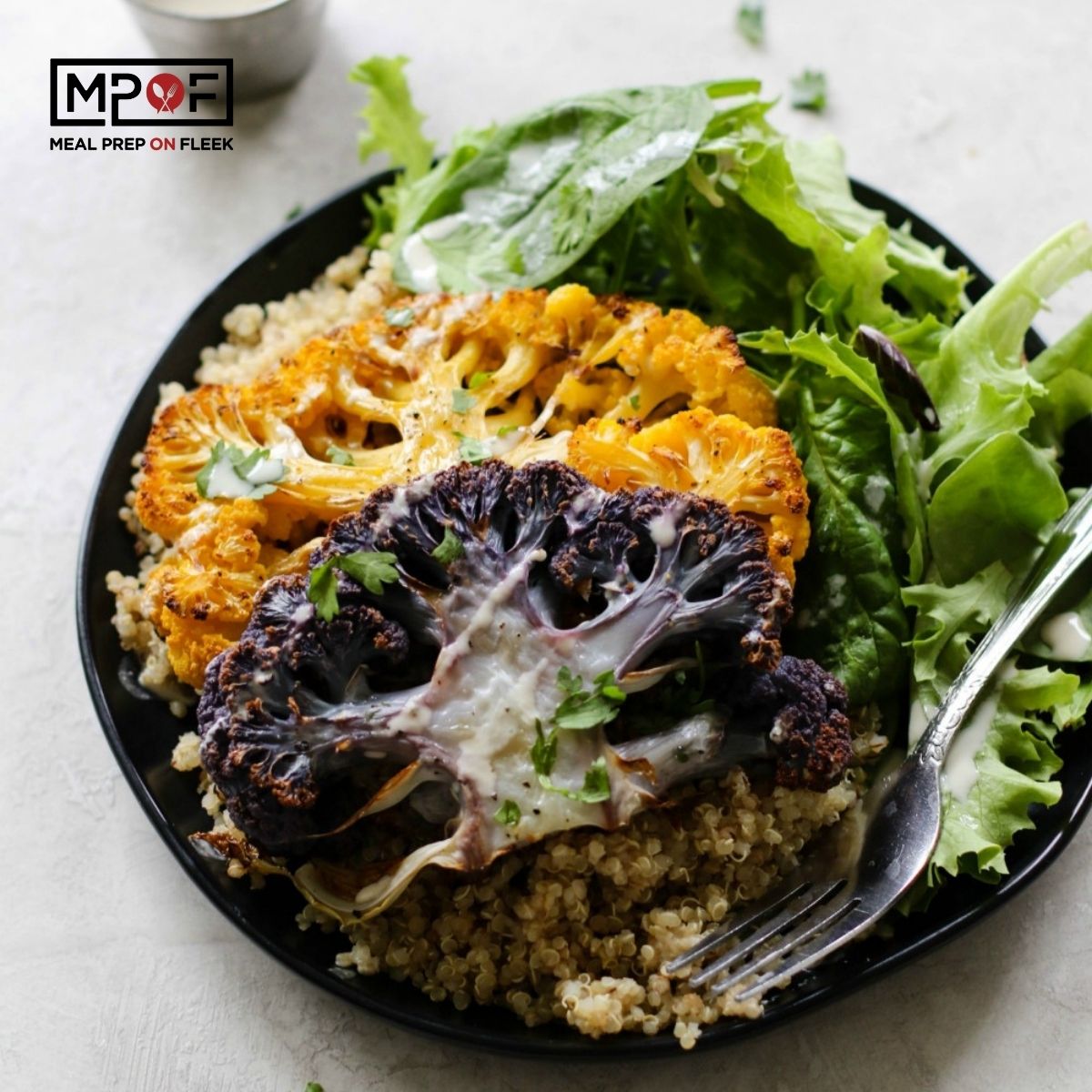
The concept of meal prepping has gained significant traction in recent years, driven by a desire for convenience, cost savings, and better control over dietary intake. The "Cauliflower Steak With Quinoa & Tahini Meal Prep" is meticulously designed to fit seamlessly into this framework. Its components can be prepared in advance, allowing for quick assembly of individual meal portions that can be stored for consumption throughout the week. This efficiency is particularly valuable for individuals with demanding schedules who might otherwise resort to less healthy, pre-packaged convenience foods or expensive restaurant meals. The recipe’s robustness in storage, maintaining its appeal over several days, further solidifies its utility as a practical meal prep strategy.
The Science Behind Satisfying Vegetables
The transformation of cauliflower into a "steak" is more than just a clever naming convention; it’s a culinary technique that leverages the principles of heat transfer and Maillard reactions to enhance flavor and texture. Roasting at a high temperature (425°F or 220°C) initiates the Maillard reaction, a complex chemical process between amino acids and reducing sugars that creates hundreds of new flavor compounds, resulting in the desirable browning and savory notes. Simultaneously, the moisture within the cauliflower caramelizes and evaporates, leading to a crispier exterior. The internal structure breaks down, rendering it tender and fork-able. This contrasts sharply with methods like boiling or steaming, which can often result in a softer, less appealing texture and a dilution of flavor.
The inclusion of quinoa addresses another critical aspect of meal satisfaction: protein and fiber content. A study published in the Journal of Nutrition highlighted that diets rich in protein and fiber are associated with increased satiety and reduced overall calorie intake. Quinoa, with its impressive profile of both, helps to combat mid-day hunger pangs and prevent overeating. Its complex carbohydrate structure also ensures a slow release of energy, averting the common post-lunch energy slump often experienced with meals high in refined carbohydrates.
Tahini, while often recognized for its flavor, also contributes positively to the nutritional profile. It is a good source of healthy fats, particularly monounsaturated and polyunsaturated fats, which are beneficial for heart health. Furthermore, tahini contains minerals such as calcium, magnesium, and iron, further enhancing the nutritional density of the meal. The synergistic combination of these ingredients – the flavor-enhanced cauliflower, protein-rich quinoa, and nutrient-dense tahini – creates a meal that is not only satisfying but also contributes to overall well-being.
A Practical Approach to Dietary Goals
For many, the aspiration to consume more vegetables is a recurring theme in their health journey. However, the practical execution often falls short. This recipe offers a tangible solution by presenting vegetables in a format that is both appealing and easy to incorporate into a weekly routine. The emphasis on meal prep acknowledges the realities of modern life, where time constraints can significantly impact dietary choices. By providing a clear, step-by-step guide, the recipe empowers individuals to take control of their nutrition without requiring extensive culinary expertise or a significant time commitment each day.
The recipe’s adaptability is another key factor in its widespread appeal. While the core components remain consistent, there is ample room for personalization. Variations can include the addition of other roasted vegetables, such as bell peppers, zucchini, or sweet potatoes, to further enhance the nutritional diversity and visual appeal of the meal. The greens component can be swapped for different varieties, such as spinach, kale, or arugula, depending on personal preference and seasonal availability. Similarly, the tahini sauce can be customized with additional herbs, spices, or even a touch of honey or maple syrup for a hint of sweetness, catering to a broader range of palates.
The Growing Landscape of Plant-Based Meal Prepping
The "Cauliflower Steak With Quinoa & Tahini Meal Prep" is part of a larger movement towards plant-based eating, which has seen exponential growth in recent years. Market research indicates a significant increase in consumer interest in plant-based diets, driven by concerns for health, environmental sustainability, and animal welfare. This culinary trend is not limited to vegans or vegetarians; flexitarianism, a dietary pattern that emphasizes plant-based foods while allowing for occasional consumption of meat and fish, is also on the rise. Recipes like this one cater to this expanding demographic by offering delicious and satisfying plant-forward meals that do not compromise on flavor or substance.
The food industry has responded to this demand by introducing a wider array of plant-based products and by popularizing recipes that showcase the versatility of plant-based ingredients. Meal prep services and online platforms dedicated to healthy eating have become instrumental in disseminating these recipes and making them accessible to a broad audience. The "Cauliflower Steak With Quinoa & Tahini Meal Prep" exemplifies this trend, providing a well-tested and appealing option that aligns with contemporary dietary preferences and lifestyle needs.
Methodical Preparation for Optimal Results
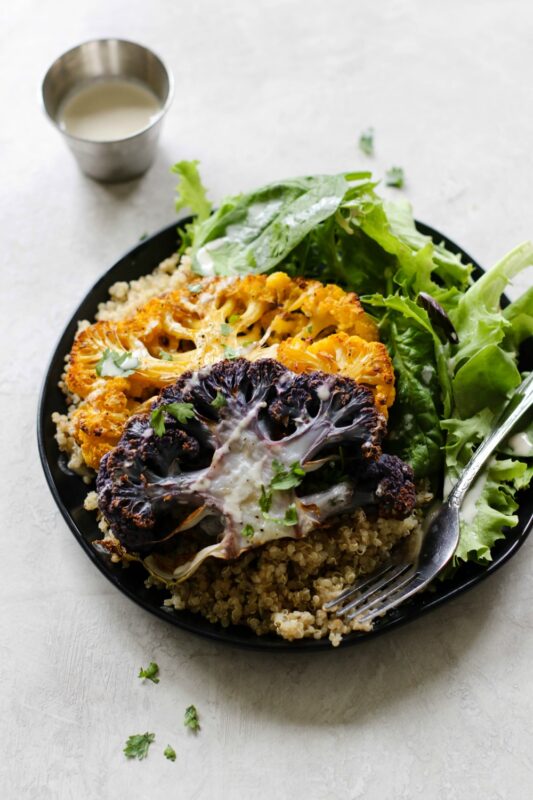
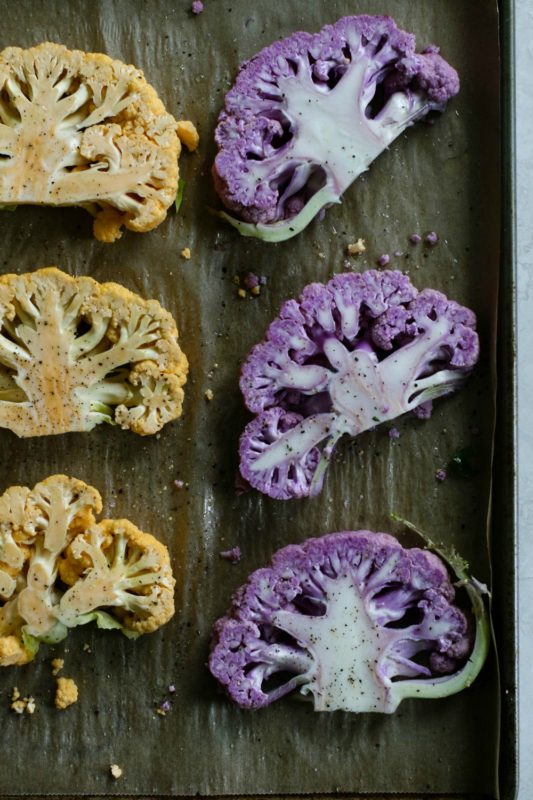
The creation of this meal prep involves a series of distinct stages, each contributing to the final outcome. The process begins with the preparation of the cauliflower. Careful trimming of the leaves and slicing into substantial "steaks," typically between three-quarters of an inch to one inch thick, is crucial. This thickness ensures that the cauliflower can withstand the roasting process without disintegrating and allows for the development of a desirable crisp exterior while maintaining a tender core. The inclusion of any leftover florets, roasted alongside the steaks, embodies a commitment to minimizing food waste, a principle increasingly valued in sustainable culinary practices.
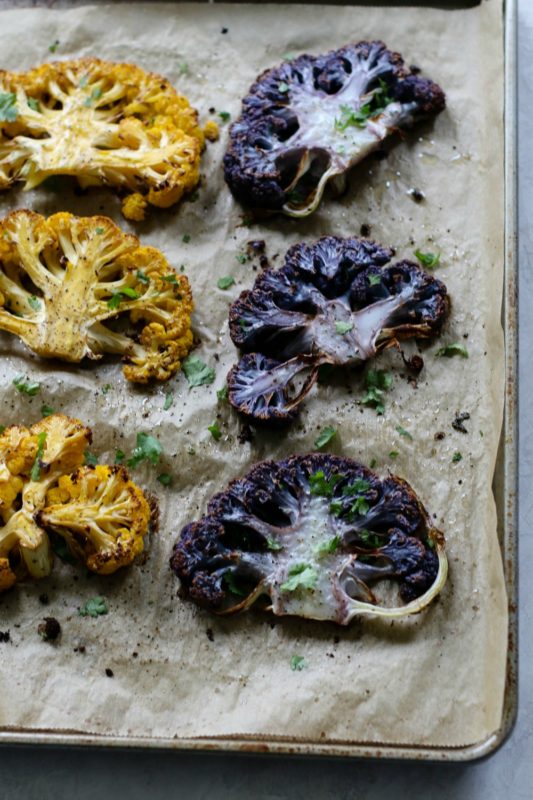
The roasting phase requires precise temperature control. An oven preheated to 425°F (220°C) facilitates the rapid browning and crisping of the cauliflower. Brushing the steaks with a healthy oil, such as avocado oil, and seasoning them with salt and pepper enhances their flavor and promotes even cooking. A roasting time of 20 to 30 minutes, with a midpoint flip, is generally sufficient to achieve the desired texture. A helpful tip for managing the roasting process involves adjusting the oven temperature if the steaks begin to brown too quickly before becoming tender; lowering the heat to 400°F (200°C) can prevent premature burning while allowing the interior to cook through.
Concurrently, the quinoa is prepared. Thorough rinsing of the quinoa is an essential step to remove saponins, natural compounds that can impart a bitter taste. Cooking the quinoa according to package instructions results in a fluffy, palatable grain. Allowing the quinoa to cool slightly before assembling the meal prep containers prevents the residual steam from making other components soggy.
The lemon tahini sauce is a simple yet critical element. Whisking tahini, water, and lemon juice until a smooth consistency is achieved forms the base of the sauce. The addition of fresh parsley can introduce a burst of herbaceous flavor. The adjustability of the sauce’s thickness, by adding water incrementally, ensures it can be tailored to individual preferences, whether for drizzling or coating.
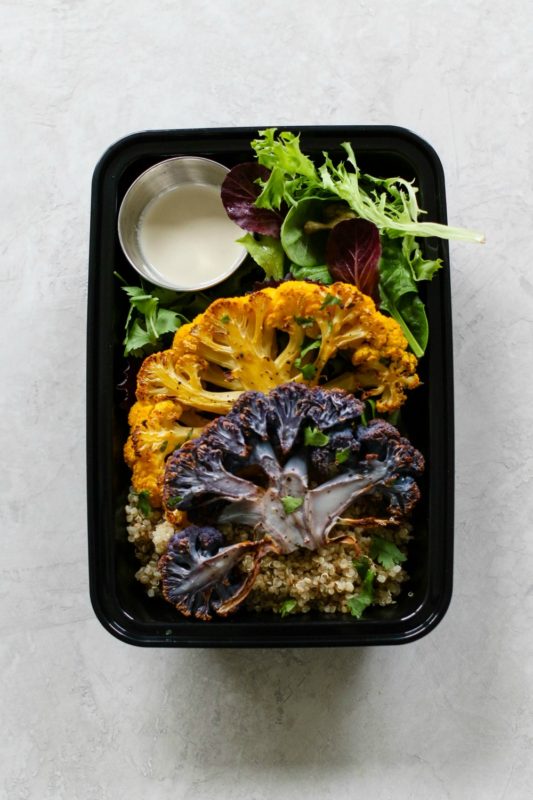
Assembly involves dividing the cooled quinoa into meal prep containers, layering in fresh greens, and topping with the roasted cauliflower steaks. The tahini sauce is best stored in separate, small containers to be added just before consumption, thereby preserving the crispness of the cauliflower and the freshness of the greens.
Storage and Reheating Strategies
Effective storage and reheating are paramount to maintaining the quality and appeal of meal-prepped dishes. For the Cauliflower Steak With Quinoa & Tahini Meal Prep, the strategy involves separating certain components to preserve their texture. The quinoa and roasted cauliflower are stable when stored together in airtight containers in the refrigerator for up to three to four days. However, it is generally recommended to store the greens separately, or to add them just before eating, to prevent them from becoming wilted and unappetizing.
The question of freezing this meal prep is also addressed with practical advice. While the quinoa and roasted cauliflower can be frozen, it is advisable to omit the fresh greens from the frozen portions. Upon thawing and reheating, fresh greens can be added to restore the meal’s vibrancy and textural integrity. This approach allows for longer-term storage of the core components while ensuring a fresh-tasting final product.
The optimal reheating method depends on the desired outcome for the cauliflower. For those who prefer a crisp exterior, reheating in an oven or air fryer is recommended. These methods allow for the moisture on the surface of the cauliflower to evaporate, re-establishing its crispness. While microwaving is a faster option, it tends to result in a softer, steamed texture for the cauliflower. A practical reheating tip suggests warming the quinoa and cauliflower separately, or together, and then incorporating the fresh greens and drizzling the tahini sauce after the main components have been heated, thus preserving the freshness and texture of each element.
Nutritional Considerations and Customization
While specific nutritional information can vary based on portion sizes and ingredient ratios, the "Cauliflower Steak With Quinoa & Tahini Meal Prep" is generally recognized for its balanced macronutrient profile. A typical serving provides a significant amount of fiber, complex carbohydrates, healthy fats, and plant-based protein. The approximate calorie count per serving, around 395 kcal, positions it as a substantial yet health-conscious meal option. The detailed breakdown of macronutrients – approximately 16g protein, 48g carbohydrates, 18g fat, and 12.5g fiber – underscores its value as a nutrient-dense choice.
For individuals with specific dietary needs or preferences, numerous ingredient swaps and additions can be considered. For instance, substituting cauliflower with broccoli or Brussels sprouts can offer a different flavor profile and nutrient composition. Other grains like farro or brown rice can replace quinoa, though they may alter the cooking time and texture. For those seeking additional protein, adding chickpeas, lentils, or even a plant-based protein crumble to the quinoa base can be beneficial. The tahini sauce can be further enhanced with spices like cumin or smoked paprika for a deeper flavor, or a pinch of chili flakes for a touch of heat.
Addressing Common Culinary Queries
Several frequently asked questions arise concerning the preparation and storage of this meal. A primary concern for many is how to prevent cauliflower steaks from falling apart during preparation. The key lies in the thickness of the slices and the integrity of the central stem, which acts as a natural binder. Slicing the cauliflower into robust pieces, typically ¾ to 1 inch thick, while keeping the core intact, is essential for structural support.
The bitterness sometimes associated with quinoa is another common issue. As mentioned earlier, this bitterness stems from saponins. Thorough rinsing of the quinoa in a fine-mesh strainer before cooking is the most effective method for removing these compounds and ensuring a pleasant taste.
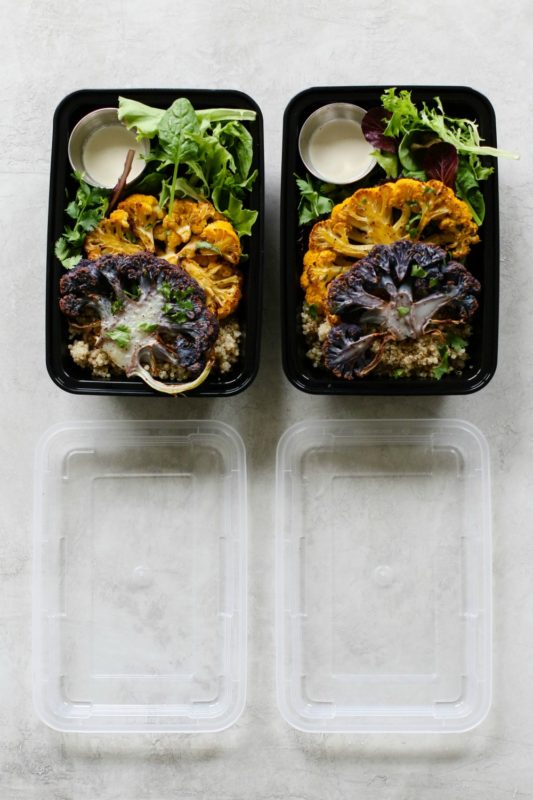
Maintaining the freshness of the greens in meal prep is a persistent challenge. Strategies to mitigate sogginess include allowing the quinoa to cool completely before sealing containers, storing the tahini sauce separately, and ideally, packing the greens in a separate small container that can be added just before eating. This preserves their crispness and vibrant color.
The feasibility of freezing this meal prep has been addressed, with the recommendation to freeze only the cooked quinoa and roasted cauliflower, adding fresh greens post-reheating. This approach maximizes storage longevity without compromising the quality of the final dish.
Finally, the best method for reheating the cauliflower steak is often debated. While the microwave offers speed, oven or air fryer reheating is superior for restoring the cauliflower’s crisp texture, providing a more satisfying culinary experience akin to freshly prepared food.
Conclusion
The "Cauliflower Steak With Quinoa & Tahini Meal Prep" stands as a testament to the evolving landscape of healthy eating, demonstrating that nutritious meals can be both delicious and convenient. By transforming a common vegetable into a satisfying centerpiece and pairing it with wholesome grains and a flavorful dressing, this recipe effectively addresses common challenges associated with vegetable consumption and meal preparation. Its practicality, adaptability, and adherence to contemporary dietary trends position it as a valuable addition to the repertoire of anyone seeking to embrace a healthier, more efficient approach to eating. As the popularity of plant-based and health-conscious meals continues to grow, recipes like this one are poised to play an increasingly significant role in shaping our dietary habits and promoting well-being.