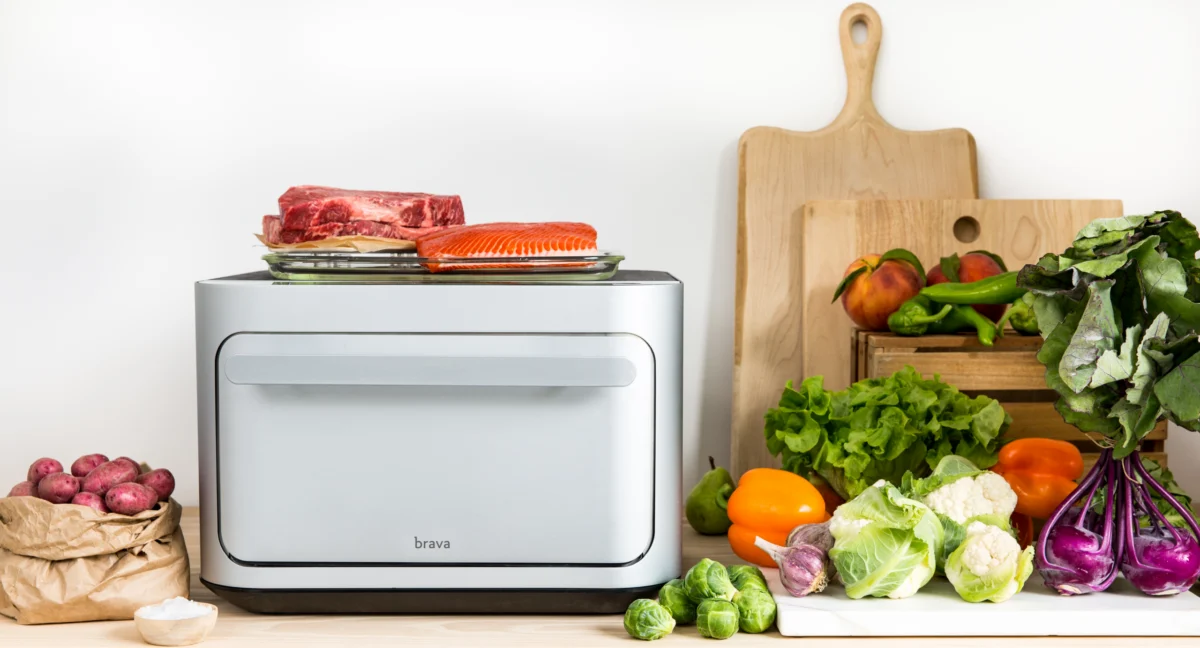

The landscape of smart kitchen technology has once again seen a significant shift with the announcement that Brava, a company renowned for its innovative countertop ovens that utilize "pure light" technology for cooking, has ceased operations. The closure, effective March 6, marks the end of an era for a brand that sought to revolutionize home cooking through advanced light-based heating. This development follows a period of uncertainty regarding the company’s future, particularly after its parent company, Middleby, underwent a significant restructuring of its residential division.
Brava’s announcement, disseminated through its official Facebook and LinkedIn pages, conveyed the somber news directly to its customer base. The company stated that it would no longer be selling new ovens, and importantly, that no further recipes, software updates, or accessibility enhancements would be provided. This effectively signals the sunsetting of active development and product support for existing Brava ovens.
A Halt to Innovation and Support
The implications of Brava’s shutdown extend beyond the discontinuation of new sales. The company acknowledged that while its Brava Cloud service and the extensive online recipe library are currently operational, their availability is not guaranteed indefinitely. Customers have been put on notice that these digital services could face limitations or complete discontinuation at any time. This prospect has raised significant concerns among Brava owners, many of whom have come to rely on the cloud-based ecosystem for their cooking experience.
Furthermore, the company addressed the critical issue of customer support, repairs, and the availability of replacement parts. Brava indicated that these services would be accessible for a limited duration, contingent on "resources remaining available." This vague phrasing has amplified anxieties among users who have invested in the premium smart oven, fearing that their appliance could become a sophisticated, yet unsupported, piece of kitchen hardware.
The Shadow of Corporate Restructuring
Brava’s cessation of operations comes in the wake of a substantial corporate maneuver within its parent company, Middleby. Just over a month prior to Brava’s announcement, Middleby finalized a transaction that saw private equity firm 26North acquire a majority stake in its residential kitchen unit. This newly formed entity was subsequently rebranded as Composition Brands.
While it remains officially unclear whether Brava was explicitly included in this divestiture and transferred to 26North/Composition Brands, a former Brava employee has confirmed that the majority ownership of Brava did indeed transition to the new ownership structure. This context suggests that the strategic decisions leading to Brava’s closure may have been influenced by the broader restructuring efforts aimed at optimizing Middleby’s residential portfolio under new private equity ownership. The sale of a majority stake in a parent company often leads to re-evaluations of subsidiary operations, potentially resulting in the discontinuation of brands deemed less strategic or profitable.
Customer Disappointment and Lingering Questions

The news of Brava’s shutdown has been met with widespread dismay among its dedicated user base. Many owners have taken to social media platforms to express their disappointment and frustration. These sentiments echo those seen when another prominent smart oven brand, June Oven, similarly ceased operations.
Brava owners, some of whom have reported using their ovens almost daily since as far back as 2019, are grappling with the potential obsolescence of their investment. A recurring concern revolves around the future of the Brava Cloud service. As one commenter on Brava’s Facebook page poignantly articulated, "They’re going to potentially discontinue the cloud, which would make it into a very expensive paperweight?!" This sentiment highlights the critical interdependence of many smart appliances on their cloud infrastructure, a dependency that becomes a significant vulnerability when that infrastructure is threatened.
Beyond the cloud service, anxieties also center on the practicalities of maintaining the appliance. The limited availability of repairs and replacement parts raises the specter of owners being unable to fix their Brava ovens should they encounter technical issues, further contributing to the feeling of being abandoned.
A Shrinking Field of Smart Oven Innovators
Brava’s departure underscores a challenging market environment for companies venturing into the smart oven sector. Over the past decade, several brands have emerged with ambitious visions for the future of home cooking, only to face significant hurdles. Brava’s unique selling proposition was its reliance on "pure light" technology, employing precisely controlled arrays of lamps – a stark departure from traditional heating elements and convection fans. This innovative approach allowed for rapid heating, precise temperature control, and the ability to sear, toast, bake, and broil with remarkable speed and accuracy. The company touted its ability to cook food significantly faster than conventional ovens, often reducing cooking times by up to 50%.
The current landscape of smart ovens is now notably less crowded. Among the remaining players, Anova, a division of Electrolux, has carved out a niche with its steam-enabled precision oven. Tovala and Suvie, both of which operate on a model that heavily integrates food delivery with their devices, are also active participants. Suvie, in particular, positions its multi-function device as a "cooking robot."
Other companies, such as Breville and Chef IQ, offer smart ovens that feature app connectivity and integration, enhancing user control and convenience. However, these offerings generally adhere to more conventional cooking methodologies. Brava, alongside a few other pioneers, represented a more radical reimagining of oven technology, aiming to fundamentally alter the cooking process itself.
A Glimmer of Hope for Light-Based Cooking
Despite Brava’s exit, the concept of cooking with light is not entirely disappearing from the smart kitchen arena. Tom Klaff, CEO of Revolution Cooking, shared an optimistic outlook in a recent conversation. He highlighted the upcoming launch of the Revolution Macrowave, a smart oven that utilizes infrared light for heating. This device is slated to begin shipping in November. While the Macrowave employs a different spectrum of light than Brava’s pure light technology, it signifies a continued interest and investment in light-based cooking as a viable and innovative approach to home culinary preparation. The success of such ventures will likely hinge on their ability to build robust ecosystems, ensure long-term support, and demonstrate clear value propositions to consumers in an increasingly competitive and rapidly evolving smart home market. The closure of Brava serves as a cautionary tale about the complexities of scaling innovative hardware businesses, particularly within the dynamic and often capital-intensive consumer electronics sector.