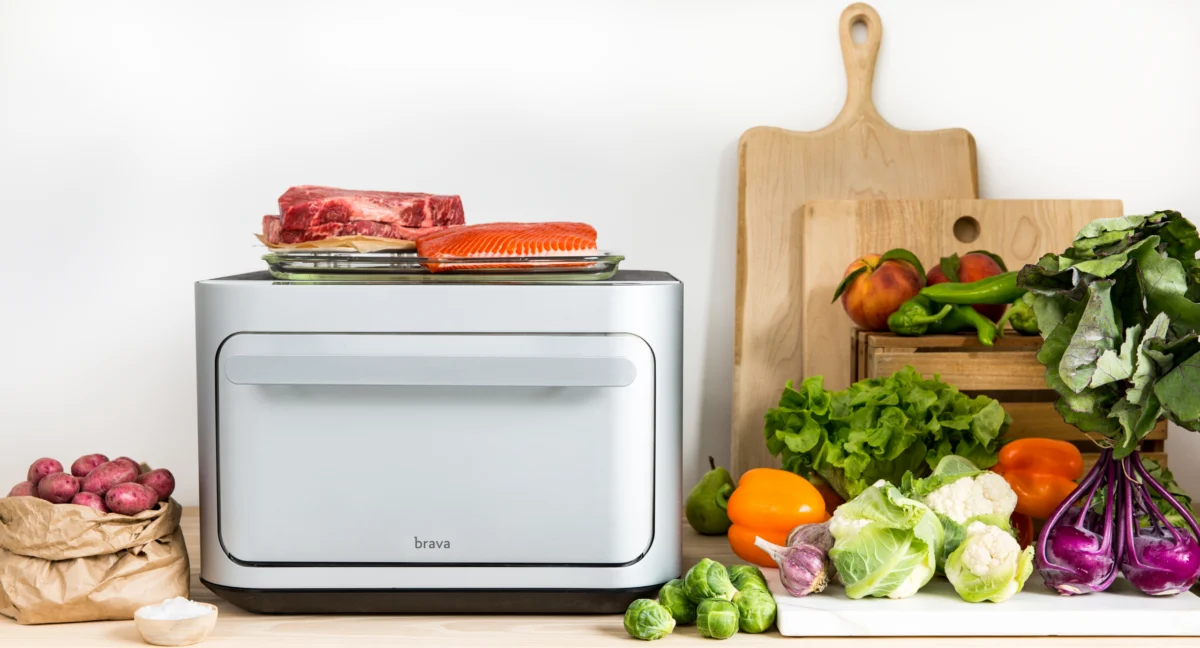

The innovative smart oven company Brava Home Inc. has announced the cessation of its operations, marking a significant development in the rapidly evolving landscape of connected kitchen appliances. The company, renowned for its pioneering use of light-based cooking technology in its countertop ovens, confirmed the closure in a joint statement released across its social media platforms, including Facebook and LinkedIn, on March 6th. This decision brings an abrupt end to the production of new Brava ovens and the provision of ongoing software and recipe updates, leaving a void for its dedicated user base.
A Flicker of Innovation Extinguished
Brava entered the market with a bold promise: to revolutionize home cooking through the strategic application of pure light. Its ovens utilized a combination of heat lamps and visible light spectrums to rapidly cook food, offering precise temperature control and faster cooking times compared to traditional ovens. This approach was designed to sear, toast, bake, and roast with unparalleled accuracy, distinguishing Brava from other smart oven manufacturers that focused primarily on app connectivity and pre-programmed recipes. The company aimed to democratize gourmet cooking, making complex culinary techniques accessible to the average home cook.
The announcement detailed that the company has ceased all new sales, and future development of recipes and software, including crucial accessibility updates, will no longer be pursued. This immediate halt in new product development and support signifies a definitive end to Brava’s journey as an independent entity.
Uncertain Future for Existing Brava Ovens
For the thousands of consumers who have invested in Brava ovens, the news raises significant concerns regarding the longevity and functionality of their appliances. Brava acknowledged the potential for its cloud service and online recipe library, which are currently still accessible, to be "limited or discontinued at any time." This statement has fueled anxieties among users who rely on these digital components for the full functionality of their ovens.
The prospect of the Brava Cloud service being shut down is particularly worrying. Many users have expressed their dismay on social media, with one commenter on Brava’s Facebook page voicing a common fear: "They’re going to potentially discontinue the cloud, which would make it into a very expensive paperweight?!" This sentiment highlights the dependence of smart appliances on their associated digital infrastructure and the significant financial and practical implications when that infrastructure falters.
Furthermore, the availability of customer support, repairs, and replacement parts has been stated to be limited, contingent on "resources remaining available." This implies that while some support may be offered in the short term, a complete cessation of these services is inevitable, leaving owners with few options should their ovens require servicing.
The Shadow of Corporate Restructuring
Brava’s closure comes shortly after a significant corporate restructuring involving its parent company, Middleby. In early February, Middleby announced the sale of a majority stake in its residential kitchen division to private equity firm 26North. This unit was subsequently rebranded as Composition Brands. While it remains unclear whether Brava was explicitly included in this transaction and transferred to the new ownership under Composition Brands, a former Brava employee has confirmed that majority ownership did indeed transfer to 26North/Composition Brands. This suggests that Brava’s operational shutdown may be a strategic decision made under the new ownership structure, potentially as part of a broader portfolio rationalization or a refocusing of investment.
The sale of Middleby’s residential unit to 26North represents a broader trend in the appliance industry, where established manufacturers are divesting or restructuring divisions to focus on core competencies or to unlock value through private equity partnerships. The rationale behind such moves often involves optimizing operational efficiency, injecting capital for growth in specific areas, or shedding underperforming assets. For Brava, it appears that despite its innovative technology, it may not have aligned with the strategic direction of its new majority stakeholders.

A Pattern of Departures in the Smart Oven Arena
Brava’s exit is not an isolated incident in the burgeoning smart oven market. The news echoes the sentiments and challenges faced by users of other innovative kitchen tech companies that have previously shuttered. The closure of June Oven, another pioneering smart oven company, serves as a stark precedent. Like Brava, June Oven offered advanced features and a unique cooking approach, but ultimately succumbed to market pressures.
The reactions from Brava owners mirror the dismay experienced by June Oven users, many of whom reported using their appliances almost daily since their purchase, some as far back as 2019. This loyalty underscores the significant impact these devices have on daily routines and cooking habits, making their discontinuation a deeply disappointing development for the community.
The Evolving Smart Oven Landscape
Brava’s departure further narrows the field of companies that have attempted to redefine the home oven experience over the past decade. The smart oven market has seen a significant influx of innovation, but also a considerable attrition rate.
Several players remain, each with a distinct approach:
- Anova Culinary: Now a division of Electrolux, Anova has found some traction with its steam-enabled precision ovens, focusing on sous vide and precise temperature control.
- Tovala and Suvie: These companies have adopted a model that heavily integrates food delivery with their smart oven hardware. Tovala offers pre-portioned meals that are cooked using its countertop oven, while Suvie positions its multi-function device as a "cooking robot" capable of preparing meals from scratch. Their revenue models are significantly reliant on recurring food subscriptions.
- Breville and Chef IQ: These brands offer smart ovens with enhanced app connectivity and features that integrate with their broader kitchen appliance ecosystems. However, they have not fundamentally challenged the core cooking methodology in the way Brava did.
The competitive pressures in this market are immense. Companies must not only develop innovative hardware and intuitive software but also establish robust supply chains, effective marketing strategies, and sustainable business models. The high cost of research and development, coupled with the long product development cycles and the need for continuous software support, presents a formidable challenge.
A Glimmer of Hope: Light-Based Cooking Continues
Despite Brava’s closure, the concept of light-based cooking, particularly infrared technology, is not entirely disappearing from the market. Tom Klaff, CEO of Revolution Cooking, expressed optimism about the future of this technology. He recently revealed that Revolution Cooking’s "Macrowave," a smart oven utilizing infrared light for cooking, is slated to begin shipping in November. This development suggests that the underlying principle of using light to accelerate and enhance cooking processes may find continued success with different market approaches and business strategies.
The Macrowave’s impending launch offers a potential avenue for Brava enthusiasts seeking a similar cooking experience. The integration of infrared and microwave heating, as described by Revolution Cooking, aims to deliver speed and precision, potentially appealing to consumers who were drawn to Brava’s innovative approach.
Analysis of Brava’s Challenges and Market Implications
Brava’s story highlights several critical challenges faced by hardware startups in the consumer electronics and smart home space:
- High Capital Requirements: Developing and manufacturing sophisticated kitchen appliances requires significant upfront investment in R&D, tooling, and production.
- Supply Chain Vulnerabilities: Global supply chain disruptions, as experienced in recent years, can severely impact production schedules and costs.
- Software Dependency and Obsolescence: The reliance on cloud services and software updates creates a long-term support obligation. Failure to maintain these services can render expensive hardware obsolete, leading to customer dissatisfaction and brand damage.
- Market Education and Adoption: Convincing consumers to adopt fundamentally new cooking technologies can be a slow and expensive process, requiring substantial marketing and educational efforts.
- Competition and Consolidation: The smart appliance market is increasingly competitive, with larger, established players often having the resources to outmaneuver smaller startups. Consolidation, as seen with Middleby’s residential unit sale, is a likely outcome as the market matures.
Brava’s closure serves as a cautionary tale for the broader smart appliance industry. While innovation is crucial, a sustainable business model that addresses long-term customer support, evolving technological landscapes, and robust market demand is equally vital for survival and success. The future of smart ovens will likely involve a blend of advanced technology, practical functionality, and a clear, long-term commitment to the consumer from the companies behind them. The question remains whether other light-based cooking technologies can learn from Brava’s trajectory and establish a lasting presence in the connected kitchen.