
The question of whether common vegetable and seed oils are detrimental to human health has escalated from niche dietary discussions to a widespread and often acrimonious debate across social media platforms and best-seller lists. Terms like “toxic sludge,” “motor oil,” and "the hateful eight" proliferate online, particularly within communities advocating for diets such as the carnivore diet, asserting that these oils are a primary, unrecognized cause of chronic disease. This renewed fervor for an old debate necessitates a thorough examination of the science, the historical context, and the processing methods that define these ubiquitous cooking ingredients.
Historical Roots of the Debate and the Rise of Industrial Oils
The debate surrounding vegetable oils is not new; it predates the internet, stretching back to their initial introduction into the food supply. For millennia, human diets largely featured fats derived from animals, nuts, seeds, and fruits processed minimally. The early 20th century, however, marked a significant shift with the advent of industrial-scale food processing. Driven by a desire to find inexpensive, shelf-stable alternatives to animal fats like butter and lard, companies began to develop methods for extracting oils from crops like cottonseed, corn, and soybeans. Products like Crisco, introduced in 1911, epitomized this era, marketed as a modern, hygienic, and economical fat.
Initially, these new vegetable oils were promoted as healthier options, particularly as concerns about saturated fat and cholesterol began to emerge in the mid-20th century. Dietary guidelines in the latter half of the century often advised reducing saturated fat intake, leading to a surge in the consumption of polyunsaturated fatty acid (PUFA)-rich vegetable oils and products like margarine, which was explicitly positioned as a healthier alternative to butter. This period inadvertently fueled the current skepticism, as the initial enthusiasm for margarine eventually waned with the discovery of trans fats, created during the partial hydrogenation process used to solidify liquid vegetable oils. The current "anti-seed oil" narrative often draws parallels to this historical misstep, arguing that contemporary vegetable oils are similarly being misrepresented.
Defining "Vegetable" and "Seed" Oils
To navigate this complex landscape, it’s crucial to first define what constitutes a "vegetable oil" or "seed oil." These terms often refer to oils extracted from the seeds of plants, distinguishing them from oils derived from the fleshy fruit of plants. Common seed oils found in grocery aisles include:
- Canola oil (derived from rapeseed)
- Corn oil
- Cottonseed oil
- Grapeseed oil
- Rice bran oil
- Safflower oil
- Soybean oil
- Sunflower oil
Notably, oils like extra virgin olive oil, avocado oil, palm oil, and coconut oil, while plant-based, are not typically classified under the "seed oil" umbrella by nutritionists, as they are extracted from the fruit or flesh of their respective plants, and often undergo different, less intensive processing. This distinction is critical, as the processing methods and fatty acid profiles vary significantly.
The Industrial Journey: How Vegetable Oils are Processed

Unlike oils from naturally fatty fruits such as olives or avocados, which can often be extracted through simple mechanical pressing, most seed oils originate from plants with a comparatively low fat content. For example, a cup of green olives contains approximately 20 grams of fat, whereas a cup of corn yields only about 2 grams. This disparity necessitates an extensive multi-step industrial process to efficiently extract and refine the oil. This process typically involves:
- Cleaning and Grinding: Seeds are cleaned to remove impurities and then ground to break down cell walls.
- Heating: The ground seeds are often heated, which aids in oil extraction but can also degrade some heat-sensitive compounds.
- Mechanical Pressing (Expeller Pressing): The heated, ground seeds are pressed to extract a portion of the oil. This "expeller-pressed" oil is less refined.
- Solvent Extraction: To maximize yield, the remaining pulp is typically treated with chemical solvents, most commonly hexane, to extract additional oil.
- Degumming: Water is added to remove phospholipids and other impurities that can cause cloudiness.
- Refining: The oil is treated with alkaline solutions to remove free fatty acids, which can contribute to undesirable flavors and odors.
- Bleaching: Clays are used to filter out pigments, giving the oil a lighter color.
- Deodorizing: The oil is heated under vacuum to remove volatile compounds that contribute strong flavors and odors, resulting in a neutral-tasting and smelling oil.
During this intensive processing, several critical changes occur: health-promoting polyphenols, antioxidants, and other stabilizing nutrients are significantly reduced or lost. Moreover, the high heat and chemical treatments can lead to the formation of small amounts of trans fatty acids (partially hydrogenated fats), particularly if the oil is repeatedly heated or poorly processed. While the Food and Drug Administration (FDA) banned manufacturers from adding artificial trans fats to processed foods in 2018 due to their established health risks, trace amounts can still occur naturally or through industrial processing. The argument that these oils are "toxic" often stems from this loss of beneficial compounds and the creation of undesirable ones during manufacturing.
The Omega-6 Controversy and Inflammation
A central tenet of the "anti-seed oil" movement revolves around the high omega-6 fatty acid content of many common vegetable oils (e.g., corn, soybean, sunflower). Proponents of this view argue that the modern Western diet’s imbalance—consuming significantly more omega-6s than omega-3s (often a ratio of 16:1 to 20:1, compared to a historically estimated 1:1 to 4:1)—promotes chronic inflammation, thereby increasing the risk for diseases such as diabetes, obesity, and cardiovascular issues. Omega-6 fatty acids, specifically linoleic acid, are precursors to eicosanoids, some of which are pro-inflammatory.
However, the scientific community holds a more nuanced perspective. While a theoretical biochemical pathway exists for omega-6s to contribute to inflammation, observational and interventional studies have largely failed to demonstrate a direct causal link between dietary omega-6 intake and increased inflammation or disease risk in humans. In fact, numerous studies suggest that replacing saturated fats with omega-6-rich polyunsaturated fats can reduce the risk of cardiovascular disease. For instance, a 2019 review published in the American Heart Association journal Circulation concluded that higher intake of linoleic acid (the primary omega-6 in vegetable oils) was associated with a lower risk of stroke, heart disease, and premature death.
The key distinction often highlighted by experts is the source of omega-6s. When consumed as part of whole foods like nuts and seeds, which are also rich in fiber, protein, vitamins, minerals, and polyphenols, omega-6 fats are associated with health benefits. In contrast, highly refined oils, stripped of these protective co-factors, might behave differently in the body, especially when subjected to repeated heating in ultra-processed foods. This distinction underscores that the "food matrix" – the overall composition of a food – is paramount, not just individual nutrients.
Expert Recommendations: A Spectrum of Fats
Leading nutrition organizations, including Precision Nutrition (PN), advocate for a nuanced approach to dietary fats, categorizing them based on their processing, fatty acid profile, and the breadth of scientific evidence supporting their health effects.
-
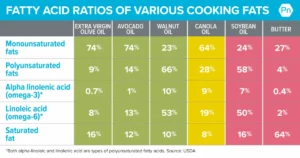
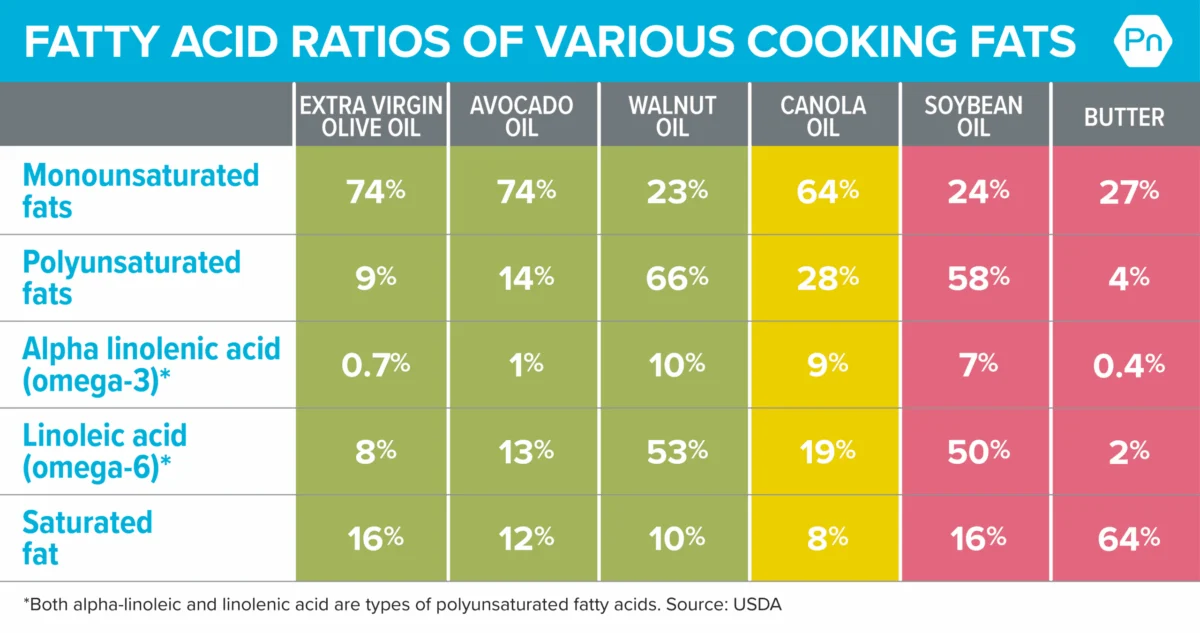
"Eat More" (Health-Promoting): This category includes extra virgin olive oil (EVOO), avocado oil, and walnut oil. These oils are typically minimally processed and rich in monounsaturated fatty acids (MUFAs) and/or beneficial polyunsaturated fats, along with protective compounds like polyphenols.

- Extra Virgin Olive Oil (EVOO): Widely lauded for its role in the Mediterranean diet, EVOO is mechanically pressed from olives without heat or chemical solvents. It is exceptionally rich in MUFAs and polyphenols, which act as antioxidants and anti-inflammatory agents. Extensive research consistently links EVOO consumption to a reduced risk of heart disease, stroke, type 2 diabetes, and certain cancers, as well as improvements in cholesterol profiles (reducing LDL, maintaining HDL). Despite a moderate smoke point (350-410°F), studies show EVOO remains remarkably stable under cooking temperatures due to its antioxidant content.
- Avocado Oil: Similar to EVOO, cold-pressed avocado oil is rich in MUFAs and has a high smoke point, making it versatile for cooking.
- Walnut Oil: Predominantly composed of polyunsaturated fats, including alpha-linolenic acid (an omega-3), walnut oil is best used in dressings due to its lower heat stability.
-
"Eat Some" (Health-Neutral to Slightly Beneficial): This category includes expeller-pressed canola oil, high-oleic sunflower oil, and high-oleic safflower oil.
- Expeller-Pressed Canola Oil: Derived from rapeseed, expeller-pressed canola oil is mechanically pressed without chemical solvents. It boasts a favorable fatty acid profile, being relatively high in MUFAs and alpha-linolenic acid (ALA), a plant-based omega-3. While not as extensively studied as EVOO, it is considered a budget-friendly, neutral-flavored option that can contribute to a healthy diet when consumed in moderation.
- High-Oleic Sunflower/Safflower Oils: These genetically selected varieties are higher in MUFAs (oleic acid) than their conventional counterparts, making them more stable and potentially beneficial for cardiovascular health when replacing saturated fats.
-
"Eat Less" (Limit Intake): This category encompasses highly refined vegetable oils (e.g., conventional corn, soybean, cottonseed, grapeseed oils), along with butter and other saturated animal fats.
- Refined Vegetable Oils: These oils, due to their extensive processing, have lost most of their beneficial phytochemicals and can contain trace amounts of trans fats. While not inherently "toxic" in small amounts, their widespread use in ultra-processed foods is a significant concern.
- Butter: While less processed than many refined vegetable oils, butter is high in saturated fat. Current dietary guidelines recommend limiting saturated fat intake to less than 10% of total calories due to its potential to raise LDL cholesterol. Butter’s relatively low content of the protective milk fat globule membrane (MFGM) means it may raise cholesterol more than other high-fat dairy products. Therefore, moderation is key.
The Pervasive Role of Ultra-Processed Foods
A crucial aspect often overlooked in the "toxic seed oil" debate is the context of consumption. For most people in Western societies, the largest source of refined vegetable oils is not home cooking, but ultra-processed foods. These industrial formulations – including packaged snacks, sugary cereals, frozen dinners, and fast food – contain refined vegetable oils alongside other ingredients like high-fructose corn syrup, added sugars, sodium, and artificial additives. The oils in these products are often subjected to repeated heating and harsh processing during manufacturing, increasing oxidation and the formation of undesirable compounds.
Numerous studies have linked high consumption of ultra-processed foods to a myriad of adverse health outcomes, including obesity, type 2 diabetes, cardiovascular disease, certain cancers, depression, and premature death. The issue here is not solely the refined oil itself, but the entire "food matrix" – a calorie-dense, nutrient-poor, hyper-palatable combination that promotes overconsumption and displaces healthier whole foods. Health authorities like the American Heart Association and the Dietary Guidelines for Americans consistently emphasize reducing intake of ultra-processed foods, implicitly addressing the major source of concern regarding refined vegetable oils.
Practical Guidelines for Informed Dietary Choices
Navigating the complexities of dietary fats requires moving beyond simplistic "good" vs. "bad" labels and embracing nuance. Here are actionable recommendations for making informed choices:
- Prioritize Minimally-Processed Whole Foods: The cornerstone of a healthy diet should be whole and minimally-processed foods. This includes natural sources of healthy fats like avocados, olives, nuts, and seeds, which come packaged with fiber, protein, vitamins, minerals, and a vast array of protective phytochemicals. These foods offer a complex matrix of nutrients that contribute to overall health.
- Choose "Eat More" Oils for Regular Use: Make extra virgin olive oil and cold-pressed avocado oil your primary cooking oils. Their robust scientific backing, beneficial fatty acid profiles, and rich antioxidant content make them excellent choices for most culinary applications.
- Consider "Eat Some" Oils for Specific Uses: Expeller-pressed canola oil, high-oleic sunflower, and safflower oils can be suitable, budget-friendly options for baking or when a neutral flavor is desired, especially when replacing less healthy fats.
- Limit "Eat Less" Oils and Fats: Minimize consumption of highly refined vegetable oils (e.g., conventional corn, soybean oil) and saturated fats like butter. If you do use them, do so sparingly and in the context of an otherwise healthy diet rich in whole foods.
- Be Mindful of Ultra-Processed Foods: The most impactful change for most individuals will be to significantly reduce their intake of ultra-processed foods. This approach naturally curbs exposure to highly refined oils, added sugars, and excessive sodium, while increasing intake of beneficial nutrients. Aim for approximately 80% of your diet from whole or minimally processed foods.
- Avoid Deep-Fried Foods: Regardless of the oil used, deep frying subjects fats to extreme temperatures for extended periods, increasing the formation of trans fats and other potentially harmful compounds. Relegate all deep-fried items to the "eat less" category.
- Focus on the Overall Dietary Pattern: The impact of any single food or nutrient is always best understood within the context of the entire diet. A diet rich in fruits, vegetables, whole grains, lean proteins, and healthy fats, with limited ultra-processed items, is far more important than hyper-focusing on one type of oil.
The debate surrounding vegetable and seed oils, while passionate, often simplifies complex nutritional science. While highly refined oils, especially when integrated into ultra-processed foods, warrant caution, the blanket condemnation of all "seed oils" ignores the established benefits of many plant-derived fats. Informed choices, guided by scientific evidence and a focus on whole foods, remain the most reliable path to dietary health.