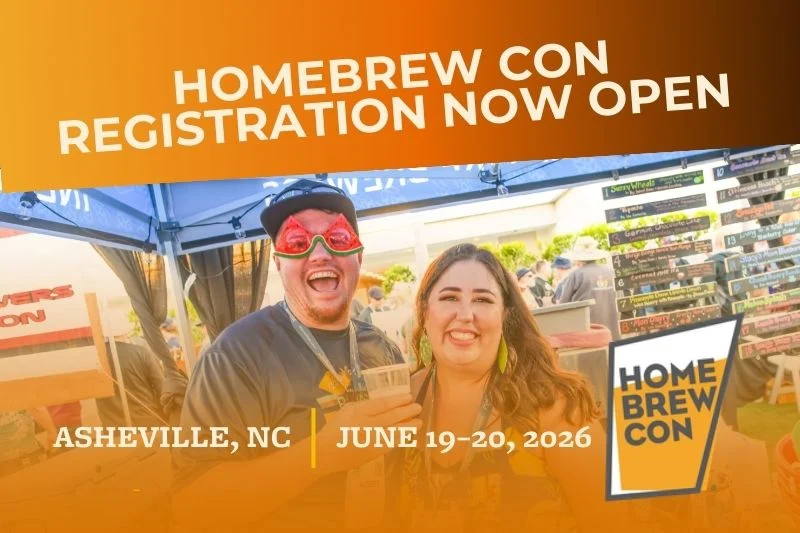

The American Homebrewers Association (AHA) has officially opened registration for Homebrew Con 2026, marking a significant milestone in the organization’s history as it returns to a full-scale national gathering following a multi-year hiatus. Scheduled to take place from June 19 to June 20, 2026, in Asheville, North Carolina, the event represents the 46th iteration of the world’s longest-running and most influential conference dedicated to the hobby of amateur fermentation. The return of the conference is not merely a logistical restart but a symbolic relaunch of the AHA as a newly independent entity, following a period of structural reorganization and strategic rebuilding.
The 2026 conference will be centered at the Harrah’s Cherokee Center in downtown Asheville, a city frequently cited as a premier destination for craft beer enthusiasts. The programming is designed to be a comprehensive "takeover" of the city, beginning with the final round of judging for the National Homebrew Competition (NHC) on June 17 and 18, and culminating in the NHC Awards Ceremony and the traditional "Knock-Out Party" on the evening of June 20. This year’s event carries a registration fee of $334.95, exclusive to active AHA members, reflecting a shift toward a more intimate, community-focused model that emphasizes quality of engagement over sheer attendance volume.
Historical Context and the Road to Independence
To understand the significance of the 2026 event, one must look at the recent trajectory of the American Homebrewers Association. Founded in 1978 by Charlie Papazian, the AHA was for decades a division of the Brewers Association (BA), the trade group representing small and independent professional craft brewers. However, the landscape of both professional and amateur brewing underwent significant shifts during the early 2020s. Following the 2023 Homebrew Con in San Diego, the AHA entered a period of transition characterized by a "pause" in large-scale national events.
During this hiatus, the AHA underwent a major structural transformation, emerging as an independent organization. This move was prompted by a desire to return to the grassroots origins of the hobby and to ensure that the association’s resources were focused entirely on the needs of amateur brewers rather than the commercial interests of the professional sector. The 2026 conference serves as the inaugural flagship event for this independent iteration of the AHA. Organizers have spent the intervening years rebuilding the organization’s infrastructure, largely powered by a dedicated network of volunteers and a renewed focus on homebrew clubs, which form the backbone of the community.
Asheville as the Host City: Strategic and Cultural Significance
The selection of Asheville, North Carolina, as the site for the 2026 return is a calculated move. Known colloquially as "Beer City USA," Asheville boasts one of the highest numbers of breweries per capita in the United States. The city’s brewing culture is deeply intertwined with the homebrewing community; many of its most successful professional brewers began their careers as amateurs in the Appalachian highlands.
By hosting the event in Asheville, the AHA taps into a robust local infrastructure of fermentation-focused businesses and a geographical location that is accessible to the dense population of homebrewers along the Eastern Seaboard. The economic impact of the event on the local economy is expected to be substantial. Historically, Homebrew Con has drawn thousands of attendees who contribute to the local hospitality sector, including hotels, restaurants, and, naturally, local taprooms. The decision to utilize the Harrah’s Cherokee Center and The Renaissance hotel ensures that the event remains centralized, fostering a "campus" atmosphere that encourages networking and spontaneous collaboration among attendees.
Event Structure and the National Homebrew Competition
The National Homebrew Competition (NHC) remains a central pillar of the conference. As the largest amateur brewing competition in the world, the NHC serves as a benchmark for quality and innovation in the hobby. The 2026 timeline places the final round of judging immediately preceding the conference sessions. This allows the results to be processed and presented during the grand finale on June 20.
The competition typically sees thousands of entries across dozens of style categories, ranging from traditional European lagers to experimental fruit beers and meads. Judging is conducted by certified officials from the Beer Judge Certification Program (BJCP), ensuring a high standard of objective evaluation. For many homebrewers, winning a medal at the NHC is the highest honor achievable in the hobby, often serving as a catalyst for those looking to transition into the professional brewing industry.
The 2026 conference schedule includes:
- Educational Seminars: Led by industry experts, these sessions cover technical brewing science, ingredient deep-dives, and equipment innovations.
- The Social Club: A reimagined space for homebrew clubs to share their creations, fostering the camaraderie that is a hallmark of the event.
- Homebrew Expo: A trade show featuring the latest tools, ingredients, and technologies from leading suppliers in the fermentation industry.
- The Knock-Out Party: The concluding social event that celebrates the winners of the NHC and provides a final venue for community building.
The Shift Toward a "Smaller Event, Bigger Energy" Model
A notable departure from previous years is the AHA’s explicit statement that the 2026 conference will be smaller in scale. In official communications, the association emphasized a "Smaller Event. Bigger Energy." philosophy. This strategic pivot is a response to several factors currently affecting the events industry and the hobbyist community.
First, by limiting ticket sales, the AHA aims to create a more focused and high-value experience for attendees. Large-scale conventions can sometimes lose the intimacy that characterizes the homebrewing hobby, where the exchange of specific technical advice and personal recipes is paramount. Second, a smaller footprint allows for greater agility in event management and reduces the financial risk for the newly independent association.
The AHA has warned that because of this limited capacity, tickets are expected to sell out rapidly. This scarcity creates a sense of urgency but also ensures that those in attendance are the most dedicated members of the community. The requirement for active AHA membership further reinforces this, ensuring that the event serves as a benefit for those who actively support the organization’s mission.
Broader Implications for the Homebrewing Industry
The return of Homebrew Con is a vital indicator of the health of the amateur fermentation hobby. While the "craft beer boom" of the 2010s has stabilized, homebrewing remains a critical R&D lab for the wider industry. Many of the trends that eventually dominate the commercial market—such as the rise of Hazy IPAs, the resurgence of ancient grain beers, and the popularity of hard seltzers—often find their footing in the experimental carboys of homebrewers.
The AHA’s stated vision of "a homebrewer in every neighborhood and a homebrew club in every community" reflects a broader push toward localism and self-sufficiency. In an era where consumers are increasingly interested in the provenance of their food and drink, homebrewing offers a unique opportunity for creative expression and technical mastery. The 2026 conference acts as the primary hub for this knowledge exchange.
Furthermore, the independence of the AHA may allow for a more aggressive advocacy stance on legislative issues. Homebrewing laws vary significantly by state, and a focused national organization is essential for lobbying for the rights of amateurs to transport and share their creations at competitions and festivals.
Logistical Planning and Community Involvement
As the countdown to June 2026 begins, the AHA has outlined a phased rollout for further involvement. In the coming weeks, applications will open for speakers, volunteers, and homebrew clubs wishing to participate in the Social Club. This community-driven approach is essential for the event’s success, as the AHA relies heavily on the expertise and labor of its members.
Suppliers and fermentation-focused businesses are also being invited to participate as sponsors and exhibitors. For businesses in the malt, hop, and yeast sectors, Homebrew Con represents a direct line to their most engaged and knowledgeable consumers. The presence of these industry partners provides the financial backing necessary to execute an event of this scale while also giving attendees access to the latest product developments.
Conclusion
The announcement of Homebrew Con 2026 in Asheville represents a "new chapter" for the American Homebrewers Association. By moving forward as an independent entity and adopting a more focused event model, the AHA is positioning itself to lead the hobby through the latter half of the decade. The 2026 gathering will not only be a celebration of beer, mead, and cider but a testament to the resilience of a community that has spent nearly half a century refining its craft. As registration opens, the homebrewing world looks toward North Carolina, anticipating a return to the traditions and innovations that have defined the hobby since its inception.