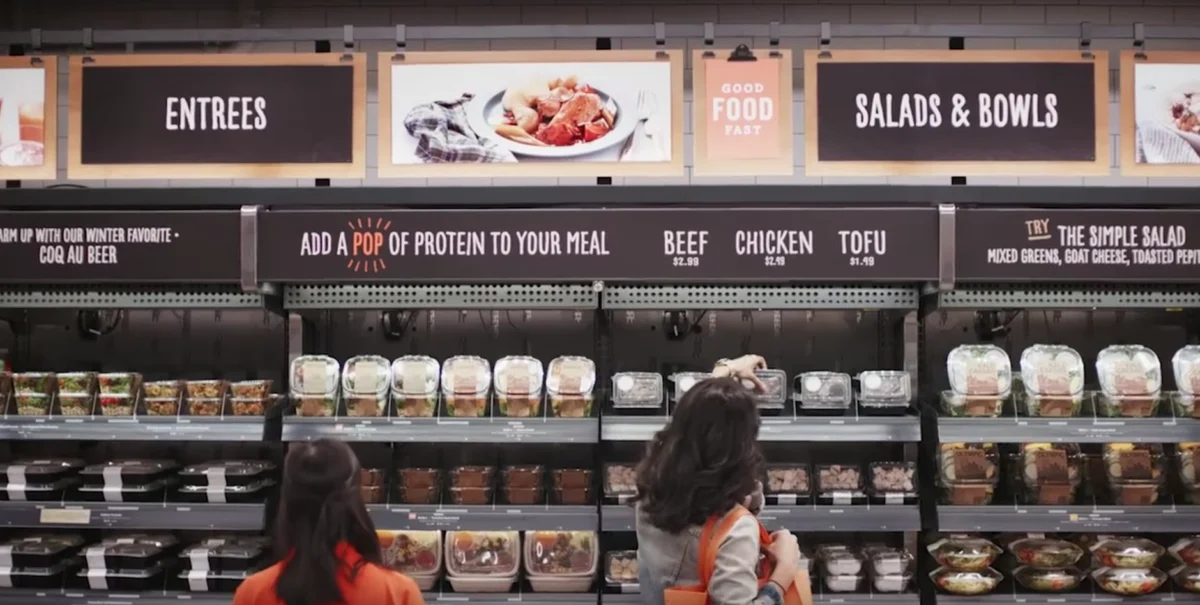

Amazon has officially signaled the end of its ambitious foray into tech-forward physical grocery stores, a venture that began nearly a decade ago with the groundbreaking "Just Walk Out" technology. The e-commerce giant announced the closure of its Amazon Go and Amazon Fresh physical store formats, marking a significant pivot from its initial strategy to revolutionize grocery shopping. This decision represents a de facto admission that the futuristic vision of frictionless, cashierless retail, while technologically impressive, did not resonate sufficiently with mainstream consumers to achieve widespread adoption.
The initiative, first unveiled with the launch of the initial Amazon Go store in Seattle in October 2016, aimed to redefine the in-store grocery experience. Amazon had grand aspirations, at one point envisioning the deployment of up to 2,000 "Just Walk Out" locations nationwide, exploring various store formats. The core promise was simple yet revolutionary: customers could enter a store, select their items, and depart without any traditional checkout process, eliminating the need for cashiers or even interacting with a payment terminal. This was powered by a sophisticated combination of computer vision, sensor fusion, and deep learning algorithms that could accurately track what shoppers took from shelves and automatically charge their Amazon accounts.
Genesis of a Futuristic Vision
The debut of Amazon Go in downtown Seattle was met with considerable fanfare and anticipation. It presented a compelling glimpse into a potential future of retail, where convenience and efficiency were paramount. For a time, the technology seemed poised to become the new standard, showcasing Amazon’s prowess in artificial intelligence and its ability to translate complex technological solutions into consumer-facing applications. The initial reaction from many observers and tech enthusiasts was one of awe, with the "magic" of walking out without paying generating significant buzz.
However, the reality of shopping in an Amazon Go store, as many consumers experienced, was often less seamless than the marketing suggested. While the absence of queues was a clear benefit, the underlying experience could feel disorienting. The act of leaving a retail environment without a formal transaction, despite being the intended functionality, often left shoppers with a lingering sense of unease, a feeling of having inadvertently bypassed a fundamental retail norm. This psychological barrier, coupled with other practical considerations, appears to have hindered broader consumer embrace.
Consumer Adoption and Technological Evolution
Despite the technological sophistication, the "Just Walk Out" concept struggled to gain sustained traction. While consumers generally desire reduced friction and shorter wait times in their shopping experiences, the question arises whether the perceived inconvenience of traditional checkout was truly a significant enough pain point to warrant such a radical departure. In retrospect, the ability to navigate a self-checkout lane or utilize tap-to-pay methods likely represented a sufficient level of convenience for the majority of shoppers.
The retail technology landscape has indeed evolved significantly since Amazon Go’s inception. Computer vision and AI are now widely integrated into retail, but the most successful applications have taken a different approach. Rather than attempting to eliminate checkout entirely, the prevailing trend favors enhancements to existing self-checkout systems. Companies like Mashgin, which offer rapid, multi-item scanning, and smart cart vendors such as Shopic and Caper, are achieving significant adoption by streamlining the checkout process without fundamentally altering the user’s perception of how a transaction occurs. These solutions focus on speed and accuracy within a recognizable framework, fostering a more natural integration into established shopping habits.
Amazon’s Strategic Shift and Future Investments
In light of these developments, Amazon’s decision to shutter its Go and Fresh physical grocery stores is a clear strategic adjustment. The company’s announcement explicitly states a continued commitment to its Whole Foods Market acquisition. Amazon plans to expand its Whole Foods presence, with reports indicating an intention to open an additional 100 locations. This suggests a focus on a more established and culturally aligned grocery format, where integrating advanced checkout technologies might be approached with greater caution. The inherent brand identity and customer base of Whole Foods may not align as readily with the pervasive integration of cameras and person-recognition technology that characterized Amazon Go.
This retreat from its internally developed physical grocery store concepts, beyond the acquisition of Whole Foods, signifies a broader conclusion to Amazon’s experimentation in this sector. The closure of Amazon Books, Amazon Style, and now Amazon Go and Fresh indicates a significant recalibration of its brick-and-mortar retail strategy. While these ventures represented bold attempts to innovate, their ultimate failure to achieve scale points to the complexities of consumer behavior and the challenges of disrupting deeply ingrained retail norms.

Broader Implications for the Retail Sector
The implications of Amazon’s retreat from its cashierless grocery vision are far-reaching for the broader retail industry. It suggests that while technological innovation is crucial, it must be carefully aligned with consumer preferences and existing shopping behaviors. The "Just Walk Out" technology, while a marvel of engineering, may have prioritized technological advancement over intuitive user experience.
The success of solutions that augment, rather than replace, traditional checkout processes highlights a more pragmatic path forward for retailers seeking to enhance in-store efficiency. This includes investments in faster self-checkout systems, improved inventory management enabled by AI, and personalized shopping experiences through mobile applications. The focus is shifting towards incremental improvements that enhance convenience without alienating shoppers or creating a sense of technological dissonance.
Furthermore, the financial implications for Amazon are substantial. The development and maintenance of the sophisticated technology required for "Just Walk Out" stores, along with the operational costs of physical retail, represent a significant investment. The closure of these formats allows Amazon to reallocate these resources towards areas that demonstrate clearer returns and align better with its long-term strategic objectives, such as its burgeoning advertising business, cloud computing services (AWS), and its core e-commerce operations.
A Look Back at the Timeline
- October 2016: Amazon Go opens its first store in Seattle, Washington, introducing the "Just Walk Out" technology to the public.
- Early Years (2017-2019): Amazon announces plans to open hundreds of Go stores nationwide and explore multiple store formats, fueling widespread speculation about the future of grocery retail.
- 2020-2021: Expansion continues, with Amazon Go stores opening in key metropolitan areas. Amazon also launches Amazon Fresh physical stores, which initially incorporated "Just Walk Out" technology but also offered traditional checkout options.
- 2022-2023: Reports emerge of Amazon scaling back expansion plans for Go stores and experimenting with modifications to the technology to improve efficiency and reduce costs. Some Amazon Fresh stores begin to be phased out or reconfigured.
- February 2024: Amazon formally announces the closure of all remaining Amazon Go and Amazon Fresh physical grocery stores, signaling the end of the "Just Walk Out" initiative as a primary retail strategy. Simultaneously, the company reiterates its commitment to expanding its Whole Foods Market chain.
Data and Context
The grocery sector in the United States is a massive market, with annual sales exceeding $900 billion. Within this landscape, convenience and speed are increasingly important factors for consumers. However, traditional grocery shopping, characterized by browsing aisles, selecting items, and a familiar checkout process, remains deeply ingrained.
Studies on consumer behavior in retail have consistently shown that while shoppers appreciate efficiency, the overall shopping experience, including product selection, store ambiance, and the perceived value of goods, plays a critical role. The psychological comfort of a completed transaction, even if it involves a brief interaction with a cashier or self-checkout machine, appears to be a significant factor.
The cost of implementing and maintaining advanced AI and computer vision systems in a retail environment is substantial. For "Just Walk Out" technology, this includes numerous cameras, sensors, and the complex back-end infrastructure required for real-time data processing and billing. This high cost, combined with potentially lower-than-anticipated customer adoption rates, likely contributed to the economic unsustainability of the model for Amazon on a large scale.
Official Statements and Future Outlook
While Amazon has not provided extensive commentary beyond its press release, the announcement clearly indicates a strategic pivot. The company’s focus now shifts towards optimizing its existing retail footprint and exploring technologies that enhance, rather than entirely replace, traditional shopping paradigms. The continued investment in Whole Foods suggests a belief in the enduring appeal of curated grocery experiences and a willingness to adapt technologies to fit established brand identities.
The broader retail industry will likely continue to observe the evolution of frictionless checkout technologies. However, Amazon’s experience serves as a cautionary tale, underscoring the importance of consumer acceptance and economic viability in the adoption of disruptive retail innovations. The future of grocery retail will likely be shaped by a blend of technological advancements and a deep understanding of consumer psychology and ingrained shopping habits. The era of the fully cashierless grocery store, as envisioned by Amazon’s initial "Just Walk Out" experiment, appears to be drawing to a close, at least for now.