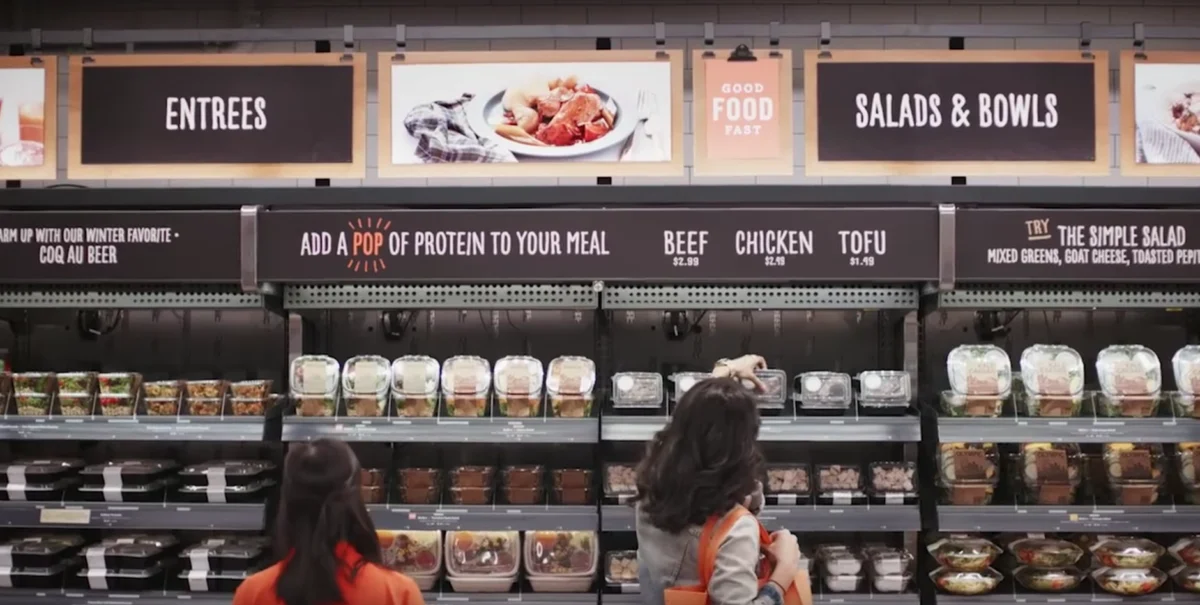

Amazon’s ambitious foray into revolutionizing the grocery shopping experience with its high-tech, cashierless Amazon Go and Amazon Fresh stores has officially come to an end. The e-commerce giant announced today its decision to close all its physical Amazon Go and Amazon Fresh locations, marking a significant retreat from a vision that promised to redefine brick-and-mortar retail. This move signals a broader strategic reassessment for Amazon in the physical grocery sector, despite its continued investment in the Whole Foods Market chain.
The initiative, first unveiled with considerable fanfare nearly a decade ago, aimed to leverage cutting-edge technology, including advanced computer vision and artificial intelligence, to create a seamless shopping journey. The initial concept envisioned consumers walking into a store, selecting items, and simply walking out, with purchases automatically tallied and charged to their Amazon account. This futuristic proposition, while captivating in its novelty, ultimately failed to resonate with a broad consumer base, leading to the closure of a project that represented a substantial investment in a fundamentally different approach to grocery retail.
The Genesis of a Futuristic Vision
The story of Amazon’s tech-forward grocery stores began in October 2016 with the opening of the first Amazon Go store in downtown Seattle. At the time, the technology underpinning the experience was considered groundbreaking. The system relied on an intricate network of cameras and sensors to track items as shoppers placed them in their baskets. The promise was an entirely frictionless experience, eliminating the need for traditional checkout lines and human cashiers. Amazon initially harbored grand ambitions for this concept, with plans to expand to as many as 2,000 locations nationwide and to explore up to three distinct store formats.
The allure of a "grab-and-go" shopping experience, free from the perceived tedium of waiting in line, was a powerful draw for a company that had built its empire on convenience and efficiency. Early adopters and tech enthusiasts were captivated by the idea of a store that felt like a glimpse into the future. The seamless integration of technology with the physical act of shopping was a testament to Amazon’s prowess in innovation. However, as the concept moved beyond its initial novelty, practical challenges and a subtle psychological barrier began to emerge.
Consumer Adoption Stumbles
Despite the technological marvel, Amazon Go and Amazon Fresh stores struggled to achieve widespread consumer adoption. While the underlying technology was impressive, the actual in-store experience often felt unnatural and even unsettling to shoppers. The act of leaving a store without a traditional payment exchange, while technologically sound, created a sense of unease for many, as if they were inadvertently doing something wrong. This psychological hurdle proved to be a significant impediment to the widespread acceptance of the cashierless model.
Data from consumer behavior studies often highlights the importance of established routines and perceived fairness in retail interactions. While consumers generally desire reduced friction and shorter wait times, the complete elimination of a checkout process, even a self-service one, disrupted ingrained shopping habits. The implicit trust required for a system that automatically charges for items, while efficient, may have felt too novel or too impersonal for a significant portion of the grocery-buying public.
A 2022 report by eMarketer projected that while contactless payment options were growing, the primary drivers for adoption were speed and convenience, not necessarily the complete removal of a human or self-service point of interaction. The report indicated that consumers valued options that streamlined the process rather than entirely bypassed it, suggesting that Amazon’s vision may have been too radical for the established grocery market.
Evolving Retail Technology Landscape
The retail technology sector has continued to evolve since the inception of Amazon Go, with a discernible shift in focus. Instead of aiming to completely eliminate the checkout process, the most successful innovations have centered on enhancing and accelerating existing methods. Companies like Mashgin, which offers rapid self-checkout kiosks that scan multiple items simultaneously, and smart cart vendors such as Shopic and Caper, which integrate scanning and payment directly into the shopping cart, are demonstrating significant traction.

These technologies address the consumer desire for speed and efficiency without fundamentally altering the perceived transactional nature of shopping. They offer a more palatable integration of advanced technology into familiar retail environments. For instance, Mashgin’s systems are reported to reduce checkout times by as much as 80%, providing a tangible benefit without the psychological dissonance associated with fully autonomous exits. Similarly, smart carts allow shoppers to scan items as they go, creating a running total and enabling a quicker exit, often through a dedicated self-payment station.
This divergence in successful technological adoption suggests that the grocery industry’s path to innovation lies in refinement and enhancement rather than radical disruption of core consumer behaviors. The market has shown a preference for solutions that optimize existing processes, making them faster and more convenient, rather than those that fundamentally alter the transaction paradigm.
Amazon’s Continued Grocery Strategy: Whole Foods and Beyond
While Amazon is pulling the plug on its experimental Go and Fresh store formats, it remains committed to its presence in the physical grocery market through its ownership of Whole Foods Market. The company announced plans to open an additional 100 Whole Foods locations, indicating a continued belief in the value of brick-and-mortar grocery retail. However, the approach to technology within these stores is likely to be more measured.
The cultural synergy between the Whole Foods brand, which emphasizes a premium, health-conscious, and often artisanal shopping experience, and the dense deployment of cameras and recognition technology required for a fully cashierless environment has always been a point of discussion. It is plausible that Amazon will opt for a more subtle integration of technology within Whole Foods, focusing on enhancing the existing shopping experience rather than attempting to replicate the cashierless model. This could involve improvements to inventory management, personalized offers, or more efficient self-checkout options, aligning with the broader trend of enhancing, rather than replacing, traditional retail touchpoints.
A Broader Retreat from Physical Retail Experiments
The closure of Amazon Go and Amazon Fresh stores represents the culmination of a broader trend for Amazon: a strategic retreat from its internally developed physical retail ventures outside of the Whole Foods acquisition. Over the past few years, the company has shuttered or scaled back several of its physical retail experiments, including Amazon Books, Amazon Pop Up shops, and Amazon Style, its apparel store.
This series of closures underscores the significant challenges of translating e-commerce success into the complex and often lower-margin world of physical retail. While Amazon’s logistical and technological capabilities are formidable, the economic realities and consumer preferences in the brick-and-mortar space present a different set of hurdles. The acquisition of Whole Foods in 2017 for $13.7 billion remains its most significant and enduring investment in the grocery sector. This acquisition provided Amazon with an established brand, a loyal customer base, and a network of physical locations that it has continued to integrate with its broader ecosystem.
Implications for the Future of Retail
Amazon’s withdrawal from the cashierless grocery store concept has several implications for the future of retail:
- Validation of Hybrid Models: The success of companies offering enhanced self-checkout and smart cart solutions suggests a strong future for hybrid retail models that blend technology with familiar shopping behaviors. Consumers appear more receptive to technologies that augment rather than entirely replace traditional interactions.
- Consumer Behavior Dynamics: The Amazon Go experience highlights the intricate interplay between technology, convenience, and consumer psychology. Radical technological shifts require not only innovation but also a deep understanding of ingrained habits and psychological comfort levels.
- Strategic Re-evaluation for Tech Giants: This development serves as a cautionary tale for other tech giants looking to disrupt traditional industries. While innovation is crucial, a nuanced approach that considers market readiness and consumer adoption is paramount. Amazon’s continued investment in Whole Foods demonstrates a pivot towards integrating technology within existing, successful retail frameworks rather than building entirely new ones from scratch.
- The Enduring Role of Physical Stores: Despite the rise of e-commerce, the Amazon Go closures do not signal the end of physical retail. Instead, they suggest a need for physical stores to offer unique value propositions, whether through curated experiences, community engagement, or seamless integration with digital channels, rather than solely focusing on transactional efficiency through radical technological deployment.
In conclusion, Amazon’s ambitious experiment with cashierless grocery stores, while technologically innovative, ultimately failed to capture the broader market’s imagination. The company’s strategic shift, marked by the closure of Amazon Go and Amazon Fresh stores, underscores a pragmatic re-evaluation of its physical retail strategy, with a continued, albeit likely more conventional, focus on its established Whole Foods Market brand. The lessons learned from this endeavor will undoubtedly inform future retail innovation, emphasizing the critical balance between technological advancement and genuine consumer acceptance.